Review: Disclosure Day
Starring Emily Blunt, Josh O’Connor, Colin Firth, Eve Hewson Directed by Steven Spielberg Universal Pictures – in Cinemas now On the brink of World War III a cybersecurity specialist working […]



Starring Emily Blunt, Josh O’Connor, Colin Firth, Eve Hewson Directed by Steven Spielberg Universal Pictures – in Cinemas now On the brink of World War III a cybersecurity specialist working […]
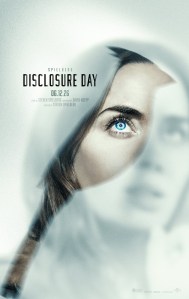 Starring Emily Blunt, Josh O’Connor, Colin Firth, Eve Hewson
Directed by Steven Spielberg
Universal Pictures – in Cinemas now
On the brink of World War III a cybersecurity specialist working for a secret government agency steals an extraterrestrial Toblerone threatening to release the truth about Roswell to a seemingly unsuspecting world.
‘What would you do,’ asks a traumatised Jane (Eve Hewson), supposedly a failed nun (don’t ask), but now on the run with Daniel Kellner (Josh O’Connor) along with the stolen alien tech (sadly not actually a Toblerone), ‘if you discovered that we are not alone?’ At the other end of the phone call, kindly Sister Maura (Elizabeth Marvel) comes out with some generalised drivel about the universal nature of God, rather than gawping at her young protégé’s question and exclaiming: ‘Girl! You telling me you’ve never seen The X-Files or Close Encounters of the Third Kind?!?’
To be fair, she could have cited a list of science fiction novels, movies and TV shows longer than Disclosure Day’s interminable 145 minute running time. As the movie ground on, the only real question I had was where Steven Spielberg has been for the last fifty years.
I recently re-watched Close Encounters, and while as a whole it hasn’t stood the test of time at all well, the first hour is still full of memorable, genre-defining set-pieces. What drives that opening act is a sense of mystery, and more importantly, wonder. The idea that there was a secret government agency tasked with First Contact felt fresh, and that ordinary Americans would find their consciousnesses somehow tuned into the approaching alien intelligence spoke charmingly to the universality of life itself.
Nearly fifty years – and eleven seasons of The X-Files later – such ideas warrant barely a blink. If Eve Hewson’s Jane asked the ordinary Joe or Josephine in the street whether we were alone in the universe, they would shrug and say: ‘Nah, there’s probably some aliens out there somewhere, it’d be nice to meet them’. If Josh O’Connor downloaded his alien archive footage to their phones, they’d wince wearily, ‘Alien? Schmalien!!’ telling him that their social media feeds were already spam full of ‘authentic’ Roswell autopsy videos, and to stop wasting their time and data allowances. And if Josh went on to shock them with the revelation that there was a secret government agency involved they would roll their eyes and sigh: ‘Yeah, whatever’.
Not only did Close Encounters do it better, but Spielberg’s real sci-fi classic E.T. The Extra-Terrestrial did it better than anyone has either before or since. Disclosure Day is the alien movie no one needed, one that would have been out of date twenty years ago, if not before.
Aside from the horribly outmoded story, Old Papa Spielberg depicts mobile phones and the internet like a grandad who’s heard about these new-fangled gizmos from one of his grandchildren. In Disclosure Day, a sheep-like populous use their phones to passively watch terrestrial television, and appear to be surprised by the idea of Deep State conspiracies. Meanwhile O’Connor’s Daniel Kellner is supposed to be a maths genius (we know this because he scribbles some formulas on a piece of hotel notepaper) in a world seemingly without supercomputers or even rudimentary quantum machines. Hey, Steven, literally the whole world runs on computational mathematics. It’s 2026, not 1977.
But even if you can forgive Steven for these cringeworthy missteps, the fundamentals of the story are all over the place. Who are these aliens anyway? One minute they’re crashing into the desert in New Mexico (clearly unable to fly their UFOs in a straight line), the next they’re turning up as badly rendered cutesy CGI animals to lead white Midwestern children to Narnia to impregnate them with special powers. It manages to be both laughably pukesome while not making sense at all – although I guess the Disneyesque animal incarnations are preferable to anal probes. Of course the aliens are disguising their true selves, but as Jordan Peele pointed out in his 2019 reboot of The Twilight Zone, the almond-eyed ‘Grey’ alien is a racial stereotype rooted in the legacy of American wars with Japan, Korea and Vietnam, and most other sci-fi creatives have moved beyond that for good reason.
And all of this is before I get to the invisible fire-engine. I don’t think I’m alone in thinking that a low point for the Bond franchise was in Die Another Day when John Cleese’s Q furnished Pierce Brosnan with a disappearing Aston Martin 12 Vanquish. How we laughed. Twenty-four years later I was cringing. Invisible vehicles are naff. End of.
The cast do their best with all this pointless nonsense. Emily Blunt as a weather presenter turned alien emissary opts for dialling everything up to eleven and hoping for the best. Josh O’Connor plays the whole thing like a hopeful 1970s kid who’s just been told he’s not getting Findus Crispy Pancakes for tea after all. Eve Hewson as his girlfriend can barely conceal her disappointment that, having got a major gig with the world’s most famous film director, her character effectively disappears at the mid-point and is there just to ask questions about faith and give Josh a hug at the end.
And then there’s Colin Firth as an English villain in spectacles. Need I say more?
Verdict: There are one or two half-decent set pieces, but even the John Williams score feels like a lukewarm parody of the composer at his finest. If the credits didn’t assure me otherwise, I would have concluded that Disclosure Day was a Steven Spielberg movie cooked up by Chat PG Tips – or perhaps by an alien, inadequately briefed. 4/10
Martin Jameson
 Doctor Who News Star Trek News
