Feature: Preparing for a Brand New Day 1: Spider-Man (2002)
With Brand New Day hitting cinemas at the end of July, Alasdair Stuart spins a web (any size) through Spider-Man’s appearances on the big screen this century… Mild mannered Peter […]



With Brand New Day hitting cinemas at the end of July, Alasdair Stuart spins a web (any size) through Spider-Man’s appearances on the big screen this century… Mild mannered Peter […]
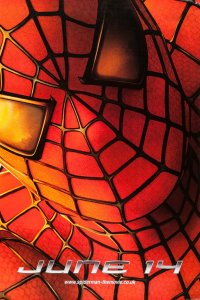
With Brand New Day hitting cinemas at the end of July, Alasdair Stuart spins a web (any size) through Spider-Man’s appearances on the big screen this century…
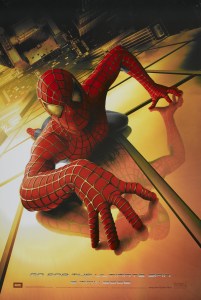
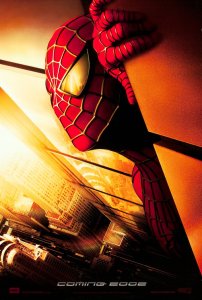
Mild mannered Peter Parker (Tobey Maguire) is bitten by a genetically altered spider and finds himself imbued with incredible abilities. Struggling to balance his normal life with his heroic one, Peter is torn between his love for Mary Jane Watson (Kirsten Dunst), his loyalty to his best friend (Harry Osborn), his relationship with Harry’s abusive and driven father Norman (Willem Dafoe) and his guilt over the murder of his Uncle Ben (Cliff Robertson). He finds release in his life as Spider-Man, New York’s premier superhero until a mysterious, goblin-faced figure with high-tech weaponry rises…
Raimi’s original Spider-Man is, along with the Fox X-Men movies, essentially Phase Zero of the Marvel Cinematic Universe. It’s incredible to think this movie is 23 years old now, and even more incredible that so much of it remains functional to very good.
Raimi brings his usual frenetic invention to the character and pairs it with a surprisingly bloody-knuckled, gnarly approach to violence. One of the largely overlooked elements of Spider-Man is the fact that Peter is extraordinarily strong, very tough and on occasion, brutal. Raimi grabs onto that with both hands and the closing act fight here is one of the nastiest in superhero history. It’s almost Raging Bull or Tokyo Fist-esque in the way he uses slow motion punches, Peter’s face distorting as the Green Goblin beats the hell out of him with hammering, armoured punches. It’s also visually very striking, especially the sequence where Peter is trying to save the day with half his mask ripped off.
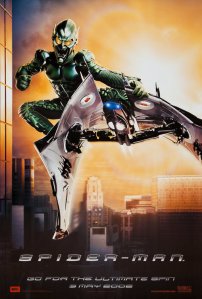 That visual invention and tone makes the second act of the movie enormously fun and has an edge that’s only got sharper with time. There’s a real sense of foreboding as Goblin is sighted in the distance for the first time, over a parade in Times Square. The offhandedly vicious way he murders a rival (and a good chunk of the US Military Industrial Complex) is genuinely shocking and the sense of threat is balanced with some lovely acrobatic work from the stunt team. That’s also offset by the fact Pete’s brand new at this and, bluntly, bad at it. He gets his ass handed to him more than once. He’s brand new, untested, dangerous and in danger. He’s Spider-Man.
This is the soul of the movie and it still works so well. To my enormous surprise, a lot of the core performances haven’t aged as well. Maguire’s Peter is weirdly flat and emotionless, Maguire playing him as shy and awkward but it coming off as distanced and unengaged. That picks up in the second half, and Maguire lands the heavy beats well, especially Ben’s murder, but if you’re looking for the smartass, motormouth Spidey, then I’d advise jumping to the Garfield or Holland movies.
 Franco is bad to flat out awful and gets worse across the course of the trilogy in direct proportion to how bad the material he’s given is, and prepare yourselves, because the stuff he’s given in Spider-Man 3 is very awful. He’s watchable here but there’s a weird distance to him too, and it almost feels like the 1960s psycho-drama elements Raimi loves so much are what the two men are struggling to engage with. Of the three leads, Dunst is by far the best and is given by far the least to do. MJ’s job, in these movies, is to get understandably annoyed with Peter, scream and be rescued. Where Franco doesn’t find anything to work with in Harry, Dunst digs deep enough to find some depth and spark to Mary Jane and she carries the emotional weight of the movie for most of its run time.
Outside these three, the rest of the cast are uniformly very good to flat out brilliant. Rosemary Harris is given by far the broadest, least subtle material to work with as 1960s frail old lady Aunt May but brings some real sincerity and warmth to it. Robertson too, whose resemblance to Johnny Cash is genuinely uncanny, is great as Uncle Ben, bringing a conscious humour and kindness to the most important man in Pete’s life.
But the show is stolen lock stock and pumpkin bomb by Willem Dafoe and JK Simmons. The former turns Norman into an erratic monster long before he becomes the Goblin, and finds malice, calm and complexity in him once he does. By far the best scenes here are Norman talking to the Goblin as his reflection and an unbearably tense Thanksgiving where he and Peter work out who the other man really is.
 Simmons meanwhile, sweeps in with the great Bill Nunn, Ted Raimi and Elizabeth Banks in tow and gives us the three best minutes of the movie. His JJJ is a cheerful monster of a man, the head of a screwball comedy about the Daily Bugle where punchlines land every few seconds. Brilliantly, just as you think you’ve got his measure, Simmons shows us surprising courage and heart in New York’s best worst editor. It’s an incredible turn and it’s unsurprising both men have become mainstays of the Holland run too.
Verdict: Spider–Man is uneven, operatically dramatic, sometimes incredibly violent and the start of a decades long conversation Hollywood is having with the character and the idea of being a hero. It’s not always fun, but it’s always interesting. 7/10
Alasdair Stuart
 Doctor Who News Star Trek News
