Fear The Walking Dead: Review: Season 7 Episode 11: Ofelia
Searching for a weapons cache discovered by Dwight, Daniel wanders off and is captured by the Stalkers. What follows test him and Luciana to the limit and Wes to breaking […]



Searching for a weapons cache discovered by Dwight, Daniel wanders off and is captured by the Stalkers. What follows test him and Luciana to the limit and Wes to breaking […]
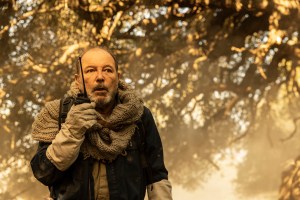 Searching for a weapons cache discovered by Dwight, Daniel wanders off and is captured by the Stalkers. What follows test him and Luciana to the limit and Wes to breaking point.
Any episode which puts Reuben Blades front and centre is always good news and this is no exception. Daniel has been a fascinating part of the show for years, the beating dark heart of it endlessly in opposition to the one other cast member he’s most like: Strand. But here, this season in particular, Daniel has been broken by events. Barely able to function and convinced his daughter, Ofelia, is still alive.
This week that comes to a head and Daniel’s fragile mental state is put in the spotlight. Blades plays him with the subtlety of a jazz musician, showing us both Daniel’s self-awareness and his increasing lack of it. He kills an innocent young man in a heartbeat, is cheerfully open about how badly he’s going to hurt other people given half a chance and knows he’s being lied to. But he also knows he can’t back away from that. He’s become the personification of human anxiety; aware that what he wants is illogical. Aware that he can’t stop. He’s tragic, monstrous and aware of both.
What really impresses this episode is the fact it’s a four-way spotlight. In addition to Blades’ barnstorming turn, Spenser Granese’s Arno gets a wonderfully fatalistic final episode and one that propels Wes, played by Colby Hollman, onto a very different path. Hollman is one of the newest arrivals on the show but he’s really making his presence felt. His visceral pity and horror at Daniel’s plight and his disgust at the way Luciana weaponizes her friend’s illness drives him to defect. It’s not just logical, it’s also entirely understandable and even sympathetic. The moment he confronts Luciana works not because he’s angry but because he’s sad. This is the core conflict of the show: idealism vs reality, and for almost the first time, the main characters aren’t just in the wrong, someone says they are out loud.
That’s the meat of the story, wrapped up in these four fantastic performances. In terms of overall plot, it doesn’t advance a great deal but honestly it doesn’t need to.
Verdict: This is a morality play happening in the shadow of the coming war and one which explores what happens when good people have no choice but to do bad things. It’s complex, gritty, desperately sad and very good. 9/10
Alasdair Stuart
 Doctor Who News Star Trek News
 Sci-Fi Bulletin: Exploring the Universes of SF, Fantasy, Horror and Spy-fi!