 minor spoilers
Ahsoka faces her past…
I’ll start with the incidentals in that we have more Norse mythology this episode with the sense that the High Republic and others might have used a literal whale road to travel between galaxies.
The episode itself is largely focused on Ahsoka and what happened to her after the events of episode 4. It’s a journey into her past but also very much rooted in the type of person she is now.
What I really, really like about this episode is it explores the trauma of survival, the nature of guilt and how we might leave our pasts where they belong – behind us. Ahsoka has gone from an optimistic padawan in the Clone Wars to a stoic and reserved woman both in Rebels and also here.
Ahsoka has given the impression of having judged the universe and found it wanting – not in a dismissive way but in the way of someone who’s been at the worst end of misfortune enough to have come to expect nothing good except for what she can make for herself. In other words she’s a survivor of trauma.
The presentation of this is subtle – all show and no tell and the show is beautiful to watch, distracting almost in that I suspect a lot of viewers won’t see how what Ahsoka sees in this episode are reflections of her own fears, her terror at who she might be. It’s not for nothing that Baylan accused her of harbouring the worst kind of legacy in episode 4.
For all this then the whole thing is steeped in a deep melancholy, whether it’s when we’re following Hera and Jacen as they search for their friends or when we’re with Ahsoka as she is forced to make a choice about the kind of person she will be now she’s no longer defined by war.
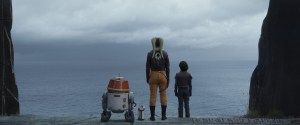
As always with this show it is stunning to look at – the framing and staging are easily on a par with Denis Villeneuve’s vision in Dune and Arrival and there are numerous shots you could freeze frame and put on your wall. This elegance and surety of touch only adds to the emotional heft of this story – if episode 5 is about a woman drowning (and nothing else) it’s told in a way that has you sad for a world that doesn’t exist and a history you’ve shared with a fictional character. That is pretty impressive.
The final thing I want to talk about is Ahsoka’s journey. There’s a bunch of lore around who she is that comes from the Clone Wars but, most importantly, this episode sees her reborn emotionally, spiritually and, almost, literally. The sense that baptism is at the heart of this episode is right there in the water into which she fell. And as befits those born again she emerges, like Gandalf the White, in pristine robes and with a sense of purpose that I think will surprise Sabine when they finally meet again. If this was Buddhist literature it might even be suggested that she met a bodhisattva and has, herself, become an arahant – a being who has reached a state of enlightenment.
Verdict: Ahsoka as a character feels like she’s complete – emerging from stories started in the animated series’ she’s been a part of and from her relationship with Anakin Skywalker.
The question now is where does this master go next and what will she do?
Rating? 9 clones out of 10.
Stewart Hotston




 Sci-Fi Bulletin: Exploring the Universes of SF, Fantasy, Horror and Spy-fi!