 A week before Picard lands on Amazon Prime, cast and creatives travelled across the Atlantic for a gala premiere at the Odeon in Leicester Square, and then a junket with European press. Sci-Fi Bulletin’s Paul Simpson was there, and the first interview featured the four show creators: Alex Kurtzman, Michael Chabon, Akiva Goldsman and Kirsten Beyer…
 Coming into this, you have a big fanbase for The Next Generation but also new people coming to it – how do you strike that balance for the hardcore fans and those new to the world of Star Trek?
Michael Chabon: Very carefully! (general laughter). That may have been the single hardest job. That was our work from the beginning, and it was never easy. That was the priority to make sure it was for my nephew, who is a passionate Star Trek fan, and his wife, my niece, who kind of thinks she hates Star Trek. They were at the premiere in LA and they loved it.
Alex Kurtzman: There’s an amazing group of people in that room – Kirsten and Akiva and Mike and I have various connections to Star Trek but also the thing you want to reach for always is, what’s a great story? What’s a great universal story? When we figured out how to tell that story, then we can say, ‘is it Star Trek enough?’ We were coming from an assumption that we’re going to embed all of the necessary Star Trek ornamentation, but what’s a great story?
 The really great thing about this is, what other franchise would allow you to tell a story about a 92 year old man who’s looking back, who’s closer to the end of his life than the beginning, and asking, ‘Did I make all the right choices?’ I think that’s why the show is going to impact a lot of people – Picard has been a father to so many generations, not just the one that watched the original show, but many many generations after who found him, and took great comfort in him.
Patrick and Picard now are inextricably linked, and seeing what he’s become and carrying all the weight of knowing what those shows were, watching this show has its own experience. If you’ve never seen The Next Generation, what you’re seeing is a beautiful story of a man reckoning with his life, and I think that’s why it will reach everybody.
We’ve heard about this 30-plus page document that Patrick read and is what charmed him to make the series; a second season is already coming. How much of Picard’s story have you charted out in your mind? How far ahead were you thinking when you were writing the show?
Akiva Goldsman: We joke about the 30-page, 35 page document that Michael wrote that includes in it absolutely nothing that’s in the first season.
Kirsten Beyer: Picard…
Goldsman: Picard, fair point. There was a lot of us learning each other, the four of us and Patrick, and Patrick finally feeling something like’ these are safe and sound hands, fundamentally, let’s all make it up together’, which is what we did from that point on. In that sense, we just finished charting a journey for season 1, and we are setting off to chart a journey for season 2 and we know just about as much as we knew when Michael wrote that document.
 How much has the discussion of artificial intelligence influenced the story of the show?
Beyer: It’s funny because Data is our classic artificial intelligence and in Star Trek we are always addressing this question: what does that mean? Is he a living thing? What kind of rights does he have? Is he a machine? Is he a tool? Does he belong to us? That’s a conversation Star Trek: The Next Generation was having in its first season, right? Now, thirty years later, the most important and interesting facet for us was the love that Jean-Luc Picard developed for Data, no matter what he was, and the way that that relationship stayed with him long after Data’s death in Nemesis.
In our early conversations with Patrick, realising that that was one of the biggest holes left in Picard’s heart and a piece of unfinished business was really powerful and impactful and really affected the subsequent direction?
It was interesting you were discussing ‘what is Star Trek enough?’ What is Star Trek enough – how do you define that?
Chabon: Lightsabers, Baby Yoda…. (laughter)
 Goldsman: I’ll give you a partial answer to that and I’m just going to talk for Michael and myself for a second.
My first Star Trek convention was 1976, and Michael and I are two kids who at 12 and 13 played Star Trek. We were original series fans. We’ve had a lot of luck telling stories that had nothing to do with Star Trek but Star Trek was probably the first story we ever really heard and took in. Why that is, I don’t know.
There are so many ideas as to what Star Trek is that first we relied on each other and our cohort here to decide whether it was Star Trek enough for us. We believed that if it was Star Trek enough for the four of us, there were some people out there like us for whom it would be Star Trek enough.
We can’t serve an abstract idea of fandom; we can’t serve an abstract idea of what is or isn’t enough of a thing. It has to be inside us. For us, ‘Star Trek enough’ is if it feels like Star Trek for us.
What were your priorities taking this forward – we haven’t gone beyond Nemesis on screen apart from seeing Romulus being destroyed [in the 2009 movie]. Was it important that you tied it into the first Star Trek movie, the one you worked on, Alex?
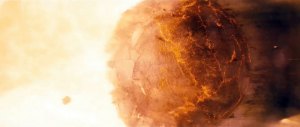 Kurtzman: It wasn’t so much that it was important to tie it into the movie as the movie gave us a really wonderful plot point to draw from and happened to synch up with Picard’s timeline. So in looking at the ways in which Picard’s life would have been changed in surprising ways, the idea that the supernova totally diverted the course of his life became a really wonderful well to draw from.
I don’t think we set out to link it to the film deliberately. It was fun to be able to do that – when we made the movie, we couldn’t have predicted this was coming 12 years later – but it’s nice to be able to do that, and nice to be able to create a continuity of Star Trek. We are in the Prime timeline, we’re not in the Kelvin timeline, but the interesting thing about that movie was this was the one element of that film that was in the Prime timeline because it was the supernova, and Spock’s jump that created the Kevlin timeline.
Star Trek: Picard begins on Amazon Prime on Friday January 24, 2020.




 Sci-Fi Bulletin: Exploring the Universes of SF, Fantasy, Horror and Spy-fi!