Moon Knight: Review: Original TV Soundtrack
by Hesham Nazih Disney, out now One of the best new TV shows from the Marvelverse also brings us a new composer to help carry the emotional and mysterious […]



by Hesham Nazih Disney, out now One of the best new TV shows from the Marvelverse also brings us a new composer to help carry the emotional and mysterious […]
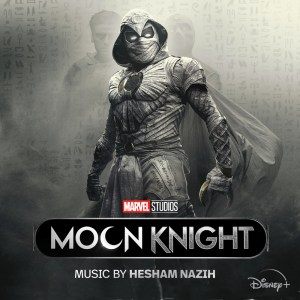 by Hesham Nazih
Disney, out now
One of the best new TV shows from the Marvelverse also brings us a new composer to help carry the emotional and mysterious cores of this lesser-known comic-book hero.
Opening with a lovely concert piece of the series’ swooping and exotic main theme, the score then takes us chronologically through the series, with only slightly spoilerific track titles for those who haven’t had the pleasure of watching yet.
With its mysteries, mythology, and story arc rooted in Egyptian antiquity, it’s no surprise that we get plenty of the sweeping flutes and sistrums that we’d expect from Hollywood when it does Ancient Egypt in movies and TV. What’s a pleasant and evocative surprise is that we get some beautiful blends of genuine Egyptian and North African music, woven in with more Asian strings here and there, and even modern electronic ambiences on occasion, which give slightly distanced and relaxed moods.
Well, maybe this is less surprising when you know that Hesham Nazih is an Egyptian composer who has won a ton of awards for his scores mixing traditional and modern music into epic forms in Egyptian and Arabic cinema and TV over the past couple of decades. Now he’s brought his talents to Western screens, and they are in full force.
Yes, there are still the kinds of orchestral melodies you’d expect from a Hollywood blockbuster, especially in the romantic themes and those bits of “Hollywood Egyptian” tracks, but then there are moments of sheer wonder and joy that bring something different. One moment you’ve got the sort of threatening undertone of a Terminator type atmosphere, for example in the “Village Scales” track, and a solidly Hollywood villainous chant in the background, and then the next you’ve got the evocative sweep of “The Constellation” and its appended wistful Arabic song.
If the score has a flaw, it’s a slight over-reliance on the main phrase of the theme tune, but it’s a nice phrase from an excellent composition, and so not really much of a downer.
Verdict: This is atmospheric, sweeping, evocative, and filled with instruments and phrasing quite unusual for a Hollywood score, yet which blends beautifully into one. This is the kind of score that one fervently hopes will add to Nazih’s collection of awards, and garner a new audience for his work, because it deserves to. 10/10.
David A McIntee
 Doctor Who News Star Trek News
 Sci-Fi Bulletin: Exploring the Universes of SF, Fantasy, Horror and Spy-fi!