Evil: Interview: Aasif Mandvi
Evil has come to Alibi. The highly acclaimed CBS success from last season airs Mondays in the UK, with Mike Colter, Katja Herbers and Aasif Mandvi as a team investigating […]



Evil has come to Alibi. The highly acclaimed CBS success from last season airs Mondays in the UK, with Mike Colter, Katja Herbers and Aasif Mandvi as a team investigating […]
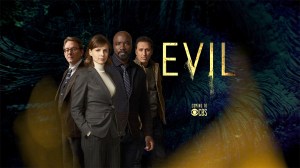 Evil has come to Alibi. The highly acclaimed CBS success from last season airs Mondays in the UK, with Mike Colter, Katja Herbers and Aasif Mandvi as a team investigating weird phenomena on behalf of the Catholic Church. Shortly before the series had its British premiere, Paul Simpson chatted with Mandvi about his role as Ben Shakir, the scientist and atheist of the team…
How did you first hear of Evil? Did they approach you?
 Actually, ironically I was in London when I first heard about it. I was in the UK doing a series for Channel 4 called This Way Up, with Aisling Bea and Sharon Horgan. I got this script and I read it and I thought, “This is really interesting.” It’s the kind of role that I haven’t really played before
Of course it was Robert and Michelle King and I was a fan of their work, The Good Fight, The Good Wife. I thought this was a high pedigree product, but you get these scripts and you never know what’s going to happen.
I was staying at the W Hotel in Shoreditch and there was a casting office a couple of doors down that my agents arranged for me. An assistant came in on a Saturday to put me on tape, and I did the audition at this empty casting office, on the weekend in Shoreditch and sent it off to the casting office here in New York. I guess they liked what they saw.
When I returned to New York I met with the Kings. Originally the character was not written as a South Asian character, he was a white guy, and I think they liked me. Clearly I was fortunate enough to get offered the role.
 That anticipates one of the questions I was going to ask: how much did the character change between you being cast and starting work on it? When you say they didn’t envisage it that way and it was just ‘straight Caucasian’ did it actually alter the character’s outlook that much or is it more that you could bring elements of yourself into it?
I think it was a bit of both because they had written it as a white guy. I think the original concept was a cross between Patton Oswalt and Penn Jillette. I thought…
(slowly) Okay…?
(Laughs) I thought, I’m not going to get this. I tried to gain a few pounds very fast!
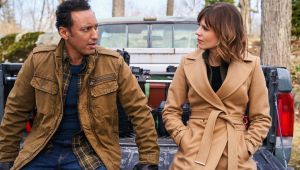 I went in, I read it, then when I got cast Robert and Michelle and I had a conversation about changing his name. They wanted to lean into the fact that he was from a Muslim family.
They liked this idea of doing this show about the Catholic church and there’s this character who’s clearly an atheist and a scientist and he doesn’t believe any of this religious stuff, but clearly it would be interesting if he came from a more religious family and maybe that family was Muslim. That’s where we changed Ben’s last name to Shakir. Then, I think like any show, once the actor brings their sensibilities and their talents to it, they started writing towards that.
So it was a little bit of both but they definitely did adjust the character. I think for Robert, he was very intrigued with the idea of exploring that aspect which I don’t think they had originally thought of – his background, and his cultural and religious identity, which was very different from than if he had been a white guy.
 What I really liked about what they wanted to do with Ben was, they actually wanted him to come from a religious family but he himself be an atheist. That’s something you don’t often see. Sometimes you’ll get ‘Oh he’s a religious guy, now we’re going to lean into his religious upbringing and his religious beliefs and all that’ but we pivot away from that and make that part of his backstory. He’s having his own identity crisis and relationship with his religious inheritance, as it were. You see that in a Christian storyline where he might be Christian and he’s moved away from Christianity but our idea is that this character is an atheist and doesn’t believe in any religion, but happens to be coming from a Muslim religious identity.
I’ve often thought religions are like sports teams: whatever sports team your Dad likes is what you end up liking. So it’s in Ben’s DNA but he himself is also having a reaction against that and has moved in another direction, which feels complicated to me.
And also of course you have Mike and Katja’s characters, both of whom are dealing with that with the Christian church.
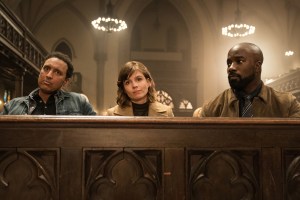 Right. Well, Mike’s character, David Acosta, is clearly religious and he’s a priest in training and Katja’s Kristen Bouchard is a sceptic around that but she’s also a psychologist. Ben also exists on the other extreme where he doesn’t even really believe in psychology. He’s a real empiricist who believes only in things he can quantify and measure and so there’s a purist element to him there and that’s where he’s gone.
Robert and I talk a lot about how he ended up in this place. If he comes from a family where his sister wears the hijab, where does he end up in this? So, I think we’re going to explore a little bit more of that in season two.
That sounds very good. I like the end of the second episode where Ben’s looking at apparent pictures of “the angel” at the hospital – normally a show would give it five or six episodes before challenging one of the lead characters quite so directly. Ben is really challenged by that because he can’t work out how the hell they did it.
That’s one of the good things about the show: the questions don’t get resolved neatly. Often things get seeded and then will play out. You realise in episode 2 that Ben is struggling to figure this thing out that he can’t explain and then in episode 5 he’s talking to the woman on the reality show and he talks about how he’s still frustrated about that. So clearly, he’s been mulling this over and stewing in this thing.
We talked about that idea that he’s not going to be able to explain everything away. There are going to be things that he can’t and it’s going to frustrate him as well.
 The other one that really sticks with me, partly because I just love John Glover’s performance, is episode 3 where it’s suddenly Ben’s Alexa at home reacting to what’s going on…
That’s another aspect that I think is interesting about the show, for me. They really explore the use of technology and how our technological age – the internet and social media and all these devices like Alexa or Siri and other things – how do those things facilitate a way for people who have nefarious things they want to do in the world? How does that become a tool for them?
The show doesn’t just live in the world of exorcism and demons, even though that’s there, but it lives in a place where it’s really dealing with the reality of our world, and how technology gets used in these things and used as a smokescreen where people hide behind that.
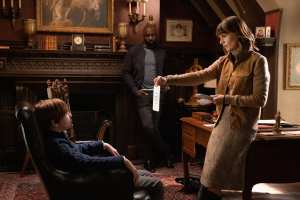 There’s also that banality of evil: some of the examples of things that are going on, you wouldn’t think of as Omen 666 type events. They are far more down to earth.
Yes
I think the scariest one for me is the boy, the sociopathic kid, in episode 4.
Yes, a lot of people have said that that was a turning point for our show actually.
I would agree.
It was actually after that episode that CBS picked up the second season, and also I think it’s when the audience clicked into the show and said, ‘Oh this is something more than what we expected it to be’.
It was also one of the most disturbing episodes that I think we have because it lived in a place where you ask: what do you do in a situation like that?
If you have a child – and I feel it acutely now being a new father – what do you do with your child in that situation? I think it reached a lot of people on a very personal level. Those decisions and that reality was very disturbing and scary – scarier than somebody possessed by a demon because that doesn’t exist in our reality.
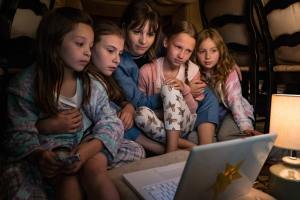 I think that the show picked up from there with the way that it dealt with the kids [Kristen’s daughters are key characters in the show] and the VR game. Just saying that and the hairs on my arm have gone up just remembering some of those scenes!
Right right! Well again, I think that Robert and Michelle really wanted to play with these ideas of technology. For a show like this to have legs and really keep the audience engaged I think we have to go in a lot of different areas and explore a lot of different things from different angles. So I think they were effective in doing that and I think there’s going to be more of that in season two.
What is the biggest challenge for you playing him?
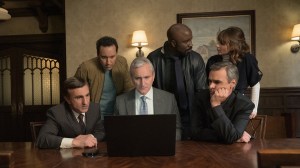 I think Ben is just so different from me and as an actor it’s the biggest challenge and the most fun to play a character who really has a very different world view.
I’m much more spiritual, personally, and I’m not an empiricist in the way Ben is, so just getting into his mind-frame and into his mindset… The distance between you and a character, traversing that distance and using whatever you can to shorter than gap is the challenge. Where do Ben and I overlap and where do we differ, and where do I use my own life and where do I use my imagination? As an actor I felt like that was the most fun and also the most challenging thing.
What do you look for in a script when a project comes to you? What is it that attracts you: is it the character, the people involved, the project?
 I think all of the above. It’s always the character, obviously it starts there. Is this an interesting character? On a series you don’t always know what the journey is going to be. With a movie you can say, “OK, this is the journey that this character goes on, and is it interesting to me?” With a series, you can say, “OK, is this an interesting character that could potentially go on an interesting journey over the course of many seasons?”
Also it’s the people involved. In this case I had Robert and Michelle King, and Katja and Mike and Michael Emerson who I’m a big fan of.
Other projects like This Way Up, it was Aisling Bea who offered me that role. Again, it was a fun character and I’m a huge Sharon Horgan fan, so it was OK, I’m doing it.
It is a combination of the people you get to work with and the role that you get to play and where you get to go with it.
Evil airs on Alibi on Mondays at 9 p.m.
Thanks to Kelly Phelps for assistance in arranging this interview.
 Doctor Who News Star Trek News
 Sci-Fi Bulletin: Exploring the Universes of SF, Fantasy, Horror and Spy-fi!