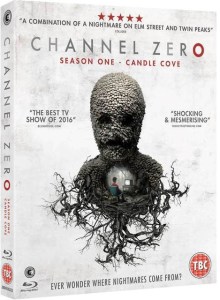
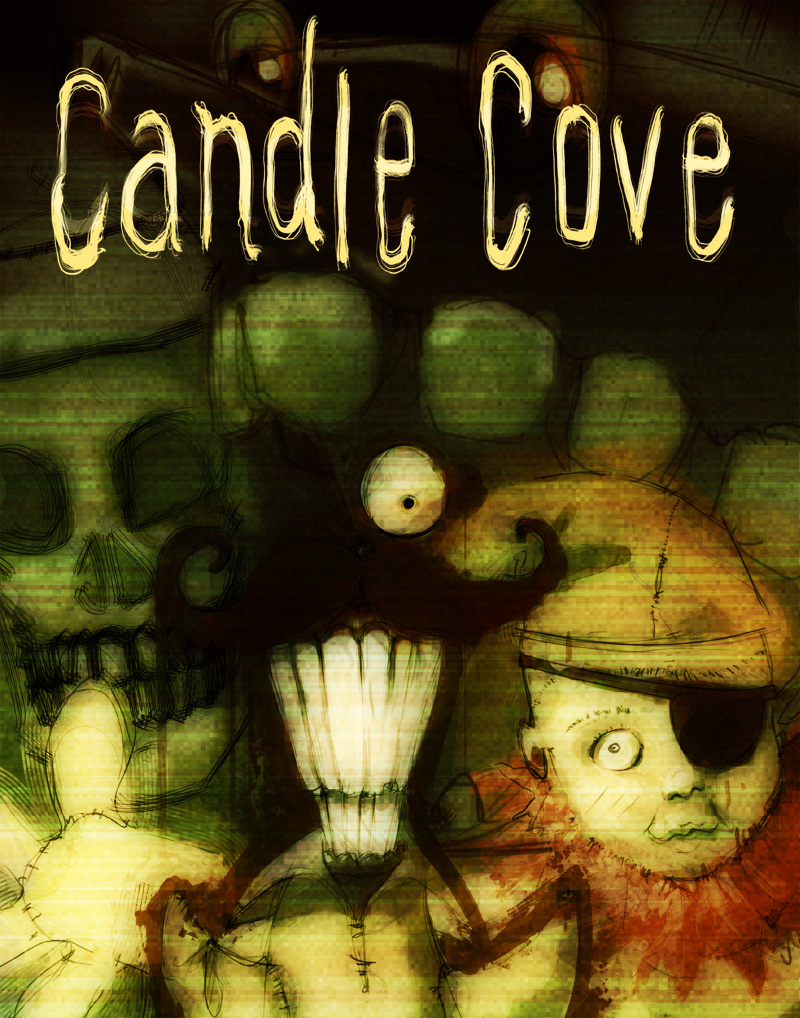
 Channel Zero isn’t your normal SYFY channel anthology series – six-part tales based on a creepypasta, it kicked off with Candle Cove, out on Blu-ray and DVD from Second Sight on October 30 in the UK. Paul Simpson caught up with the show’s creator Nick Antosca to look back at the first year…
What’s the attraction of the creepypasta story form?
It’s not the format that I like. To me, they’re just urban legends in a different format. They’re our generation’s version of urban legends and the fact that there’s this growing pool of nightmares that people have written down, it’s like a peek into the collective unconscious of a generation.
When you start to read the stories, you see themes popping up, you see common fears, and Candle Cove was a great first story to adapt because it got to a lot of those fears – fears of technology, memories of childhood, a lot of stuff that I found really interesting.
I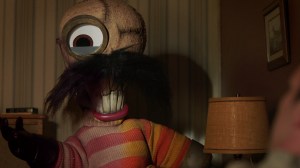 t also tapped into that vein of nostalgia – at the time of original broadcast it was Stranger Things, and now the phenomenal success of It…
That wasn’t something that I consciously considered or anticipated, but we seem to be speaking towards the fears and interests that a lot of people had at that time. I think the interest in Stranger Things and It speaks to a nostalgia for the Eighties, for the childhood era of a lot of people who are making horror stories right now – not even horror stories, genre stories. Candle Cove was just a very good story for our time.
People can now binge watch it on DVD/Blu-ray or stream it in the US: do you think the experience will be very different for them seeing it that way, rather than week in week out, with all the shocks and cliffhangers that were layered in?
Yes – the show airs in episodes, obviously, but I think of each season as a unified whole, as horror novels on TV, and each episode is a chapter. My preferred way for people to watch it is all at once, if they’re so inclined. We tried to set a unified sense of mood and a consistent tone of dread and psychological suspense and I think you get that best if you watch each season as a whole.
 Is there a crescendo of that tightening up or does it start at a high level and maintain it?
Ideally each chapter is effective but there is a crescendo because every season is structured as a complete story, so it has a sense of rising tension, of rising dread, and then a climax. My hope is that if you watch every season straight through you will feel that there is a unified mood and atmosphere. I also think that people will notice little details and connections that they might not otherwise notice across the entire season.
It does feel like a solid journey through the season, rather than stop-start, stop-start…
Candle Cove is about a man looking back into himself and into his history and coming back in order to resolve something from his past. Hopefully that journey comes across when you watch it straight through. Episode 5 is Mike’s lowest moment, when he starts to come apart psychologically, and then in the finale, he’s finally prepared to face his demons.
I’m assuming that sense of a whole will be different from season to season with different directors involved; how much of that comes from them and how much from the producers and writers?
It’s a very collaborative process. Coming out of the writers’ room I know what tone and mood we’re going for. I know what flavour I want for the season but then I hire a director who clearly has a vision and empower them to put their own stamp on it.
Having seen Craig Macneill’s film The Boys, I knew he had a very clear vision, a very strong sense of tone, that he was able to capture dread and psychological suspense. I felt that his visual style was very similar to what I hoped for for Candle Cove so a lot of the particularly clever interesting shots are things that he, or he and Noah Greenbeg, his DoP, came up with in order to capture the tone of the scenes in the scripts.
 Did you give specific instructions in the scripts for the visuals in terms of angles?
Sometimes yes, sometimes no. One thing I learned on Hannibal was to write very visually, very specifically, very technically so there are times in the Channel Zero scripts where we’ll indicate a shot.
So for instance in the finale, there are moments when it says in the script the camera pans off of the Tooth Child and we hear something terrible happening and we pan over to see [spoiler] watching, and then we pan back to see the Tooth Child is gone and Mike is lying on the ground. Or the shot at the end of the epilogue – those shots are specifically in the script.
But there are other moments where we wrote shots into the script, and I told the director at the beginning, “You don’t have to do the exact shot. They’re there to tell you the intention for the scene, how it should feel,” so there are some moments where Craig shot it exactly as it was written because he liked that, and there are other moments where he thought it was cool but he had a better idea that could take it even further and be more surprising. The directors are always empowered to do that.
And of course you’ve got the material to cut round in the edit room, if you need to. How collaborative is it in the edit room? Are directors still involved at that stage?
Very collaborative. The directors are completely involved throughout the editing process. Craig was there almost through the end – he had to go shoot his next movie, which came together during the editing process, but he was there with the editors almost until the very end. Which is very unusual!
The relationship that we have with directors on Channel Zero is not the normal showrunner/director relationship in TV. It’s a collaboration and one of the things that I love most about this job is getting to work with and collaborate with directors that I really admire.
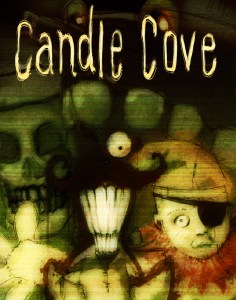 What do you think having them involved that far into the process brings that makes Channel Zero different?
I think it brings a tonal consistency to each season, and also allows the show to be one thing that I dreamed it always would be, which is a showcase for great new voices, specifically in indie films.
I don’t only hire horror directors: if you look at Craig’s first film, it seems like a horror film but it’s more a psychological study. Steven Piet’s film, his only film that he did before [Channel Zero season 2] No-End House, is not a horror film at all, it’s a character study and suspenseful, but he’s clearly a talent. My interest is in finding extraordinary new directors, and letting the show be an early showcase for their work.
To read more about the genesis of Channel Zero, click here for our 2016 interview with Nick Antosca, and here for more behind the scenes on the first season.
Thanks to Debbie Murray and Michelle Marron for their help in organising this interview.
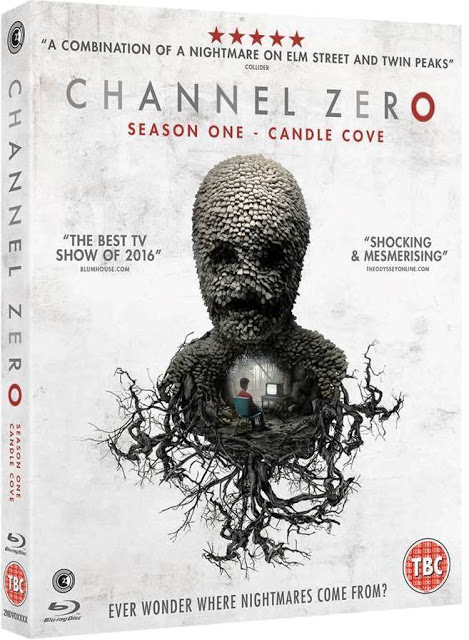
Channel Zero: Candle Cove is out on October 30 from Second Sight on Blu-ray and DVD in the UK.
For a peek at season 2, No-End House, click here.






 Sci-Fi Bulletin: Exploring the Universes of SF, Fantasy, Horror and Spy-fi!