 When a girl (Annalise Basso), already gripped with social anxiety, moves to a big city with her mother (Maura Tierney), she discovers that the tech-dependent society is far more paranoid and intrusive than she first feared.
Possibly the closest that this series has come to being like an episode of Black Mirror, the all-seeing and intrusive future tech here is remarkably prescient. There’s a scene at the beginning where the students are subjected to very heavy-handed security checks before entering school, and it doesn’t take much to see the parallels that can tragically be drawn with the real world. The students are reassured that this all makes for a safer and more enjoyable learning environment, but surely not if every move is being scrutinised.
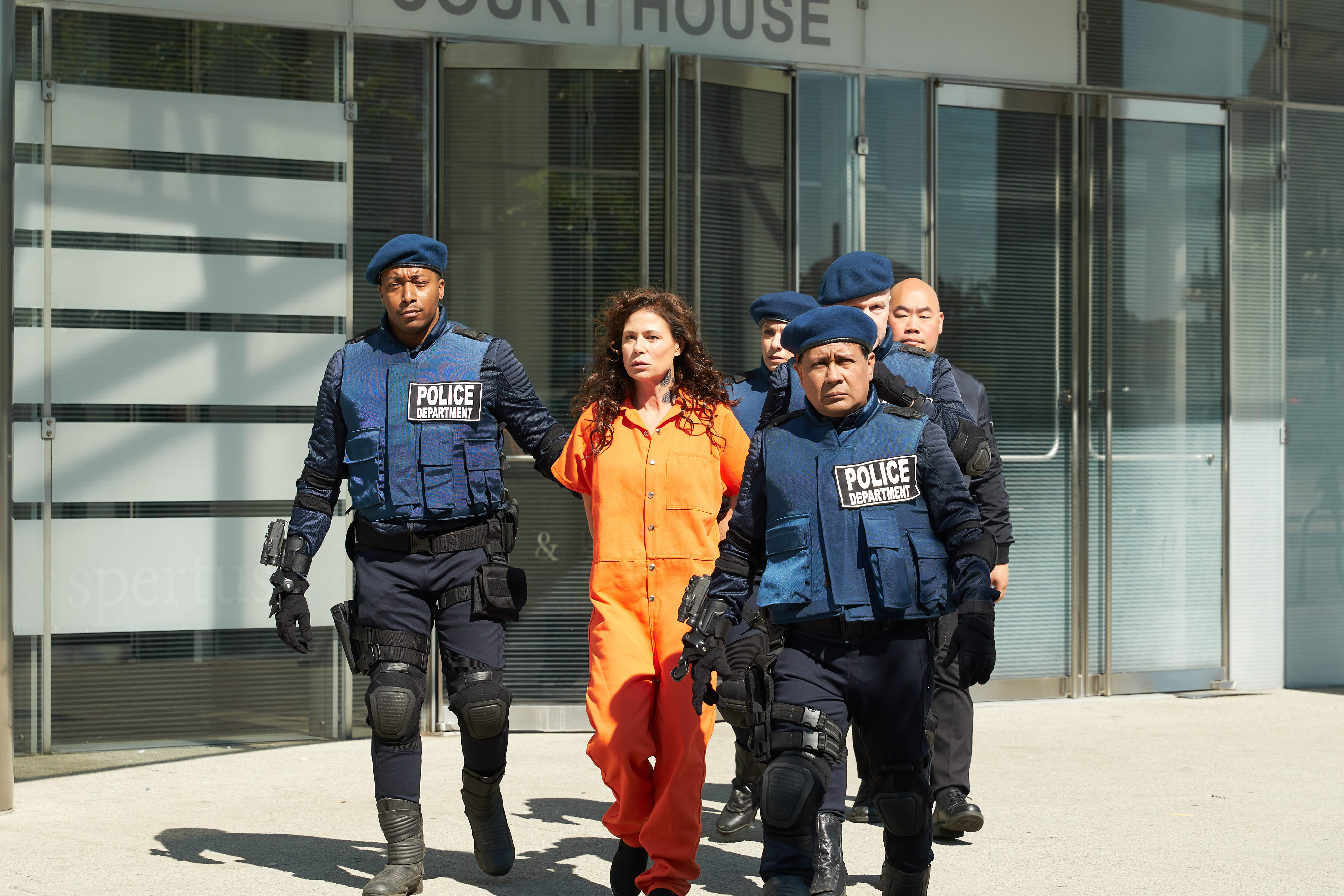
Director Alan Taylor finds a different pace from his Game of Thrones and Thor: The Dark World assignments, essentially following the awkward Foster as she tries to fit in. She desperately wants the latest wearable that will help her fit in, and then develops a crush on tech support guy Ethan. It’s a futuristic John Hughes set-up, but then there’s also the threat of a terrorist cell operating within the school, and the loss of free thought and privacy.
The fake news, xenophobia, terrorist attacks and pre-cog justice are classic Philip K. Dick tropes, and screenwriters Kalen Egan and Travis Sentell do a great job in distilling the essence of the author’s 1953 Star Science Fiction Stories short Foster, You’re Dead. With the author self-medicating at the time, and the contemporary Cold War fears, the paranoia was present then, and is now. The genders have swapped from father and son to mother and daughter, but the fears are unchanged.
The episode takes place in the aftermath of an event where people were forced to take a side – East or West – and there’s a continuing distrust of ‘the other side’. This feels like the set-up to a Young Adult dystopian series (Insurgent and The Hunger Games, step forwards) but there’s enough resolution in these 50 minutes to be satisfactory.
Verdict: The allegory and allusions are very on the nose and sadly far too relevant, but this ticks off a hefty checklist of PKD tropes, and you might not see the ending coming. 7/10
Nick Joy




 Sci-Fi Bulletin: Exploring the Universes of SF, Fantasy, Horror and Spy-fi!