His Dark Materials: Review: Season 3 Overview
The BBC adaptation of the award-winning Phillip Pullman trilogy draws to its conclusion, but does it go out with a whimper or a roar? I’ve historically struggled with His Dark […]



The BBC adaptation of the award-winning Phillip Pullman trilogy draws to its conclusion, but does it go out with a whimper or a roar? I’ve historically struggled with His Dark […]
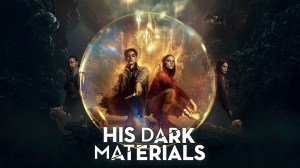 The BBC adaptation of the award-winning Phillip Pullman trilogy draws to its conclusion, but does it go out with a whimper or a roar?
I’ve historically struggled with His Dark Materials as a series. Having never read (or especially had any interest in reading) the books on which the show was based, I came to the thing cold, and that wasn’t something I felt helped me in the first two seasons, which felt pretty much like they had been written in a sort of shorthand way, for people who’d read the books and knew the overall story. So at the end of the third and final season, did anything occur to change my mind? Well, sort of…
I find that in this third season, the show has an odd tension which leaves me somewhat struggling to quantify my reaction to it. On the one hand, an excellent cast give an absolutely superb and committed set of performances that would melt the heart of even the sternest critic. Beautiful cinematography combines with an excellent score and sets and effects which belie the TV budget to create a stunning piece of media, of which any studio should be rightly proud.
On the other? Well, it’s a narrative that I too often found difficult to take seriously, partly because, once again, that shorthand is there, assuming the knowledge of the viewer and leaving gaps that it never bothers to explain to the uninitiated like myself. There’s a pivotal scene towards the end of the penultimate episode in which arguably one of the more important characters in this particular mythos dies, and the only reason I know who they were is that I looked it up on Wikipedia afterwards. In the context of the show, they (literally) drop out of the sky, are revealed, die and no more is said by anyone at all.
Then there’s the more fundamental issues I have with elements of the show. Mary’s story, which is supposed to be so crucially important, feels… superfluous at best. Yes, I get that the story has her as ‘The Serpent’ to Lyra’s ‘Eve’ (because the show at least briefly explains this) but her student gap year-style wanderings through the multiverse feel unfocused and largely irrelevant. Even her final destination, in a paradise populated by talking Pachyderms who roller skate along on giant round fruits (yes, really) feels more like an incidental aside than a fundamental part of the story. For someone who is supposedly such a key part of proceedings, it really never feels like Mary has a point until we get to her ’McGuffin Moment’ where she delivers a speech about how she lost her faith (itself feeling somewhat contrived) and thus inspires our leads to do the thing which prophecy demands.
That prophecy is my other issue with the narrative. For what is such a fiercely anti-religious work, with so much to say about the wrongs not only of organised religion but of the figures who exist within it, the narrative is happy to place real weight and importance on nebulous concepts like prophecy (and biblical prophecy at that), magic and spiritual power. It feels… oddly inconsistent, as if the author is saying that all religion and faith is wrong except for the bits they like.
All that said, I had a good time overall with this third and final season. The character work was exquisite, even against such a narratively jarring backdrop. The chemistry which developed and grew between the young leads was believable and well-paced, and Dafne Keen surely deserves many plaudits for her portrayal of the pain and suffering which form Lyra’s tribulations, as well as her maintenance of a wry sense of humour in even the bleakest moments. There’s a danger, in a narrative which has her as the literal child of prophecy, that Lyra could be an extraordinarily dull character, and it’s testament to Keen’s talent as an actor as well as the script that she is not.
And she’s far from the only one. Amir Wilson knocks it out of the park with his quiet, understated performance as Will, at once the master of the most powerful weapon in creation and also an awkward teenager unable to fully express himself in the simplest of circumstances. James McAvoy has a wonderful old time as Asriel, the bastard’s bastard, who doesn’t care who he kills or what he loses in pursuit of what he sees as a higher goal. McAvoy’s ability to switch from faux-sincerity to cold-hearted objectivity is rivalled only by the delicate way in which he handles Asriel’s final twist – beaten, (apparently) betrayed and with nothing left to live for, Asriel does one good thing in his life which may well ironically serve the very goal every one of his twisted, murderous schemes to date were bent towards. Again I am left to wonder at the irony of a story railing against morality tales being one itself.
But best of all is Ruth Wilson, absolutely magnetic as Mrs Coulter. There’s never been any doubt Coulter was ruthless as well as complex but this season really allows Wilson to peel that onion, as we see the inner workings of Marisa Coulter. After all that she’s done in the previous seasons, it might seem redemption is impossible for the character, and whereas she never fully becomes good, we do at least get to understand and sympathise as to why she was so very bad. That she manages to showcase that vast intelligence and capability for ruthlessness with a series of seamless about-faces, double-crosses and nefarious schemes, all carried off with the confidence of a woman who knows, ultimately, that she’ll get away with her life if not her soul, is the final icing on the cake.
It’s a season that goes places: different worlds, other planes of existence and various emotional boundaries. It’s rarely afraid to examine the flaws of its heroes as well as the redeeming qualities of (some of) its villains and it absolutely commits to telling a story which feels defiantly bigger than any BBC show for kids and adults alike has any right to be.
Verdict: Ultimately, it does feel like two very different shows, operating somewhat dissonantly on top of one another. One a human tale of loss, love and the human condition. The other a somewhat overblown, often contradictory and frequently nonsensical manifesto against the very thing it ultimately becomes. It’s testament to the talents of all involved that it’s able to transcend those flaws enough that I cared about what happened to its main characters in the end, even if I couldn’t fully believe in the world they inhabited or the backdrop against which their story took place. 7/10
Greg D. Smith
 Doctor Who News Star Trek News
 Sci-Fi Bulletin: Exploring the Universes of SF, Fantasy, Horror and Spy-fi!