Mission: Impossible: Feature: The IMF Question
Alasdair Stuart ponders another of the intriguing questions thrown up by the events of Mission: Impossible: The Final Reckoning… There’s a moment in the opening seconds of The Final Reckoning […]



Alasdair Stuart ponders another of the intriguing questions thrown up by the events of Mission: Impossible: The Final Reckoning… There’s a moment in the opening seconds of The Final Reckoning […]
 Alasdair Stuart ponders another of the intriguing questions thrown up by the events of Mission: Impossible: The Final Reckoning…
There’s a moment in the opening seconds of The Final Reckoning where President Erika Sloane contacts Ethan Hunt via a VHS tape. It’s a smart beat, emphasizing how low tech the government has been forced to go as the Entity takes over every computer network on Earth. But it also highlights one of the movie’s biggest problems: Ethan’s near messianic status as the only person able to do the job. Nested inside that is another, more interesting question:
Where the hell is the rest of the Impossible Mission Force?
To answer that we need to look at the three acts of the franchise, and three factors: who’s in charge, who’s in the field and what resources do they have.
Mission: Impossible to M:I:III
 The IMF is exactly as it’s been presented in every iteration of the TV show. A full-sized government agency full of specialists with every possible skillset that deploys variable teams on a moment’s notice to solve problems before they start.
Mission: Impossible shows us Jim’s team with Ethan as their pointman. It also shows us a bunch of support staff, especially in the opening sequence and confirms that the IMF is an agency, in this instance run by Henry Czerny’s Eugene Kittridge.
Mission: Impossible 2 builds on that with Sean Ambrose, played by Dougray Scott. Ambrose is a blunt instrument where Ethan is an acrobatic scalpel, an IMF agent whose fondness for violence leads him off the reservation into the exact sort of behaviour Ethan spends the entire franchise being accused of.
This is interesting for two reasons. Firstly, it sets the first hints of the franchise’s fondness for rogue agents and places the IMF in the interesting ethical position of being a solution for its own problems and a problem for its own solutions. But more interesting, when viewed with the original movie, it becomes clear this happens a lot. Luther and Franz are both disavowed in the first movie, a polite name for ‘gone rogue’. The entire franchise is haunted, especially the third act, by the terror the government feels at what happens when IMF agents go into business for themselves. Gifted, brilliant, living in the shadows and feared by those they protect. Sometimes with good reason.
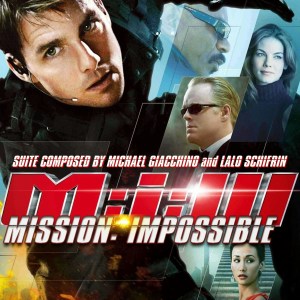
M:I:III shows us a little more about how large the organisation is. We see a GI Joe-esque headquarters complete with a cover identity. We learn that there are so many IMF agents there’s an organisational legend for them to hide behind. We also learn that Ethan is that rare agent who has survived long enough to want to retire from active service. The fact he starts the movie as a trainer also implies that the agency is both recruiting and pretty large. Ethan isn’t the only trainer, Lindsey isn’t his only pupil.
The arrival of Lawrence Fishburne as Director Brasel, and Billy Crudup as nepo baby Musgrave also gives us some interesting hints at how the IMF is viewed. Brasel is brilliant, furious and under huge pressure. Musgrave is hired less for his skills and more for his family ties and everyone pays the price for that. The IMF is now large enough to have internal political strife.
So we have three directors confirming the IMF’s status as their own agency. We’ve got numerous field agents and we’ve got unlimited resources. That won’t last.
Ghost Protocol, Rogue Nation and Fallout
 There’s a strong case for these being the best movies in the franchise. They’re also a functional trilogy about the fall and rise of the IMF.
Ghost Protocol is the IMF’s darkest hour. The agency is exposed and framed for a terrorist atrocity. By this stage Ethan is in long term deep cover, both in Russian prison and hiding inside the cover story of having murdered his wife’s killers. As we’ve discussed before, the series has a colossal problem with using female characters as collateral but here at least it doesn’t go where you first think it might.
What’s interesting about Ghost Protocol is how much it drills down on the IMF as a concept. We get a hint of them having resources everywhere and the fact Benji and Jane are part of an active team confirms that Ethan’s team isn’t the only one the organisation has. It also shows us life after the IMF, with Jeremy Renner’s William Brandt revealed to be a former field agent taken off the line due to an implied nervous breakdown over the loss of his protection asset, Ethan’s wife, Julia. Like I say, problems with women.
But by taking the organisation out at the knees Ghost Protocol reminds us, and the characters, who these people are. No piece of technology works, no plan is perfect and yet with seconds to spare the team still do the job and save the world. The message is twofold. The IMF really can do the impossible, but the IMF needs to rebuild from the ground up. Ethan going back under cover in the final scene, and the implication Luther has been brought back from retirement to help dispose of the loose nuke in San Francisco Bay both hint at that.
The idea that the organisation has been gutted is central to Rogue Nation. Brandt’s plot with Alec Baldwin’s Secretary Hunley, focuses on the fallout from Ghost Protocol as the US intelligence services discover the wire taps have been coming from inside the house and disband the IMF. Interestingly, the only three agents we see this impact are Luther, Benji and Brandt. Luther, it’s implied, retires while Benji and Brandt go to work for the CIA. It’s entirely possible that numerous other agents have taken similar steps and we just don’t see them. It’s also entirely possible that Benji, Luther, Ethan and Brandt are the only field agents left standing and everyone else who was on mission when the organisation shut down was left to fend for themselves. It’s possible that at this point the IMF operates like the terrorist cells it fights, largely isolated from each other until called upon. You could certainly read Hermione Corfield’s cameo as an IMF agent at a London safehouse as either someone happily working in isolation or a CIA agent pleasantly surprised when a counter-intelligence legend walks into her station.
Rogue Nation‘s entire premise is that the nightmare of the previous movies happens constantly in every country. Solomon Lane’s network is a dark mirror of the IMF itself, and the comforting institutions of M:I:III are completely shot away. The arrival of Ilsa Faust proves this, an agent who hasn’t so much come in from the cold as made a home there. Rogue Nation also finishes with a lovely, ambiguous piece of institutional Judo. Hunley either uses the IMF operation he witnessed to springboard into a new career or Brandt manipulates him into reinstating the organisation and getting a fiefdom of his own within the CIA. Combined with the curtain call moment where Ethan introduces Benji, Brandt, Luther, Ilsa and himself as the Impossible Mission Force, it seems likely that at this point they really are all there is.
That changes in Fallout in some fun ways. The most obvious in the faked hospital room sequence, is the return of the support staff agents we last glimpsed way back in the first movie. I love a good secret agent roadie and the fact Ethan has these resources to pull together this fast suggests the IMF is back on its feet.
But the other major element of Fallout suggests it isn’t. The CIA, in the form of August Walker and Erika Sloane, both express enormous scepticism about the IMF. For Sloane, it’s their refusal to let individual lives be sacrificed for the greater good. That’s something that returns to haunt her in The Final Reckoning. For Walker, it’s an ideological conflict and a professional offence. Ideological because of his true status as terrorist John Lark, professional terrorist. Professional because Walker is the spiritual son of Sean Ambrose, blunt force trauma in a good suit.
As this act closes then, we’ve had two directors, both of whom have been killed in action. The agency is public and they’ve got, technically, the unlimited resources of the CIA but more oversight than ever before. That seems to suggest that the number of field agents has drastically decreased, something the final two movies explore in detail.
Dead Reckoning and The Final Reckoning.
 The final duology to date could be read as an exploration of three existential crises happening at once: the loss of a clear ideological enemy in espionage and pulp fiction, the rise of AI, and Tom Cruise subsuming what looks a lot like a second mid-life crisis into a spirited defence of the movie industry. These two movies are a mess, frequently brilliant, frequently lousy. But when looked at, it becomes clear that they’re also the logical endpoint of the IMF’s journey. Ethan and his team are still active, still in the field and now distrusted not because they’ve gone rogue but because the structures that created them have.
Kittridge’s return is vital to this concept. The original IMF director, and the one man to ever take clear pleasure in busting Ethan’s chops, Kittridge runs the CIA, but still has intimate working knowledge of the IMF. That all but confirms the idea the IMF has remained as a CIA ‘boutique’ operation following the events of the previous trilogy. It also speaks to the idea of their support systems twisting under them. They’re still principled outsiders dedicated to defending the world. But now the world they’re defending is fighting over who controls the technology that will rule it.
‘The next war isn’t going to be a cold war, it’ll be a shooting war, a ballistic war ; over a rapidly-dwindling eco-system. The last of the world’s energy, drinkable water, breathable air. Whoever controls the Entity controls the truth. The concepts of right and wrong can be clearly defined for centuries to come.’
The final duology does so much wrong, but this speech from Kittridge, and the fact it’s him delivering it, is perfect. The IMF are victims of their own success. The ideological purity of the last few spies left is now an active threat to the active threat their old bosses face. There’s a read in there that’s worryingly in line with Ayn Rand. There’s another which marks this thirty year old blockbuster franchise as ending its run in pure cyberpunk.
That cyberpunk ethos extends into The Final Reckoning and takes us back to where we started. With the former head of the CIA, now the President of the US, contacting the last spy she has by secret videotape. Ethan’s people have no resources except what they can scavenge, an agency actively opposed to their mission and no support. By this point, they really are the last agents left standing and the recruitment of Paris, Degas and the Donloes speaks to that. The IMF has finally run out of tricks, besides doing the last thing the Entity expects. Coming in from the cold. Telling the truth. Putting every single card on the table one last time. That’s why the very odd closing scene plays out like it does. With the Entity imprisoned, the IMF is, once again, five people in London at night. They have no idea what’s next. They have no idea if they’re disavowed. All they know is all that matters. Misson accomplished.
In a recent interview, Angela Bassett mouthed ‘Not the last one’. Chris McQuarrie and Tom Cruise have both stated there are ideas in play for further movies. When they arrive in a few years, it’ll be interesting to see where the IMF is as an organisation and what role Ethan, Benji and the rest play in it.
Mission: Impossible: The Final Reckoning is in cinemas now
The first seven movies are streaming and available on disc.
The original TV show is available on DVD.
 Doctor Who News Star Trek News
 Sci-Fi Bulletin: Exploring the Universes of SF, Fantasy, Horror and Spy-fi!