Interview: David Gilman
David Gilman enjoyed many careers – including firefighter, paratrooper and photographer – before turning to writing full time in 1986. He has written many radio and television scripts including several […]



David Gilman enjoyed many careers – including firefighter, paratrooper and photographer – before turning to writing full time in 1986. He has written many radio and television scripts including several […]
 David Gilman enjoyed many careers – including firefighter, paratrooper and photographer – before turning to writing full time in 1986. He has written many radio and television scripts including several years of A Touch of Frost, and his first contemporary spy thriller, The Englishman, was published this month by Head of Zeus. He replied to some email questions from Paul Simpson…
What was the inspiration for The Englishman – was there a particular striking image (of which there are plenty in the story) or a scene that drove you to write it?
Who knows where inspiration comes from? Various elements combine. I had seen an amazing documentary made by an Italian film crew who had been given access to a Russian penal colony. It held the most dangerous of men. No-one had any chance of escape. So I thought, what if there was a man who could escape? Who would he be and why would he be there? First what type of man. And so the story was probably triggered by the documentary and then unconsciously supported by the aggressive acts of the Russian state on our streets.
You credit the research assistance you were given – did anything arise from that which fundamentally altered the trajectory of the book?
My books always require additional research as I go along. A bright spark of an idea ‘oh, wouldn’t it be great if…’ often becomes hours of finding out the facts I need.
 If you can say, what was the original link going to be for the newspaper and Eddie?
I thought newspaper sales could be traced via the code on the paper. What retailer sold what batch of newspapers so I could at least pin down an area. I discovered this was impossible. With help, I found a way around the problem.
There’s a nice mirroring of the original attack capturing Carter, Raglan’s mission in the caves and his later fight in the prison boiler room in terms of use of narrow areas – was that conscious when you were plotting?
I don’t plot. Once the character has already endured a traumatic experience, it seems natural to me that their involvement in that incident would be/can be reflected again. It adds to the character’s hinterland, those images, experiences and memories that we all have at some stage of our lives and that makes us who we are and how we might behave.
The fights are described in a lot more detail than often is the case in thrillers, and remind me at times of Adam Hall’s work (particularly the early Quiller missions). How did you work out the choreography for these (some people act them out, others use action figures or can envision it in detail)?
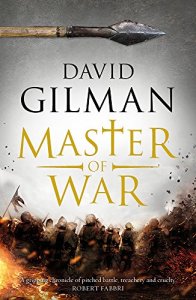
I am not conscious of choreographing fight scenes, though unconsciously I am both in the thick of it and standing back as an observer. Even in my ‘Master of War’ series where intense large-scale battles are fought, the action is always experienced through the immediacy of those taking part. So when two men face each other in what might be a face to the death it’s all instinctive.
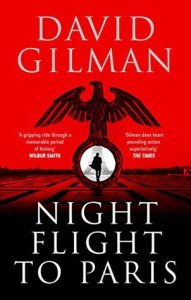 You’ve described Raglan as a “modern-day knight errant” – a description that was used of Leslie Charteris’ The Saint. Who have been the influences on you as a writer?
These influences are probably deep-seated. No doubt from reading adventure novels as a child and then quickly grabbing whatever adult books were available on the shelf at home. There were very few. Mostly Nevil Shute, Leon Uris, the thriller writers of the day. If I am writing Historical Fiction I’ll read a different genre, when writing contemporary thrillers I will read someone like Carlos Ruiz Zafon – a wonderful, magical author. By counterpointing my own efforts this frees up my own imagination. Back in my youth I think of some of the more ‘muscular’ writers like Norman Mailer touched a nerve. My question is always who is the hero? If in my case most protagonists are male, there are certain criteria. Does he have a heart? Does he have a conscious? Does he have a moral compass? And does he put himself in danger on behalf of others who need him? And when the time comes can he do what most of us cannot.
Do you plot out the whole story before you start writing, or do you work on the first draft allowing things to move as they need to? And the corollary of that – how much of The Englishman changed between first outline/plot and the final book?
I have tried to plot out stories but for me, it is a cold, analytical process and I get bored with it quickly. So I prefer to start with an image or an event and see where the story goes. Something happens and we go from there. Cause and effect. In the beginning, I might have an idea that needs developing so I’ll scribble down a few notes. It never works out. I’m no sooner up and running after an event occurs than the story takes on a life of its own – but to contradict that I am steering the boat. I’m in charge.
 What was the biggest challenge of writing The Englishman, compared with your other novels?
To be honest, there was no challenge. Pace and character development are common to all my books. The wonderful thing about writing historical fiction is the absence of modern technology. Not having a mobile phone call between the Kings of England and France before the significant Battle of Poitiers in 14th century France was helpful in my Master of War series. Contemporary thrillers are slicker, information retrieval for characters and story development can be almost instantaneous.
And, hoping the answer is yes, will we see Raglan again?
I am currently writing the second book.
The Englishman is available now from Head of Zeus; click here to order from Amazon.co.uk
Read our review of The Englishman here
Thanks to Amber Choudhary for her help in arranging this interview
 Doctor Who News Star Trek News
 Sci-Fi Bulletin: Exploring the Universes of SF, Fantasy, Horror and Spy-fi!