The Exorcist: Interview: Jenny Seagrove and Adam Garcia
The power of Christ compels us to share our exclusive chat with stars Jenny Seagrove and Adam Garcia about the stage version of The Exorcist currently playing in London’s Phoenix […]



The power of Christ compels us to share our exclusive chat with stars Jenny Seagrove and Adam Garcia about the stage version of The Exorcist currently playing in London’s Phoenix […]
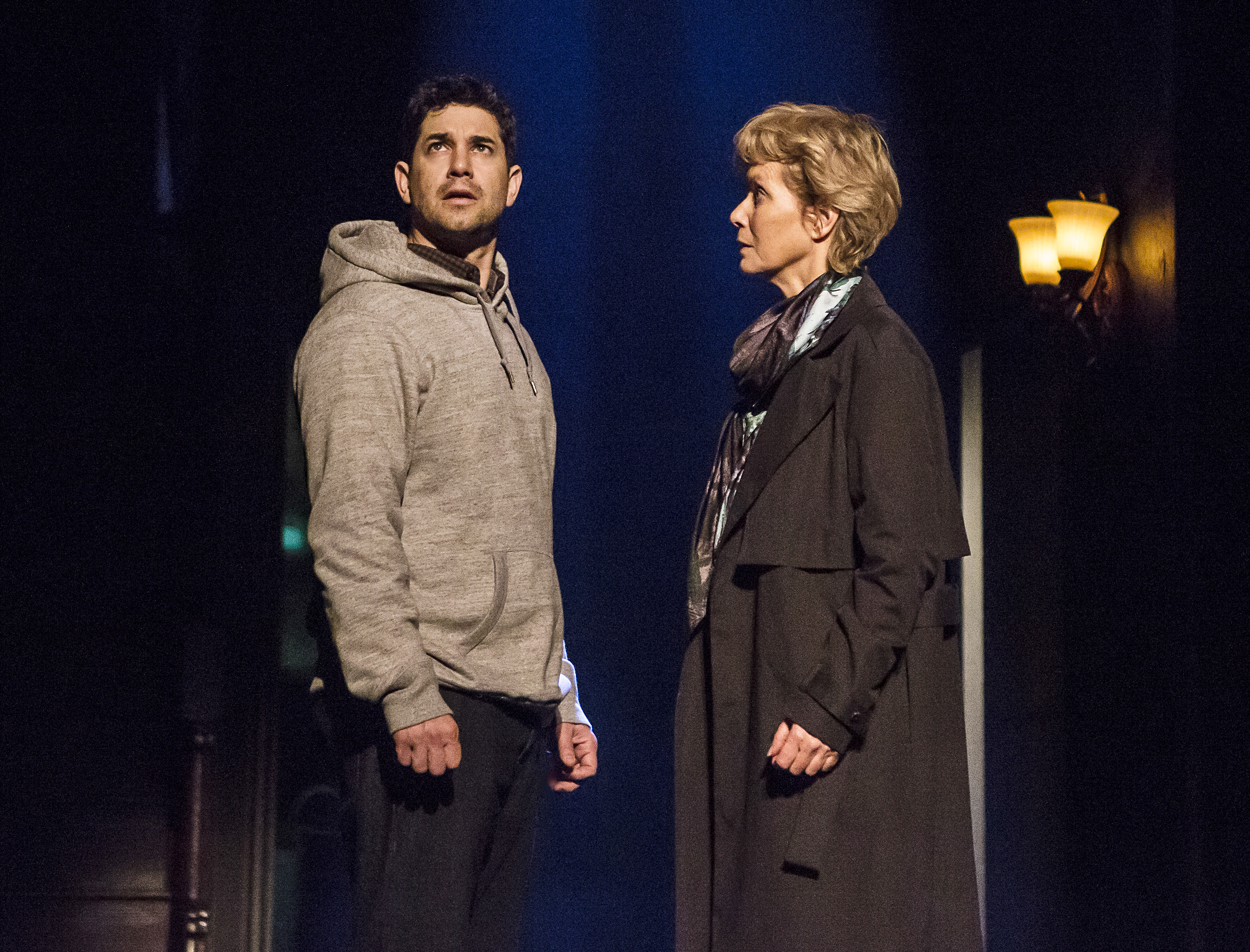 The power of Christ compels us to share our exclusive chat with stars Jenny Seagrove and Adam Garcia about the stage version of The Exorcist currently playing in London’s Phoenix Theatre. And before you ask, no it’s not the same as the film!
Sitting alone in the Dress Circle of the Phoenix Theatre shouldn’t be a scary experience. The house lights are on, the sound crew are experimenting on a makeshift desk with a bunch of wires trailing over the Stalls seats, and yet a shudder has just travelled the length of my spine. Why? Because Ian McKellen’s silky Pazuzu the Devil voice has just been pumped round multiple speakers in the auditorium. ‘Would you like to play another game, Regan?’ he invites
William Peter Blatty’s original novel has been adapted for the stage by John Pielmeier. It played for five weeks in Los Angeles with Brooke Shields and Richard Chamberlain before being tweaked and remounted in the UK at Birmingham Repertory Theatre for three weeks last year, and now has a home in London’s West End for five months although the 1930s Phoenix Theatre on London’s famous Charing Cross Road is more used to hosting Blood Brothers than bloody crucifixes. I’m joined by stars Jenny Seagrove (she plays Regan’s mother Chris) and Adam Garcia (Father Damien Karras). It’s a week into the show’s run, they’re still tweaking things every night and press night is on Halloween. And they’re loving it!
Jenny and Adam, you’re one week in to the run; how’s it all going?
J enny Seagrove: Fantastic. We’re growing and growing. It’s a highly technical role and while the words remain the same each time, we’re tightening and tightening, squeezing the tension a little bit higher.
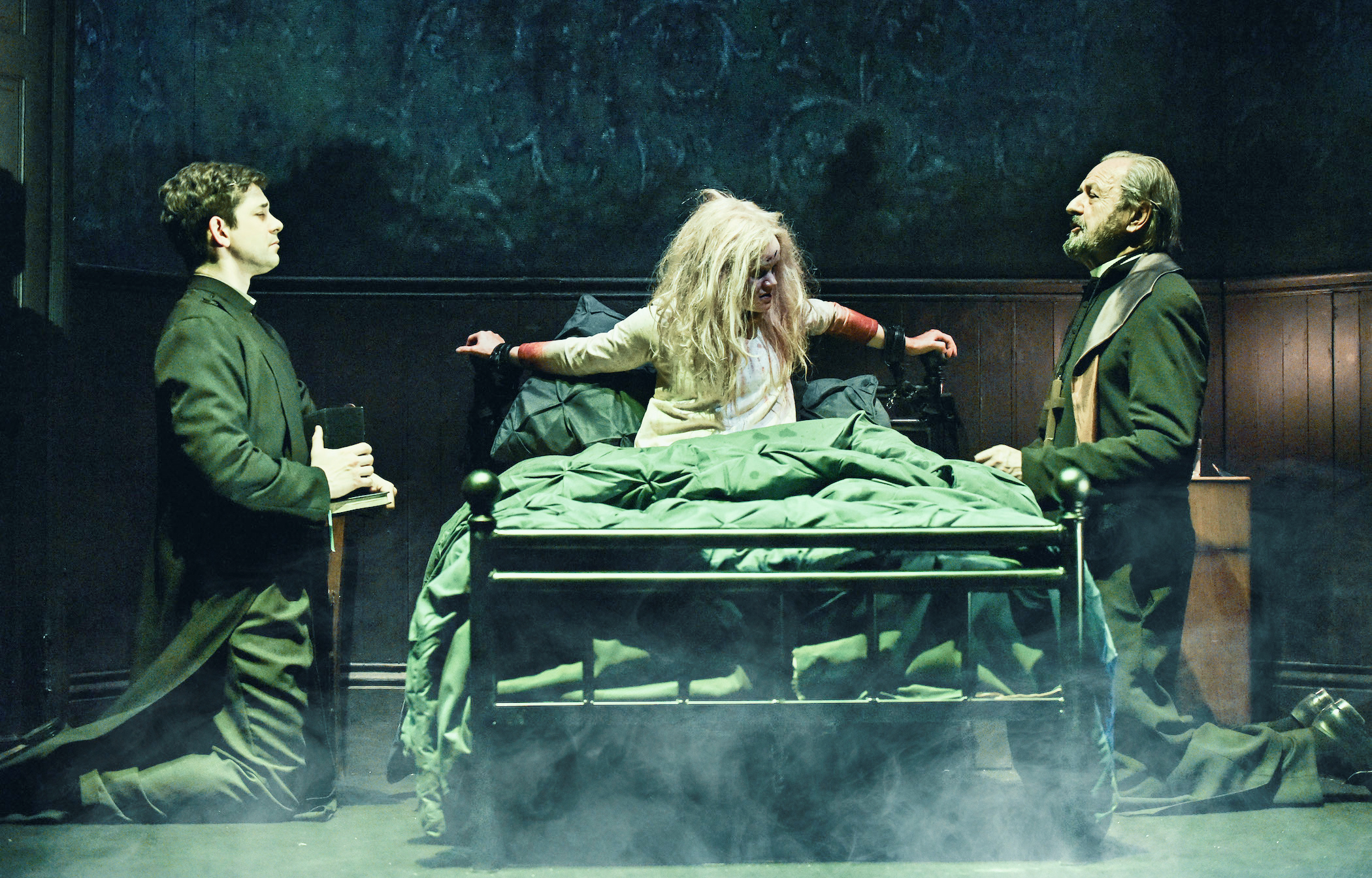
Adam Garcia: There are illusions, lots of sound and lighting effects, video projection, and – like any magic show where you have to trick people – it’s about that perfect timing.
JS: Sean [Mathias, director] is brilliant at that. Looking at the other [fantasy and horror] shows in town, I think we’re in a renaissance because the level of technical invention has reached a place where people are now going ‘Oh, we could do that’. I don’t think you could have done this show as effectively five years ago; I don’t think it would have worked. Human beings are very inventive, so they’d have found a way of doing it, but technical invention is now so sophisticated… look at what they’re doing with Harry Potter! I feel like we’re the same… stuff that will make people go ‘wow!’ The video stuff is cutting edge, and some of the sound effects really mess with people’s brains.
AG: When they’re all combined, people’s sensory perception is challenged.
JS: Someone walks across the stage and then suddenly appears back on the other side and you go ‘Whoa, how did that happen?’ I love it.
Is the terror helped by the absence of an interval, meaning that the tension is sustained?
AG: I think so. There’s a natural gap in the narrative around the halfway point which might allow an interval, but it’s quite satisfying for us to be able to play it the whole way through. I don’t get to decompress.
JS: I don’t get to decompress either. Bang, you’re on the train and then you’re coming out the end of a very long tunnel. But, if they put an interval in then we’d make the most of it, and for the audience it’s the chance for a drink and to get even more scared, coming back in and dreading what’s next.
What’s your earliest recollection of The Exorcist and what’s your relationship with it? For me and my peers, watching the movie was a rite of passage.
J S: I was too young when it came out and I’ve never seen the film. I’ve worked with the director William Friedkin; I did a film called The Guardian with him [Jenny played a mysterious babysitter] and I watched excerpts just for fun, but I’ve never seen it because I don’t like the horror genre… for me to watch. I like frightening people and being part of it but I don’t actually want to watch it myself. When I knew I was doing this I deliberately didn’t watch it because I don’t want to copy someone else’s performance; I want to come it completely fresh.
Ellen Burstyn was Oscar-nominated for the role.
JS: Yeah. No pressure! I haven’t let any of that come in to my head. She’s brilliant, she was Oscar-nominated, and that’s fine – that was her. This is a very different script and we’re on stage, so… bring it on!
A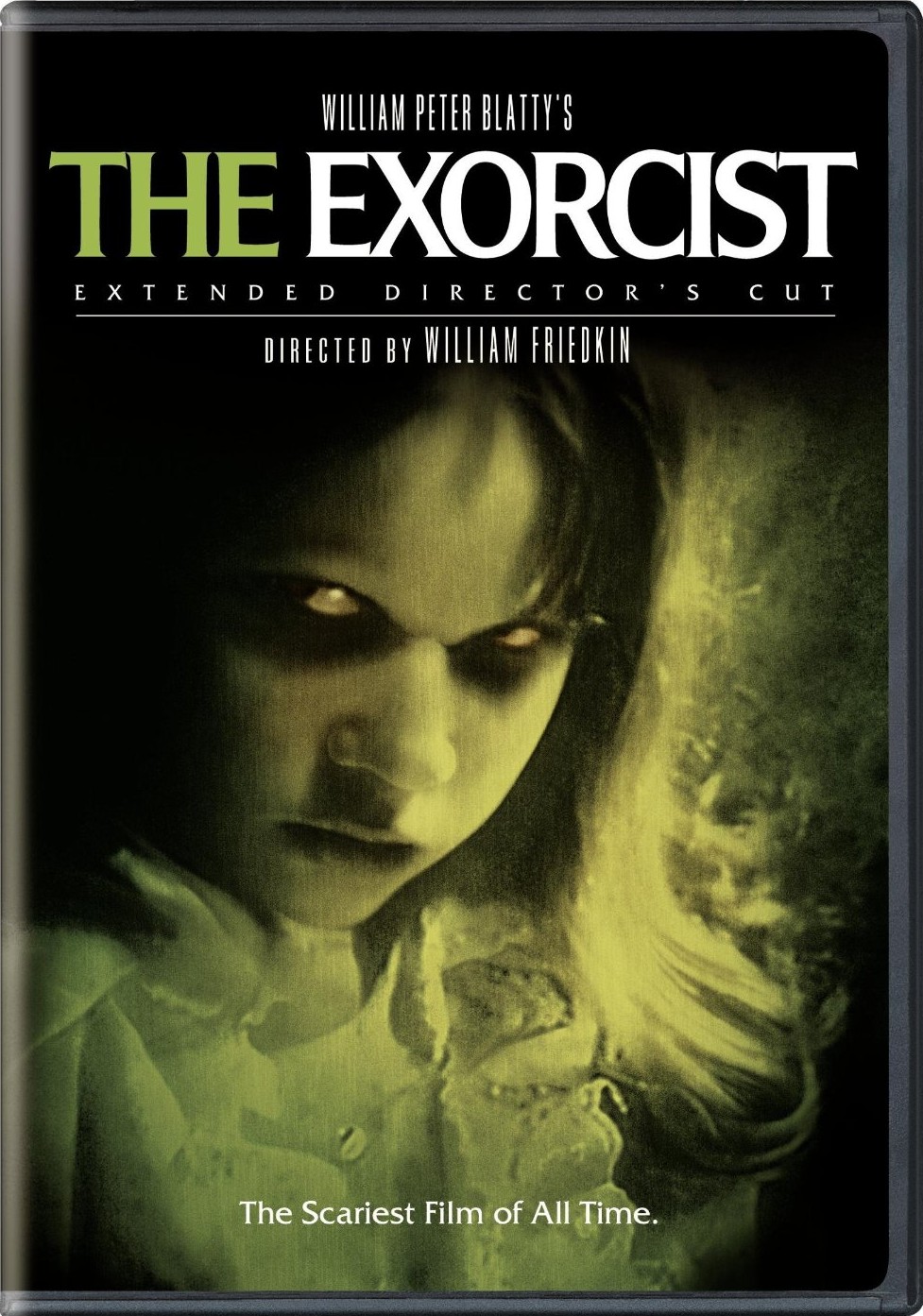 G: I watched it when I was 13 in that ‘rites if passage I’m going to see what the fuss is all about’ way, and I don’t remember much detail from it. I remember the pea soup and the head turning and her crimped over backwards walking on the ceiling, but other than that my main recollection is that it was shot like a noir. I don’t remember much about it, which I’m grateful for. It’s like when I said I was doing Saturday Night Fever [the stage musical] and people asked me if I was going back to watch the film and I said ‘no!’
JS: You can’t copy someone. Inevitably you get images in your head of what someone else has done and then you can’t get rid of them. You have to start virginal.
AG: I remember a shot of his face looking very concerned, but that’s about it.
Jenny, did the part of Chris appeal to you because it’s a good meaty role, a million miles away from some of your other stage work.
JS:– I’ve done plenty of really meaty roles – I’ve not just done [Alan] Ayckbourn and [Noel] Coward! There’s other stuff I really got my teeth into, as opposed to this, which I got my fangs into! (Laughs) What really appealed is that this is a great role.
Of course, I serve the play, but what really appealed to me was working with Sean Mathias, John Pielmeier, the creative team and the other actors. We’ve got some really talented people and for me choosing work is all about the package, it’s not just the role. You can be offered a great role with a director you know is quite average.
Sean Mathias is one of the greats – he’s extraordinary, a genius, and I don’t use that word lightly. He’s not only brilliant with the text, but also the technical effects so that they be claustrophobic and disturbing. He understands what’s needed.
 Adam, you mentioned that you played in Saturday Night Fever, as well as Grease, and now you’ve played in The Exorcist. Which popular 70s movie is next?
AG: I know. It just seemed like the right thing to do. When I first got asked to audition I admit that I thought ‘They’re making a stage play of The Exorcist? Really?’ I asked if they could send me the script. Then when I read it, I just wanted to know what happened next. It was literally a page turner. It’s so beautifully constructed, so elegant, but with so much in it. I realised that if the actors and creative team could make this work it would very special.
When I met Sean I could see his approach was very intellectual and passionate. He has such a Catholic grounding and understanding. I felt like I was going to be in very safe hands. Like Jenny said, we do all serve the play but because this is not only a horror but a drama – it’s about darkness and evil and hope and how to find goodness. It’s a really important ride that we all travel on to literally fight our way through this play.
Strip away the horror elements and the story is about faith.
JS: Yes, mental illness as well. Is it all in their minds? It’s a really interesting discussion going on underneath all the horror effects. That’s what makes it so grounded and important.
AG: Around this theatre in particular there are many drug addicts. You look at them and they’re tortured – whether that’s self-imposed, mental illness, homelessness, loneliness, violence. However that’s occurred, you look at them and they are wrecks. We can label that – it’s mental health, it’s addiction, social deprivation; we can do that scientifically. And the play does that too – how do you label something that happens like this, and is the label right?
JS: It’s questioning all the time, which is wonderful. It leaves you questioning and wondering ‘Is it possible? Is it in their minds? What is it? Is it evil?’ All of those discussions are fascinating.
 There are very big questions about evil.
AG: One of the first things I found interesting about the book is on the first page where William Peter Blatty writes an excerpt from a police interview with two mobsters who have tortured someone to death. The casual disdain about how they treated this person before killing him is chilling. It then says a few more examples before ‘Dachau, Auschwitz’. Sympathy for the Devil by the Stones is saying that Satan was there. John F Kennedy’s murder? I was there. Maybe it was Satan, or maybe it was the incredible evil of human nature.
JS: I believe that there is a universal energy of good, and if you believe that, you also have to understand that as an equal balance – because life is all about balance – there is also an energy of evil. So, evil must exist if there is good. And then you get the circumstances you’ve been talking about – instances of pure evil.
At the end of the performance, with all this intensity built up, how do you come back down to Earth again?
JS: It depends. Every show is different. Some shows really affect me and others seem more technical somehow. And sometimes because the audience is cheering at the end it’s easier to come out of it. If they were really really quiet, shocked, I think it would be hard to come out of it. But they stand and cheer.
AG: They got what they came for, which is to be deeply disturbed… hopefully!
Because you’re so involved in the technical execution of the effects, does that keep you one step away from full immersion?
 AG: I think so. It’s both a blessing and a curse, because to be completely immersed in the dramatic nature of the narrative would be fantastic. You don’t have to be technically adept, thinking about where to stand, how the light is falling and other technical aspects. But at the same time it removes you because you’re supplying and playing a trick on the audience.
JS: You and I have both done movies where you have to work with cameras and as actors you have to access the emotions, immerse yourself in the moment but also be aware where the camera is. And if you don’t hit your mark, the camera will know. You as an actor develop the facility of immersing yourself while also having that little third eye that’s checking out the light. It’s a challenge. You can’t just walk through this play. I never walk through a performance anyway, I give one hundred percent. You have to absolutely 2,000 percent commit yourself with this play.
AG: I barely try to acknowledge people back stage. I slink around as though I’m invisible and that way no-one gets inside my space. Because if they start chatting to you about what you had for dinner…
JS: And that’s my fear of the interval. It’s 15 or 20 minutes to come out of it, and then you have get back in again.
AG: I’ve found places in the theatre where I can hide away.
For someone who was undecided about coming along, or thought they knew the story from watching the film, what would you say to them?
JS: Come along, it’s human beings on stage and to be in the presence of real people and you suspend the reality to be with them in the space seeing them what they’re going through I think is ten times more powerful than being in the cinema. She does something inappropriate with a crucifix – you see blood, it drips, and you go ‘argh’!
AG: It is that visceral nature of live theatre. Really bad things happen right in front of you. Spit, vomit, snot… all sorts!
 It fully earns its ‘18’ rating then?
JS: I think so. It would be hard for younger children to see this.
AG: My godson wants to come, and he’s turning 18, but I’m not sure he’ll like it. This is a deeply seething, insidious piece.
JS: What’s worrying is that the incidents of young people self-harming is rising, and there’s a scene in here of self-harming and that might be worrying for people to come along, see that and think ‘that’s me!’ It touches a few chords.
AG:– The topic of the play is something that people are very familiar with. Not just good and evil, or Satan and God, but the idea of why teenagers feel alone, why single parents feel like they’re out of control, why some person with an addiction problem is becoming unhinged, why someone suffering great grief feels like he cannot go on. These are all familiar themes. They’re aren’t supernatural, it’s just life.

 In my own personal experience I find it scarier now than as a teenager.
JS: I think it does get harder as you get older because you have much more life experience. You can empathise and relate to things with your own experience and that feeds back with what you’re watching.
This plays runs until March. What have you got lined up next?
AG: I have some concerts in the middle of next year, but apart from that, nothing concrete. This is such an immersive thing to do it’s hard to be thinking about looking for another job. I’m not in that space at all. This is it. I’ll have a new baby by then and so my wife will probably want a rest and I can take over.
What about The Exorcist: The Musical? You’ve got the chops!
AG: (Laughs) They’ve got Carrie! American Psycho, Bat Boy – which I loved – and The Toxic Avenger. Hey, it could happen!
The Exorcist is playing at The Phoenix Theatre until March 2018. Tickets from http://www.atgtickets.com/shows/the-exorcist/phoenix-theatre/
 Doctor Who News Star Trek News
 Sci-Fi Bulletin: Exploring the Universes of SF, Fantasy, Horror and Spy-fi!