 With nearly a decade of lead up in the single most ambitious and commercially and critically successful movie franchise in Hollywood history, directors the Russo brothers faced perhaps the single most unenviable task of all, linking together plot lines from 18 previous movies, assembling characters from all of them on screen and providing a payoff for a villain whose masterplan has been hinted at ever since that small scene at the end of the original Avengers Assemble. The knowledge that this would be the first of a two-part denouement to the third phase of the MCU did nothing to lessen the expectations this entry had piled on it, and although the Russos had proved their chops at handling a bunch of heroes on screen at once in Civil War, the scale of this project was on another level – could they possibly deliver something that would fulfil audience expectations?
Ensemble movies can be tricky. Whedon managed well enough with Avengers Assemble by narrowing the focus to just the six main characters, relying on the ever dependable Loki as a sort of token bad guy who the audience would enjoy so much that his lack of screen time or coherent plan would be forgiven and a whole lot of quips. By the time he reached Age of Ultron, the MCU had significantly altered, with Winter Soldier and Guardians of the Galaxy in particular showcasing the ability for stories to be told in ways that didn’t always require adherence to any ‘template’. It had also become something significantly deeper and more solid since that first Avengers movie, and Whedon was fairly open about how he had struggled with the demands of the studio to create set-ups for other movies while condensing Ultron’s reign of terror into a single movie. For what it’s worth, I think that second movie represented a significant improvement on the first, but Whedon’s determination to hold forth on the challenges and studio interference left him walking away from the MCU as a whole and left the next Avengers movie to be taken up by new hands. After the success of Civil War, which many dubbed ‘Avengers 2.5’ (unfairly in my opinion), the Russos seemed the obvious choice. Their ability to tell a complex, multi layered story involving multiple characters which weaved in surprises, linked to the wider project and still retained a satisfying three act structure seemed ideal for the job.
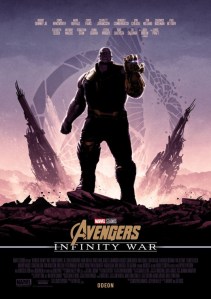 And the Russos don’t mess around when it comes to Infinity War. Their significant challenge is presenting Thanos as the sort of universe-threatening entity that would require a team up of not just the Avengers but all their new friends and even some other characters they had not yet met. The issue is that the Mad Titan has appeared to this point only in post credit scenes and small cameos. In every one, he’s done little more than gurn at the camera or sit and threaten people from his big chair. Others have done his dirty work, while he sits in the shadows. We have seen our heroes take on Gods, hordes of aliens and legions of super intelligent murder bots and emerge triumphant – Thanos needs to be something that provides a team which numbers an all-powerful artificial being in its ranks and has conquered all those previous threats with a challenge. The Russos open by doing just that. It isn’t that Thanos murders Heimdall mercilessly, or even that he outwits and then callously dispatches with Loki – although both those deaths, and let’s not beat around the bush here, both those guys are dead, not ‘marvel dead’, do resonate because of how integral both were to their franchise, riding high off the back of Ragnarok. It’s that Thanos beats the Hulk. On his own. With no help from his lieutenants who back off to ‘let him have his fun’. He doesn’t struggle, he doesn’t even seem especially irritated by the fact that Loki unleashes a beast on him who we’ve seen punch giant flying aliens to death and beat a giant undead wolf – he just methodically beats Hulk to a pulp, without a word or even a cry of effort. It’s his silence in that fight which jars the most. This isn’t a Loki or an Ultron, with those characters need to preen and swagger as he goes about his work. Thanos is a monster precisely because he isn’t – sure, he’s big and purple, but he doesn’t waste time monologuing (he has minions who do plenty of that for him), he doesn’t especially seem to take pleasure in the damage he inflicts, it’s all just stuff that he has to tick off a list to get to his destination.
Opening the movie amid the wreckage of Thor’s ship with dead Asgardians strewn about the place seems calculated to shock as well – the last time we saw Thor and friends, they’d just defeated the Goddess of Death herself, and were setting off for a new life amongst the stars, in search of a place to call home. That level of optimism, so casually disposed of here to give our villain an entrance, speaks to the intent of the filmmakers – this isn’t going to be the usual triumphal gathering of our heroes.
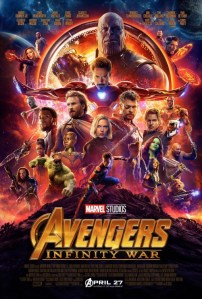 That scene also sets up the fractured nature of the narrative that the Russos set up to give our heroes enough room to breathe on the screen. Thor is left to drift through space where he’ll eventually collide with the Guardians. Hulk is flung to Earth where, as Banner, he encounters Doctor Strange and eventually Tony Stark. There’s one more setup required after that, done by the scene of Vision and Wanda stealing their moments away from their respective ‘factions’ of our heroes following the fallout of Civil War. This scene, again, helps to do a lot of heavy lifting in a very short space of time. The Russos don’t waste time with a recap that would slow the momentum of the narrative, or scenes that would bloat the run time showing the respective factions doing their own thing. Wanda and Vision are together, away from the others. That one fact tells us all we need to know – the rift is not healed, but these two lovers are still overcoming that barrier for themselves. Our heroes have hope as long as that relationship continues.
It’s at this point that people who make a living from pointing out flaws in movies will advance what is one of their key arguments about the franchise since Age of Ultron – the ‘fluctuating power of Vision’. Ultron establishes that Vision is able to wield Thor’s hammer, though not what exactly that means, and sees him capable of taking out hordes of Ultron clones and eventually the big bad murder bot himself (albeit when the latter is hopelessly damaged and could likely have been taken out by anyone). It’s true Vision is partly composed of the Mind Stone, but neither Ultron nor Civil War suggested that he commanded the full power of it – indeed in this movie he explicitly states that he doesn’t fully understand ‘this thing’ that rests in his head, and when Wanda places her hand to it, she ‘feels only him’. Civil War was where the power fluctuation argument began – why doesn’t Vision just win because… Vision? Well, because Vision never wants the fight, doesn’t wish to harm any of the Avengers (and Wanda in particular who happens to be on the opposite side to him). Civil War is not – up until Tony’s red mist descends in the final showdown – a film about people trying to kill one another. It’s a political disagreement that gets out of hand, between people who’ve fought and bled together, and none of them – Vision included – is not pulling their punches.
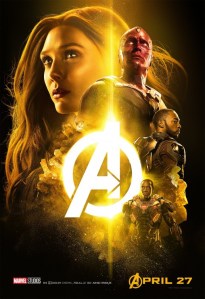 In addition, when Vision is attacked here, it is by Thanos’ own lieutenants, wielding weapons capable of stopping him from phasing – in other words weapons which actually do lasting damage to him. There’s no indication to this point that Vision has ever experienced pain or incapacitation from an injury, and it’s fair to assume both would come as a huge shock, to say nothing of the debilitation that can be done to him by alien technology outside even his own experience. Vision’s power doesn’t fluctuate conveniently for the narrative, as some naysayers claim – rather it remains constant while the situations in which he finds himself do not.
At any rate, having established our characters and dragged those who were hiding out of it, the film ends up (from our heroes’ point of view) splitting into several neat areas. On Earth, Steve Rogers and his gang assemble their defences as best they can to meet the inevitable invasion of Thanos and protect the planet. In space, Tony, Strange and Spidey find themselves confronting things they don’t really understand and eventually encountering (most of) the Guardians and Thor, Rocket and Groot go off together on a quest to get Thor a new, bigger, badder weapon with which to exact his revenge upon Thanos. The one thread uniting these separate stories is Thanos himself, as his story (and that of his ‘children’) binds the other narratives together.
This is where one of the other big misconceptions of the movie seems to arise – that Thanos is a sympathetic character and even – in some analyses I’ve seen – that the film is constructed as a hero narrative around Thanos. After all, we get to see his motivations, we hear him explain his goals, and we witness him achieve them. However, it is my own opinion that this is to misunderstand the subtlety at work here in the Russo’s writing.
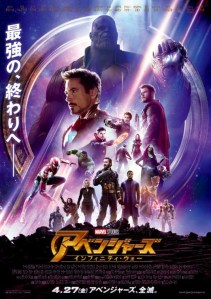 First of all, Thanos is a monster. That much should be obvious, but to recap,c his solution to the fact that life will always outstrip the natural resources required to sustain it is to propose the obliteration of half of any population. First he proposes it on his own home world, and is rightly decried as a lunatic. Then when that homeworld falls into ruin because – as he sees it – of the refusal of his people to follow his suggestion, he embarks on a quest to go across the universe, visiting his ‘solution’ on every planet he encounters. Then, he hits on the idea of obtaining the ultimate power in the universe so that he can use that power….to slaughter half of the entire galaxy in one snap of his fingers so that he can retire happy somewhere. Leaving aside the obvious logical questions (what happens when life inevitably gets back to previous levels – does he just snap his fingers again, ad nauseum, what happens when he dies and is no longer there to do the snapping? Etc.), this is a horrifying plan. Thanos talks of it dispassionately as ‘necessary’ and ‘merciful’, but the one thing he never does is question any of his assumptions. A hero’s journey involves the hero learning something about a flaw in their assumptions/ beliefs/ abilities and working to overcome that and win a final victory. Thanos has no introspection, and is surrounded by enemies who are weaker than him (and therefore beneath his notice) and lieutenants who are utterly subservient to him and spend their time toadying, bowing and declaring him to be the very best he can be. Thanos starts and ends the movie exactly the same – there is no hero’s journey here.
Secondly, as if this lack of progression for the character personally wasn’t enough, we have the steps he takes to get where he wants to go. He tortures one ‘daughter’ in order to get another to co-operate in leading him to the Soul Stone. He then sacrifices his ‘beloved’ Gamora to gain the stone and complete his work. Adherents to the ‘This is Thanos’ Hero Narrative’ schtick point to this sacrifice and the fact that Thanos cries before doing it as proof he isn’t irredeemable – he ‘loves’ Gamora and feels sadness at making the sacrifice for what he sees as the greater good. To those people I will say two things. Firstly, look at what Thanos says to his ‘beloved’ daughter when they arrive on Vormir: ‘The stone had better be up there, for your sister’s sake’. Having reduced Gamora to tears with his treatment and torture of Nebula, this is not the comment of one who loves the person to whom they are speaking. Second, look at how quickly Gamora is tossed from the clifftop. It’s not just that Thanos is massively bigger and more powerful than his daughter, but also that there is not a second’s hesitation to his action. From when he grabs her to when she falls is a mere handful of seconds. The only pause at all is just prior as she backs away from him, when he tells her that he won’t ignore his destiny a second time, ‘not even for her’. Let’s also remember that the film shows us how Thanos first took Gamora to be his ‘daughter’, slaughtering her mother as well as half the population of her planet but sparing Gamora as he was amused by her lack of fear.
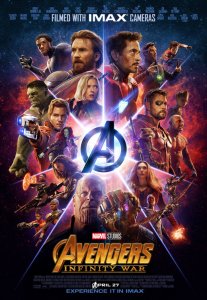 To put it simply, Thanos is a classic narcissistic abusive parent. He cares nothing for the trials and tribulations (or pain) of his children as long as his goals are achieved. He has tortured Nebula for years (as we found out in Guardians of the Galaxy Vol. 2) and continues to do so here in pursuit of the stones. He demonstrates complete indifference to the fate of Ebony Maw, and no matter how much he tells everyone that ‘his’ Gamora (and the fact he refers to her as ‘my Gamora’ is almost worth an essay in itself) is special, his actions say differently, prepared with no persuasion needed to hurl her to her death in order to grab another stone.
What Thanos does have is charisma and presence. He is powerful, confident and articulate. Unlike Loki, he talks not to self-aggrandise so much as to self-justify. He has an easy way of speaking even to his enemies (witness his exchange with Tony as he makes ready to kill him) and we never see him lose his temper or seem in the slightest bit unruffled. If we as the audience didn’t know all the evil things he has done, or the depths of his egotistical insanity, such that he sees himself fit to pronounce judgement on the entire cosmos, then sure, he could be likeable. But it’s precisely because of all those things that no matter how much screen time he gets, no matter how many times he sets out his stall, I can never sympathise with him.
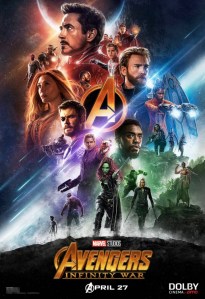 Going back to our heroes, one thing that struck me on a first watch and every time since is just how interesting the choices were that the Russos made in terms of which characters got to team up in this one. Everyone expected Rocket and Tony to be a blast together, so of course Rocket gets sidelined with Thor and Groot to make sure that never happens, instead leaving Tony to pair off with Stephen Strange in an epic battle of the laconic, self-assured god complexes. Adding Peter Parker to that mix works amazingly well, forcing Tony to think about someone other than himself in a way that he’s never really been comfortable with. Whereas it’s true that Tony has grown over the course of the MCU franchise, and was even somewhat of a father figure to Peter in Homecoming, he’s never been in a life or death scenario involving the kid, and his alternate pride at Peter’s skills and exasperation at his insistence on putting himself in harm’s way (and his constant flow of pop culture references) act simultaneously as both main motivation for and huge hindrance to his ability to fight. Tony also finds himself on unfamiliar ground being surrounded by people who don’t instinctively defer to him. Much as he might have grown, there’s a reason why Strange’s quip about ‘not working for you’ stings a bit more than even Strange himself might have intended. Think back to Ultron where Tony was funding things and deferred to Cap as the boss, then Civil War where he had de-facto become the ‘head of the family’. Being surrounded by other powerful people who not only aren’t awestruck by his capabilities and intelligence but also aren’t all that bothered about him at all is a test for him, and whereas Strange should and could be the one person he’s trapped with to whom he could directly relate to their similarity of personality type ensures that isn’t the case and (arguably) this all contributes to the failure of the plan to strip Thanos of his gauntlet (if indeed failure it was).
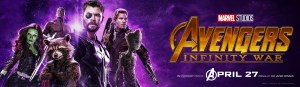 Meanwhile, Thor, Rocket and Groot’s team up and excursion to Nidavellir to create Stormbreaker is a testament to just how much good work Waititi did with the character in Ragnarok, and just how much range Hemsworth has as an actor. We know from the Guardians of the Galaxy movies that beneath the bluster Rocket is a damaged being who can sense similar damage in others, and therefore his sigh and ‘Time to be the captain’ line before he goes to speak to Thor is entirely appropriate. His probing, and Thor’s answers, are captivating to watch. Thor has always been the all-powerful Avenger, the one against whom none can stand. Even at his lowest ebb in Ragnarok, there’s that sense of optimism, that feeling that somehow he will beat the odds laid out against him. Here, he appears actually defeated for the very first time, dejected, listing off all the things he has endured, all the people he has lost. When Rocket finally poses the question as to what Thor will do if he can’t win, the simple rejoinder of ‘What else do I have to lose?’ cuts to the very quick of the character. When Thor nearly sacrifices his own life in order to restart the forges to create Stormbreaker, even sulky teenage Groot is sufficiently moved to step in and give a literal piece of himself to complete the axe and revive Thor, who we next see triumphantly emerging from the Bifrost into the middle of the battle at Wakanda.
And that battle – it feels like much of the time with our Earth-bound heroes over the course of the film is preparation for it, but when it comes it does not disappoint. Off the back of the triumphant Black Panther it’s a joy to be returned to Wakanda and its people, and adding Steve, Natasha and the others to the mix really sets things off. Another showdown fans had anticipated gets put off, as Shuri gets to talk with Bruce rather than Tony, but her interaction with him is nevertheless worth the wait. There’s a simple honesty to her ‘I’m sure you did your best’ – no trace of superiority or smugness to it, just a quiet statement of fact and then she’s carrying on with the job. It’s a shame that she then gets left to sit the battle out while she tries to extract the life stone from Vision, but then again she is supposed to be a scientist rather than a warrior.
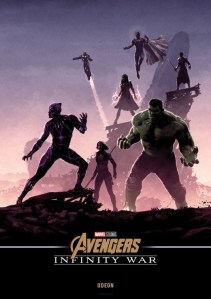 The battle itself is every bit as epic as one might hope for, even without Thanos being there until right at its conclusion. The ongoing battle of Bruce to try to get Hulk to re-emerge and the reluctance of the latter to do so speak to the seriousness of Thanos’ threat: both that Bruce is so willing to sacrifice his own identity perhaps forever to become Hulk for a chance at stopping the Mad Titan and that Hulk – a character we have never previously seen back down from any fight with anything and who had to be called off from attacking Surtur on Asgard – is too afraid to be forced to face him again.
We also get lovely little character moments in among the action – Steve earnestly replying ‘I am Steve Rogers’ to Groot’s somewhat frustrated declaration of ‘I am Groot’ after Thor introduces him as ‘Tree’, Thor and Steve’s own conversation about hair, and particularly Proxima Midnight’s confrontation with Wanda, Natasha and Okoye, all add little, much needed moments of light relief amongst the intense action against the ticking clock of Thanos’ arrival. Crucially, all of these moments, like the rest of the film, treat each of the characters exactly as they would be in their respective franchises. There’s none of the issue Whedon had with Assemble, where everyone became a mini-Tony Stark to ensure that Robert Downey junior didn’t hog the limelight. Each of the heroes is their own distinct personality, as set up by their respective individual movies, and our bad guy – importantly – doesn’t get a single moment of levity. That’s quite unique in the franchise as a whole – even Killmonger, by far the most serious and stern MCU antagonist to this point – gets to make the occasional quip. Thanos never does, reinforcing the impression of him as a pure fanatic, only interested in doing the job as efficiently as possible, regardless of the collateral damage that is done.
 And then there’s that ending. I must admit, I went into Infinity War the first time fully expecting Thanos to maybe get half the stones by the end, thereby setting up an epic conclusion in the second film. Instead, the Russos take us to the point of his gaining the stones and making the snap, and then they just end it, with everyone in complete disarray except Thanos himself, who retreats to what appears to be a farm somewhere to smile to himself at a job well done. The film ends not with a swelling, rousing score or even a promise of a fighting comeback from our heroes next time around – instead there is simple, quiet music, images of our heroes completely bereft, and then the darkness of the credits. The one small beat of hope provided by the post credit sting as Captain Marvel’s colours appear on the pager and that triumphant few notes play are well-needed, but even their significance wouldn’t become clear until the recent Captain Marvel film.
Overall, it’s a brave movie. My one reservation on my original watch was that I didn’t ‘feel’ the deaths of characters at the end as much as I felt the movie wanted me to, purely because I was well aware of upcoming sequels for most of them. In hindsight, this matters less because the way in which the deaths affect those left behind is what’s important. It doesn’t matter that I know Far From Home is coming out in July as much as it does that I saw Tony’s utter despair as Peter crumbled to dust before his eyes, sobbing and pleading as he went. More importantly, in one more confounding of expectations, the Russos left the old guard – Cap and Tony in particular – untouched by the snap. Many (myself included) had expected from the trailers that one or the other wouldn’t make it to the end of the movie alive. That both did, while others died, speaks to a confidence of the Russos in what they’re doing, as well as an intent to really make us feel whatever comes next, in Endgame.
 As they did with The Winter Soldier, the Russos elevate what could be a basic comic book fanfare movie into something altogether more nuanced and sophisticated. It’s a commentary on abusive parenting. It’s a character piece that doesn’t sacrifice the individuality of any of its dozens of players while allowing them all to fit on the same screen. It’s a lesson in how sometimes monsters win, no matter how strong the heroes may be or how heroic their cause. Most of all, it’s a damned good movie that races through its two and half hours so confidently and with such pace and flare that you’ll barely notice the time passing until the credits suddenly roll.
Infinity War is literally the best version of itself that it is possible to have ever imagined it being. The only question now is what Endgame can do to surpass it. On the basis of the evidence to date, I’m confident that the Russos have this one in the bag.




 Sci-Fi Bulletin: Exploring the Universes of SF, Fantasy, Horror and Spy-fi!