Review: The Batman (minor spoilers) (updated)
Starring Robert Pattinson, Zoë Kravitz, Paul Dano Directed by Matt Reeves Warner Bros, out March 4 Gotham is terrorised by a masked vigilante set on exposing the corruption which festers […]



Starring Robert Pattinson, Zoë Kravitz, Paul Dano Directed by Matt Reeves Warner Bros, out March 4 Gotham is terrorised by a masked vigilante set on exposing the corruption which festers […]
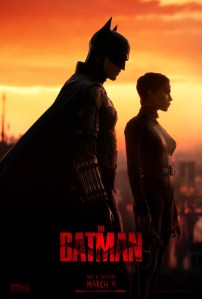 Starring Robert Pattinson, Zoë Kravitz, Paul Dano
Directed by Matt Reeves
Warner Bros, out March 4
Gotham is terrorised by a masked vigilante set on exposing the corruption which festers within its systems of governance. And it isn’t Bruce Wayne.
I’ve spoken a lot about the Dark Mirror concept of comic book movie villains in the past, but though it’s a concept which is ubiquitous, it’s not often one that’s done interestingly. Usually a movie will pull its punches on really examining what the similarities between protagonist and antagonist are and what that might mean for the guy for whom we are supposed to be cheering. Notable exceptions include Black Panther and…well, that’s pretty much it. Nolan skirted around the edges of the idea in The Dark Knight, but Ledger’s Joker was less a reflection of Bale’s Batman and more a reaction to him.
Matt Reeves, who did so many interesting things with the Planet of the Apes movies, proves once again that he can take a kooky, slightly silly and well-worn narrative and do interesting things with it, and for the first time I can remember, I came away from a Batman movie feeling like the Batmobile wasn’t the most interesting thing about it.
Firstly, forget Nolan’s supposed commitment to ‘realism’ – Reeves’ Batman is more grounded than anything we have seen before. When this Batman walks into a murder scene full of cops all giving him the stink eye, the camera doesn’t shy away for an instant from the awkwardness of the scene. A room full of uniformed men doing their job when suddenly a lanky guy in a Halloween costume, complete with long cape just strides in. It’s something which should feel surreal, and here it absolutely does, in all the right ways.
This is also a Batman who never really succumbs to the usual Batman tics. Pattinson’s character isn’t constantly ziplining here, there and everywhere. He doesn’t always suddenly appear out of shadow and give everyone a scare. This is a Batman committed to using fear as a tool, and part of that fear is in letting his enemies know he’s coming. The slow, deliberate tread which heralds his arrival not only builds that sense of dread but also lends heft to the character. Gone are the days of the Caped Crusader leaping around like a kid who’s had too many e numbers – Pattinson’s Batman is visibly weighed down by his home-made armour, and his ability to take hits from fists, baseball bats and even bullets feels entirely believable because he always looks like he’s a walking tank when in the suit.
What’s even better is that out of the suit, Pattinson hasn’t become the super-jacked Crossfit Bro of Affleck’s take on the character, nor even the overtly muscled Bale character. While you couldn’t exactly call him scrawny, Pattinson is noticeably physically slighter than other recent incumbents of the Bat Suit, but his 6 foot 1 inch stature and some thoughtful camera work combined with that lump of a suit make sure that he looms appropriately over those around him. This is a Bruce Wayne more reflective of the lifestyle that the Batman leads – gaunt, pale-looking and often on the verge of just passing out altogether, this is again a commitment to an element of the character with which previous screen incarnations have only briefly flirted.
As to the other staple of this character, this Batman has gadgets, but they feel more restrained and also cleverer. One in particular makes absolute sense both for what the character is trying to do as well as the slightly obsessive nature Pattinson and Reeves work to illustrate. The Batmobile feels like a muscle car cobbled together and tuned by a rich guy with money to burn, rather than a super advanced tank that must have been created by a team of scientists in a lab. The suit, as mentioned, feels bulky and home-made. The utility belt has pouches with practical bits and pieces and we are blessedly far away from the Bat-everything nomenclature of the past.
Most of all, this Batman feels human. He gets hurt, he gets knocked out and we feel the impacts he endures – one scene in particular is brutal enough that the whole audience in the showing I was at audibly winced as it happened. But it isn’t just in the physical aspects that this commitment to showing the human frailty of the Batman is important, and that’s where we get to the good stuff.
There’s a moral dichotomy at the heart of a ‘grounded’ Batman as a concept. Bruce is a young man haunted by the murder of his parents, though inevitably the medium has tended to focus on his father, Thomas Wayne, the philanthropist, kind of heart and generous of pocket. Bruce becomes the Batman to try to deliver justice in his father’s memory, but that’s easier in a comic book where you can paint villains as absolutely bad and heroes as absolutely pure. In a ‘real’ world, nuance is a thing which exists, and in that world, people who tend to see themselves as absolutely morally right tend very much not to be. Worse, they are often unable to back down from that vision of themselves, given the emotional effort which has gone into that self-image in the first place. So many screen portrayals of Batman have fallen at this hurdle, in spite of excellent work elsewhere. Nolan’s Batman had his ‘One Rule’ but seemed ok with destroying public property and endangering the lives of various people, including police officers, who were in his way. Snyder’s vision, lifted more or less wholesale from Frank Miller’s Dark Knight series, was unable to see how he had become such a large part of the problem until he realised Superman’s Mum had the same name as his own mother. There’s been, historically, a failure to cross that final Rubicon of having an onscreen Bruce really grapple with the idea that maybe he isn’t the arbiter of right and wrong and absolute morality that he thinks he is.
Reeves gets there with a couple of ingenious devices, not the least one which addresses the mythologising of Bruce’s parents which tends to be an unquestioned staple of the character usually. Here, Bruce’s idea of who his parents were is challenged, in ways that are believable and which don’t stretch to the extreme or caricature.
The other is the central villain himself. Paul Dano’s Riddler, barely seen without his mask for most of the movie, is a real examination of what a Dark Mirror should be. Working from the shadows, wearing a mask and using violence to make his point as he continues a one-man crusade to expose the corruption which lies at the rotten heart of Gotham. The Riddler’s only separation here from the Batman is how far he will go to continue his fight and who his targets are. Batman is out on the streets attacking muggers, gangs of street thugs and robbers, and using a weirdly complaint police force and a giant signal in the sky to keep these elements on their toes throughout the city, ensuring they’re thinking twice about whether he might be in the nearest shadow waiting for them because of course, he can’t be everywhere. By contrast, Riddler here is working to expose the one thing Batman as a character routinely avoids – white collar crime. Again, where Nolan flirted with the idea of the corruption in the GCPD, Reeves commits above and beyond. This isn’t just a case of a few dirty cops on the take, but of an entire city’s worth of power structures and authority corrupted to its very core and in thrall to the very worst elements of society. It’s bleak stuff, revealing to us a Gotham that is almost beyond any kind of saving in a way that makes previous screen incarnations seem almost quaint by comparison.
What Riddler does is help Bruce to see the gaping lie at the heart of his ‘project’. The Batman can’t save the city by merely reinforcing its current laws and moral systems. Something deeper needs to happen, and a reckoning must be had with the very soul of Gotham itself – one you sense might not end positively for the city.
Even Reeves has limits though – this isn’t the Batman who becomes a committed anarchist, but it is one who has some actual self-realisation about what he’s doing. Maybe that’s not going far enough, but it’s arguably further than the character has ever been allowed to go and progress starts with a first step. Reeves doesn’t shy away from the violence and anger which fuel the character for the duration of the film, but having him grapple with what this means, and asking whether or not he forms part of the problem more than the solution, is progress I’m happy to see.
The rest of the cast deserve praise as well. Zoe Kravitz gives a deliciously grounded take on Selina Kyle (never once called ‘Catwoman’ here). Looking every bit as gritty and streetwise as she should, and with a suit that looks basically home made, this is a version of the character in which we can wholly believe, and one committed to justice for those she loves, without the caped crusader’s compunction about going ‘too far’ in that quest. The chemistry between the two feels, if anything’ a little rushed. Pattinson’s Batman feels like he’d be a little too creepy for the liking of a woman of Selina’s background and although the romantic spark between the two is more muted than in previous entries, it still can’t help feeling a little forced.
Geoffrey Wright’s Jim Gordon (not yet the Commissioner here) feels like a decent man struggling to do the right thing. Wright is excellent as always, though if the part has a limitation it’s that it asks us to just implicitly accept that Gordon and Batman have one another’s backs without ever really expanding on why. Given that every one of his colleagues seems to despise Batman, it’s never really clear why Gordon has taken a liking to him, nor why he’s so willing to always push back against his colleagues on the subject. Andy Serkis’ Alfred is a refreshingly simple take on the character, and the dialogue between him and Pattinson’s Bruce feels less performative and artificial than in previous iterations. I would have liked to have seen more of the character, but no matter.
On the villain side, we have a veritable smorgasbord of goodness – Colin Farrell is unrecognisable as the Penguin. John Turturro’s turn as Carmine Falcone is creepy and sinister in all the right ways, cementing just how good an actor Turturro is when given a script he can get his teeth into. Paul Dano shines as Riddler, a slightly unhinged schemer with an entirely legitimate grudge against those he targets and a model of the sort of extremist we see all too often in the modern age. I’ve seen commentary elsewhere (including Stewart’s review below) which suggests the movie settles on Dano as a left wing nutjob we should hate, with an army of left wing extremists answering his call. I’d disagree here, on the basis that yes, those latter scenes with his followers do recall real life events at the Capitol in January 2021, but my impression was that these were simply extremists using Riddler’s crusade as an excuse to do violence on others, their ‘politics’ largely irrelevant If anything, I feel that when one of them quotes back Batman’s own mantra directly to him, there’s a sense of pieces falling into place in Bruce’s mind which contributes to the journey of the character and addresses issues others eel the film shies from.
It’s not a perfect movie. Some of the tropes into which it falls are a little dated for the modern age – lingering shots of Selina in her underwear, a distinct brevity of female agency in certain aspects and a final act which does start rather to drag a little as Reeves seems to experience a Return of the King-esque crisis of confidence as to exactly how to finally end the thing. But overall, it’s an ambitious take on the material which satisfyingly upends much of what we might have come to expect from the character and interrogates those assumptions well. I for one look forward to seeing more from this iteration.
Verdict: Dark, moody and noirish with a sense of decay and despair juxtaposed against a Batman who actually self-reflects, and not a single one of Martha Wayne’s dropping pearls in sight! 10/10
Greg D. Smith
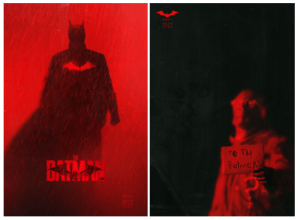 The Batman must save Gotham from a serial killer…
I am not a Batman fan. For me there are fundamental problems with a White, 1%er, vigilante accommodated by the police and driven by emotional baggage whose main targets are the mentally unwell and the poor, but who leaves White Collar criminals entirely untouched.
Coming into this movie I was ambivalent. I liked Nolan’s attempts at bringing new life to the character even if each entry was deeply flawed. I liked Ben Affleck even if the vehicles in which he starred did not serve him or the character well. Then I saw that The Batman was just a shade under three hours long. Part of me wondered if this wouldn’t be better as a six-part mini-series; at least that way I could go to the loo between episodes.
Beyond that I had no real expectations for this film. Given my history with the franchise I would have been entirely unsurprised to emerge from it with no real emotional response whatsoever.
Short story? This film handles a flawed franchise superbly and edges into the legitimately spectacular.
Director, Matt Reeves together with his two stars, Zoë Kravitz and Robert Pattinson bring meat and bones to this film. They are the real deal. Reeves bring a host of talent behind the camera too, not least in the shape of Greig Fraser, whose work on Dune, Rogue One and Zero Dark Thirty gives you some idea of his talent.
How does a tired story like Batman become something fresh? There’s every reason this should have been just another superhero movie and plenty of reasons to assume it would have been another DC dud.
Its aesthetic is undoubtedly dark and miserable which you could argue is no change on what came before with Snyder’s entries.
How does he pull it off then?
It feels like Reeves sat down and rethought Batman from the ground up. There’s no origin story here, there’s no inciting incident, no becoming a hero. Indeed we sign into this film accompanied by a monologue which finds us with a Batman in full flow, established and relied upon by the city. We discover a Batman who’s at the end of his tether, uncertain as to whether he’s making a difference of any kind.
This is mature in a way that the illusion of grittiness that dark digital filters can’t deliver.
Then there are the touch points Reeves has called upon to build his Gotham and the story he wants to tell. In this film we see more of London than New York as the basis of the city. It lends proceedings an entrenched sense of an ancient city wrecked and pillaged by those calling it home, groaning under a million ants slowly picking over its carcass.
There is a deep vein of John Ford and Sergio Leone in this film and they’re walking hand in hand with Ridley Scott’s Blade Runner and David Fincher’s Se7en. The melting pot of these influences brings something remarkable to the screen.
When Batman appears from the shadows we see a cowboy arriving into town even down to the sound of his steps jangling with spurs, letting the thugs and bandits know the nameless hero has arrived.
Batman is a detective here, the sheriff with the police department his unruly deputies, emotionally lost in the diminishing returns of his quest for vengeance as he solves actual clues.
Another plank of Reeve’s freshness here is the Batman himself. There are no high tech gadgets. This isn’t a billionaire with Tony Stark levels of super gadgetry. This is a man who’s used his resources to create homebrew solutions to the problems he faces, from his muscle car to his bullet proof suit. It lends the film a sense of groundedness.
Batman might be tough and frightening but he’s a man in a suit working at the very edge of what’s possible, not driving over the cliff with pop out wings and impossible technology. There’s a tremendous moment when an escape attempt goes very wrong and another when a car stalls and in both sequences there’s this sense that Bruce Wayne is fallible, human, capable of failing. This, more than the sketchy sense of what he wants, brings the character to life.
There are no nice society balls, no criminals in ridiculous outfits. Nicknames are familiar but the people wearing those badges aren’t – they feel like people who might actually live in the grim hell of Gotham.
Add to this the sumptuousness of the cinematography – there are three sequences I think will strike everyone as worthy of extended contemplation – and what we have here is a grown up take on Batman that isn’t pompous, isn’t portentous and successfully eschews the (beloved) ridiculousness of so much of his time on screen.
 Zoë Kravitz’ Catwoman has exactly the same grounded aesthetic. A woman with an agenda and motivations that don’t align with Wayne’s. I thought Kravitz was superb, given her own solid arc and I’m looking forward to seeing what else she does. If there’s a weakness it’s that the camera lingers just a little too long on her body when there’s no need and her character falls for a masked vigilante just a little too easily. Add to this the fact that when they do entangle romantically it’s pretty much chaste and it felt like this element could have been removed without any damage to the story.
However, Catwoman and Batman’s interactions bring life to the film, adding substance where on his own Batman would have been a little too locked down emotionally. Selina and Bruce are both crucial to the story and not just because they’re main characters – their backstories and motivations are critical to the tale being told and this is good writing. Sometimes you could have any hero on screen and it wouldn’t make a difference. Thor could be replaced by Superman who could be replaced by Aquaman and they’d all end up the same story – smearing into the genre without any distinctiveness.
Without Bruce Wayne’s own personal story, without Selina’s social context, this story wouldn’t work and couldn’t be told. Those other heroes and their films are fine, some of them even great, but this is next level – marrying superb storytelling with masterful film making.
This is where looking to Se7en and creating the mood and feel of Blade Runner comes into its own. Detective work fighting against a serial killer focused on political corruption. It’s many layered and these elements provide a whydunit that’s compelling and leads us almost to the end of the film before we realise that Batman’s not there to unravel the political corruption in the city and has actually failed to deal with the central antagonist – Riddler.
If this is a film about Gotham then in many ways the main character is actually Riddler. Paul Dano’s face isn’t seen for the majority of the film, hidden as it is behind a discount mask. Yet the menace he brings is there almost from the opening of the film and, if pre-release reaction has tended towards the mocking, I think the decision around his presentation is bold and political in nature. Having said that, Riddler never really establishes a strong emotional presence which is a shame because I think then we could have had more sympathy for his motivations.
And this is my biggest criticism of the film – it’s that it does what so many politically right leaning superhero films do and that’s render those agitating for social change as the enemy. After all, Riddler’s grievances are entirely legitimate.
As is all too often the case, grievances with the social order are treated as worse than corruption and excess in the hands of the already powerful. So the film these tropes as they always do – it makes social agitators into extremists. Their masks only heightening the sense that they’re not really fully human and so can be treated with impunity.
This is where the film becomes confused. Perhaps that’s not the right word. In a contextual vacuum the film has an instinctive trust in the status quo but is quick to call out the corrupt and how a decent system falls apart when corruption eats at its core. This idea is successfully explored but is ultimately myopic.
In contrast, Selina is given room to express her own distaste of the status quo – quite rightly accusing Batman of being someone who’s never known poverty or disadvantage. Riddler reminds Batman that there’s a world of difference between being a billionaire orphan and a penniless one. The class instincts of the film are strong, but they miss the central point that when classes clash it is only a reformation or overturning of the status quo that results in a more equitable settlement. This story is not interested in tackling that question despite, or perhaps because of, having a privileged White billionaire vigilante at its heart.
This is where the analysis of the film as existing within its own world bumps up against harsh reality. Selina is a PoC. So is Jim Gordon. They are quite clearly bastions of righteousness. Gordon is morally pure and Selina is Righteous Vengeance but they both play second fiddle to the faceless White man’s morality – which is one that both trusts the system to produce good outcomes and also routinely acts outside that system with impunity. It could be described as Peak White Privilege in that he argues that other people follow rules he himself doesn’t have to.
There is also a crunchy and powerful scene deeply reminiscent of the storming of the Capitol Building. Yet the antagonists here are not the right-wing populists who actually did it but left-wing extremists. It’s like someone asked Tucker Carlson who society’s enemies were. I am really tired of this approach to rendering those who want to change society as extremists who actually want to murder us all and take away our rights. Recent history has shown that the truth of the matter is it is exactly the other side of the aisle who are committed to such methods.
This is where the politics of the film are confused. We have good representation here. We have a clear sign that corruption sits almost entirely with entrenched (White) power which deserves overthrowing. Yet the solution proposed by the film isn’t to change the system but to find more ‘honest’ people. Part of me wants to get behind that and perhaps could if it weren’t then for the motivations Riddler brings to the screen.
In some senses I think The Batman is arguing that the status quo is ok if we work at it and is better than the world that Riddler wants to bring. Which is ok as far as it goes but it’s also clear that Selina is deeply poor and that’s not going to change regardless of who’s in charge.
If you put the possibility for changing the world on the screen while showing the existing world is unjust and inequitable you better have a good reason not to deliver on that.
As ever we’re left with a film in which a billionaire decides that punching poor criminals in the face is a better option than using his vast resources to change society, improve education and access to healthcare. Take from that what you will I guess.
Verdict: If that suggests I didn’t enjoy this film let’s correct that. The Batman is deeply satisfying – as a police procedural, as a western and, deep in its heart, as a science fiction story. I am going to go see it at least once more but probably more than that. It has substance which I believe will take more than one viewing to really process.
Aside from this the visuals are sublime, the music rocks and the soundscape (the incessant rain for example) is chunky and angular, bringing the city to life almost singlehandedly.
I’m going to go so far as to say I think this is the best interpretation of Batman I’ve seen. Its mood is deeply contemporary but carries within it cultural ideas which, for me, remain central because of their emotional weight. Reeves has created something special here and it deserves to be celebrated for all its glorious, moody, flawed, brilliance.
Rating? 10 dodgy police officers out of 10.
Stewart Hotston
 Doctor Who News Star Trek News
 Sci-Fi Bulletin: Exploring the Universes of SF, Fantasy, Horror and Spy-fi!