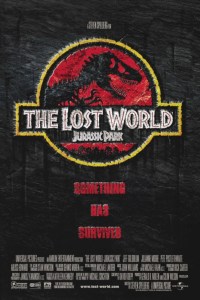
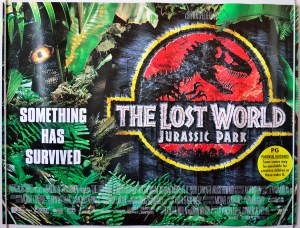
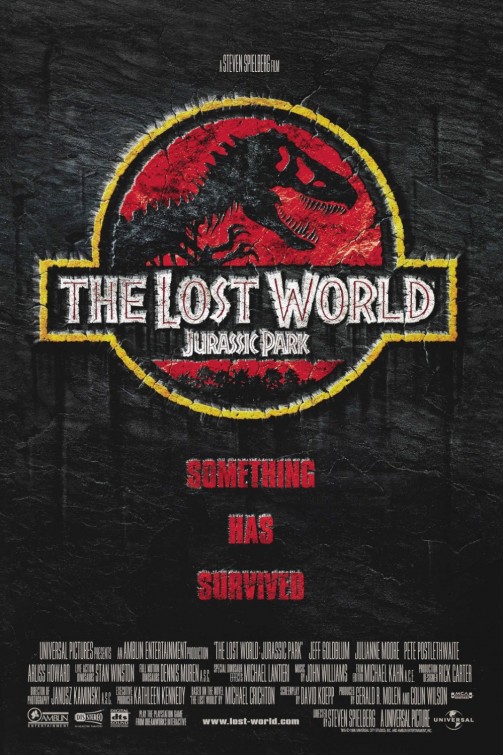
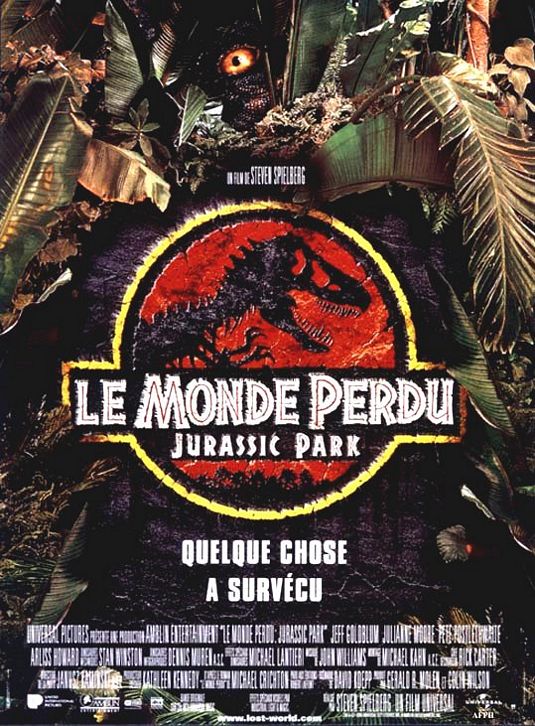
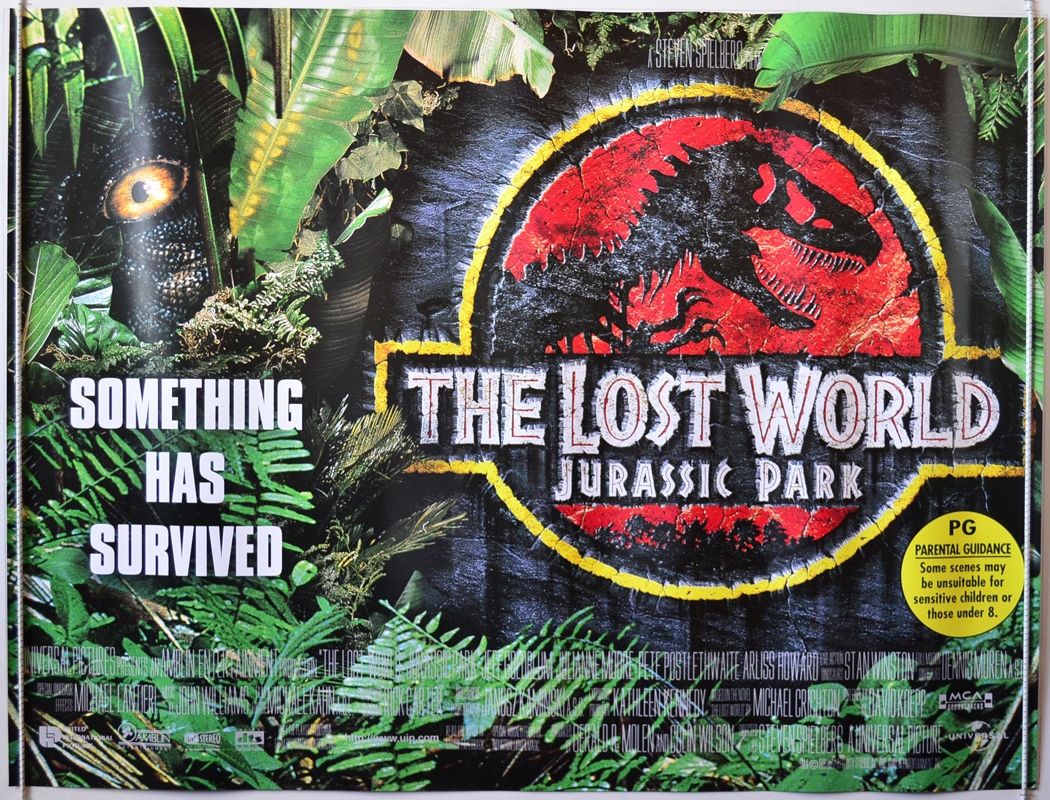
 With the staggering success of Jurassic Park, it was only ever going to be a matter of time before a sequel was brought to the screen, especially given that author Michael Crichton had already written a follow up novel in 1995. But could Spielberg re-capture the magic of the first film?
When a young girl is attacked by dinosaurs on a tropical island, Doctor Ian Malcolm finds himself being dragged back into the one place he doesn’t want to be, thanks once again to the Machiavellian machinations of John Hammond. But just when Malcolm thought the worst thing he would encounter is dinosaurs, Hammond’s ambitious young nephew arrives on the island with an entourage of hunters, intent on capturing the animals and bringing them back to the mainland.
Long before Jurassic World was enrapturing audiences with its brand of self-aware, almost but not quite fourth wall-breaking sensibility, Spielberg was trying the same schtick in this 1997 sequel to his masterful Jurassic Park. Where the original movie played out in typical Spielbergian fashion, transcending the boundaries of its ostensible genre to create a truly special family movie experience, Lost World felt more cynical, more knowing, and frankly, more like a movie.
It starts with the opening. The first movie gave us a darkly intense opening, Robert Muldoon desperately clinging to the hand of an unfortunate worker as he was dragged, screaming into the cage with the raptors. Muldoon’s urgent cries of ‘Shoot her! Shoot her!’ set the scene for a movie that would be giving us creatures that weren’t to be taken lightly. By contrast, The Lost World opens on an exotic beach, where a stupendously wealthy family – consisting of husband, wife and young daughter – have landed with their own entourage of boat crew and servants to have a posh meal. Little girl wanders off, finds a compsognathus, finds a lot more of them, gets attacked, screams and so on. We have no reason as an audience to sympathise with either of the adults, we have no real idea of what happens to the little girl (other than that it’s confirmed she is alive) and it all just feels (and is presented) a little too slick and manufactured. Then the camera flits from the screaming mother to a yawning Ian Malcolm stood in front of what turns out to be a poster of a tropical beach. This is the level that the movie’s self-referential humour reaches. It isn’t great.
 Tone set, it’s time to meet our characters. Ian Malcolm is, in fact, nothing like you remember him. The relaxed, cocky, offbeat character we knew and loved in Jurassic Park has become an intense, serious man. Granted, this may in part be explained by his circumstances – we learn through exposition that he’s basically been ridiculed thanks to InGen denying anything happened on the original island, discrediting him and making him a laughing stock in the academic community. This, combined with the trauma of his experiences, could easily explain a change in character, but unfortunately the movie never really sees fit to do anything with this. When he goes to the island, it’s to ‘rescue’ his girlfriend (instead of, I dunno, sending a team of experienced people to do so). When he’s on the island itself, he’s all quips and snarky comments again. I think the simple answer is that the character feels thinly spread here – Goldblum’s quirky style and presentation of the character worked so well in the original movie because Malcolm was a supporting player. Here, he’s made into the leading man, and there never feels like there’s quite enough there to make that work.
This is an issue which, to be fair, can be seen repeating throughout what is undoubtedly a talented cast. Julianne Moore’s Sarah Harding is a walking set of ‘strong independent female character’ tropes when we are first introduced to her, the dialogue she’s given painfully silly and on the nose. As the film progresses, Moore valiantly does her best with what the script gives her – she’s the palaeontologist looking for evidence of nurturing behaviour in dinosaur parents, and it’s a theme the movie keeps revisiting with her. Unfortunately, the rest of the time she’s basically running from things, screaming, or simply whimpering in fear, all of which somewhat detracts from just how very tough the movie keeps having her tell us she is. ‘I’ve been around predators since I was 20 years old,’ she says airily in an early scene, listing off various wild animals and then Ian Malcolm himself. Very dry, Miss Harding – but if that’s so, why do you panic so comprehensively every time one of this island’s predators is anywhere near you?
An early appearance of Vince Vaughn as Nick Van Owen, photographer and oddly inconsistent activist (near the beginning, he tells Malcolm he worked with Greenpeace ‘for the girls’, yet in a later scene he’s revealed as a committed animal rights activist ready to risk his life for the cause – the film never sees fit to address this) doesn’t do much. Nick is essentially a walking plot device, there to make stuff happen when necessary on the island, and disappearing once the action leaves it. Richard Schiff’s Eddie Carr is the tech guru who might as well have ‘I’m going to get eaten’ painted on his forehead, Vanessa Lee Chester plays Malcolm’s young daughter who stows away on the mission and whose sole purpose seems to be to have a child present for the benefit of younger audiences. There’s a painfully stupid bit worked in for her to do involving gymnastics that gets telegraphed by the script early doors and just looks dumber every time I see it. Other than that, she’s another plot device, there to occasionally get into trouble or do something dumb to shove the narrative along a bit.
 On the antagonist front, we get Arliss Howard as Peter Ludlow, Hammond’s conniving nephew and new head of InGen, who is just the most by the numbers villain ever. ‘Careful,’ he sneers at Malcolm early on in the movie, ‘this suit cost more than your education.’ Yes, he’s that level of bad guy, all puffed-up arrogance, stupid decisions and a bad person because the script says so. Fortunately, we also get Pete Postlethwaite as Roland Tembo, a big game hunter hired by Ludlow to run the expedition to the second island to capture dinosaurs. Postlethwaite was always an immense character actor, and here he’s no different. Magnetic every second he’s on the screen, despite the thin gruel the script provides him, he manages to easily be the best thing in the film, even though he departs a good forty minutes before it ends. Though he lacks the semi-nobility of Muldoon, and is in actual fact quite a soulless bastard of a character in some ways (breaking a baby T Rex’s leg and then staking it to the floor to tempt its parents towards him) as the movie progresses he reveals a lot more nuance. Next to Ludlow he’s a positively complex character, showing concern for his men, going as far as to protect Malcolm’s young daughter from news of the death of one of them, and having the good sense to walk away at just the right time. It’s slightly problematic that the best character in a ‘family’ film is one of the villains and a fairly awful person, let alone someone who gets no comeuppance and exits the movie well before it concludes, but there we have it.
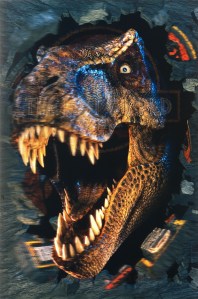
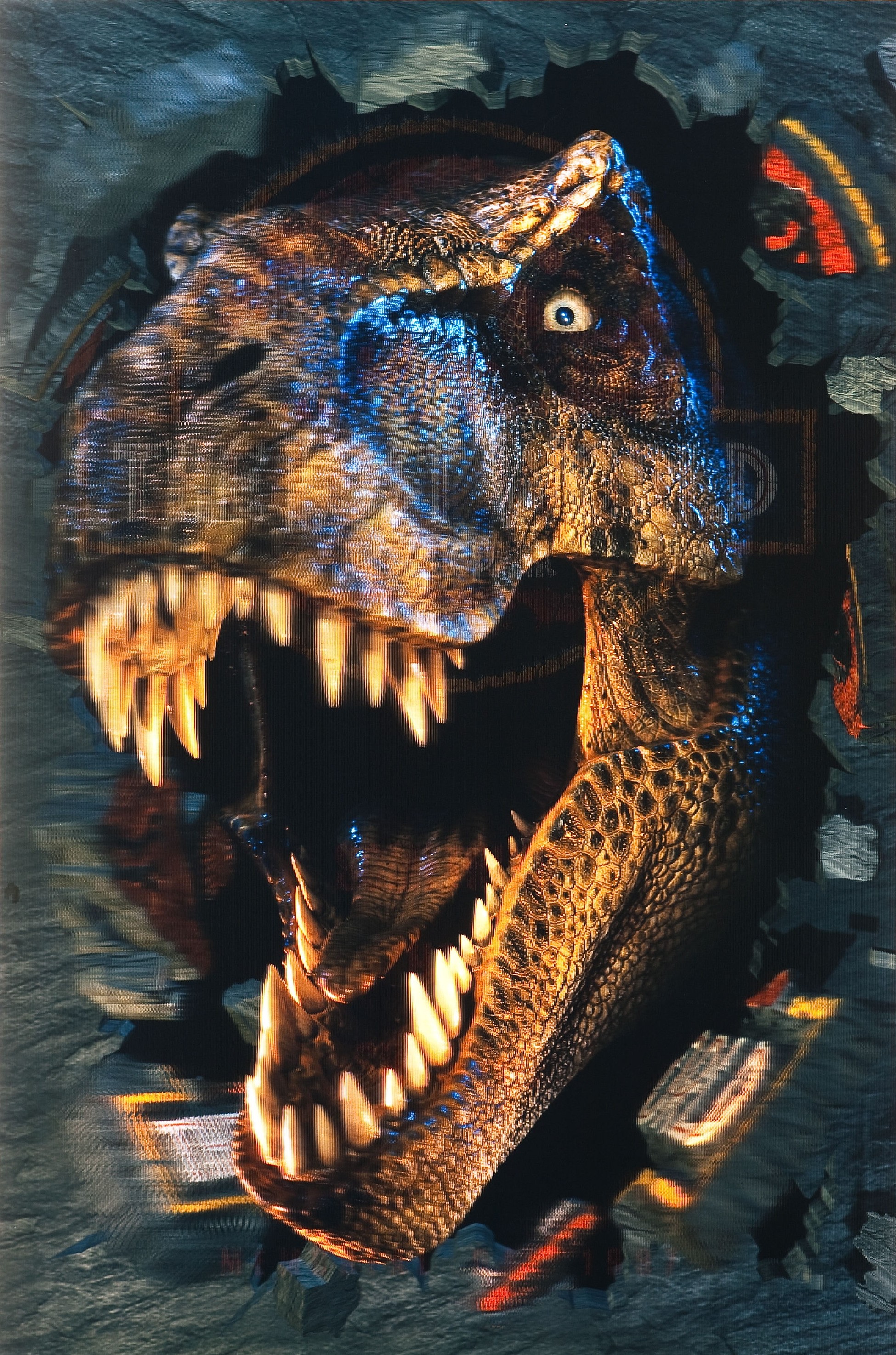
If the characters are poor shadows of their counterparts from the original movie, then the dinosaurs are worse. Much more CGI seems to have been used for the majority of the dinos, and it hasn’t, for some reason, aged anywhere near as well as in the older film. However, it’s not just aesthetics that are the issue. The T Rex, a majestic, terrifying presence in the first film, here gets used far too much (effectively occupying more than double the screen time it did in Jurassic Park) including in the thuddingly awful final act set in a US city, in which the T Rex goes on a rampage through neighbourhoods in what amounts to a poor Godzilla knock off (replete with some Japanese businessmen at one point running away backwards while pointing up and screaming, because haha, I guess).
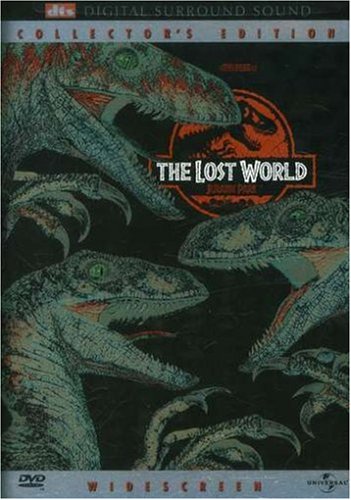
 But worst of all is the treatment of the raptors. In the first film, where the rex was the apex predator, the raptors were what provided the real scares. Even Muldoon, the great hunter, was terrified of the raptors being loose, worrying about it far more than the rex. Here, although things start well as a pack of the creatures picks off men in the long grass, they then suddenly inexplicably become akin to drunk children as they attempt to take a bite from our heroes. There’s the aforementioned gymnastic silliness, but there’s also just the odd inconsistency they show throughout the final scene on the island involving them. They don’t climb until the script has them do it. They barrel through sheets of glass in one leap one moment and then butt their heads against it in futility the next, and they go from confidently leaping from one place to the next to staggering about like newborn foals, legs flailing about in all directions to give our heroes the time they need to get out of there. It all feels less like a threatening, scary adventure and more like an elaborate set of scenes carefully scripted out, as if in some meta way this cinematic representation of a theme park has now become a theme park ride – stand here, the scary monster will leap out at you in a carefully regulated fashion, leaving you enough room to get around it and onto the next part of the ride, and so on and so forth.
It all just ends up feeling very soulless. When I say it feels like a movie, this might sound an odd thing to say – that’s what it is. But the whole point of a movie is that it transport you into its world so that you go on a journey with the characters, experience the rush of fear and triumph and sadness and happiness along with them. Jurassic Park was a transporting experience, making you feel the awe of the characters as they saw and interacted with the characters, the wonder of the marvels laid before them, and the terror as it all started to go wrong. Here, with much less direct interaction between people and dinosaurs, much more concentration on the dinos as spectacle rather than as living creatures, more CGI, and a plot that basically just barrels from one predictable set piece to another, it just feels like a fairground ride.
 It also, unforgivably, doesn’t make sense within itself. When the gang flee the carnage they’ve created in Ludlow’s camp, how and why does Nick run into the baby T Rex that Tembo has staked out? There’s no indication that this was near the camp, and there’s no sign of Harding – why does he end up there? When the boat transporting the T Rex crashed into the harbour, the rex itself is trapped in the hold, yet the whole crew is dead – did he lock himself in there? How did he bite a crewman standing inside the perfectly intact bridge so perfectly as to leave the man’s hand dangling from the wheel? These are the sort of obvious, weird inconsistencies of logic that pull a person out of the narrative (or at least they did me) and combined with the general feeling of going through the motions that the film has, it all adds up to feeling like a cynical cash-in, rather than a film that needed to be made.
So tropey are the characters, so hackneyed the dialogue and so perfunctory the plot, that it doesn’t even feel like a Spielberg movie. In all honesty it simply feels like someone took the template of the first movie and copied it without properly understanding it at all. Maybe Spielberg didn’t really grasp what it was that had made the first movie so majestic. Perhaps he just ran out of creative steam. Whatever the answer, this is a sequel of drastically diminished returns. To paraphrase Ian Malcolm, speaking in its predecessor: perhaps Spielberg was so preoccupied with whether he could, that he forgot to ask whether he should.




 Sci-Fi Bulletin: Exploring the Universes of SF, Fantasy, Horror and Spy-fi!