Feature: The Year of Eating Dangerously
As we approach the end of 2022, Martin Jameson provides his Top Ten Horror Movies of the Year – The Year of Eating Dangerously… If you had asked me only […]



As we approach the end of 2022, Martin Jameson provides his Top Ten Horror Movies of the Year – The Year of Eating Dangerously… If you had asked me only […]
 As we approach the end of 2022, Martin Jameson provides his Top Ten Horror Movies of the Year – The Year of Eating Dangerously…
If you had asked me only a few years ago, I would have told you that my interest in horror cinema was a marginal one. I had little time for ‘jump-scare’ movies; CGI monsters are anathema to the imagination; and gore for the sake of gore is a bore. It’s the darkness inside a character’s head that is truly unsettling, and the scariest monsters should only very, very occasionally emerge from the shadows.
But times have changed. Narrative cinema is dominated by dramatizations of the factual (complete with montages of the real people during credits, somehow suggesting that the story wouldn’t be valid if it was simply a work of the imagination). Across the aisle we find dramatizations of novels where the movie’s primary purpose seems to be largely to save you the bother of committing the time and energy to read the book yourself. With apologies to Philip K. Dick, it’s too often a case of ‘we will imagine it for you wholesale’. Then there’s the mythic spectacle of the superhero movie, loved by billions, but a proven soporific for this particular reviewer.
To add insult to imaginative injury, anyone creating a genuine fiction had better have the ‘right’ to tell that story. Modern life is full of absolutes and representational IEDs which a writer who cares about the longevity of their career will be careful to avoid.
Science fiction has always been good at avoiding these pitfalls, what with the word ‘fiction’ being on the label, and so it is, that I have also learned to love horror, because the whole point of the genre is to find meaning in the dark and unacceptable. No one has to justify their ‘right’ to scare the willies out of people.
I think 2022 has been a good year for cinematic horror. The spectre (so to speak) of pointless voyeuristic exploitation movies seems to have receded, making way for a whole slate of films prepared to rummage around in the mucky entrails of our angst-ridden zeitgeist.
This said, here are my picks from the year.
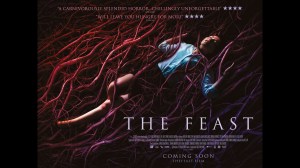 10, The Feast – Away from genre content, viewers who had enjoyed hassled chef Stephen Graham suffering at the hands of ungrateful diners in Boiling Point in 2021 could go on to savour similar pleasures with Bear on Disney+, but back in our world it was time for the diners themselves to come to a sticky end. I wasn’t hugely keen on Lee Haven Jones’s culinary gore-fest, but it was distinguished by being a rare Welsh language release and it set the tone for what turned out to be something of a Year of Eating Dangerously.
 9. Bodies Bodies Bodies – This U.S. debut for Dutch director Halina Reijn starts well, but ultimately disappoints as it abandons horror for Gen Z satire, ultimately revealing itself to be little more than an extended shaggy dog story (figuratively… there aren’t any dogs). It holds your attention, though, and promises exciting work to come from director Reijn and writer, Sarah DeLappe.
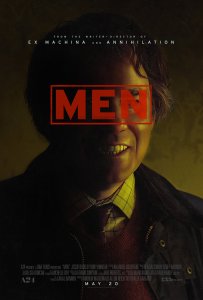 8. Men – Alex Garland’s worthy exploration of male control buckles under its own concept, namely that all the men in question are played by Rory Kinnear, complete with assorted wigs, false teeth, prosthetics and digital de-ageing. Kinnear is a brilliant actor, but even his skills can’t stop this from seeming like an overlong episode of The League of Gentlemen where the multi-role conceit becomes comical rather than scary or profound. For all that, it’s oddly watchable and definitely bold.
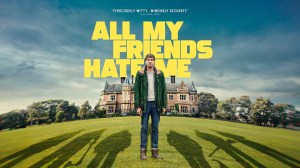 7. All My Friends Hate Me – Arguably not a horror film at all, Palmer and Stourton’s excellent script uses familiar horror tropes to explore the insecurities of the millennial generation now that middle-age is not far over the horizon. Witty and truthful, framed as the uni reunion from hell, this is one of the smartest genre films of the year, just don’t expect any actual scares.
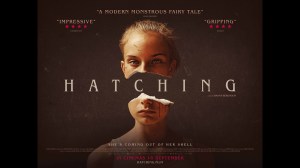 6. Hatching – As subtle as being hit on the head with a large egg, Hanna Bergholm’s exploration of puberty (and its associated body horrors) works far better than it deserves to. A little bit Angela Carter, a little bit Where the Wild Things Are, Hatching uses its Finnish retro horror schtick to creep the audience out and capture the growing pains of adolescence and the tension between mothers and daughters in a way that only cinema in the raw can achieve.
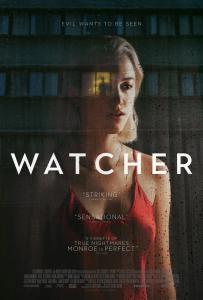 5. The Watcher – For three-quarters of its running time, Chloe Okuno’s debut chiller looks as if it is going to turn more common depictions of stalking and harassment of women by men darkly on its head, and then disappointingly it doesn’t. Having said that, most of the film plays out as an atmospheric portrait of a stranger in a strange land struggling with an uncertain and creeping paranoia. If The Watcher had had the courage of its convictions it would have been something very special indeed, but it’s still a promising start for Okuno.
 4. Bones and All – Back to the Year of Eating Dangerously, the critics went wild for Luca Guadagnino’s cannibalistic rites of passage road movie. It had a lot going for it, with standout performances from Timothée Chalomet, Taylor Russell and Mark Rylance, and Bones and All is at its best as a verité examination of addiction and poverty. But it does outstay its welcome, and lurches awkwardly to its resolution, uncomfortably inverting some of the key story beats from the original novel.
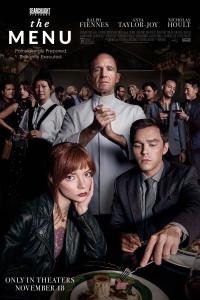 3. The Menu – Just in case audiences were in any doubt as to the year’s predominant theme, shortly after we’d recovered from the stomach churning captain’s dinner in Ruben Östlund’s brilliant polemical drama Triangle of Sadness, we were treated to Ralph Fiennes presenting an haute cuisine ‘last supper’ to an array of unpleasant super-rich diners in Mark Mylod’s perfectly constructed ten-course foodie horror. I awarded this eight stars on my first sitting, but having gone back for seconds I would happily add an extra Jameson star. There are a few holes, but it’s without doubt one of 2022’s classiest movies. As to why film and TV became so preoccupied with dangerous dining, I suspect that will be the subject of PhDs for years to come, something to do with kitchen and restaurant being the perfect metaphor for social inequality, and the unavoidable fact that, as the chef in The Menu puts it so elegantly, ultimately everything, no matter how delicious, does turn to shit.
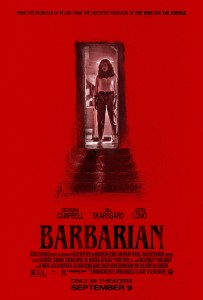 2. The Barbarian – The downside of watching a lot of horror is that it gets harder and harder to be horrified, so if I find myself genuinely wigged out in a darkened cinema, I think it’s only fair to throw a few plaudits, and Zach Cregger’s directorial debut had me cowering in my seat. Part of its success is down to its switchback, unpredictable structure, whereby you think you’re watching one film and it turns out to be something else altogether. You will never want to book an AirBnB again.
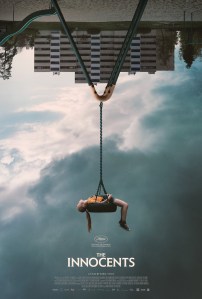 1. The Innocents – If I admired The Barbarian for properly scaring me, Eskil Vogt’s haunting Nordic horror pips it by scaring me and moving me as well. There’s a long tradition of ‘paedophobic’ cinema, where childish innocence becomes a conduit for evil possession of one kind or another, but in The Innocents, what wigs the audience out is that the children are simply children, flawed and utterly believable, albeit with the paranormal power to do terrible things. We’re frightened but we care. That’s a hard trick to pull off.
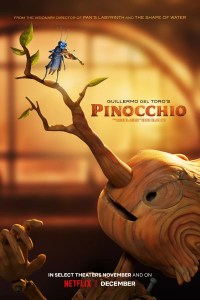 So that’s my top ten, although my most satisfying cinematic experience of the year was actually Guillermo del Toro’s Pinocchio. The classic children’s story might not class as horror per se, but with del Toro at the helm, the darkness is never far away, not least because it has been time-shifted to Fascist Italy under Benito Mussolini. In a stroke of storytelling genius, this Pinocchio doesn’t want to be a ‘real boy’ at all, after all, he’s a puppet and he can live forever. In del Toro’s retelling, the naïve immortal has to choose mortality – and inevitable death – to save the ones he loves. At a profound level that’s about as dark as it gets.
Martin Jameson
 Doctor Who News Star Trek News
 Sci-Fi Bulletin: Exploring the Universes of SF, Fantasy, Horror and Spy-fi!