Planet of the Apes: Interview: Last Frontier producer Martin Alltimes
War for the Planet of the Apes was one of 2017’s blockbuster hits – and heads to Blu-ray and DVD next week. There’s also another chapter to the Apes saga […]



War for the Planet of the Apes was one of 2017’s blockbuster hits – and heads to Blu-ray and DVD next week. There’s also another chapter to the Apes saga […]
 War for the Planet of the Apes was one of 2017’s blockbuster hits – and heads to Blu-ray and DVD next week. There’s also another chapter to the Apes saga now – Planet of the Apes: Last Frontier, a new videogame created by Andy Serkis’ company The Imaginarium. In the first part of our coverage, Head of Studio Martin Alltimes explains the genesis of the project to Paul Simpson…
I’ve been working in videogames for the last 20 years, mainly for large corporations and videogame companies such as Sony, Eidos and Disney. Towards the end of my time at Disney I started to become more interested in indie games and thought there would be an opportunity to get indie studios to create content that was as compelling [as the big companies’ games]; even if they couldn’t compete in the same budgets, they could in terms of ideas and aspirations.
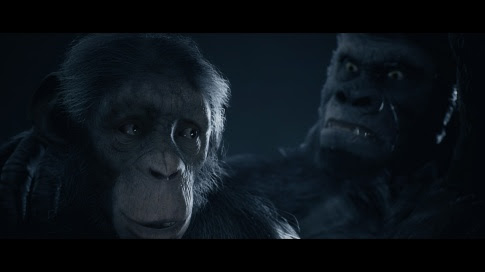 One of my favourite games of the last generation was a game called Heavy Rain, which was the first to try to reboot an early genre video game called the interactive movie. It was a game that eschewed normal game-playing mechanics, action mechanics, in favour of narrative and storytelling. I intuited that on the PlayStation4 and the Xbox One you’d be able to use the same technology that they use in movies to create realistic lifelike characters at an affordable budget. I happened to tell this to an agent friend of mine who represented Andy Serkis… and so I flew over and convinced them that a company with no track record making video games could make video games.
When it came down to choosing the franchise, the wife of one of Andy’s co-founders, Jonathan Cavendish, suggested a game based on Planet of the Apes. Andy had just finished Dawn… and we knew that Fox had greenlit the third movie.
When we went to see the movie, we realised it was a cool basis for a piece of interactive cinema, because in the Apes franchise there are no black and white characters. There are good and bad humans, there are good and bad apes, and no matter what viewpoint you have, everyone’s perspective is legitimate. Koba, who is technically a villain, but the reason he does what he does is understandable because of how he’s treated by humans. Similarly 97% of human civilisation has been wiped out so they are extremely vulnerable, extremely scared and it explains the reasons why they react in the way they do when their survival is threatened.
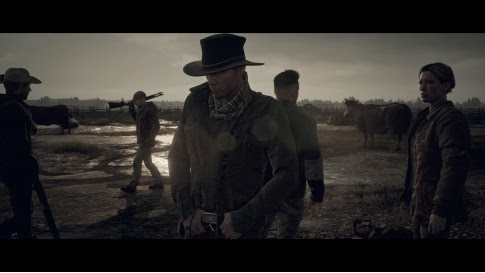 What we thought was interesting was you could have three different endings – the apes win; the humans win; and one where they find a way to live together. When you’re trying to write something that involves interactive narrative, what you want is the player’s actions to have meaningful outcomes in terms of how the story plays out.
When we spoke to Fox we all agreed that we didn’t do a “play the movie” game and base it on War… because the characters in that can’t die, and also there’d be no surprises. You know the characters well, you know what they can and can’t do – and also we wanted to be able to kill off characters. All the main characters in our game can live or die and that means there’s a lot more at stake.
Without spoiling it for people who’ve not seen War… yet, we had to set it in the timeline before War… and so we decided to pick a time literally halfway between the two movies. War… is set two years after Dawn… so it’s about a year before the events of War… The war that started at the end of Dawn… has started but our apes have splintered away. They’ve escaped and are fearing reprisals because they don’t want to get in conflict with the humans. They’ve migrated 800 miles northeast to the Rocky Mountains where they’ve found another cave network where they think they can live in peace. They arrive in the spring when goods are plentiful but when the story starts, winter is coming, food is running out, and they are forced to scavenge outside their safe haven. The need for finding a source for food to support the tribe is what sparks the conflict between the apes and the humans.
 We knew that in the movies the apes are the heroes, but we wanted to make you care about the humans so in our story you play as both human and ape characters and we wanted you to empathise with both sides of it. They’re both drawn into this conflict for reasons of survival and how they decide to deal with it once conflict is initiated is really down to the player. It’s legitimate to go all out to kill humans, or kill apes or find a way to live together. And as in the real world there are forces outside your control that are bucking against whatever decision you are making because not everybody agrees with everything.
Depending which path you choose, the path is between two and a half and three hours long and once you start making choices, it’s a choice every 20-30 seconds. There’s a lot of back and forth in terms of the dialogue. One of the things we wanted to do was let you legitimately change your mind, rather than committing to a course of action and then realising what the consequences might be. This also allows more natural dialogue so one character can explain one point of view, you can react to that; another character explains another; and finally you can come to a conclusion and decide how to react. There’s a lot more back and forth than you usually get in these games.
In part 2, coming early next week, Martin discusses the practicalities of creating the game.
Thanks to Anita Wong and Izzy Jagan at Indigo Pearl for their help in arranging this interview.
 Doctor Who News Star Trek News
 Sci-Fi Bulletin: Exploring the Universes of SF, Fantasy, Horror and Spy-fi!