Interview: Jessica Martin
Actor, impersonator and artist – as her website name, ArtyMiss, suggests, Jessica Martin has many strings to her creative bow. Earlier this year, she continued her comics career illustrating a […]



Actor, impersonator and artist – as her website name, ArtyMiss, suggests, Jessica Martin has many strings to her creative bow. Earlier this year, she continued her comics career illustrating a […]
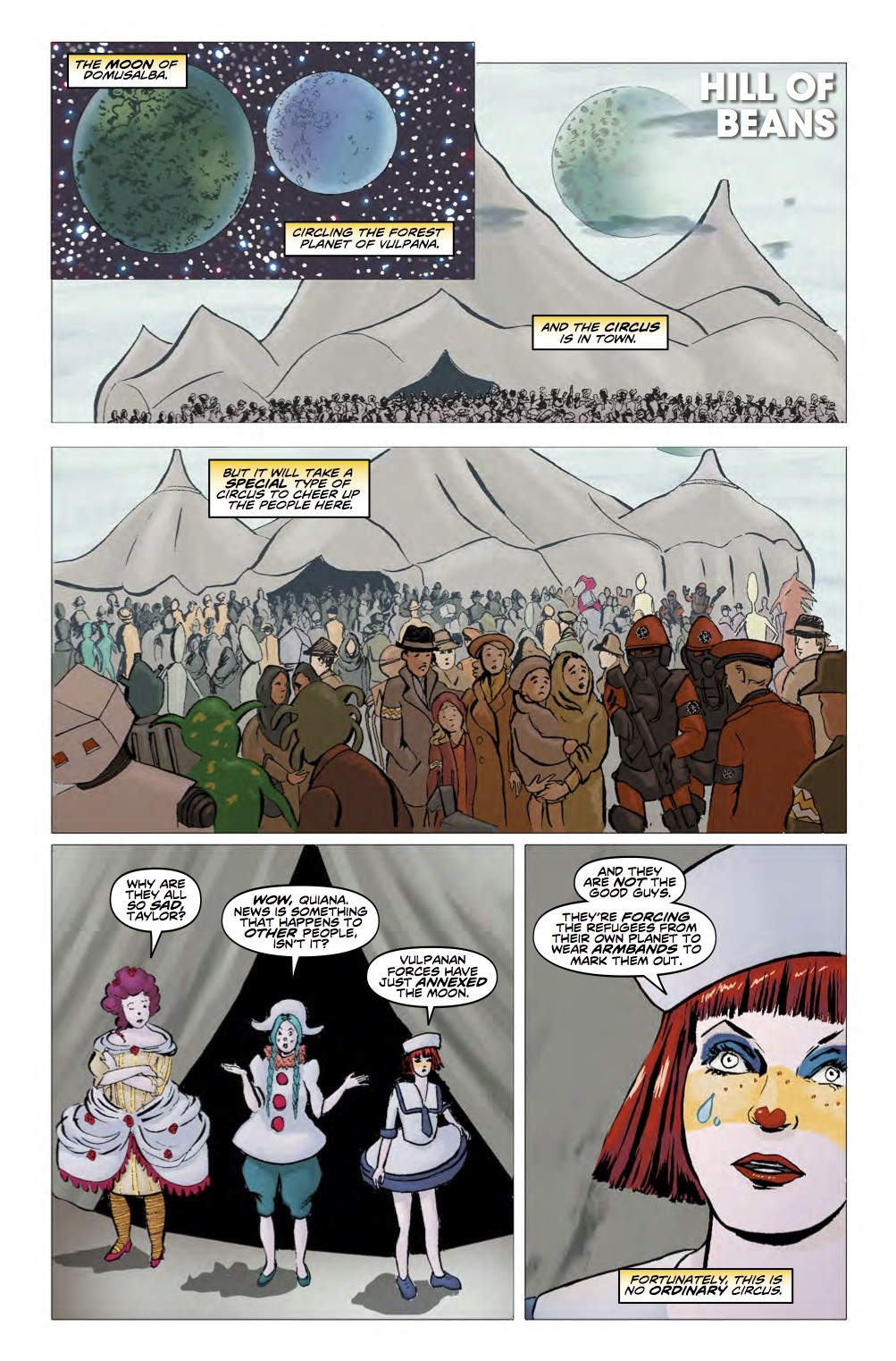
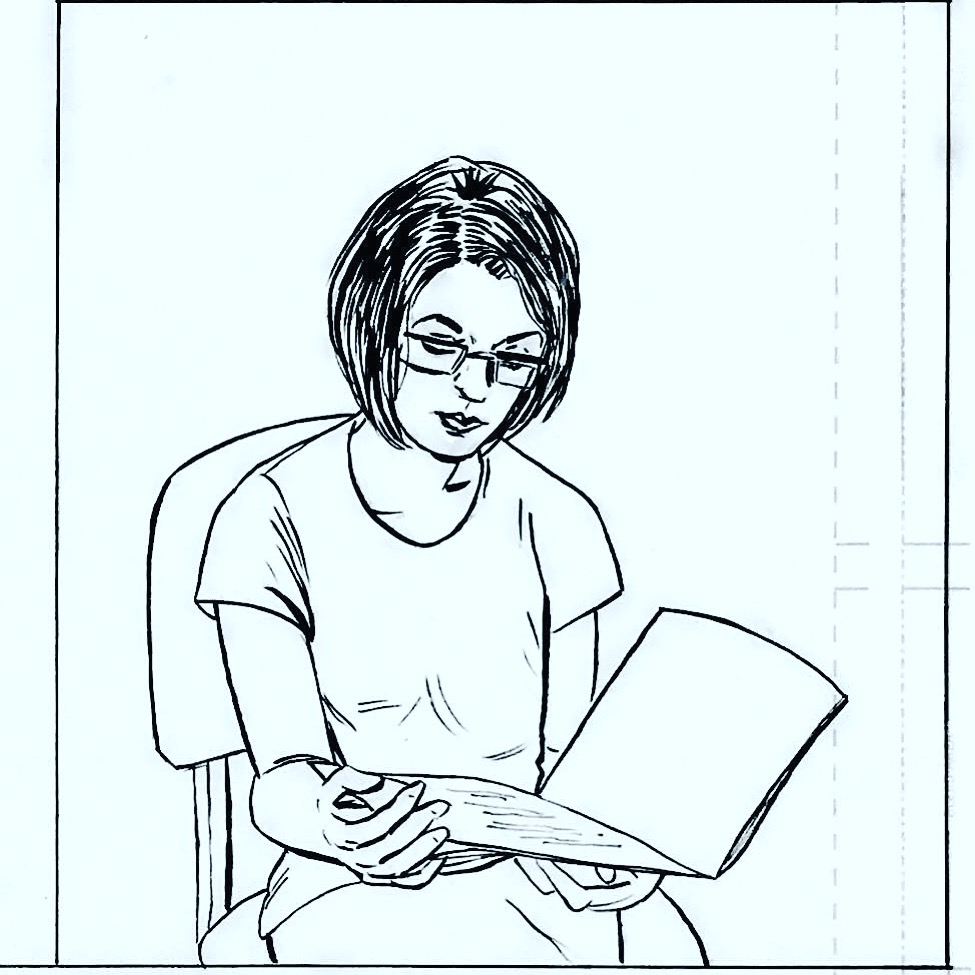 Actor, impersonator and artist – as her website name, ArtyMiss, suggests, Jessica Martin has many strings to her creative bow. Earlier this year, she continued her comics career illustrating a new story, Hill of Beans, for the Seventh Doctor, Ace and her character Mags from The Greatest Show in the Galaxy, written by Richard Dinnick for Titan Comics, now out in trade paperback.
How did you get involved in the Seventh Doctor comics?
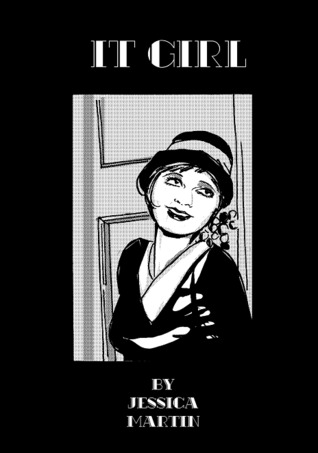
 In 2013, I wrote and illustrated my first indie comic, It Girl, about Clara Bow, and that was the result of a hobby that is turning into another career now.
Go back to even before then: in 2010, the epiphany came to me – I had a family trip to the Tate Modern and although I wasn’t hugely into the conceptual art at the gallery, I picked up a really lovely book called The Creative Licence – Permission to Be the Artist You Always Wanted to Be, by Danny Gregory. Essentially the book is a call to arms for all frustrated artists, people that maybe sketched in their childhood and left it behind, or even had never drawn before and thought they’d really like to have a go at this. I did sketch as a child; aged 18 I did A Level Art, and my focus was always on things to do with movie stars. I was into old Hollywood movies from when I was yay high. My A Level subject was observational drawing and theatre design. It was all linked in to the fact I went on to become the actress that I still am today.
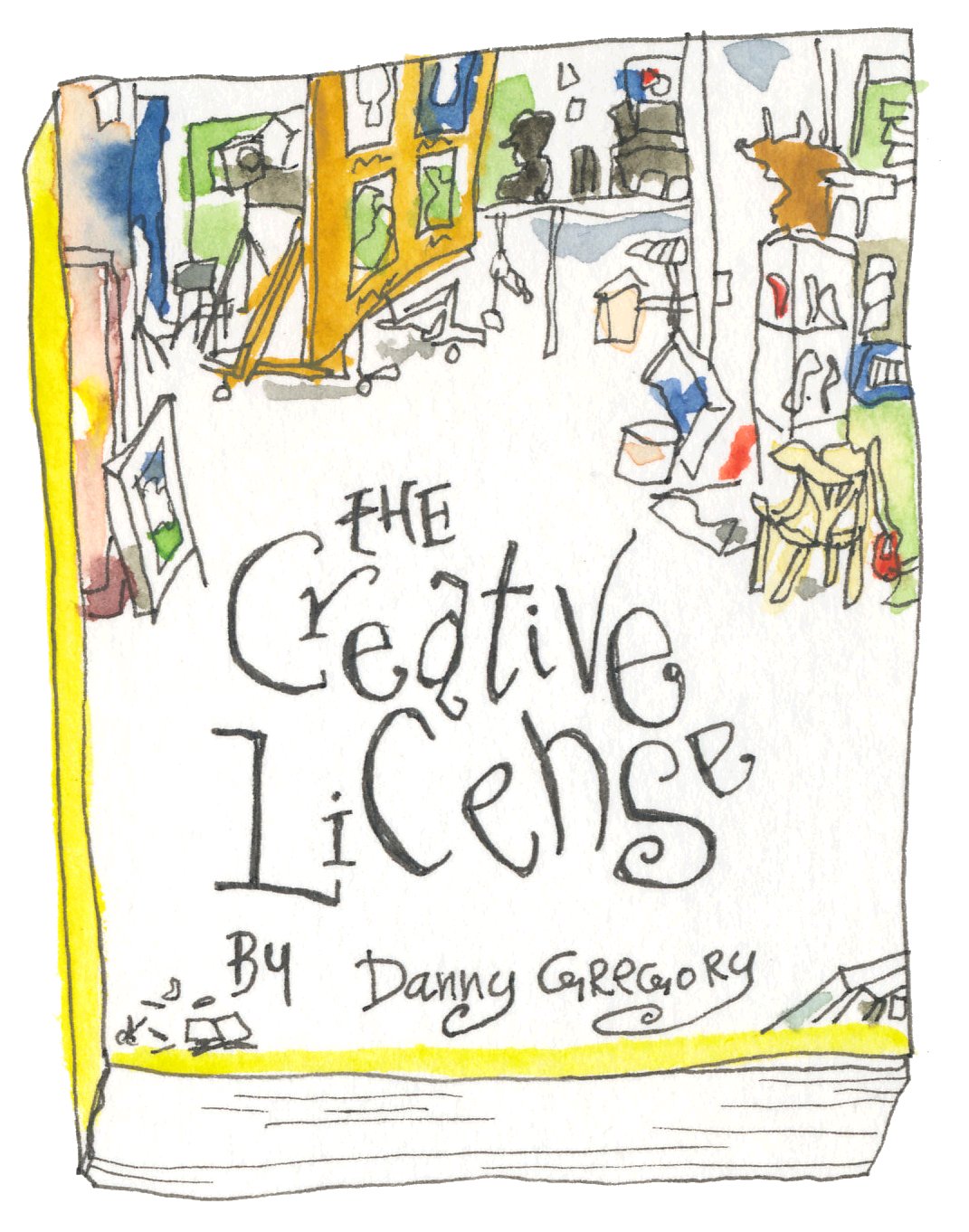 This book did what it said on the packet – it gave me the information to access my inner drawing muse, and from that day I started sketching. It wasn’t necessarily movie stars. I drew everything that was in front of me, because this was one of the things the book advocated: don’t judge what you’re drawing, just see everything as if you’re looking at it with new eyes; don’t even do it with a pencil. I launched into this, and it was a personal thing. I wasn’t sharing it with anybody aside from my family and close friends – “ooh I’ve got this lovely hobby again”.
A year after that I was doing Spamalot, the musical, playing the Lady of the Lake, and my King Arthur in that production was Phil Jupitus. As possibly some of the SFB audience know, he’s a huge comics fan, and he’d go into Forbidden Planet or wherever and pick up the comics as they came out. Because I knew he had an interest in art generally, I showed him these sketches I’d been doing, and he looked at them, looked at me and said, [in PJ tones] “Well, you should be doing a graphic novel shouldn’t you, like, do a comic, you’re an actress, you can write a script.”
It was like a lightbulb! Yes, this was absolutely the way to apply my new-found passion for art. Much as I can indulge and relax in a hobby, I do like things to have a purpose to them, so for me that was the discovery of something that had been under my nose. As a child I had avidly read girls’ comics like Diana and Princess Tina, as well as Look-In. Oh my God, there was treasure in my back garden.
I didn’t realise the challenge. I started to read graphic novels of all kinds – Posy Simmonds’ Gemma Bovery, and I was really blown away by Alison Bechdel’s Fun Home. But I also loved Bryan Talbot, and the era that was the work of the Studio like Barry Windsor-Smith and Mike Kaluta: more fantasy and a romantic style of comics. That tied into me discovering Vertigo Comics – there was a line called Madam Xanadu and Fables, which I absolutely loved.
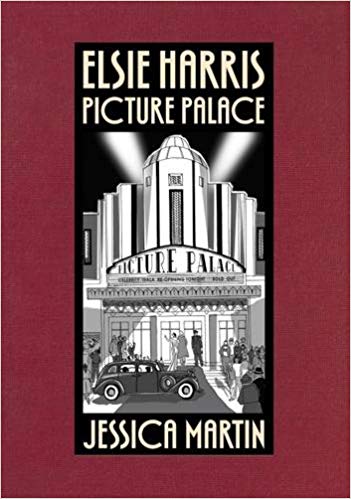 By 2012, I had started to formulate an idea for a long graphic novel – Elsie Harris’ Picture Palace. The subject of it is a girl in the 1930s who has a talent for art and a love for the films. She is going to have this rags to riches adventure behind the scenes of the film industry. I had no idea whether there would even be an audience for my kind of comic. I called in my accountability partner, my friend Bob; ever since I got into this thing of drawing, he’d got excited for me. He said, “If you want to do this seriously you’re going to need to go to conventions, you need to connect with people, you need to have deadlines.” I was being made to take it seriously from the get-go, so I had my little portfolio of pages of my book.
In 2012, I went to the London Super Comic Con, my very first one, and at the Titan Comics stall at the convention, I met Steve White who was then editing. He was so lovely, and said to me, “You obviously know how to tell a story.” When I think back, those pages were very primitive art-wise. I just had this need to put my story down in a comic. I can relate to a lot of people starting comics now – there are all sorts of different styles. Everybody’s got this urge: they want to tell this story and want to share it and put it out there. It’s a language – hieroglyphics. If people can understand what you’re saying, you’re most of the way there.
The journey for me then was making more connections. I got to meet Mark Buckingham, who was the primary artist on the Fables series for Vertigo and was very encouraging. Oddly both he and Steve said to me, “You look really familiar and I can’t put my finger on it”, and then the penny dropped! But I had no idea that my personal art journey would bring me back to my past, playing Mags in Doctor Who some 30 years ago.
 In 2012 also, the DVD of The Greatest Show in the Galaxy was released and I did a little commentary with some of the actors and [writer] Stephen Wyatt, so it was a time of reunion for us. I met up with Sylvester [McCoy] and Sophie [Aldred] again and I started to get invited to a few Doctor Who conventions, not many, so at the same time as my comics career was burgeoning, the interest in my classic Doctor Who era was also burgeoning, or rather people were interested in inviting me to that arena again.
My book, Elsie Harris, got shortlisted for a prize – Myriad Editions’ First Graphic Novel prize. I didn’t win and they didn’t publish me but I had the accolade. Matt West at Miwk Publishing was aware that I did this comic about Clara Bow; he bought a copy and loved it, and kept nudging as to what was happening. When I was shortlisted, we had a conversation and I realised we were both singing off the same page – he wanted to do a beautiful hardbound vintage style book which is exactly how I envisioned Elsie Harris to be. That was my first book – a small press, but still a proper publishing deal. That got published in 2015.
 The Doctor Who thing kept going. I wrote a comic strip which Mark Buckingham illustrated and a wonderful American, Charlie Kirchoff, coloured. Charlie is also a big Doctor Who fan and said, “Have you ever been to the States to do the big Gallifrey One convention?” I said, no never. He had a chat with Shaun Lyon who runs that convention and I got invited out. The first time I went was three years ago, in 2015, and I was introduced to Richard Dinnick, a prolific and very talented writer of Doctor Who amongst other things. Richard had a relationship with Titan and had a chat with [editor] Andrew James about a back up story with Mags in a future incarnation. He wasn’t the first person to have the idea: I think Stephen Wyatt and [script editor] Andrew Cartmel had been thinking about a Mags spin off a while ago along with Matt at Miwk but nothing came of it.
About a year ago Richard told me this strip was in the offing, but the i’s weren’t dotted and the t’s weren’t crossed. It was all a bit pie in the sky so I thought I’d believe it when I see it on paper. And then of course, as with all these things in publishing, it all happened very very quickly – this year I went to Gallifrey One again, where Titan Comics were announcing their new line, and the story with Mags was announced. There was not one little sketch on paper yet but it was all definitely happening.
I’m curious as to why, because she was only in four episodes, but that storyline seems to have captured the Doctor Who fans’ imagination. It is still there and on point.
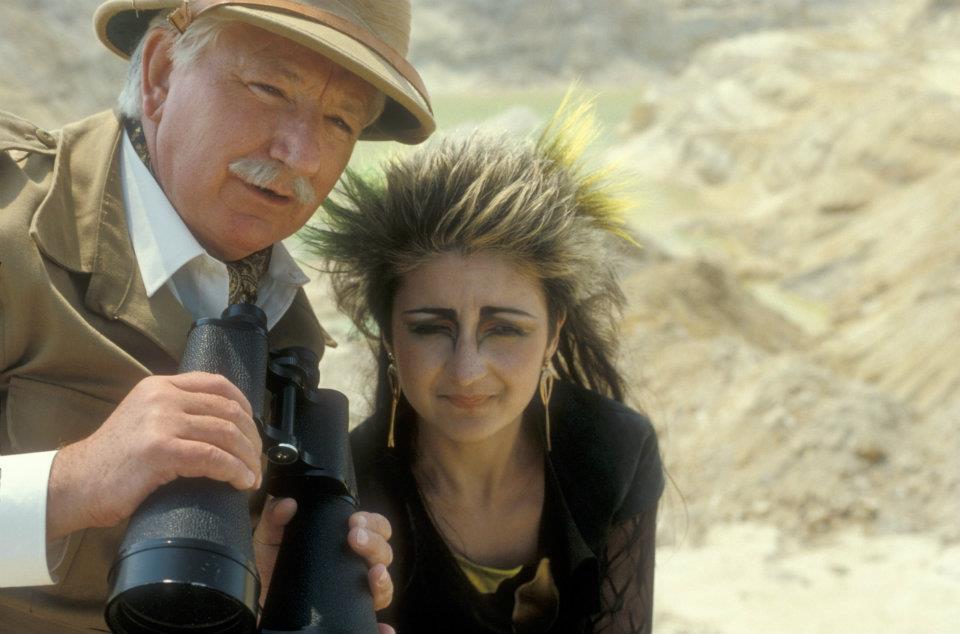 In many ways, it’s the epitome of Cartmel era Doctor Who, with larger than life characters – the Captain, Whizz Kid, the Clowns – which the show hadn’t done for some time. Because of its production history there are more anecdotes to be told. And it had a great cast.
It did – it was a Greatest Show in so many ways. I remember being quite starstruck myself, with the boy playing Adrian Mole [Gian Sammarco] in it.
You didn’t have much time to get that first issue sorted out?
No!
 How did you work with Richard – did he give you a full script with descriptions?
Richard is wonderful because he has a very good visual side to his writing. In the first instance he gave me the overall story, not the script as such, with lots of picture references. I was able to go away and design my primary characters knowing this was what he had in mind but there was also room for me to exercise my own imagination and style. He trusted me, and the storyline was written to suit my sensibilities. It had this post-modern Casablanca meets Blade Runner vibe to it, and it’s very much a character driven story as well.
The panic for me was the time constraints because I am not a dedicated comic artist – I am dedicated to it when I’m doing it but I am still a working actress. Of course, sod’s law, when I started out my hobby, the jobs were there but sometimes they weren’t that exciting, but one of the most exciting roles of my entire career came up at just the time I had this deadline for Titan – playing Dame Shirley Porter in a play called Shirleymander. That started rehearsals in April and I had to have my first eight pages to Titan for April to be published in the June edition.
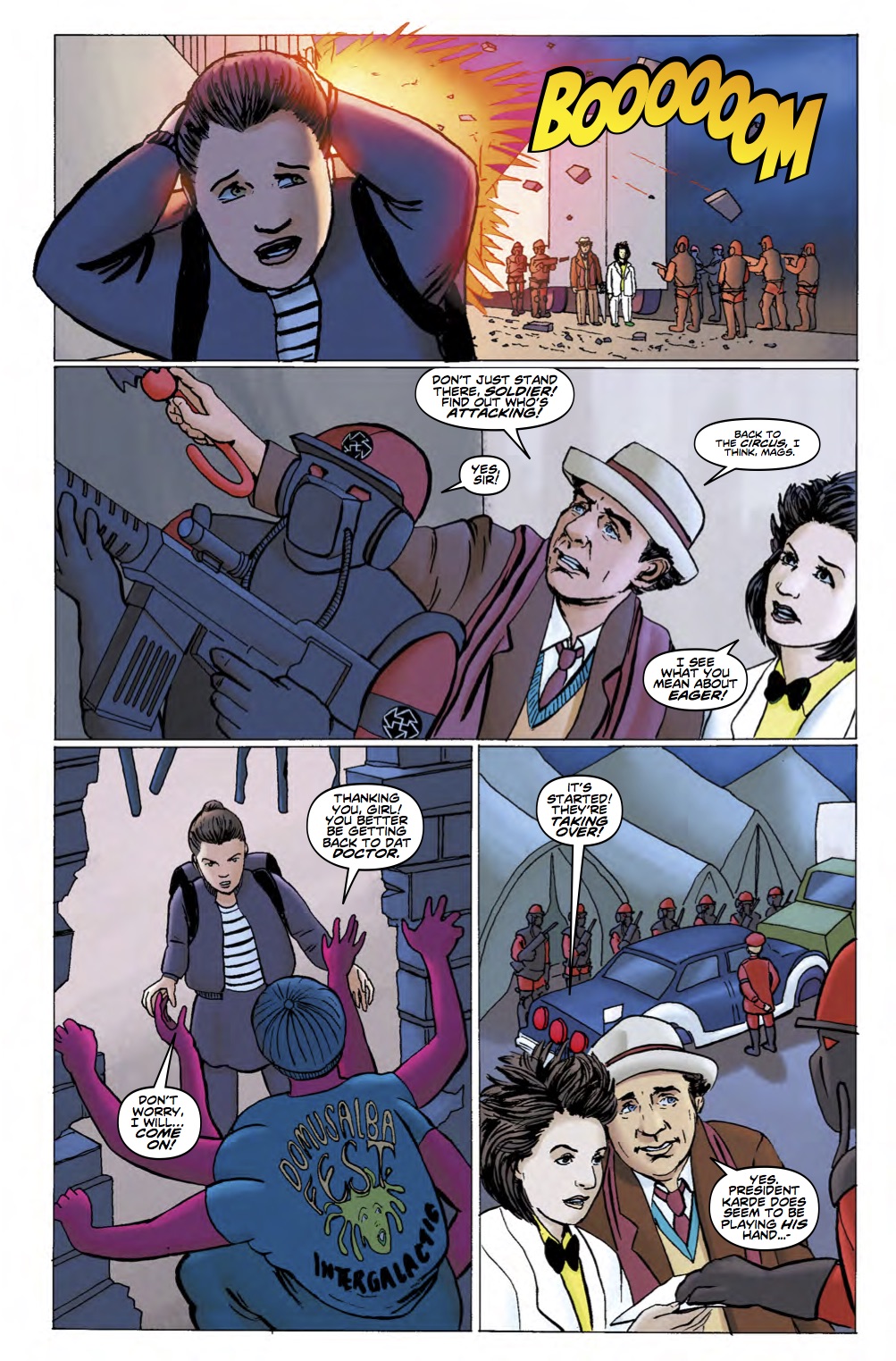 I had the usual artist’s panic. I think a lot of artists are up against the wire anyway – they have maybe two or three jobs going – but I had one job and I wanted to do it really well because it was my first job for Titan. I had to work harder and faster than I’ve ever worked in my life – but you know what? They say if things don’t break you they make you a better person and hopefully a better artist.
I feel that my first time at it, it wasn’t just the story, I wasn’t sure what Titan wanted from me – I knew they wanted me to do the job, but you look at all the amazing work that artists have done before and you get this, “oh my God, how can I do it?” feeling. But now I think, each to their own, and literally last night I finished the last page to the third part of the story and it really reaches a fantastic crescendo.
From a personal point of view I’m very proud of what I’ve done and I feel, in some respects, it might even look as if there’s a different artist on the third bit – but that’s how it goes. Every page that you do, you always improve in some way. It’s been a wonderful experience, because John Freeman is editing. He edited the comic strip [for Doctor Who Magazine] in the 1980s, and he’s been able to look at it fondly because he has an association with that era – but he’s terrific in helping and guiding and letting you play to your strengths as an artist too.
What’s been the biggest challenges for you?
 The biggest challenges have been there are lots of scenarios. If you were doing a soap opera, you’re just set in a house or a pub, but we’re in outer space – I’ve never done a sci-fi comic before so this is something new to me. I’ve got to invent objects, not just invent people. That was difficult… but it’s all doable and it all relates to when I started this sketching thing again on a grown up level. You don’t look at things as “Oh my God, that’s a tree I could never draw that!” You break everything down and say, “This is a shape, and it’s a shape whether it’s an alien, a human or a cup and saucer.” I think I’ve trained my eye to look at things in that way, and know that everybody’s had to do something for the first time.
I guess I’m older than a lot of people doing this kind of thing for the first time but I think I’m up to it. I can do it, it takes me a bit longer and a bit more effort than people who’ve been in the way of it for 20 years or whatever. I’m up for a challenge. When life gets too easy, I throw myself a new one.
The person reading doesn’t care – they want the story told well. I didn’t realise until very recently that Steve Dillon was just 17 when he did some of the early Doctor Who Weekly strips!
Wow! He was a prodigy; Sean Phillips was 15 when he started, but I don’t want to be compared to those prodigies (laughs).
You want to enjoy the story no matter the age of the writer or artist.
I hear you. My sister was looking at the comic, and I was showing her all the trials, and she said, “But Jess, no one thinks about that.” They’re reading the story, and the story grabs you or it doesn’t. If someone starts to look at those things, the story’s broken down here.
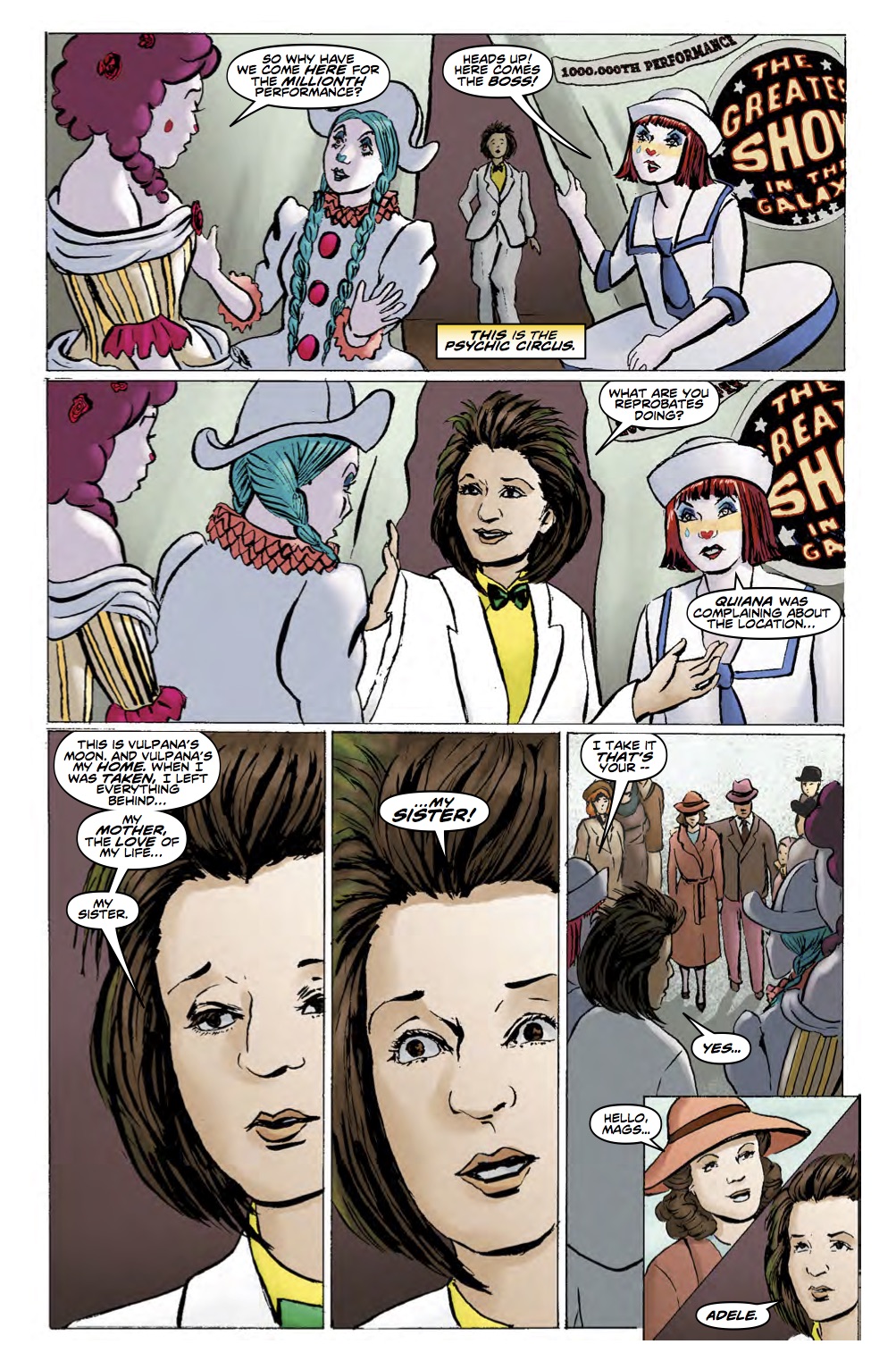 You’re drawing a character that’s physically based on you, that you played 30 years ago. How much input did you have into how she looks and behaves now, or was that solely in Richard’s hands?
The characterisation totally was coming from Richard. He obviously was into the story and the characters; there wasn’t anything that jars where I thought he’d obviously remodelled her based on some fantasy in his head as to what Mags was meant to be like. I like the fact that he’s modelled her on Rick from Casablanca. She’s secretly a werewolf (no plot spoilers there!) but she’s running a show and is also a wonderful humanitarian, looking after all those people from other planets and making sure people are treated fairly. Although there’s obviously a nostalgia thing going on, it’s so of the now, and without giving too much away, there are certain characters who are very like people who are in the news at the moment.
In terms of the costume, I immediately thought, “If it’s Rick from Casablanca, then I’m going to be having Mags in a dinner suit.” She’s got a slightly Doctor Who look about her too, which is kind of nice and poetic. I’ve kept her hair with a bit of the werewolf Gothic Susie Sioux spike going on, but a more sophisticated and more mature length of hair. But it’s still very much Mags and still very much me.
I think I know what my idiosyncrasies physically are and I’m not scared of them – a 15 year old me drawing a comic would have changed all the features to idealise and Barbie doll-ify myself, but I’ve taken the things that make me very much me and hopefully done it in an impressionistic way and made the character consistently Mags and me.
 Who do you feel are influences on your style? Or have you absorbed a lot over the years and things filter through your own hands and mind?
Exactly the latter – there is something in the way I draw that no matter how much I’ve improved in the 7 years I’ve done it consistently, there is something I do that people say, “It’s you. I can see the Jessica style in that.”
I used to take it as an insult, but now I think, “This is why anyone who wants my work will want it because it looks like my work.” But there are certain things that I have hopefully picked up and learned along the way.
I’m still trying to perfect it, but all my inking is done with a Windsor & Newton no. 3 brush. I learned how to ink from Mark Buckingham – he got me to collaborate on a one-off story for Vertigo. He did the pencils for it then gave me the pages to finish in ink, and he spent some time teaching me how to dip a brush in the ink and do the thick to thin lines. I suppose maybe if I wasn’t doing that much work I would go digital but I don’t think it would save that much time and I like the feel of doing the inking and the fact there’s a finished physical piece of work at the end. I’ve already had a query from someone before the first issue came out asking if there was a chance of getting some original art. So that’s there. That’s not the reason I do it, but it’s nice to have something that’s like, “I made this. Here it is. On a sheet.”
 That analogue thing is something that survives. There are files on computers from The Greatest Show era that are unopenable!
I used to love to going to see certain artists at art galleries – I used to marvel that there’s this painting on the wall that’s 600 years old and taken care of. It’s fabulous, a human being did it. I think that there will be, within the school of artists coming up, people who want to do their stuff analogue, that goes with all the artisan coffee, and the cassette recorders in Urban Outfitters. Actually in speaking to the traditional, I’m in a way being innovative!
Jessica Martin’s Life Drawing. A Life Under Lights is released next year by Unbound. For more details on that click here. (NB pledges close on October 22, 2018)
For more on Jessica’s graphic work, check out ArtyMiss Publishing’s website here.
Thanks to Will O’Mullane for his help in setting up this interview. The Seventh Doctor trade paperback is out now and can be ordered here from Amazon.co.uk
 Doctor Who News Star Trek News
 Sci-Fi Bulletin: Exploring the Universes of SF, Fantasy, Horror and Spy-fi!