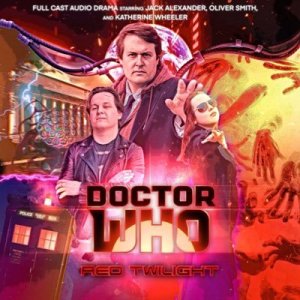
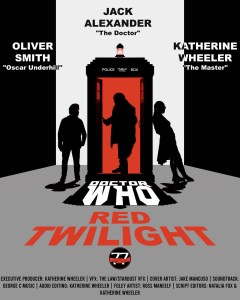
Katherine Wheeler and Natalia Fox are the creative team behind a new series of Doctor Who audios, Red Twilight, whose fourth episode is released this week, completing the first part […]
Katherine Wheeler and Natalia Fox are the creative team behind a new series of Doctor Who audios, Red Twilight, whose fourth episode is released this week, completing the first part of the first season. They chatted over Zoom with Paul Simpson…
Are you pleased with the reaction to the first couple of episodes?
Katherine: Very.
Natalia: Yes, it’s been great.
Katherine: It’s been lovely.
Natalia: We weren’t expecting how positive the reaction would be, it’s been really incredible.
Katherine: You put something out into the world, it’s a little bit self indulgent but you hope people might enjoy it at least and a lot of people have. The first episode’s got eight hundred and something views at the moment. But yes, we didn’t expect to get any reaction at all, so it’s brilliant.
OK, let’s step right back. What are both of your first memories of Doctor Who?
Katherine: Oh lord, it’s quite boring, for me. I’m of the age where I wasn’t alive when Seven’s era was coming to an end and the Eighth Doctor was there to fill that gap. I watched it as it came out from 2005 as a kid and never stopped watching it, really. Obviously family members would say ‘Doctor Who used to be Tom Baker, used to be Jon Pertwee.’ And I’d be like ‘Oh, that’s great. Anyway…’ So I started watching it and didn’t get the memo to stop, really.
I remember one time, I was about seven. I went to see a screening of The Brain of Morbius at The Quad, because I used to live in Derby with my parents. It was the first classic episode I watched, it’s one of my first memories of seeing anything to do with the show and they had a special guest on. I just remember being sat there bored senseless and just like ‘Dad, when can we go?’ I later remembered that the guest at the talk was Terrance Dicks and now, of course I’d kill to be in that room, pay any amount of money to be in that room, but it just completely passed me by.
Natalia: I’m the same, really. My mum’s always been into sci-fi so she put on Doctor Who in 2005. I was quite young and happy to watch it and then got very into it and have watched it ever since. I always say if people ask if I’ve watched Classic Who that technically I think I’ve watched all of it but I can’t remember most of it because I was very young and my uncle was babysitting me and he’d have classic Doctor Who on repeat. I have vague memories that it was on and I was watching it but I could not tell you what happened.
Katherine: I’m there to do that!
Natalia: I’ve watched, exclusively, the Master episodes, not gone any further yet.
You’ve not just watched it, you’ve taken it to the next level and you’re now creating it. What is it about Doctor Who that sparked you?
Natalia: Oh, I don’t know, it’s just cool isn’t it?
Katherine: I think, you do stuff like go to your first convention and then you make friends through the show. Over the years we’ve made so many friends, people we’ve talked to once, people we’ve talked to many times. I’ve always wanted to find a crowd of people I belong to and I just love my friends that I’ve made in the community, they’re my best friends, basically. Doing anything with them or for them or just creating something together is like the greatest form of joy because you’re making the thing that you’re passionate about. Everyone there wants to work together, being with each other, talking to each other all the time and so when we work on stuff, the people we work with are usually just our mates. You know when you play dress up when you’re a kid? We’ve created this fantasy realm that we’ve decided to just make real and hopefully people happen to enjoy it.
Natalia: Yes, it’s the community that keeps Doctor Who going. The community is so active; even when the show’s not actively airing, everyone’s talking about Doctor Who. People are going to cons and cosplaying Doctor Who characters and so it keeps you actively engaged with the fandom and then when Doctor Who’s not on you want to be able to make something so that everyone in the community has something to be like ‘Oh wow, here’s a little piece of Doctor Who.’
If you go back and look at interviews with people when the New Adventures started, thirty or more years ago, they’re saying the same things. Something about the show speaks to so many generations.
Natalia: It’s like it manages to be realistic while being very fantastical. There are parts you can relate to. As a kid I could relate to Rose, the very council estate living, modern day companion and then there’s parts you can relate to and then you see them going on these fabulous adventures and you’re like ‘Wow, I wish that was me.’
I think that’s the thing isn’t it, we all wish that…’Was that the TARDIS?’ You sort of look round the door. Is it going to be today that it arrives? And that feeling doesn’t go, I can tell you.
So on a practical level, why this story? Why tell it this way?
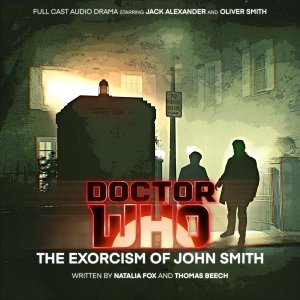
Natalia: This isn’t the first Doctor Who thing we’ve made. So, we’ve made three fan books in the past, so our journey with making Doctor Who started there, making these fan books that we sold for charity. We made one about Sacha Dhawan’s Master and he has a copy of it. So it’s like the love for the show inspired that and now it’s moved into an audio form.
Katherine: I think the genesis of the audio started about two years ago. Jack had been asked to be the Doctor and play him in a little story of someone else’s just as a one off, for a laugh. There were some ideas floating around the place about making something, but nothing concrete. Fans are always coming up with new things, making new things, starting them and they might not go anywhere. Jack, the lovely man he is, said to me, ‘If we ever did do something, would you want to come and play The Master?’ I said OK. I’ve not been in the fan audio world really but I’ll do that.
Months went by, nothing came of it, and I was round visiting Nat in Norwich and suddenly, I was sitting on the sofa and I was like ‘I’ve just got this brilliant idea…’
Nat here is a librarian so I was in the library and they were in charge of about forty children, making their little friendship bracelets for a craft activity. I was just sat there thinking ‘I have just had the best idea for a Doctor Who story that I’ve ever had and I have to tell somebody.’ And bless them, I was just like ‘Nat, don’t mind me for one minute, I’m just going to get on my phone and ring a few of our friends and pitch this idea to them.’
They were like, ‘Alright, OK.’ I said ‘I’ll be right back, I’m going to help you with your crafts.’ One hour later and the session was over and I was still there and they found me still on the phone just raving about this thing I’d just thought up. And then it spiralled and spiralled.
I think, as the series goes on you’ll be able to see the original idea that I had unfold— and as most Doctor Who series do, it has a big idea, it has an arc behind it. It was this one beginning idea that spurred me to just make the thing and then eventually a year and a few months later, it’s out. We had planned exactly what we were going to do with it and exactly where we were going to go with it.
So what’s been the biggest challenge in terms of the story’s creation?
Katherine: I wouldn’t describe it as a challenge, in a way, but maybe the most intricate aspect of it is balancing. You want to be able to let people play in your world and write their stories and have their own ideas and so you say, ‘You write this and we’ll turn it into this fully produced audio.’ But you’ve also got to say ‘Well, I don’t want to lumber them with too much of this arc to tell.’ It’s the balance of letting people play in that sandbox and telling one coherent story with it.
Natalia: In creating the story, the ultimate series arc went through so many different variations because we had the idea of ‘This is where I want it to go, this is how I want it to end.’ But then it was getting it to that point. It had gone through so many different variations and so many different things, there was so much talking about it and that was so hard, finding a way to actually make what you wanted to tell possible.
Katherine: So enjoyable. As soon as we found the way it was Eureka!
Natalia: Then we were able to go back through and thread all these little references to it, right from the first episode to where it’s ultimately going to end up.
The character of the Doctor to me from listening to both episodes, there is an element of the Shalka Doctor, the Richard E Grant…
Katherine: Jack was very pleased when he read that in the article. He was like ‘That’s brilliant, I’ll take that.’
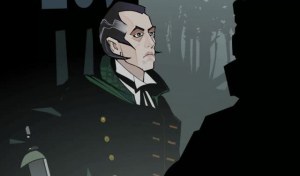
There are the arrogant Doctors – Colin Baker and Peter Capaldi – both of whom suffer at the beginning by being so unlikeable. But what you’ve managed to do is have that slightly unlikeable quality that Richard E Grant has as the Shalka Doctor without him being a pain in the arse.
Katherine: Yes, that’s a great compliment, thank you.
How much of that comes from you guys writing and script editing and how much of that has come from Jack in terms of how he wanted to play the Doctor?
Katherine: I think a lot of the original ideas came from Jack. Originally his incarnation was going to be very brash, very arrogant but as the character evolved, we put motivations behind what he does and how he does it so it’s become more refined. It’s like a blend of some of the Doctors but it’s its own new thing because of the motivations this character has, to do what he does.
You cannot not know that’s the Doctor, in that first scene.
Katherine: Yes.
Do you know in your minds where this Doctor fits into the television timeline?
Katherine: Yes.
Natalia: We know in our heads but we’re never going to say in the show where it fits in because it’s in the far future – which will become apparent as the show goes on.
By the far future you mean in the Doctor’s far future?
Natalia: It’s a long way in the Doctor’s future, yes.
Katherine: Because we thought, we don’t want to get ensnared in any sort of continuity that’s been left. People love these Doctors and eventually, possibly, probably, there’s going to be a next Doctor, a new Doctor, maybe a Doctor after that and so we wanted it to be out there and not too close to what the show might actually touch on. Because people know those Doctors and they don’t know this Doctor, really, yet.
The companion… often, looking at the history of the show, they’re creating a companion that is acting as a mirror for the Doctor in different ways, so that we find out more about them, so with Capaldi, Clara becomes the career as opposed to almost the girlfriend that she was with Matt Smith. So, was Oscar created in order to tell us more about the Doctor or did he come in fully formed and we’re learning about both him and the Doctor?
Katherine: I think the latter, definitely. You do get the reluctant companion archetype in Doctor Who – Tegan, Belinda – but it’s not very often done for obvious reasons. The companion is always the audience surrogate, the companion is the audience and it was more like, we want Oscar to feel very whole. You’re learning about him and he’s got a lot of depth to him because you’re being dragged around after this Doctor. And he is too: he can’t stop running, essentially. And I think it was really interesting as well to do that reluctant archetype justice because we could have made him very willing to get onboard and then made him a mirror to the Doctor but it almost wouldn’t have explored the extent of what we can do with him.
OK, so without spoilers, does he have a very specific arc himself this season?
Katherine: Yes, he does, yes. There’s a throughline.
But that’s two different things. A throughline is where the character goes from A to B, an arc is that the character learns something on his way from A to B and that’s a big difference…
Natalia: He learns things, he goes places, and his and the Doctor’s relationship also goes through a lot. They have their moments and then they have their friction which is very interesting to get to show because you don’t get to see the Doctor and the companion having that much friction, usually. But because of the whole reluctant thing, Oscar and the Doctor’s relationship is able to have its own arc.
Katherine: He learns things from travelling with the Doctor, he’s exposed to situations that you might not necessarily see as much on TV and that changes how he develops as a companion. What things he learns.
What’s been the most satisfying moment for you creatively?
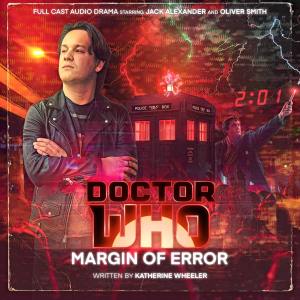
Katherine: Probably listening to episode 1.
Natalia: Yes. Listening to episode 1 was brilliant because we’ve obviously edited it, we’ve heard it to death and you get to a point where it’s like ‘I can’t tell if this is good or not. I can’t tell.’ You hear it with some layers, you hear it with SFX and you’re like ‘OK, this has added something, is it good?’ And then you hear it with the soundtrack and you’re like ‘Oh my God.’ Everything comes together beautifully.
Katherine: With episode 1, there’s been, honestly, so many satisfying moments, at least once a week. The first time we did a read through and realised that this was really going to work and it was really exciting. The first time we went to a studio, on rare occasions we were allowed into a studio to record. But it was probably about three weeks ago, after hearing the draft of the first episode for the first time and I’d been feeling awful about it. I’d been feeling so stressed because I’d seen it from a little synopsis on a sheet to a bare bones structure, to a script, script edited, read through, recorded, then Nat and I stitched it all together – and then there was the SFX layer, I was thinking ‘Is this still good enough?’ These SFX are amazing but is it enough? And then, we get the final draft from our lovely sound designer Ross and we sit down and we’re like ‘OK, let’s just listen to this from start to end.’ It brought me to tears quite a few times. We’ve made Doctor Who. This is what this is, this is Doctor Who, we’ve made it. That was very satisfying.
Lots of people come up with ideas and ideas are ten a penny. It’s actually taking it right the way through and having your name on something at the end and you need to take pride in that.
Katherine and Natalia: Thank you.
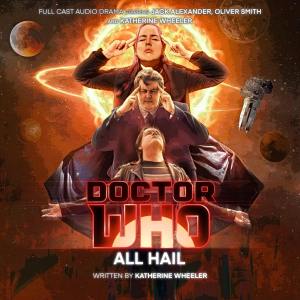
So how far ahead are you on the rest of the season?
Natalia: Actually, we’re surprisingly ahead of the schedule we’d planned for it-ish. We just did a read through for episode eight, which is the final episode of the second block and we’ll be in the studio this weekend, recording it, which we weren’t expecting, to have that recorded before the end of this year. So, we’re very nicely surprised that that was done and ready and we were able to get the studio, we were able to do everything. And then in terms of actually writing the episodes, we’re about halfway through the third block. So we’re halfway through the ending of the season, at the minute, writing wise.
Katherine: We’ve got a lot of stuff in place. We’ve essentially written the second block, all that’s left is to edit it, read it through, record it. And hopefully get it out some time halfway through the next year is the goal. But we know what’s going to happen episodes and episodes ahead. It’s being worked on basically, everything’s been worked on, concurrently at the moment.
So how much, if any, has changed from the reaction to episode 1? And from your own reaction to hearing episode 1, as a reality?
Katherine: We’re quite happy with what we’ve set up, what we’ve done. We haven’t changed anything. Hearing episode 1 go out and thinking ‘OK, this is set in stone now,’ we wouldn’t change a thing, honestly.
Natalia: Hearing episode 1 fully made gave us more ideas for just tiny little things to thread in. Like, just before we did the readthrough for episode 8, we just slipped in a little line that was a callback to Oscar in episode 1 and I don’t think we would have thought to put that in if we hadn’t just heard it. It’s good because it’s fresh in your mind again.
Katherine: You see what people pick up on. And what people don’t.
Natalia: There are hints to the series arc right in from episode 1, some of which people have noticed and some of which people haven’t and so it tells us how subtle we can get away with being in the future.
The fact that people haven’t picked up on it is as much on them as on you.
Natalia: I like when we have things that are very subtle and then you can look back on them and be like ‘Oh, OK.’ Off the top of my head, something that’s already been revealed was in episode 1, when the Doctor and Oscar carried the Master into the TARDIS. You heard the tiniest little groan from the TARDIS and the Doctor goes ‘Ugh, not now.’ And by the end of the episode, she’s revealed to be the Master and it’s like, that tiny little noise was a very subtle thing that no one picked up on at the time.
Or commented on more to the point.
Natalia: Yes, no one commented. It would be nice if people picked up on it. No one…because we did a live chat and I was waiting to see if anyone went ‘Hmm, that’s suspicious.’ And they didn’t.
What’s one moment from television Doctor Who that for you, sums up the programme? It can be classic, new, whatever. If you met somebody who had never seen the show and you wanted to show them one moment or one scene…
Natalia: That’s a hard question.
Katherine: I’ve got a few answers actually. This might be a wildcard pick for some people but… a scene that I adore and love is the ninth Doctor sitting down to have dinner with Margaret Slitheen [in Boom Town]. It’s 2005, golden tinted television and it’s sort of Doctor Who in a nutshell, really. They catch the bad guy and then the Doctor sits down and has a conversation with the bad guy. The episode resolves at the very start and spends its time exploring this sort of moral, what happens next? And there’s that scene that I think does sum up Doctor Who as a whole because it’s the Doctor giving someone their very last dinner, alive, and asking could you do it? And could he do it?
Natalia: I also have an extremely random pick. This really wouldn’t make sense, to see out of context but in Flesh and Stone, just the bit when the Doctor walks away from Amy and she has that countdown and her eyes close. Amy has a weird moment and you see the Doctor’s changed his jacket but you don’t really notice it or I didn’t notice it the first time I watched it. And then, when it’s revealed that he’s gone back through her timeline and that’s one of the moments that you then see again and you’re like ‘Woah, hang on.’ Suddenly that weird little thing that seemed like maybe someone had forgotten to tell Matt Smith to put the right jacket on is actually a really important thing. I love that, I love watching that scene and being like ‘Wow, this is really plot relevant and you’ll never know it.’ It’s one of my favourite things about Doctor Who is how they can thread things through like that.
Katherine: It’s a show where it does actually matter.
Natalia: Yes and the Harold Saxon posters, all leading up to the Utopia reveal. In the background of so many scenes you see ‘Vote Saxon, vote Saxon.’ And then you look back at it and you’re like ‘Woah. That was planned out and so cool.’
So, this is season 1, do you have any idea where you’ll go with season 2? Or will that be acomplete new set of characters?
Katherine: I couldn’t possibly comment. That’s just me being annoying. There’s thoughts, flying around. To say if it were a different set of characters or not would obviously be spoiling things.
Natalia: We have it planned out, where we’re going with it.
The first three episodes can be accessed via the YouTube channel here; episode 4 premieres on 11 December at 8 pm GMT.



 Katherine Wheeler and Natalia Fox are the creative team behind a new series of Doctor Who audios, Red Twilight, whose fourth episode is released this week, completing the first part of the first season. They chatted over Zoom with Paul Simpson…
 Katherine: Oh lord, it’s quite boring, for me. I’m of the age where I wasn’t alive when Seven’s era was coming to an end and the Eighth Doctor was there to fill that gap. I watched it as it came out from 2005 as a kid and never stopped watching it, really. Obviously family members would say ‘Doctor Who used to be Tom Baker, used to be Jon Pertwee.’ And I’d be like ‘Oh, that’s great. Anyway…’ So I started watching it and didn’t get the memo to stop, really.
 Natalia: I’m the same, really. My mum’s always been into sci-fi so she put on Doctor Who in 2005. I was quite young and happy to watch it and then got very into it and have watched it ever since. I always say if people ask if I’ve watched Classic Who that technically I think I’ve watched all of it but I can’t remember most of it because I was very young and my uncle was babysitting me and he’d have classic Doctor Who on repeat. I have vague memories that it was on and I was watching it but I could not tell you what happened.
 Katherine: I think, you do stuff like go to your first convention and then you make friends through the show. Over the years we’ve made so many friends, people we’ve talked to once, people we’ve talked to many times. I’ve always wanted to find a crowd of people I belong to and I just love my friends that I’ve made in the community, they’re my best friends, basically. Doing anything with them or for them or just creating something together is like the greatest form of joy because you’re making the thing that you’re passionate about. Everyone there wants to work together, being with each other, talking to each other all the time and so when we work on stuff, the people we work with are usually just our mates. You know when you play dress up when you’re a kid? We’ve created this fantasy realm that we’ve decided to just make real and hopefully people happen to enjoy it.
 Natalia: It’s like it manages to be realistic while being very fantastical. There are parts you can relate to. As a kid I could relate to Rose, the very council estate living, modern day companion and then there’s parts you can relate to and then you see them going on these fabulous adventures and you’re like ‘Wow, I wish that was me.’
 Katherine: I think the genesis of the audio started about two years ago. Jack had been asked to be the Doctor and play him in a little story of someone else’s just as a one off, for a laugh. There were some ideas floating around the place about making something, but nothing concrete. Fans are always coming up with new things, making new things, starting them and they might not go anywhere. Jack, the lovely man he is, said to me, ‘If we ever did do something, would you want to come and play The Master?’ I said OK. I’ve not been in the fan audio world really but I’ll do that.
 Katherine: I wouldn’t describe it as a challenge, in a way, but maybe the most intricate aspect of it is balancing. You want to be able to let people play in your world and write their stories and have their own ideas and so you say, ‘You write this and we’ll turn it into this fully produced audio.’ But you’ve also got to say ‘Well, I don’t want to lumber them with too much of this arc to tell.’ It’s the balance of letting people play in that sandbox and telling one coherent story with it.
 There are the arrogant Doctors – Colin Baker and Peter Capaldi – both of whom suffer at the beginning by being so unlikeable. But what you’ve managed to do is have that slightly unlikeable quality that Richard E Grant has as the Shalka Doctor without him being a pain in the arse.
 Do you know in your minds where this Doctor fits into the television timeline?
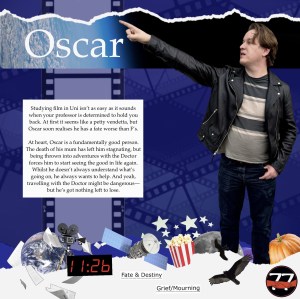 Katherine: I think the latter, definitely. You do get the reluctant companion archetype in Doctor Who – Tegan, Belinda – but it’s not very often done for obvious reasons. The companion is always the audience surrogate, the companion is the audience and it was more like, we want Oscar to feel very whole. You’re learning about him and he’s got a lot of depth to him because you’re being dragged around after this Doctor. And he is too: he can’t stop running, essentially. And I think it was really interesting as well to do that reluctant archetype justice because we could have made him very willing to get onboard and then made him a mirror to the Doctor but it almost wouldn’t have explored the extent of what we can do with him.
 Katherine: Probably listening to episode 1.
 So how far ahead are you on the rest of the season?
 The fact that people haven’t picked up on it is as much on them as on you.
 Katherine: I’ve got a few answers actually. This might be a wildcard pick for some people but… a scene that I adore and love is the ninth Doctor sitting down to have dinner with Margaret Slitheen [in Boom Town]. It’s 2005, golden tinted television and it’s sort of Doctor Who in a nutshell, really. They catch the bad guy and then the Doctor sits down and has a conversation with the bad guy. The episode resolves at the very start and spends its time exploring this sort of moral, what happens next? And there’s that scene that I think does sum up Doctor Who as a whole because it’s the Doctor giving someone their very last dinner, alive, and asking could you do it? And could he do it?
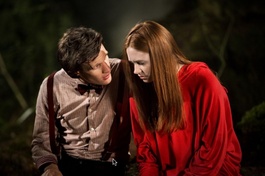 Natalia: I also have an extremely random pick. This really wouldn’t make sense, to see out of context but in Flesh and Stone, just the bit when the Doctor walks away from Amy and she has that countdown and her eyes close. Amy has a weird moment and you see the Doctor’s changed his jacket but you don’t really notice it or I didn’t notice it the first time I watched it. And then, when it’s revealed that he’s gone back through her timeline and that’s one of the moments that you then see again and you’re like ‘Woah, hang on.’ Suddenly that weird little thing that seemed like maybe someone had forgotten to tell Matt Smith to put the right jacket on is actually a really important thing. I love that, I love watching that scene and being like ‘Wow, this is really plot relevant and you’ll never know it.’ It’s one of my favourite things about Doctor Who is how they can thread things through like that.
 So, this is season 1, do you have any idea where you’ll go with season 2? Or will that be a complete new set of characters?
 Sci-Fi Bulletin: Exploring the Universes of SF, Fantasy, Horror and Spy-fi!