Interview: Pierce Brown (Iron Gold – 2018)
The Howlers are ecstatic – after two years, fans of the Red Rising universe can find out what happened to Darrow and his friends after the rising came to its […]



The Howlers are ecstatic – after two years, fans of the Red Rising universe can find out what happened to Darrow and his friends after the rising came to its […]
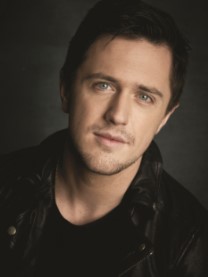 The Howlers are ecstatic – after two years, fans of the Red Rising universe can find out what happened to Darrow and his friends after the rising came to its head in Morningstar. Pierce Brown has been travelling the world to promote the first book in the new trilogy, Iron Gold. During a brief downtime, he chatted once more with Paul Simpson…
Everyone always asks writers about what the hardest part of writing something is; but what was the easiest part of writing the new trilogy?
 The two things that were easiest were the things that felt like a natural evolution.
The easiest part has been expanding the world because the easiest parts are the parts the writer is interested in – so going down the rabbit hole of finding out what the barracks are like, or the criminal enterprises are like. I was a little worried: I thought that would be the most difficult part, but surprisingly it became the easiest.
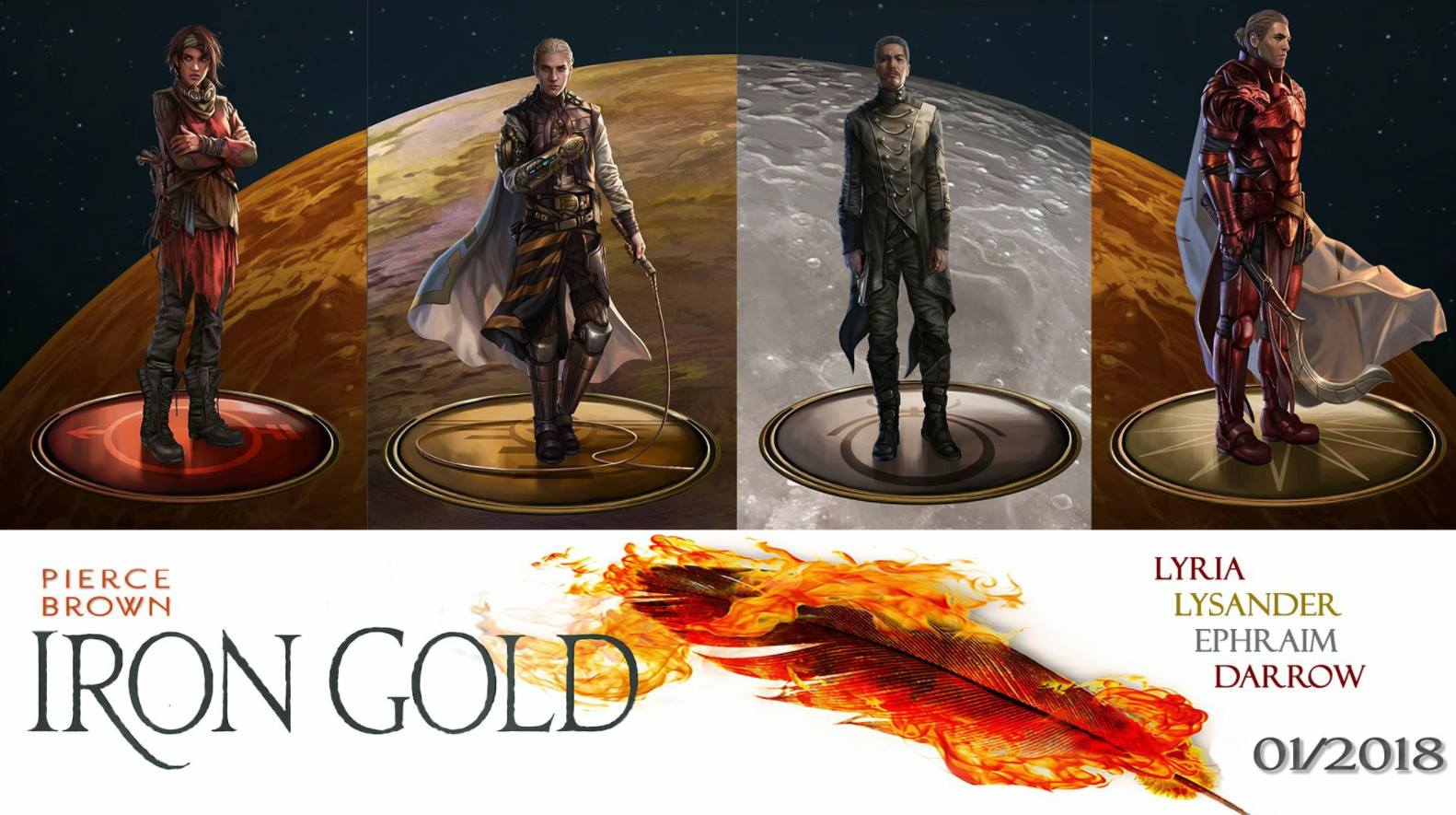
The second easiest was the creation of Lyria’s character. It felt spiritually similar to Darrow’s beginning but in a very different way, without giving her essentially the Marvel treatment, the superhero powers. We were able to explore the world that Darrow would have been able to have seen at first without her having the ability to affect things in the way that Darrow did with him being changed into a Gold.
 I wondered if that was one of the starting points for Lyria, as an alternate path that Darrow could have taken. But her world has been changed by everything that happened in the original trilogy, so how much do you think she would have been the same person if you’d written her as a character ten years earlier in the timeline?
I think she wouldn’t have been as disillusioned as she is. She has this resilient spirit but what defines her character is she’s been promised so many things. She’s been suckered in by the dream and the ideology and the beautiful speeches of the people who were the heroes in the original trilogy. And her disillusionment stems from expecting the world to go one way and it ending up going completely the opposite way because it feels like she’s been betrayed by her own kind.
If she’d been in Darrow’s position she wouldn’t have had that: she’d have known the world was bad; she wouldn’t have had the betrayal that Darrow had, but overall she wouldn’t have been as disillusioned because she would have had an enemy to fight. In this one she doesn’t even know who the enemy is.
That mirrors our own existence pretty remarkably because the difference in Darrow’s character – what really helps define him and creates his moral compass – was the trauma happening to him, was such injustice. That was able to shape his character, and one of the reasons I created him was to be able to have that pure sense of purpose. Right off the bat, Lyria is robbed of that. Of course, she suffers casualties, she suffers people dying, but it’s done in a way that it’s done by her own people, which creates a moral ambiguity and an inability to create the moral compass that Darrow had. Really in many ways she is kind of lost.
 It feels to me that in Iron Gold, there are even more shades of grey than there were in the original trilogy.
The shades of grey – that’s the whole reason for this series. I wanted to explore that in a way that was honest to the original promise. Red Rising has never been about a binary, about good and evil; it’s always been about shades of grey. The new points of view were used to show us multiple perspectives on Darrow, multiple perspectives on the rising and to show how things aren’t as simple as good and evil.
The original trilogy promised that but it ended in such a climactic and fulfilling note that this is almost a natural progression that mirrored my own perception of the world. I started seeing more shades of grey as I got older. That’s the point of the points of view: to show how conflicting interests and conflicting viewpoints on events happening, and hopefully mirroring to some degree our own world.
Are there specific areas of our world that you’re drawing from?
It’s less me trying to define and portray our current political climate than me trying to illustrate what I see as presiding themes in our existence. You’ve always had migration, you’ve always had war zones and immigrants from those war zones – refugees – and they’re obviously part of the political zeitgeist now, but I feel that any work of fiction should ask questions about its own time.
I’m not arrogant enough to presume I have the answers to those questions, but I feel I should bring out and reflect things from our own world. One of the things that science fiction can do so well is talk about those themes that run through history, and in my mind it doesn’t necessarily reflect our world as it does reflect something that is common to human existence – which is refugees; which is power vacuums being filled by [disreputable] political parties; which is the questioning of democracy or communism, or the argument between policies and politics with armies backing the argument.
 You are bringing these questions up for a readership that perhaps might not have been considering them at this stage in their lives. Do you have that consideration at the back of your mind when you’re writing, that you’re opening their minds to new concepts?
I think I do and that goes back to what I believe the central mission of an author or artist should be, which is to help people look at their own world and ask questions. I don’t think it’s the artist’s position – mostly because of the artist’s temperament – to give answers to the questions. I think it’s our duty to provide the questions themselves.
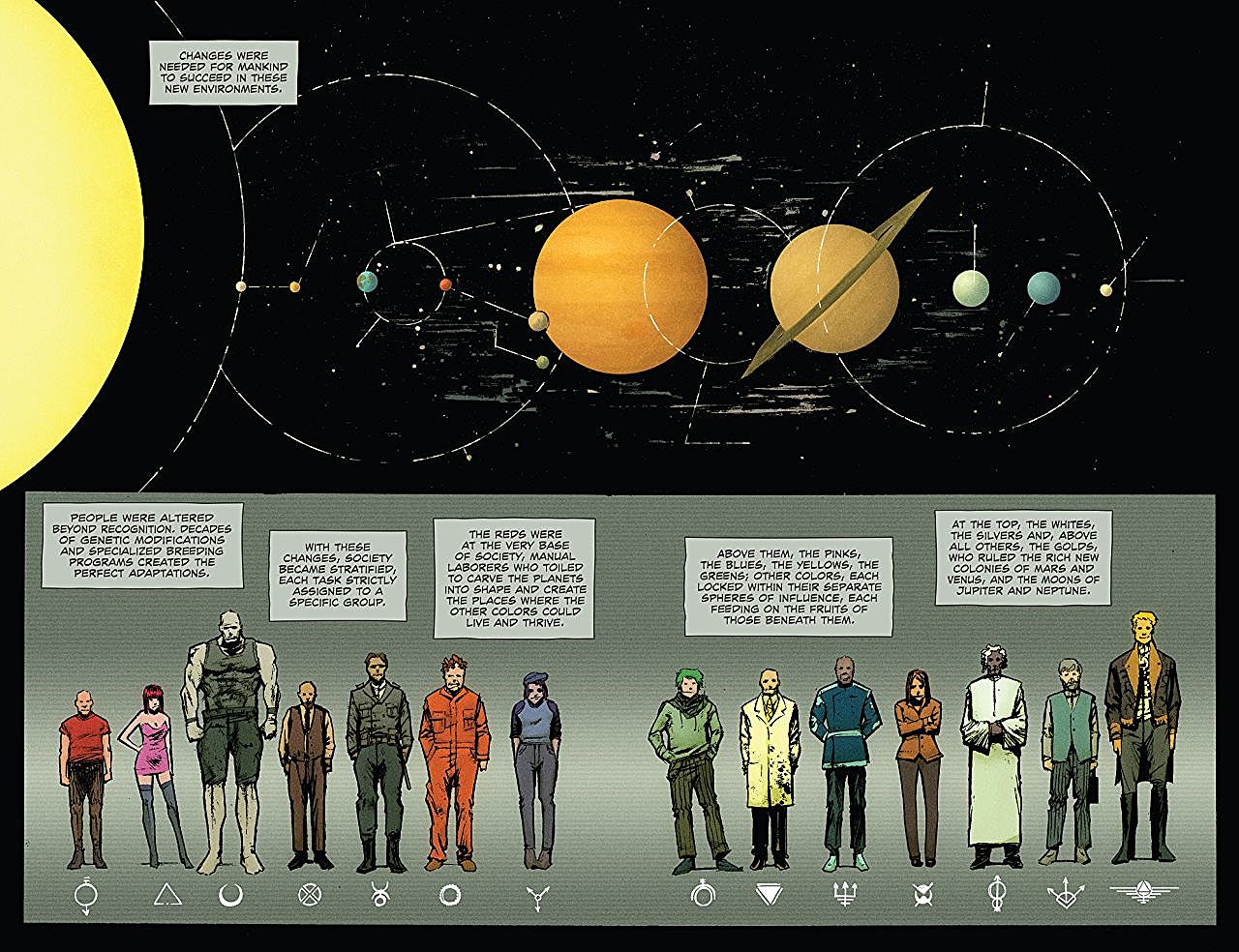
In many ways the whole system that Darrow is overthrowing is a questioning of society. Of course we haven’t been grouped into colours as they are in the Red Rising world, but there are inequalities that exist in income, in racial relations, in gender that hopefully people will be able to ask more questions about based on my books and maybe it will let them see their own world in a different perspective. When I was young, it really helped me.
When you’re young, you’re surrounded by a bubble: a bubble that exists by the school you go to, by your parents, by social influences around you, and many times the only way to break free of that bubble is to seek a way into the world outside. Often that stems from art or books or film. I think that one of the shaping influences on my young life was reading books from a perspective different from my own that challenged my preconceived beliefs.
Has your interaction with the Howlers [the fans of the series] given you new perspectives that have then fed into the books?
Undoubtedly. In many ways my readers have helped me broaden my own horizons, have brought more people into my life that I might not have crossed paths with, based on many different variables. It’s really shown me the effect that a line or a chapter or even a book itself can have on someone’s life, and it teaches you the importance of choosing your words carefully and the importance that your own stuff has in people’s lives. People see themselves in the books and the readership of Red Rising is diverse in every category – and that makes me inspired to create more representation in my own work.
You mentioned when we spoke two years ago that you were sitting down with your editor to outline the new books far more than you did the first series…
(laughs loudly). I remember the conversation and I felt a little guilty because for Iron Gold I created an outline and completely abandoned it!
 Before you started writing how much did you know where the story was going to go?
I knew the path that I wanted to take the characters on in terms of their own thematic and personal evolution but what I did not know, and what did change, is the physical form that would take.
When I’m crafting a story, I look primarily and with greatest interest at where the character begins and ends in terms of their perceptions and in terms of their emotional states. Once I have that, I create a physical or actual representation of that, or a plot representation of that. I knew the arc of my characters and that didn’t change through the whole thing; what changed was the physical representation of that. Mostly, it was how they got where – where Lysander was for most of the story, where Lyria ended up physically. That stuff changed from my outline.
And presumably before you even started outlining, you’d worked out who these four point of view characters were going to be; how much did they change along the way while you were writing?
Yeah, quite a bit. I actually gave Lyria’s character much more agency at first, but then I found when I did that, I had less room to take her in the next two books. I had to rein in her characters’ actions a bit more, and rein in her mental evolution to a degree, because I thought she progressed a little too fast. Lysander has more of an ambiguous turn – he went a different way than I thought he was. I can’t say too much without being spoilery about him but he takes a very different turn in this book than I intended.
The second book is out later in 2018, so presumably that’s at a very advanced stage; how far are you with the third book?
The third book is in outline sketch form, broad strokes: I know where the characters are going and I know what I want them to do. Finding the actual beats of the story is still far away. Dark Age I went into with a pretty substantial outline that I’ve not deviated from, mostly because I had the foundations.
I think what was difficult about having an outline for the first one was that the foundations changed quite a bit, because what you’re doing [in the first book of a series] is setting up foundations. That’s not all you’re doing, but it’s a substantial task, laying foundations for characters and setting up four arcs like that – so that book changed quite a bit. Once I knew who the characters were – and that was a very pertinent question you asked earlier about how much the characters changed [when I was writing them] – it made it much easier to do the outline for Dark Age.
Have you found that there are aspects you created in Red Rising that you’re kicking yourself for now, because they’ve hemmed you in somehow?
Fortunately no. And [writing from a perspective of] ten years later, I can see what doesn’t work and I can see how to change it. I think there are ways in the story of really altering the arena you are in by making plot-driven changes. For instance if I had problems with characters constantly being able to communicate with each other, I could introduce a virus that subverts all of their communication. That’s the beauty of science fiction: unless you are dead set on the world you’re in, you can introduce a plot-driven device to change the paradigm quite a bit.
That’s a great question though because on an individual scene level I probably would be able to answer that but it’s hard to pull from memory.
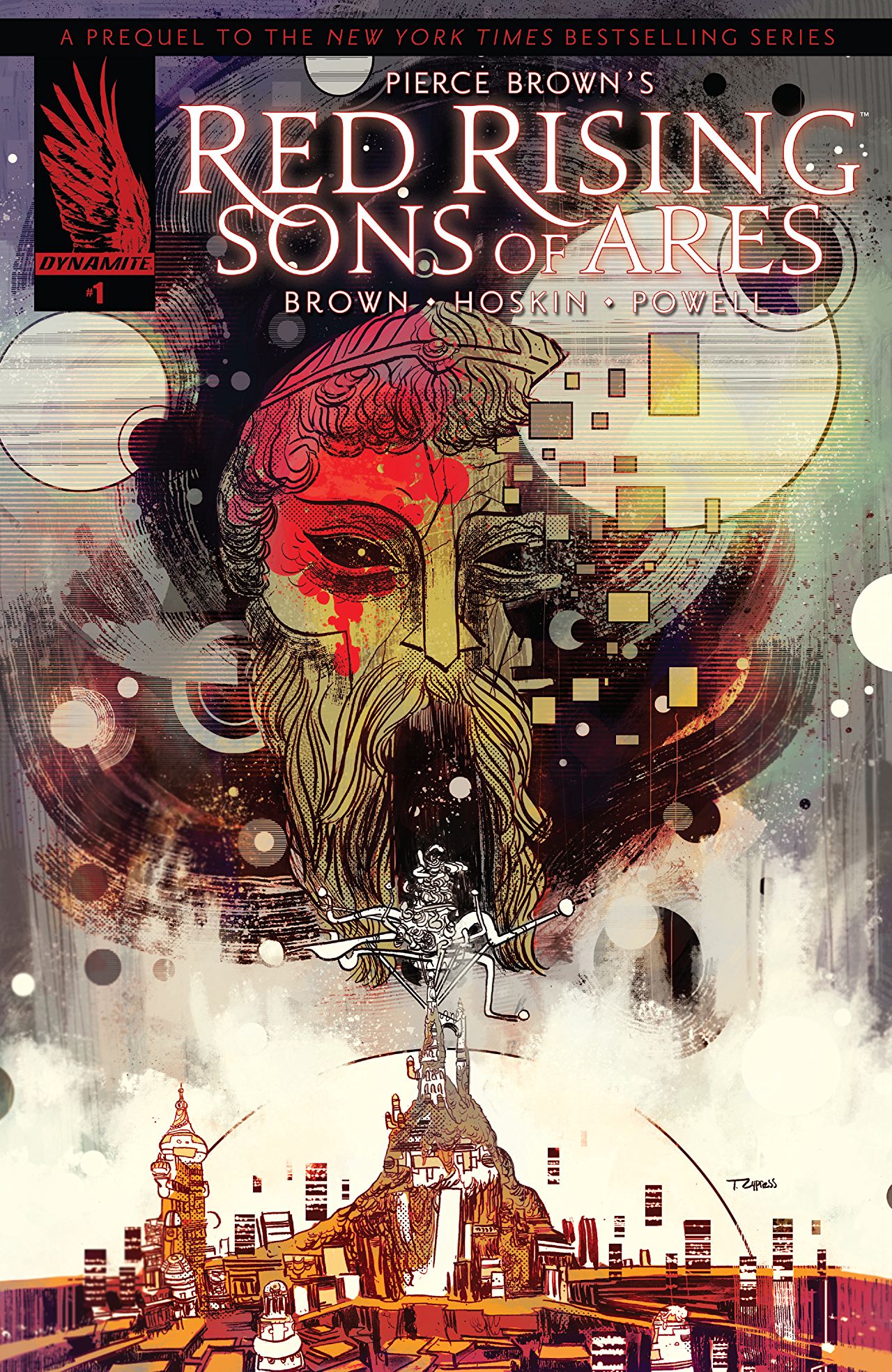 With the comic book you were going back to a time before Red Rising. Were you working on that before Iron Gold?
They were the same time.
Were you able to seed things into Son of Ares that is going to pay off in the new trilogy, or did you have to regard them as two separate entities?
I never regard anything in the Red Rising world as two separate entities, and I think that people who read the comic will be pleasantly surprised to see some things interact with each other, or at least overarc between the two different stories. You don’t want to pigeonhole yourself, and create something where it’s difficult to tell the story, so you don’t want to leave all the characters alive or kill all the characters off or anything else, but it is fun to bring up a character who’s mentioned in the comics and introduce them into the text trilogy.
Are there still characters that you have in mind for this world that you still haven’t found a place for?
Only about a hundred! I have so many character pages out there of characters that I just haven’t been able to introduce. A lot of them are Golds, but it’s already a Gold-heavy story. I want to introduce more representation among all the colours, and there’s a whole back list of characters that I am dying to bring in. Howlers that haven’t been named who have their own little arcs out there. The famous Carver Zanzibar, the Carver from the Himalayas, I still haven’t figured out how to get a face to face with that guy. But it’s a pretty good bet if someone is mentioned in a book we’re going to see him eventually.
 How do you see the future of this universe? Will there be further books, or do you want to take a break from it?
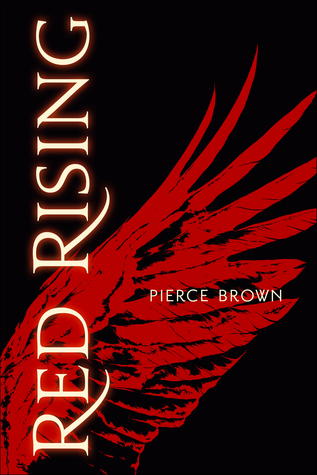
It’s a good question but one it’s hard to answer. I only did the Iron Gold series because I felt it had to be done when I finished Morning Star – I felt it was a natural continuation, a natural evolution. The last thing I want to do is dilute the series and write books that are of little consequence. Iron Gold for me feels like a book that is heavy with consequence, heavy with things that change the world around them, as will Dark Age, as will the last book of the series.
It’s all defined by me having something to say, me having something to change in the world, because I can’t write a book unless I’m excited about it, and I can’t be excited about it unless I’m doing something fundamentally different. The DNA of Iron Gold is fundamentally different from the Red Rising DNA, with the multiple perspectives, the increased adult themes, things like that, so it would really would be me getting to evolve it to another place and I can only answer that question by the sixth book.
For me the natural evolution would be taking it to TV and being expanded in long form narrative like that.
It needs that sort of time spent on it for the depth of the worlds to come across.
And for me, having a television show would mean I’d be able to expand it in ways that I couldn’t even expand in different books, to a degree. I’d be able to intertwine character arcs and characters from, say, Morning Star who didn’t appear in Red Rising and bring them up in seasons 1 or 2 to create that full immersive experience now that I know where I’m going with it. I could expand characters and themes that Darrow never went through, that he never saw. It would be a way to expand it without changing the narrative, like popping over to Mustang’s perspective. The only way I’d retell this story is in TV, I would not revisit it in book form. That particular avenue doesn’t interest me, seeing it from Sevro’s point of view or Mustang’s point of view. I’d only like that in a different medium.
So what was the most challenging aspect of returning to this universe?
Two things. First, making the tone the same but changed and evolved, so still making it feel like the Red Rising world, identifiable and cosy in a way, but then challenging those beliefs. And that leads me to the second, and most difficult part: making Darrow’s arc a natural progression. Not necessarily in a good way, but a natural evolution from where he began, so we’re still discovering Darrow, we’re still following him – but how do we disagree with him? How do we paint him in a light that indicts his myth so we can examine the myth of the Reaper while not demeaning the acts of the first three books.
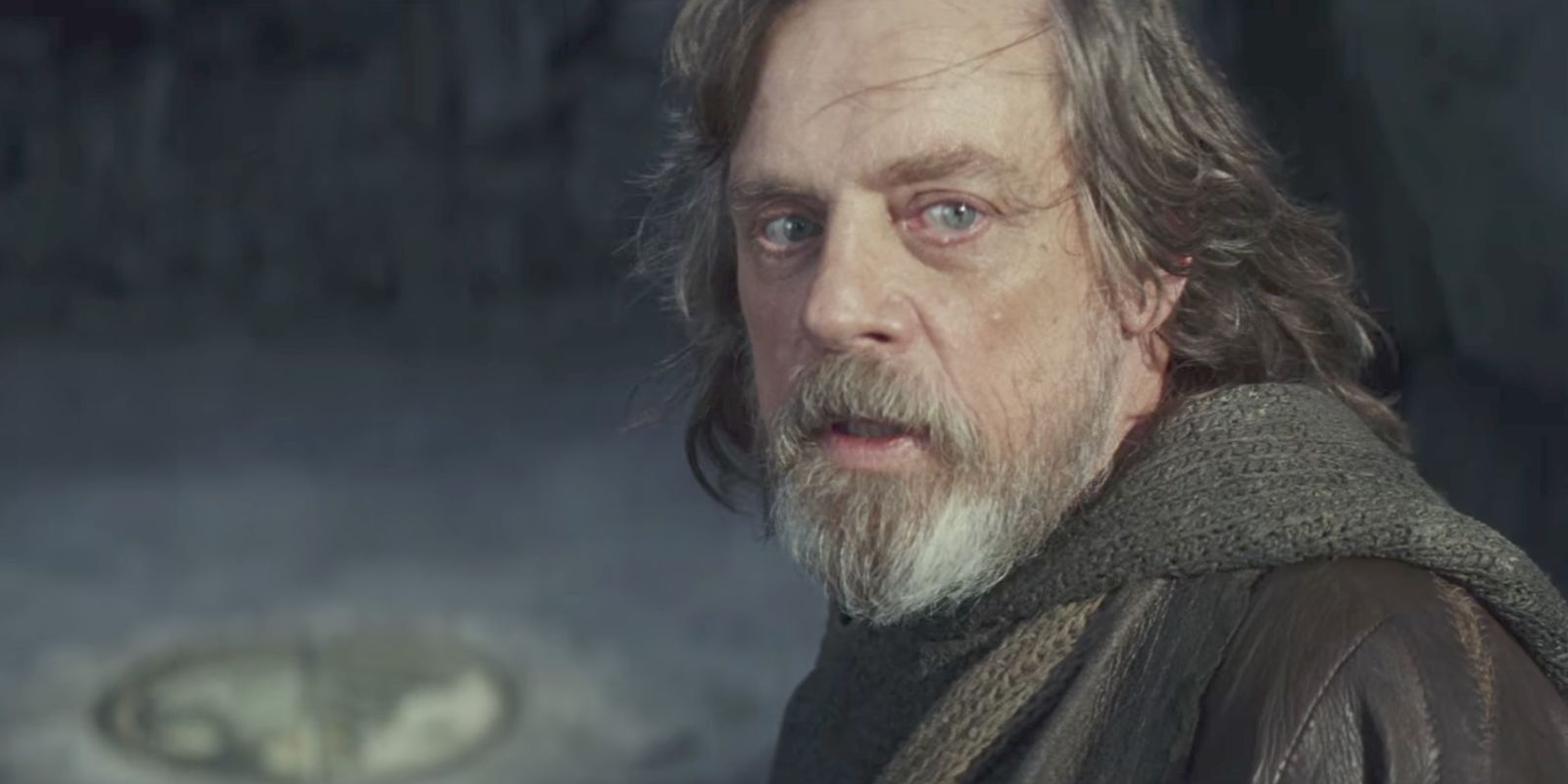 I think that was the difficulty that Star Wars had with The Last Jedi: how do they make new choices with Luke Skywalker without totally demeaning the choices of the past? I wasn’t personally a fan of the treatment Luke got in this new movie, mostly because I felt that the choice was consistent with past Jedi Masters – it’s what Yoda did – but I feel that Luke would have chosen a different path than Yoda because he was able to learn from the failures of his mentors. It seemed almost too Cormac McCarthy for the Star Wars cycle. And if he had done it and then returned physically, instead of in hologram form, I felt that it would have been redemptive instead of being unrelentingly realistic…
To me in some ways, Luke is the least important character in that film, and I think that’s as it should be – The Force Awakens gave us Han, Leia and showed us Luke going off to be a hermit. I really hoped that the focus would be on the new characters.
Yes, that’s a fair assessment. I think I entered it with different hopes and expectations. I think the difficulty Star Wars has – and this is kind of off topic – is that it was a vessel for so many of us in our own childhoods. Luke’s was the hero’s journey for us, so seeing that end in a way antithetical to what we perceived is inherently difficult. He was never a character we wanted anything non-heroic to happen to, so it happening to him I think is disastrous to our own internal myth.
Let’s flip that back on topic – the way that Darrow is regarded in Iron Gold: do you think some of that is your reaction to the heroes you grew up with, and the fact that as we grow up, we see our heroes tarnished?
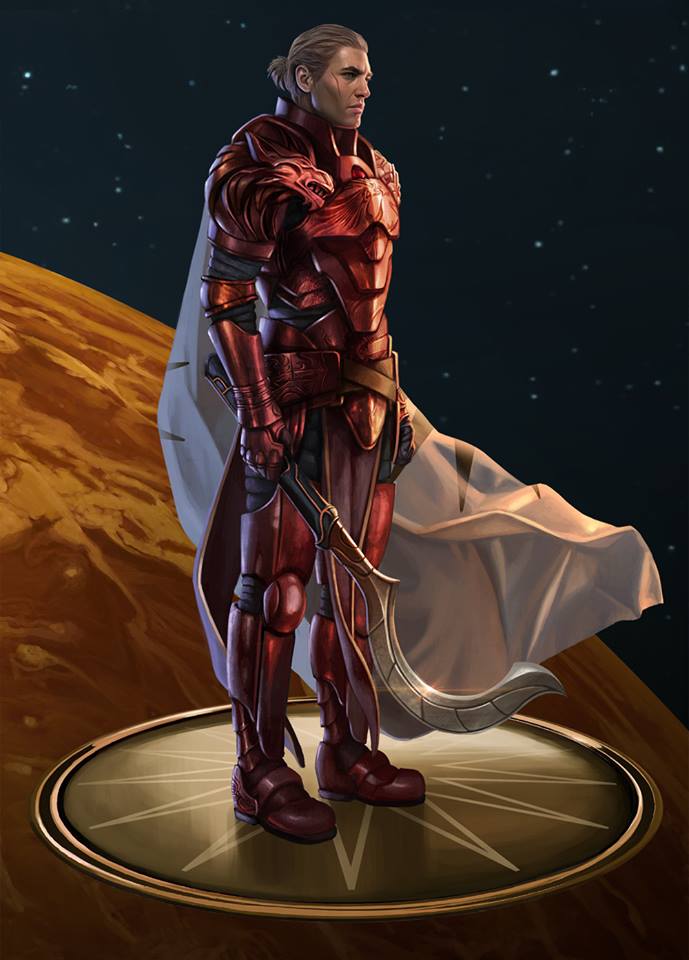 One hundred percent. I’m not sure how the UK education system is but particularly in America, we really do grow up on a myth of America and the myth of the Hero and exceptionalism. As you get older, you see the various layers and texture of that, and parts of it are accurate but somewhat dirtied by the real world, and how everything is somewhat conditional, and somewhat grey.
I think it was my reaction not so much to the reality of it – because I still think democracy is the best option – but I don’t think I’d be doing my duty as a citizen of a democracy if I’m not reading and asking questions. I think that is our duty. I think swallowing propaganda is the duty of people with a fascist government. This is my meditation on heroes and democracy in a way and I can tarnish them without destroying them.
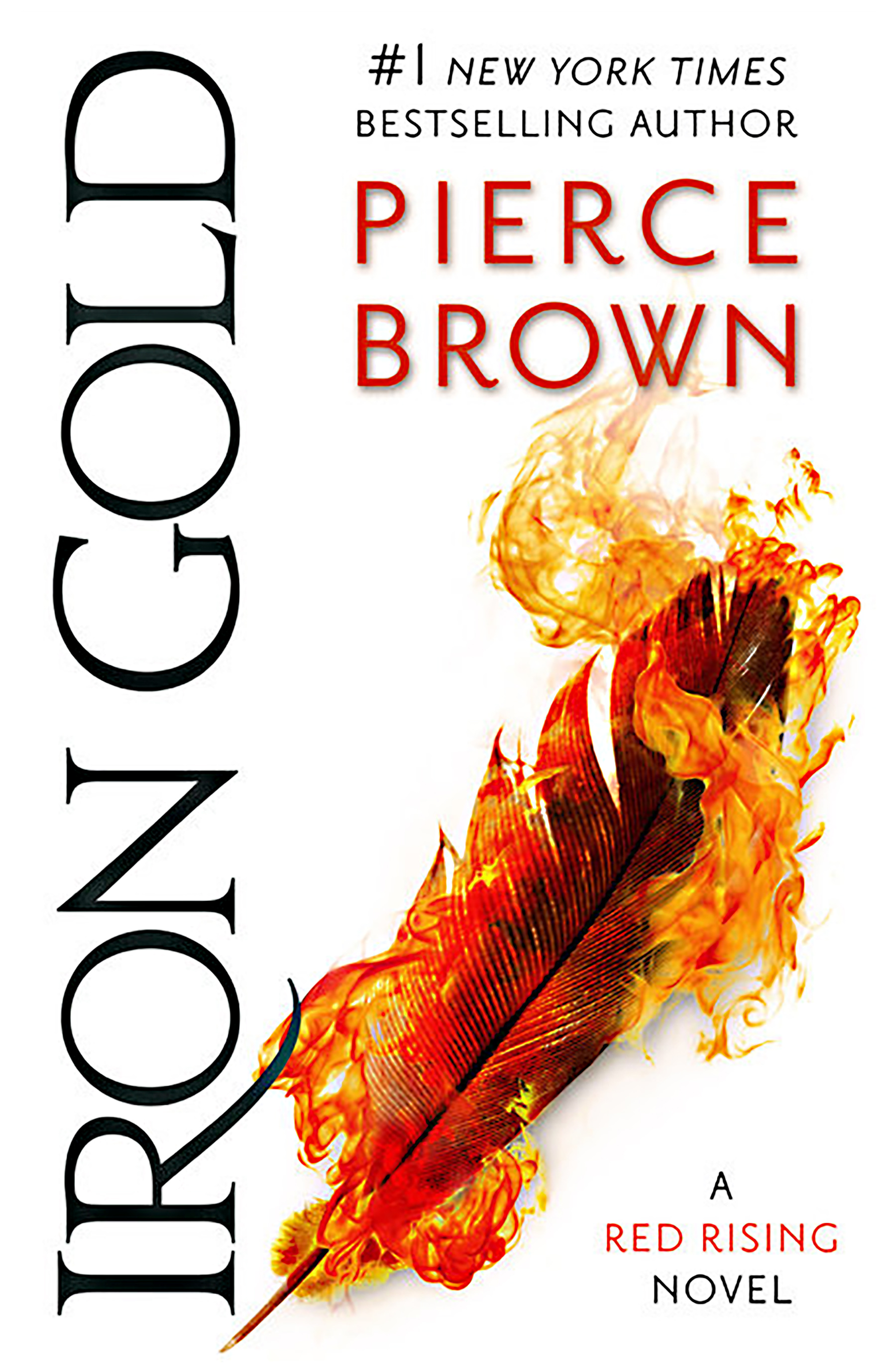
Iron Gold is out now from Hodder; thanks to Rebecca Mundy for her help in organising this interview.
Click here to read our interview with Pierce from 2016
 Doctor Who News Star Trek News
 Sci-Fi Bulletin: Exploring the Universes of SF, Fantasy, Horror and Spy-fi!