Interview: John Connolly (2022)
John Connolly’s latest Charlie Parker book The Furies is published this week, formed of two short novels – The Sisters Strange (a heavily reworked version of the story released weekly […]



John Connolly’s latest Charlie Parker book The Furies is published this week, formed of two short novels – The Sisters Strange (a heavily reworked version of the story released weekly […]
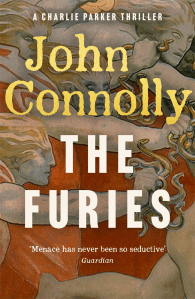 John Connolly’s latest Charlie Parker book The Furies is published this week, formed of two short novels – The Sisters Strange (a heavily reworked version of the story released weekly during the pandemic) and The Furies. He chatted with Paul Simpson about the new book a few weeks ago, but first, they discussed Connolly’s recent magnum opus, Shadow Voices – an examination of Irish genre fiction, published at the end of 2021…
When we talked about Shadow Voices last year, it was imminent. What’s the feedback been like to it?
It was reviewed in Ireland, didn’t get any reviews in England, so it’s hard to gauge. It’s been picked up by a lot of universities for courses. I know that Trinity have put it onto their creative writing course and I talked to their students about it.
It’s just a slightly different way of looking at Irish literature: you don’t have to agree with it but you can at least have a thesis presented in front of you and take it from there.
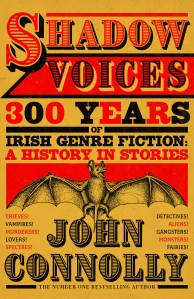 We still have the problem over here [in Ireland] that the kind of people who should read it won’t pick it up because it’s written by a genre writer – and they wouldn’t accept the basis of it anyway. So to some degree you’re preaching, a little bit, to the converted, to the people who already understand and want to look into it a little bit more deeply, but I’m glad I did it.
I think it was important for me to stake that claim. Sometimes as writers we can get very caught up in our own world of publishing – you’ve got your book out and for two weeks what you’re doing is important to your publishers and then everything moves on and you climb on the little hamster wheel for the next one. I’m fortunate, I suppose, that I have the cushion of being able to step outside that occasionally, and as I grow older, I’m more interested in looking back and trying to understand not just my place in the genre but the development of the genre overall.
It’s the very reason I’m doing a doctorate, just to try and understand things a little bit better, and this was all part of that. I met Mike Nicol, a South African writer over there, and I gave him a copy of it. He said it was ‘An apologia pro vita mea’ in its own way.
I don’t want to get into a slagging match with him but we have an author, a fiction laureate in Ireland for the next three years, who detests all genre fiction. It feels like a regressive step in some ways to have a proselytiser for fiction who not only doesn’t appreciate but I don’t think fully understands the relationship between genre and fiction in general. And it is very much a product of the type of modernist thinking with which I wouldn’t agree but these are critical positions, so we shall see.
Anyway, I’m glad I did it and it then gave me the impetus to go on and do the doctorate which was something that I just wanted to do to scratch that itch. I don’t want to teach… God forbid, that’s like a proper job.
The apologia element of it did occur to me while reading some of the footnotes. This feels like you and I sitting down in a pub chatting about these stories.
I wanted it to be very accessible. I wanted it to be accessible to a general reader, that it should be entertaining, and that’s why so much effort was put into the introductions of these people to show that actually they were fascinating and there are interconnections between writers that you wouldn’t expect.
This separation we have in Ireland between genre fiction and literary fiction is a very recent thing. But you have Lord Dunsany encouraging someone like Mary Lavin. She would be regarded by a lot of people as very much an Irish literary writer being cultivated by this man who was adored by Lovecraft and is regarded as a father of weird fiction. Most people wouldn’t be aware of those connections, so it was all about those little stones in the wall of the argument.
Half the time, the lives of the people writing it are more interesting than some of the stuff they wrote!
 Yeah, someone like Beatrice Grimshaw, not even borderline racist just out and out racist – but those stories take on a different context when you understand the life of the person writing them. This woman led this extraordinary existence, ended up in the Far East in very difficult conditions, and the stories come out of that. Sometimes they have a different complexion for the reader, I think and that’s part of it.
And it’s getting into that discussion of love the art not the artist, or vice versa.
Yes, absolutely, to understand where they’re coming from. Even somebody like, a very Irish person, Daniel Corkery who would be regarded as the raw end of the reactionary movement is interesting in and of himself. Yes, you don’t necessarily have to agree with the person but to know a little bit about their lives helps to put what they’re doing into some kind of context. To understand isn’t to excuse but it is to understand.
Moving onto The Furies, which I really enjoyed…
Thank you.
Everything in The Sisters Strange is there from the original 2020 version, but it’s ramped up to eleven. Were you completely rewriting it? Were you basically going ‘This is a proper edit’? Obviously there are new bits, there’s expansion but the core story is the same. It feels the same and yet different.
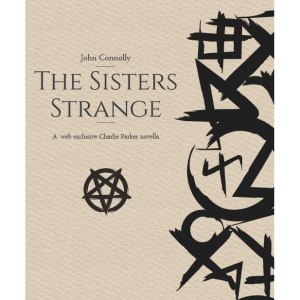 The way I write is to go from start to finish without looking back on something, simply to get from beginning to end. What people got [in 2020] was a first draft. It was a chance for people to look under the hood a little bit and see how these things are created, what the engine behind them is. But I didn’t have that luxury, which I usually do, to spend six or eight months simply rewriting, going over it again and again and again, expanding and following pathways that I hadn’t taken the first time or developing characters who were barely ciphers.
Essentially what you’ve got is the difference between a first draft and the finished version. I think people accepted it for what it was, which was a chance to see something under construction, being delivered to you unmediated, before the author has a chance to iron out all the kinks in it.
In that way it was useful but it was actually really time-consuming to have to rewrite it because like I said last time, those 500-700 word chunks only work on a phone or a computer if you’re reading them every day. They didn’t hang together as a unit when it was put together. I could see all the tonal dissonances and the stuff that I would have ironed out on a longer draft. So it turned out to be quite time-consuming to do that but it couldn’t be published the way it was. I could have published it but it would have been a very lazy thing to do and I would have been slightly embarrassed by it because all the flaws would still have been there. It benefitted from that extra time being given to it and I had the time because of lockdown and because of Covid.
The core thing about it though is that it was something that was new, at the time when none of us had a clue what Covid was.
Yes, absolutely.
It served a purpose that was way beyond a Charlie Parker story.
Sure, it was a chance to give people something that was a diversion and as you say, we didn’t know what we were going to be doing. I think we forget now just how frightening the whole thing was. Now that we’ve come out at the other end it’s hard to imagine people crossing the street to avoid each other, but that was the level we were at. Worrying if shops were going to stay open. My son saw the things in China and we started stocking up on food and it really was terrifying. So to give anybody a distraction, something they weren’t being charged for, when you’re flicking through your news cycles… it was a diversion, a little thing that would take your mind out of it, a little bit. In that sense it did serve its purpose.
And then the period going into Covid is the background for the second story.
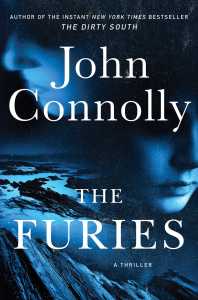 That had a different title for a long time – I think it was ‘Shelter in Place’ – and as it was being written it was clear that there were thematic and tonal links between the stories. They both have women at their core and they’re about different aspects of female strength, I think.
In both stories Parker doesn’t have much impact. In fact the women in general take on the bulk of the action and the intervention and he is almost a kind of observer as he’s trying to piece things together. Only at the end of the second story does he make a decision that has a real impact on what’s happening.
The Furies seemed like an appropriate title for the second story and for the two novels in total because of that idea, these female figures avenging unpunished crimes, which runs through it a little bit. But also, I keep wanting to do something different each time and I haven’t done something like that.
We could have published them as separate novels but that’s very difficult in the current publishing environment where the schedules are so crammed and there’s a gap between the UK and the US. Also it’s maybe a lot to ask people to pay, if they publish separately, maybe £13 each. They fitted together as a unit to me, it wasn’t like two completely distinct stories that had just been yonked together. You could see moments between them: there are references, very small, and they’re both set around the same hotel.
When I got to the end of The Sisters Strange I was thinking ‘I want to know a bit more about Billy.’ Lo and behold, go into the next one and we get his backstory and a focus. I think one of your creepiest scenes for a long time is where the old lady’s down in the cellar.
(Laughs) Dark cellars, we love them!
It’s a ghost story, it’s a haunted house story essentially, set in an old hotel, with very little violence. There’s almost no violence in the second story until very close to the end. There’s just that sense of unease. The two guys at the centre of it are just low lifes. They’re not spectacularly evil human beings, they’re just nasty bottom dwellers.
It was a chance to do something different again, after The Sisters Strange which is completely different. Sisters Strange ratchets up all that stuff as far as it can go but that was again, the purpose at the time: for people who like my books, you were getting it up to eleven. You got the weird villain, you got the supernatural undertones, all of those things, you’ve got first person narration…
That was something I hadn’t intended to do, to return to Parker’s voice but when I was doing Sisters Strange I thought, ‘Well, what would people want? Well, they’d probably want to hear his voice again.’ And so I’m now back in a situation where I can’t really go back to the third person again. The books have to stay in the first person because of that decision.
Really? OK, that’s intriguing because Parker’s been changed by what’s happened to him. What I felt with this was he’s pretty much avoiding thinking about anything of what’s happened to him. I wondered if that was conscious, so that you could move back out of his head…
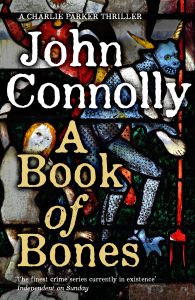 Yes, partly it was still dealing with the fallout of the sequence of novels that ended with A Book of Bones where they were so immersed in the mythology of the series. There are conflicting voices within the readership, people who would like more of that. But again, the analogy we keep coming back to every time we talk, those later series of The X-Files where it suddenly disappears up its own fundament and you can become so immersed in that mythology that it becomes unintelligible for most readers. It becomes kind of uninteresting to me as well. I want to take a break and move aside and give the series a little bit more room to breathe.
They have to be returned to but for the moment there is another Parker book done which doesn’t really immerse itself in that mythology at all. It just not what interests me at the moment. It will interest me again down the line but just at the moment, it’s not what I want to write.
I suppose I’m afraid that if I get down too much in the mythology that I’ll have to end the series. What people want is essentially something that may necessitate not writing any more. Now, if that’s what you want, then great, but I’m not entirely comfortable with it right now. There are other things I want to do.
At the end of the day, for all that, the readership (and I include myself here), we don’t own the character, he’s yours.
Yes, that’s an interesting approach to take but is that true? I have a certain ownership over him, but you could argue that as soon as a book is delivered to the publisher, even in manuscript form, everything about it ceases to be the author’s and the public takes on a certain role. That transaction that takes place between the writer and the reader is not just financial but to some degree you bequeath a certain amount of ownership of the characters to the readers who invest in them and have an emotional connection with them. I think that’s a large part of it, that emotional connection with the characters.
But there’s still the fine line between us having the emotional connection and you who knows what happens to Parker tomorrow.
Yes, it’s a curious one but it’s not as simple as saying anymore that these are my books or my characters. You’re always conscious of the readership. You can say you don’t think about them – and I try not to, it’s not a democracy – but you’re certainly aware of the emotional investment people have in books and characters. You tend to be very careful about how you use them and I probably need that moment of stepping back and maybe treading water a little bit. I hope the books develop but maybe that overall story isn’t going to develop for a few books.
It’s quite clear that things are going to happen eventually.
Yes and are we in that much of a hurry?
The “bottom feeders” in The Furies, at one point it suddenly struck me that they are almost Angel and Louis without any redeeming characteristics.
 Yes, I suppose they are. Whenever you put pairings into the books they kind of become dark reflections or versions of them.
I suppose yes, Angel and Louis would look at them as less evolved lifeforms. They have a certain loyalty to each other but it becomes clear as the story goes on that that loyalty is very tenuous and is in question. Obviously, if you can’t trust thieves, who can you trust? There is no honour among them.
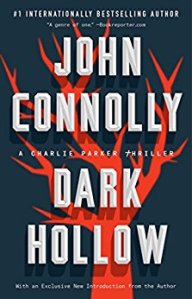
I notice that my books continually revert to pairings like that, it happens a lot through the series. Back in Dark Hollow there were two who were almost weirdly reflective of Angel and Louis. I guess it’s a trope that runs through my fiction and as you know, once you get to a certain stage you realise there are things that you return to again and again – they become part of the structure of the books, I suppose.
I still discover things in the writing of the books because the characters get a little bit older and I get a little bit older. My perspective on the world changes and inevitably some of that feeds into them. So you’d hope that there is a kind of development and Parker isn’t the same as he was twenty books ago or Angel and Louis aren’t and the books themselves aren’t the same.
I’m sure at times my editors just wish that I’d repeat myself a little bit more often. They were not worried, exactly, about The Furies but they would look at them and say ‘Well actually here’s a story that you gave away for free and you can’t expect people to pay for it again.’ And you’re trying to explain that actually, it’s not the same story, there is something different. It is a development of what was there before.
Not just that, The Sisters Strange is not actually now available.
 No, it’s not, it was very much of its time and I think people were curious about it but experimentation in any form in commercial publishing is a double edged sword. What advances you creatively doesn’t necessarily benefit you commercially. Something like Shadow Voices, almost the reason why they put it out so quietly was that it wouldn’t be a distraction. There was no promotion for it, it was literally put in bookstores. My own readership knew about it but I don’t think [the publishers] wanted to complicate what is already a quite complicated relationship with retailers when it comes to my work, perhaps.
I think I’ve probably reached the readership that I am going to reach for my career. I think what I have is what I will mostly keep. I would love to bring in enough readers as time goes on, to replenish the ones who die off, or who get bored and decide to go elsewhere.
I have these discussions very occasionally with my longstanding English and American editors. I realise I’ve been very fortunate with my editors and publishing houses and I’m not sure many publishing houses would have been as tolerant of the diversions over the years. They’ve found a way: every book that I’ve published – apart from the little ones like the book about Horror Express – have come through Hachette, and all of my books have been published by the same editor at Simon & Schuster. They have found ways to make these things work but sometimes in their heart of hearts I think they’d rather not have had to do it, I suspect!
Bookstores and retailers, retailers especially, kind of want one section of the bookstore that has your books in it. It’s that simple: they don’t want you in four different places in the bookstore. And so the tendency I think, particularly in the US, is maybe not to order the books that don’t fit into the section of the bookstore that you’re most closely associated with. It’s simpler than trying to put you in four different places when space is at a premium or shoehorning a piece of fantasy writing into the mystery section of the bookstore where somebody buys it accidentally and then gets annoyed and comes back going, ‘I thought I was getting a Parker book. What are you doing putting a book about Laurel and Hardy in the mystery section? It doesn’t belong there.’
So you create all these difficulties but I think we found over the years, a kind of equilibrium.
Going back to what we were saying earlier, that is the privilege that the sales that you’ve got, bring.
Yes…
That’s the bottom line isn’t it, if you weren’t bringing those sales in with the Charlie Parker books, no there would be no He…
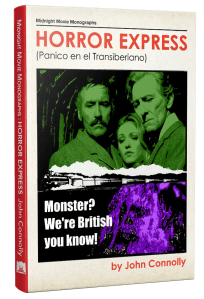 And I couldn’t afford to make the arrangements that enabled those books to be published. I appreciate I’m very fortunate in that I can say, ‘Look we’ll put Shadow Voices without an advance, and I will pay for the stories that require copyright.’ I can do that because of the cushion of the Parker books. I can take a very small advance for He because of the Parker books and that is, as you say, a fortunate position to be in and has enabled me to, I hope, get better as a writer.
Mystery fiction is a very conservative genre. I can’t think of any other genre where people have so often resorted to writing rules about how it should be written. You don’t have that in fantasy writing, you don’t have that in science fiction, you don’t tend to have it in historical fiction.
It is a very prescriptive genre and for that reason it becomes, I think, very difficult for writers to structurally experiment within it because there are commercial expectations on the part of your editors, especially the more successful the series becomes. And there are expectations on the part of readers who, like we said earlier, have a certain ownership of the characters and have invested in your career in a certain way and feel that it should adopt a certain direction.
I often look at fiction in England at the end of the 1980s and I can’t think of a mystery novel written within the genre in England in the 1980s that’s as interesting as Hawksmoor by Peter Ackroyd, which I love. Sometimes literary writers have had more freedom to experiment with genre – we forget that Salman Rushdie’s first novel was a science fiction novel.
There’s more freedom now than there was twenty years ago and I think the old guard is dying out. Inevitably that is what happens, a certain rigid element perhaps belonging to a slightly older dispensation through the efforts of mortality gets kind of winnowed away and you have a group of people – whether it’s in music or in art or in writing – who are much more open to influences, who have read science fiction and mystery fiction, who have read graphic novels and fantasy and see no reason why these things can’t be combined to create new genres or new subgenres.
There’s still a little bit of that there, there are people who still have a narrow focus on what is or is not a mystery novel, but I think that’s changing and that’s a good thing. What’s genre other than categorisation? We categorise and we’ve always categorised. ‘What is the thing?’ That is what we ask: ‘What is the thing? What are you giving me here? Give me some idea of what it is before I pick it up and before I commit to it.’ I fully understand that.
And yet, at the end of the day and I suspect you’re the same as me, you want to be told a good story.
Yes.
In some way, whether it’s in the writing or it’s in the characters, it’s in the plot, whatever it is…
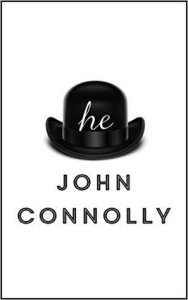 I suppose what I want, from a book certainly, is that I just don’t want my time wasted so I’m prepared to tolerate experimentation, I’m prepared to tolerate something that is maybe flimsy, because a lot of literary fiction is not story driven, it’s character driven. But in return you get a certain quality of writing that you expect from a piece of literary fiction and a certain immersion in character that perhaps you don’t get from a piece of pulp fiction, which isn’t meant to do it. It’s meant to drive you along and keep you turning the pages and there are different pleasures. But my thing is, I don’t want to put the book down and think that I’m sorry I persevered with it – because I am somebody who still perseveres with a book, hopes that I’m going to have that moment of revelation, that I’ll go, ‘Oh, now I see how it comes together.’
With He, I know it probably took people thirty pages before that clicked, before they understood how the novel was structured and how the voice was working. So you were relying to some degree on people’s willingness to persevere, you don’t always get things immediately.
Not that I’m saying ‘By the way, my peer Charles Dickens’ but when you’re reading a piece of 19th century fiction there is a moment where you struggle and if you sit down and commit yourself to it for half an hour, you literally feel your mind turn over. You feel the machinery adjust as it goes, ‘Ah, now I see, OK.’ Because this isn’t familiar but it’s not difficult, it’s just not familiar, just different.
That’s also part of it: people just want more of the same.
 Yes, there is a comfort but that’s part of the pleasure of genre fiction is that we have that comfort in the familiar. It’s why when you’re sick, you don’t necessarily want to be challenged, you want something that isn’t going to tax you. It’s why we re-read beloved books. I met a guy in Austria when I was touring who insisted he never listened to a piece of music more than once. I thought he was the strangest human being I’d ever met in my life. He said, ‘I’ve listened to it, it’s got nothing else to give me and I move onto the next new piece of music.’
Even my Spanish teacher doesn’t want to listen to anything overly familiar. He wants to constantly look for something that he hasn’t heard before, that he hasn’t read before. We were having that argument about nostalgia, which is very much part and parcel of the Horror Express book. Why are we nostalgic as human beings? What does that give us? And it is that comfort, and I think that’s one of the lovely things about genre fiction, but ultimately it comes down to the fact that there are only a few people who only read one narrow type of fiction.
Most of us will read a piece of mystery fiction and then will pick up something else. I read Nick Duerden’s The Curious Afterlife of Pop Stars which was a lovely book, then I read Rob Pugh’s Magic Box which is a fantastic book about television and folk horror, and what am I reading now? John Lanchester’s book on why financial crises happen, and next I’ll pick up a piece of fiction. Most readers are like that: we’re catholic with a small c. But I like coming back to a mystery novel every now and then because I know what I’m getting.
That pleasure of going back and reading Terry Pratchett or P.G. Wodehouse or whatever it is, there is a pleasure and a comfort in the familiar and as they say, the past is a nice place to visit but you wouldn’t want to live there.
Click here to order Shadow Voices from Amazon.co.uk
Click here to order The Furies from Amazon.co.uk
 Doctor Who News Star Trek News
 Sci-Fi Bulletin: Exploring the Universes of SF, Fantasy, Horror and Spy-fi!