Interview: John Connolly (2017)
John Connolly’s latest novel featuring Charlie Parker, A Game of Ghosts, has now been published both sides of the Atlantic – and puts Parker and his friends Louis and Angel […]



John Connolly’s latest novel featuring Charlie Parker, A Game of Ghosts, has now been published both sides of the Atlantic – and puts Parker and his friends Louis and Angel […]

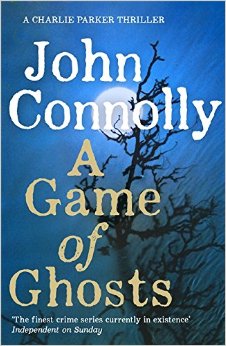 John Connolly’s latest novel featuring Charlie Parker, A Game of Ghosts, has now been published both sides of the Atlantic – and puts Parker and his friends Louis and Angel up against a group calling themselves the Brethren. As ever with the Parker series, there’s much more going on, and Connolly sat down with Paul Simpson shortly after the book was published in the UK to discuss things metaphysical – and much more…
Thank you for the darkest Charlie Parker novel yet…
Blimey.
 From your reaction, you seem surprised at that description…
I don’t think it’s the darkest; I think there are darker books than this one. I suppose it’s partly the setting: if you set a book in the depths of winter, when it seems like it’s never going to end, particularly in Maine where it’s grim, then that infuses the book – and it’s a ghost story so it has a different ambience.
Ghost stories for me are always interesting: I spent a year finessing Night Music so I suppose I had been thinking in terms of supernatural fiction for the best part of a year, and therefore wasn’t really surprised that that would infuse the book that follows. You are always kind of a prisoner of the book that precedes, for good and bad.
So I suppose in that sense, perhaps it’s true but I always am surprised when readers say they like The White Road, a much earlier novel, because that is very dark and very bleak, but obviously I haven’t looked at it since I wrote it so I’m not a good judge.
The interesting thing about The White Road is that that’s the first time that you have a real idea where the series could – and indeed does – go. When we last spoke a couple of years ago you said things were moving into place and we’d see that in the next couple of books, which clearly we have. How much of this, in terms of the extra-worldly stuff involving Parker’s dead daughter, and indeed the climax of this book, did you know in your mind that this was where you were going to go?
 Certainly at the start, I didn’t think that. Most writers, when publishers say they want to publish their first book, their initial reaction is, “well can I have it back, and I’ll do it properly”! Anybody who expects to be published probably shouldn’t be! That should rule you out – it’s like anybody who wants to be a politician, that should automatically rule you out.
So you often you have to live with things in the first novel that had you known that you were going to have a twenty-year career, you’d have done differently. I remember Ian Rankin talking about this: if you read the early Rebus books, Rebus has a background in the SAS in Northern Ireland and as the books have gone on, that past has been sort of shelved. It’s not referred to because it didn’t suit the books at all. Writers have to live with these things.
Obviously the supernatural elements were there right from the beginning in the first book, but you really don’t know you’re going to get the chance to write a second one. That’s why so often every first novel is quite cluttered. Ross MacDonald had a more sympathetic view of that when he said that a first novel is an index of a writer’s interests for the rest of his or her career, and there will be things in there that might just be glanced upon because they’re all in this great grab-bag of the imagination, but they will be teased out later – but if you go back to the first novel, everything will be there from the start. I think that’s an interesting way of looking at first novels.
So obviously, no, I didn’t plan it because I didn’t know in twenty years I’d still be alive, but yes on the other hand, everything that came later was already present in that first novel in some shape or other.
 I took two years off after The White Road – I did a book of short stories and a standalone book, and like most standalone books, you could probably have dropped your series character into it, it wouldn’t have made a great deal of difference to it. But it was a chance to think, so when I came back to The Black Angel, I knew what I wanted to do. I knew that I was going to develop a mythology, and I knew that the books would be sequential – they would not be discrete episodes. You could read them in that way, and I hope you would be able to enjoy them, but if you were to decide to read them in order, it would be the pleasure of watching something much larger unfold.
Some writers have done it in mystery fiction but there had been perhaps a slight mistrust of the reader’s intelligence. At no point do fantasy and science fiction readers complain that they’re getting a saga – they can remember names! Mystery fiction is always quite reluctant to do that. Perhaps they were afraid that if a reader went into a book store and book 1 wasn’t available, they weren’t going to buy book 5.
 In mystery fiction, some readers are quite curious: they want to read every series in order, they want to start from the beginning. That doesn’t always work – if you were to read James Lee Burke, and pick up [the first Dave Robicheaux book ]The Neon Rain, that bears no resemblance to [the second,] Heaven’s Prisoners. Although Burke had written a number of novels before that, Neon Rain is very much a first novel in terms of mystery fiction – so sometimes that’s not the best place to start. Sometimes it takes writers a book or two – or more – to find their feet. I’m still finding my feet! I’ve been doing it for a while but you’re always feeling you’re on slightly dodgy ground.
It’s as much a process of discovery for writers as for readers.
Stephen King said when he wrote the final three Dark Tower novels that he went back and listened to the audiobooks of the original four. Do you go back at all?
 No, and I never listen to an audiobook of mine – it’s too much like hearing my own voice recorded. I rely on readers to say this was well read.
It’s torment for me to go back and read something I’ve done in the past, even to the extent of checking facts. I usually have to get someone else to do it. I physically find it difficult to open the books.
I read and revised The Book of Lost Things for its tenth anniversary and it was one of the hardest things I’ve ever done, because your instinct is to begin tearing it apart and reassembling it. To use your King analogy, with The Stand he went back and put in the 300 pages the editors cut out because it always rankled. Writers shouldn’t ever really be allowed to go back to their works, unless you find a genuine error.
I had to restrain myself: what I did was very lightly polish it, [take out] the odd bits of repetition, but it’s very difficult. I don’t think most writers would want to go back and look at what they did, ever. I’m amazed they can do it – not that the books are bad but you couldn’t do it and not wince, I would have thought.
It’s perhaps more to reimmerse himself in that world?
I’ve got 15-16 books in the series and I’ve asked Clair, who looks after a lot of things for me, to try and put together a Concordance. I find it hard, but readers have a much better memory than I do. There are readers who will reread the series regularly and their knowledge of the series is much better than mine, so therefore they spot inconsistencies that I as the writer will just skate over, because I can’t immerse myself in quite the same way. My relationship with it is very different. It makes it hard to keep it all in your head. If Clair ever gets around to it, it’ll be wonderful but for now I have to do that or ask somebody who might know better than me.
 Are there things that you set up in those early stories – with Louis and Angel, or Parker himself – that you wish you’d done slightly differently?
I wish, like almost every writer, that I’d made him a little younger. I’ve tried to play quite fair – the books don’t go year on year but he was always about a decade older than I was so he is now in his mid to late 50s, and Angel and Louis are older than him, so they’re in their sixties. But that gives the books a certain melancholy and it allows the books to change.
The great example is Robert B. Parker who never really let Spenser age, and at the moment we have Kay Scarpetta in Patricia Cornwell’s books whose niece is going to be old enough to have her own series but whose aunt doesn’t appear to have aged at all. How did she do that?! You can tie yourself in knots!
If you allow characters to age, their relationships mature, their interactions change, the nature of the novels changes and develops – so the Lord giveth and the Lord taketh away. There would be advantages to still having him in his forties, perhaps, but the books couldn’t have worked like that.
But you do have, in a sense, a get-out, in terms of what happened to him – he has gone to the other realm and was sent back…
 I think that’s possibly true but that doesn’t help in this book when questions of mortality are raised about people around him. They’re not as young as they were; their bodies are beginning – as all our bodies are – to betray us.
It’s difficult for me: that overarching narrative has assumed a momentum that is slightly out of my hands. When you write a series it is a bit like a boulder rolling down a hill, so you have to find a way to arrest that momentum and velocity.
The other point, which is out of my hands but is quite lovely, is that readers develop an affection for characters. Mystery fiction is often dismissed as being plot driven but it’s very much character driven – a mystery is a mystery, there’s not much that changes: someone dies, there’s an investigation, there’s a conclusion. We go back to them for the characters. So I do get readers saying “please don’t hurt any of these people because they mean something to me, and I enjoy that period I spend with them as a reader.” That’s quite lovely but it could be a pair of golden handcuffs in a way. That’s out of your hands as a writer.
I was quite surprised that the Collector died…
 What I liked was the mundanity of it – and that’s what happens. It’s not the Bond villain with the cat, living in the volcano [who gets you] – it’s the snarky little kid who wants to buy a pair of trainers.
There’s a fear of describing books in terms of hybridisation, and publishers hate it and booksellers hate it. “This is my vampire-space-romance-econovel”! I still think of these as mystery novels but I have a slightly wider conception of mystery than purists will have. With each step the books have got slightly odder. Perhaps if you’d said to readers at the beginning, “This is what you’re going to be getting into”, they wouldn’t have picked up the books. But because there wasn’t a huge leap from the world of The White Road to the world of this book – it happened over the space of a further 11 novels – people have taken small steps into this world and perhaps they’re willing to go along with it in a way that they might not have done had it been sprung on them in one dose. So each novel you feel you can take things a little bit further and by and large the readers will go along with it.
The trick and the difficulty is that there has to be a terrestrial explanation for everything that happens; you can’t say, “The ghost did it” – at that point the whole edifice is falling apart.
So what’s the terrestrial explanation for what happens to the Brethren at the end of this?
 You could argue that the Brethren are already dead; what you have is a group of people who believe something and are living in a certain way out of this belief, and whether what they believe is real or unreal doesn’t affect the people who die as a consequence. To take an analogy, it doesn’t matter if when you get to Allah you get 72 virgins; what matters is all the damage you do getting there. So what you believe and the reasons you believe it is kind of irrelevant – these people could be trialled and imprisoned for what they’ve done, and at the trial they would have said “we did this because we thought we were going to be saved”. But all of the crimes are committed by flesh and blood figures in a flesh and blood world.
I try to play fair with that at the very least. That’s why this last sequence of novels have very consciously been written in the third person. For the books to work and the reader to get the information that the reader needs, which has to be more than Parker, it couldn’t be done as first person. I’ve always interwoven first person and third person narratives but Parker couldn’t have more information than I could logically allow; that didn’t allow for the development that was required for this sequence.
These will all be written in the third person with alliterative titles but I think it will eventually skew back towards first person narrative.
Have you considered first person narrative from one of the point of view of one of the other characters?
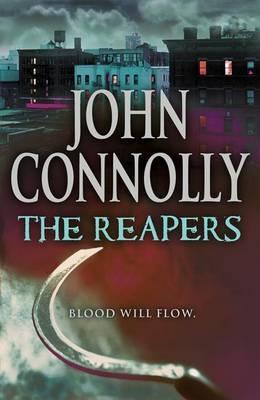 No, I think the closest we got to that was The Reapers. Part of that was an experiment of pace but also a way of allowing to see Parker as these other characters saw him. We got to see how Angel and Louis saw him, how the two old guys working in the motor shop saw him, because up until that point, everything we knew about Parker we got from sitting inside Parker’s head. So we see him as this slightly austere figure, and people are uncertain about him. He brings his past with him; and these characters have a huge amount of affection for him, a huge amount of loyalty.
Parker isn’t an unreliable narrator in the common use of the term – but he is in some terms…
We all are! He doesn’t tell you an untruth, and I try to avoid those moments where two thirds of the way through a character goes “I suddenly had a prickling” and I think, “nobody thinks like that; if you’re doing a first person narrative, tell me what you’re thinking”. He’s unreliable only in that he is human. He doesn’t withhold information, or lie – he doesn’t know. And in the later books, he’s frightened.
There’s an exchange in A Song of Shadows about faith where he’s asked, “Do you want to be shown the thing itself. Do you want to have proof?” But you don’t need faith if you have proof – faith goes out the window at that point. Parker is a man who is being forced to look at the proof and to know that there is an existence beyond this one but it bears no resemblance to anything that anybody’s written down in the Good Book. It represents a loss of identity. That’s what he fears most – that you might be subsumed into this thing.
The scene where Jennifer sees the little boy is haunting and bleak…
You can go astray. This is not a world that is ruled by any intelligence.
 How much of this is what you believe, and how much what you’ve had to logically build up around the ideas that you’ve created?
The books are very much infused by Catholicism, but God is very rarely mentioned. These are books about repentance and the possibility of salvation. A great deal of crime fiction is about repentance and the possibility of salvation – particularly those written by Irish Catholics. James Lee Burke brings that sensibility, Denis Lehane’s Mystic River is very infused with it, a very Irish Catholic sensibility.
I get very polite letters of complaint from very polite people who disagree with me very politely and one of the criticisms that’s happened in recent years comes from Americans of quite a conservative stripe who feel that these books are liberal screeds and I have to point out that their conception of liberalism bears no relation to [what it is this side of] the Atlantic.
 These books are infused with a Christian sensibility. They are books about forgiveness, standing up for the vulnerable and the poor and the oppressed. I also point out that the private eye genre is predicated on this. It arose out of a society – California in the 1920s – that was absolutely corrupt, that was ruled by the railroad companies because they controlled the movement of goods and people. They owned the judiciary, they owned the police, the political system. So what did you do about that if you were poor and your house was in the way? You had to go to somebody who was not obligated to this system in any way, so right from the start, it takes a Victor Hugo [stance] – people without bread are always right. That sensibility infuses all of the books. If you don’t agree with that, don’t be reading private eye fiction. It’s not for you – go and read Brad Thor. Lovely man but he writes right wing flag-wavers – if you want to read that, that’s fine.
You always get the same complaint – “I don’t pick up novels to read people’s political views or social views”. What they actually mean is, “I don’t pick up novels to read political and social views I don’t agree with”! I like to read Daniel Silva but I suspect if I sat down with Daniel Silva for five minutes we’d come to blows! I can see the merits in his books and the way they’re put together. It’d be a very dull world if you only read things that you agree with. That’s not the basis of reading. To read is to challenge yourself, to read is to empathise and inhabit another consciousness.
 Do you think people still read to be challenged as much as they did, and read books to learn?
There is not a universal model for the reader, and so there are readers who will only read mystery fiction of a certain stripe. They would never pick up anything else. Their entire library is mystery fiction and they read in a very deep and narrow channel, I suppose. Then there are readers who read quite casually, when they go on holiday, who read two or three books a year. They’re on holiday and there’s that golden hour when they read. My father read one book a year, never more than that.
But bookstores and the publishing industry are kept going by a small number of people who buy an awful lot of books. At the core of that group, and I think I’m one of them, are people who will read almost anything, and are always looking for something different. They will jump from mystery novel to a piece of literary fiction and go back and read something older and then a piece of non-fiction. I’m seeing Mark Billingham this evening so I read a proof of his new book, then picked up a lovely book called When the Shooting Stops, the Cutting Begins, which is by a man called Ralph Rosenblum who was Woody Allen’s editor, so it’s about the construction of film. I think there are a lot of readers like me who jump around, and when you read a novel, you want to inhabit a consciousness that’s not your own. You’re not about fundamentally reaffirming all your beliefs in the world, you want to see the world through other people’s eyes.
With Facebook now, there’s that constant reinforcement of your own point of view…
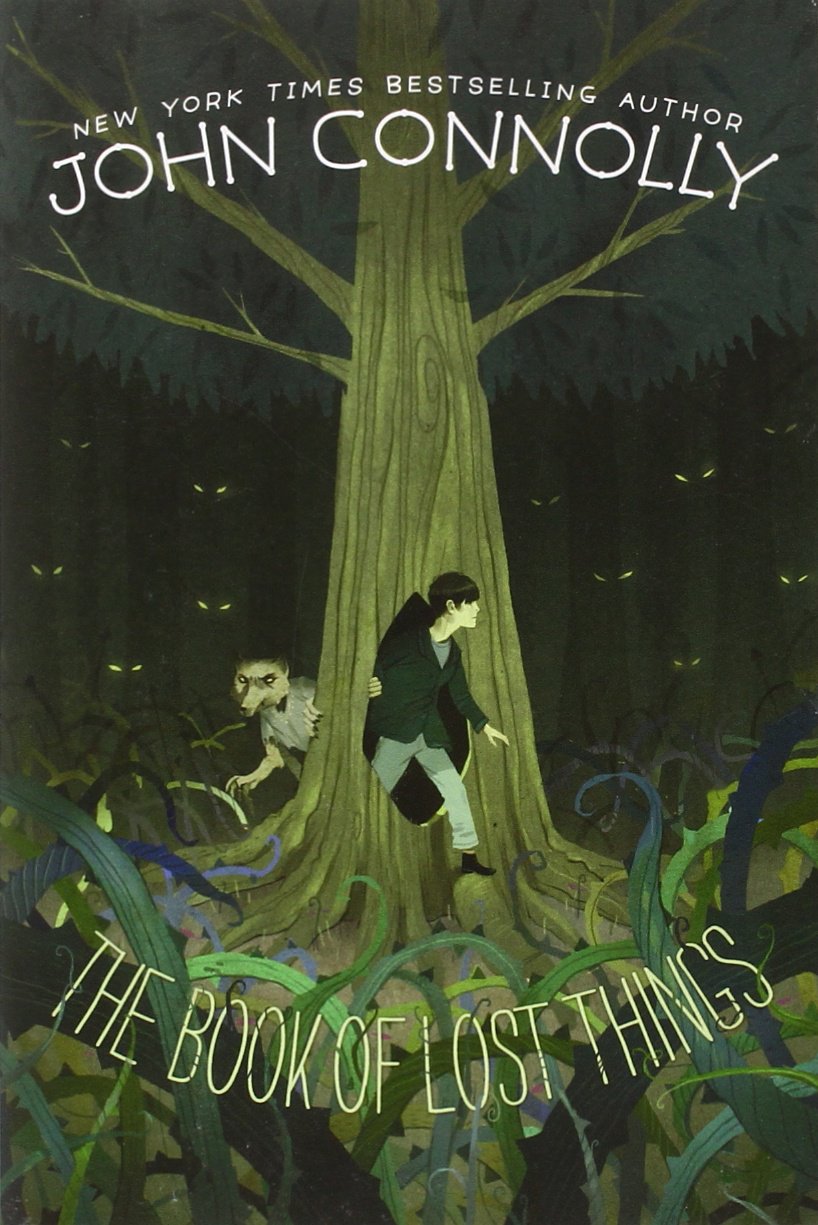 But that’s always happened. If you only read The Telegraph… There are always ways you could find your tribe. I’m more hopeful for readers, and readers of fiction particularly – because fiction requires you, if you read it properly and read it well, to leave yourself open to change, because the only way to enjoy a piece of fiction is to set aside something of your own sensibility and allow yourself to inhabit another person’s consciousness. That’s part of the pleasure… and it is a contaminant.
I’ve written about it in very half-jokey ways, but The Book of Lost Things and the Caxton Lending Library [stories] – which are meant to be light reads – talk about how books change people. If you read a book you’re changed; and a book that affects you changes you fundamentally as a human being. Books are not fixed objects, and to approach them in that way is to do them an injustice.
Books are ideas.
Books are potential, and no two readers read them in the same way. We bring all our life experiences to a book, everything we believe in and we know of, and we can be changed by them. But some of us are not able to be changed, and that’s fine. There are as many reasons for reading a book as there are readers, I suppose. And there’s nothing wrong with escapism – it’s a perfect legitimate reason to read. As long as you get something out of the book, as long as it’s not a chore.
Any more collaborations coming up?
 No, the collaboration that I did was enough that my other half nearly suffocated me! I loved doing it, it was a very interesting experiment. As she realised very early on, I’m not naturally a collaborator; writers are control freaks. Very few novelists collaborate – if they do it, it’s in another medium. They move into film or television and even then very few of them do it successfully because you are the ruler of your own world when you are a novelist and you don’t really want to share it with people.
I loved doing the science fiction books. One of the difficulties of doing books like that – and it was the same with The Gates and those books for kids – is that younger readers don’t read reviews and don’t look at Tube posters, so you need to go into every school. There are some writers who do that for a living, and it is their job to be a children’s writer. You spend days in schools that are very fulfilling but I already had a day job and I simply didn’t have the time or the energy to go and do it. I love school events, and I still do them. But it was very hard and frustrating.
And what’s the latest situation on Parker in other media?
I’ve been very reluctant to do anything for quite some time, and I am quite protective of the books. We signed an option agreement last week with an American company, and I liked them because they were different. They were involved with Hilary Swank’s Boys Don’t Cry and Jane Campion’s Proof, so they come with a slightly different track record. It’s very early days but the agreement is signed.
I think the books are quite difficult to adapt. They are very much written as novels, and one of the problems is that they are not particularly dialogue driven. I know from readers that a lot of the pleasure they derive is that everything is mediated through Parker’s consciousness, or at least it was in the early books. They’re reflective, and a lot of that is very hard to translate to screen. It has to get the right pen through it.
It needs a sensitive writer who can get to the core of the stories.
 That’s why as the novelist you step away and realise it really isn’t in your hands and you don’t know enough about it. These are people who have their various areas of expertise and will, I hope, be able to translate these into a different medium.
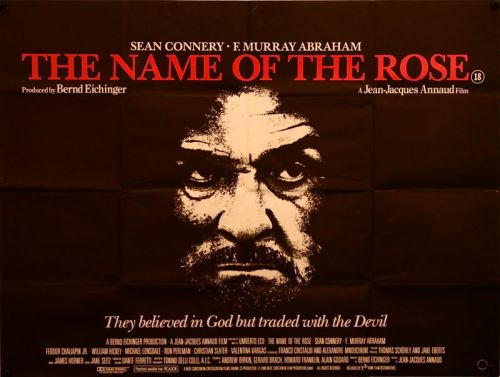
I always go back to Jean-Jacques Arnaud when he filmed The Name of the Rose and described it as a “palimpsest”. I thought that was a lovely description. That’s an unfilmable novel so you’re not getting the novel but something very interesting instead. And that’s what you have to hope for.
I’ve thought for a long time they’d work as radio plays.
There are a lot of people who enjoy them as audiobooks. Maybe they’ve translated in that way because they’ve got room for the voice, and that’s the most important part. The Nocturne stories were written for radio, to be performed by an actor, and I was very conscious of getting the sense of a story being told. I think that’s still there in the Parker books, that sense of a particular voice coming through.
Do you have Parker’s voice in your head?
No, but there are particular rhythms to his speech when I am writing that will come out. I don’t consciously have to think; there are particular cadences that come quite naturally from practice over the years. I was reading James Lee Burke last year and there was a section that crept into my book that was Burke-ian. I was quite tempted to leave it in, but I could sense his rhythms affecting mine; they’ve always affected mine. I’m very much a child of Burke and a child of Ross MacDonald. It takes a long time to shake off your influences, if you ever do – and some you should never shake off.
Parker makes wry observations about various things – such as Le Carré in the most recent novel. I take it these are you?
Very much so. Because he shares a lot of my sensibilities and a lot of my tastes and a lot of my opinions, it seems quite natural that these should creep through, and sometimes there’s a point to them. That idea of the discussion of solipsism – Lennon really didn’t look outside his own bubble of the world. I think Parker would naturally gravitate towards a McCartney rather than a Lennon, as he’s someone who feels other people’s pains so much.
 If you met Parker, would you get on with him?
I think he’s admirable. These books are, on one level, wish fulfilment, the idea that Parker is infused with a kind of Christian sensibility… If you read MacDonald, towards the end, Archer is almost a Christ figure, not because he’s good but because he’s willing to take on other people’s pain. It helps to expunge guilt and relieve him of some of his own pain and I think that’s very much Parker. But he’s also prepared to hurt somebody, because he’s filled with rage.
The real world situation with Parker’s living daughter came as something of a shock but then you think, “well yes, he does keep getting his kid in trouble” – but Parker is thrown by it as well…
Yes but he also realises that there’s a truth to it. He made a decision quite a long time ago that he can rebuild a family and have that kind of life and get a regular joe job and not get into trouble, but he understands, I think, that all of this pain and rage won’t go away and will find an outlet that will be incredibly destructive. He can’t do what he needs to do and have a family, so he has made a sacrifice, or believes himself to be making a sacrifice. If you thought what you were going to do would bring harm on your child, most of us would stop doing the thing that was going to do harm; his decision is very different and is odder and more troubling.
He wants his cake and eat it though…
He wants to have a relationship with her, but is prepared to accept distance. Distance is the sacrifice he’s prepared to make – she cannot live with him.
 But he’s also realised that Jennifer is talking to her…
There’s a line in one of the earlier books – the reason you are put on this Earth is to protect your children until they’re able to protect themselves. But it keeps getting turned back on him. Every time he thinks he understands what is happening, the thing has shifted around again like a lazy Susan, and he’s stuck on the other side going “I still don’t know”.
But you do?
I do. Otherwise you end up painting yourself into a corner and that’s a disaster.
But I fully expect you to continue pulling the rug out from under us!
Part of the trap of writing something with such a large storyline is you can’t always be juggling it so that a reader can come fresh every time, and there will be some novels that are harder to get into. The next one will be very involved with the series, and then it might be nice to take a book out that isn’t quite so involved with the mythology.
Thanks to Kerry Hood for her help in organising this interview. A Game of Ghosts is available now from Hodder in the UK and Atria in the US. Read our review here
 Doctor Who News Star Trek News
 Sci-Fi Bulletin: Exploring the Universes of SF, Fantasy, Horror and Spy-fi!