Interview: Nick Setchfield
Writer and editor Nick Setchfield’s latest novel The Spider Dance is published today by Titan Books (read our review here), and as part of the blog tour to promote his […]



Writer and editor Nick Setchfield’s latest novel The Spider Dance is published today by Titan Books (read our review here), and as part of the blog tour to promote his […]
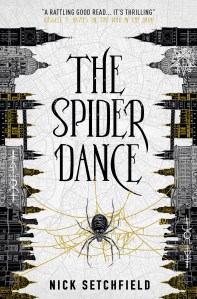 Writer and editor Nick Setchfield’s latest novel The Spider Dance is published today by Titan Books (read our review here), and as part of the blog tour to promote his latest foray into an alternate world of espionage, he answered some questions from Paul Simpson…
 How much of the plot beats for the second book did you have in mind before you worked on the first book – and how much did they alter as a result of actually having written that story?
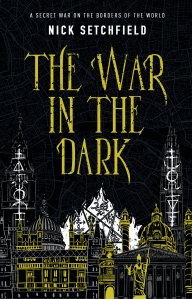
I had no plot beats mapped out at all! I was convinced the first book was a one-off while I was writing it – though there were moments where I idly entertained the idea of a series, of course, because Winter and his world seemed a natural fit for a sequence of adventures, moving through the occult landscape of the Cold War. Only when Titan offered me an initial two-book contract on the strength of The War in the Dark did I have to focus on the hard reality of a sequel. Or another adventure, I should say, as The Spider Dance is very much its own story, even though it’s informed by Winter’s experiences in the first book. I’m pleased to hear that people who haven’t read War yet are enjoying this one as a standalone story.
Was there a particular image, scene or character that sparked the plot for this book? (And connected to that, do you have any particular actors in mind for any of the characters – not necessarily ones who could be cast now, but from whenever?)
There were two initial seeds: a BBC4 documentary on King Ludwig II of Bavaria, which gave me the image of a royal heart, cut from the body and entombed in a jar, which I thought was splendidly macabre. The other starting point was an elevator pitch I made to myself: “The Day of the Jackal… with vampires”, which I thought would be a great story engine for a horror thriller, and gave me the image of a vampire seen through a telescopic lens, with the cross-hairs almost forming a crucifix… As for casting, there’s a character that’s definitely written with the brilliant Peter Cushing in mind, just as I put Orson Welles in the first book!
 Do you outline the whole book before you start writing, or do you have some central plot beats in mind and work from there?
It’s been a slightly different process on each book. The War in the Dark was extensively outlined while still leaving room to react and improvise. I didn’t really have that luxury on The Spider Dance – I had a deadline, and less time to write it in, so I had to hit the page running. I knew some of the key plot beats – you need some sense of structure, or at least I do – but everything inbetween was a discovery. Exciting! Scary! Exciting!
How far had you got with the second book when the first was written – and did you have time to react to the comments in reviews regarding the setting and the characterisation (positive or negative)?
I was three quarters of the way through writing The Spider Dance when The War in the Dark was published. I think it’s fatal to react to opinion, good or bad, in the writing itself. You just need to stay true to your storyteller’s compass (god knows your inner voice is feeding you enough criticism as it is!).
The only thing that gave me pause was a young girl at a book signing for The War in the Dark, who told me “I loved Karina – she was so cool!”, which absolutely slew me, just the idea that this character I’d created had a reality inside someone else’s head – but at the same time I knew that Karina didn’t feature in book two, apart from a couple of passing references. God, the guilt! But I told Karina’s story in War. Characters are story and in a way I’d betray her story by trying to squeeze her into this one. If you’re the girl from the signing and you’re reading this: you made my day and I hope you like SIS agent Libby Cracknell. The Spider Dance is her story.
Did you find the process of telling this story easier as a result of having gone through the editing of the first book?
I guess I had a muscle memory by that point, a sense of what it’s actually like to finish a book after years of false starts. But it’s never any easier. It still feels like open imagination surgery – without anaesthetic.
What was the most challenging element of writing the new book?
I wanted to use vampires, who have been mined so extensively as a concept, in so many brilliant stories by other people. I needed to reinvent them, to an extent: keep all that was terrifying and seductive about the myth of the undead but make it a fresh, relevant threat for a Cold War thriller. My vampires are sharp-suited, ruthless, pragmatic and have an agenda all their own. Some of them don’t play by the established rules, either. They walk in sunlight and laugh at crosses, which makes them even trickier to kill. So that was the biggest challenge of The Spider Dance but also one of the most enjoyable bits, creating a hierarchy of vampires, some that could almost pass for human in a Naples nightclub, some that are little more than bones and rags, erupting out of a burial mound on the French coast… It was fun to play with them all.
What was the most surprising thing that came out of the research for this book?
Probably the fact that both sides in the Cold War employed what were known as “libido strategists” for setting up honeytraps. I had to put that in!
The Spider Dance is out now from Titan Books, click here to order from Amazon.co.uk
 Doctor Who News Star Trek News
 Sci-Fi Bulletin: Exploring the Universes of SF, Fantasy, Horror and Spy-fi!