The Whisperer in Darkness: Interview: David Thomas
To create the very particular soundscapes required for The Whisperer in Darkness, the sequel to the successful podcast The Case of Charles Dexter Ward, writer and director Julian Simpson turned […]



To create the very particular soundscapes required for The Whisperer in Darkness, the sequel to the successful podcast The Case of Charles Dexter Ward, writer and director Julian Simpson turned […]
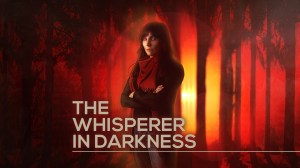 To create the very particular soundscapes required for The Whisperer in Darkness, the sequel to the successful podcast The Case of Charles Dexter Ward, writer and director Julian Simpson turned once again to sound engineer David Thomas, who brought a wealth of experience to the task. Thomas chatted with Paul Simpson about the challenges of the project…
Thank you for a very enjoyable soundscape on The Whisperer in Darkness.
Glad you liked it. It was a labour of love. You just put your heart and soul into it on these ones.
Did you have conversations with [writer and director] Julian Simpson about Whisperer after Charles Dexter Ward or was it more that you became involved once he’d actually done the script?
 I properly became involved once he’d done the script but we did have a meeting earlier. There was some sort of podcast festival where Julian was speaking and we met for lunch when he talked about where he saw it all going.
That was around April [2019] so it was before he’d refined his ideas but we had the idea that there were going to be UFOs and that sort of thing. At that point I was expecting it to be not quite as much in the vein of Charles Dexter Ward and be a bit more supernatural in a UFO type vein. But of course being Julian he managed to meld it all together and joined it up.
It starts off from the Rendlesham Forest incident and it gets into everything including the old gods without feeling like a misstep at any point.
I think that Julian’s thing, Dunwich and Rendlesham and that whole part of the world, he’s from around there as well so he understands it all; Suffolk merpeople and all that sort of thing. He writes from a long term knowledge of it and it’s always interested him as far as I can tell.
That sort of feel infuses in a script, doesn’t it?
Yes, very much so. And he loves the research and all that sort of stuff. He loves going through the archives, going to The Times and researching old newspaper articles.
How detailed descriptions does he give you of what he wants from soundscapes? Or have you worked together enough that you know what he’s getting at?
The scripts will say something like ‘a sound a bit like a modem with static and a barking dog’. He writes it so that I know what he’s got in his mind but he leaves enough space for me to interpret it.
He trusts me to come up with some ideas, and if I’m going in the wrong direction he’ll go, ‘Oh actually that doesn’t work, for this reason’ and obviously that’s totally fine. But he writes it with specifics but also with enough space around it that he’s not nailing it down straightaway.
 Were there things when you read the scripts for Whisperer that you went ‘Ahhhh, this gives me an opportunity to do something I’ve wanted to do for a long time’?
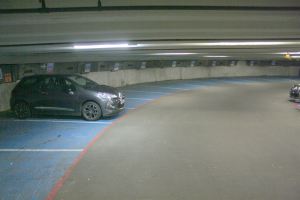
Slightly different angle to that. The car chase scene where [investigator Matthew] Heawood is in the car park wasn’t quite ‘oh I’ve always wanted to do this’ it was more like ‘Oh this is really difficult’ (Laughs). So your first instinct is ‘Arghhh’ and your second instinct is ‘Well, you don’t hear car chases on the radio’ certainly not in a car park.
I’m a big David Bowie fan and my favourite song is Always Crashing in the Same Car which is all about him driving at full speed round a deserted car park. So it set that off in my mind and I thought, ‘Oh it would be really nice to do cars screaming around car parks’ and it just got me in that vibe of wanting to do something that is very very difficult in a purely sound environment because you’ve got to deal with different perspectives of different characters.
You’ve got to deal with cars coming up and smashing into walls, [Heawood] running up through the stairs in the middle of the car park and then out the other side. There’s so much to do to make it believable. So it’s a real challenge.
I’m fairly happy with how that turned out. I think it was quite a good bit of work.
I think that the great thing about this is you’re never pulled out of the story thinking ‘Oh that’s a sound effect’. It feels like it something that could be happening to Matthew or Kennedy.
I did actually record the general hum background and doors and things, at the car park that’s mentioned in the script. It’s the Bloomsbury Square car park: I recorded full surround recordings in that car park just to get the right hums. Like it mentions in the script, it’s an unusual car park in that it’s a spiral and so cars don’t really stop to go round corners, they just sort of appear around the corner and they just spiral up and up and up. It helped to have the right recordings.
It’s almost like location plates being taken to be used as background for something that’s being filmed in a studio.
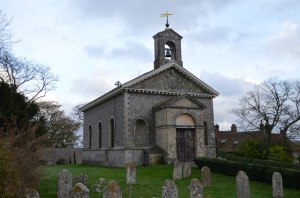 Yes, it’s a bit like that. The voice bits we recorded in Glynde Church, right next to Glyndebourne Opera House, and because it’s all stone, it’s actually quite similar in lots of ways to a car park. The mystery woman was standing outside the church: she actually phoned into a phone that was in the church that had its own stereo microphones on it and I was following Heawood with another stereo microphone, then I put it all together in post production. You got all the movements so you’ve got the different perspectives and you could control it in post production, which was quite nice.
Are there moments when you’re doing something like that that you go ‘I wish we were just in the studio’?
No, I live for being out on location because you just get a sense of being so much more real. Everything can be much more real.
I would always choose being out on location rather than in a studio. I’ve done Shakespeare out on location, which was a bit of a nightmare because of planes, but barring Shakespeare, modern day stuff, I love doing on location. You do have to wait for loud noises and builders and that sort of thing so it can take a bit longer, but the advantage is that so much of the sound is built by the time you get into the studio to mix it. You’re not having to add layers and layers of stuff which make it sound a bit more false and a bit more like a radio drama.
 That’s the interesting thing with the podcast is that it’s got to have some sort of different edge for it to be a podcast rather than an eight part drama on Radio 4.
Exactly. Location is a part of that although quite a lot of Radio 4 dramas I push to do on location as well if I can. But I think that the thing with the podcasts is content-wise, it can push a few more boundaries, and because you can make assumptions about people wearing headphones a lot of the time, you can do more tricks with the sound than you are allowed to in broadcast terms.
I use some binaural techniques in episode 8. That’s a stereo method of recording that only really works on headphones. In episode 8 the chanting of the people around you is recorded binaurally. which means that Kennedy Fisher had microphones on her ears which fit on like headphones, and that enables you to pick up sound in a way that doesn’t appear between your ears but appears actually outside. You can locate it in a space outside of your head whereas most stereo when you listen to it is spaced within your head.
I had the conventional elements of the sound in those wood scenes in episode 8 as stereo but all the weird stuff that comes into the world from outside is placed outside your head. So, you get a slightly weird two-position effect, in that the real world is in your head but everything that’s odd or occult or the UFO happens spaced outside of your normal stereo space. Most people aren’t going to notice that but they might notice that there’s something odd about it or it’s a bit more spooky because it’s that bit more unusual.
And certainly mixing stereo and binaural in the same track is… well, I’ve not heard it used before but nothing’s new under the sun. It’s certainly not a usual technique. I just hoped it would add a spooky edge to episode 8.
 I listened to the majority of that sequence while walking the dogs, with headphones, and then the last little bit in the car and the effect was very different.
Funnily enough when I was doing my final checks, just making sure that the files were ready for delivery, I was walking the dogs as well. It just so happened that episode 8, I was walking through the woods in exactly the same place that we’d recorded it. Walking the dogs and hearing this chanting coming from exactly the location I was looking at is a bit weird.
So where was that?
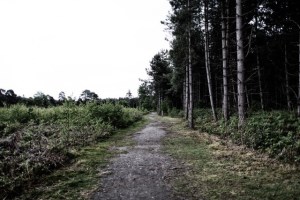
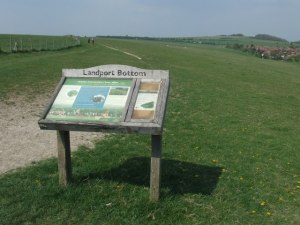
Up on Landport Bottom, just above Lewes. There’s very few places in the south east where you’re free of traffic but there’s just a little patch in the woods at the top of Landport Bottom that you’re more or less traffic free and not too many planes because the leaf cover of the trees hides some of the plane noise and the rustling of the leaves. It just isolates you a bit more than normal.
Julian was talking about the fact that you actually dodged a bullet not going up and doing it on location in Rendlesham
Yes! I didn’t even know that until I’d read your interview with him. I knew that there were plans to go to Rendlesham but I didn’t realise that there was building work in the church, so yes, recording in a location is a bit dangerous.
I do have a studio here where I do all the post production. The way we plan it is that we all meet up at my house and go from there to the locations but if the weather is absolutely terrible or something, then we can do quite a lot of stuff either at the studio or in my house if we need to. Obviously that’s not the preferred method.
But if you’ve only got the actors for a limited amount of time you may not have the option.
Exactly. It’s all very tightly scheduled.
So what was the biggest challenge for you for this particular project?
 Well the biggest challenge actually was the car park scene.
But I think you create your own challenges as well: the burst of static stuff was a self imposed challenge.
I was just setting up some recording techniques so that we could record one of the actors who was working on it with us [Ferdinand Kingsley who played Slide] in a certain way to get a certain type of sound and I just needed to play some audio through a speaker. On my phone I was playing Windowlicker by Aphex Twin and he said, ‘You know if you look at that on a spectrum analyser you’ll get a funny pattern’. I loaded it into my audio editor and was like, ‘Wow there’s a spiral, that’s amazing’ and over the next couple of days I thought, ‘I wonder if I can do something with the static with that?’.
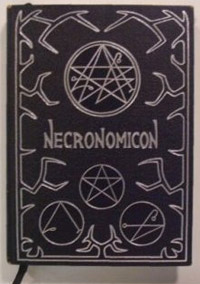
I was looking online for things I could draw into the white noise and I found the symbol for the Necronomicon which features in the stories. It’s an occult book that’s been brought over from the Middle East to Dunwich. I thought I’d burn that in and see how it sounds, and you get this weird whooshing sound which became quite distinctive when you heard it several times throughout the piece. It’s satisfying hearing things like that come together.
Presumably assuming series 3 and Kennedy’s adventures continue, that would be something that would be a useful continuity marker without necessarily hammering it home that it is.
Who knows what Julian will come up with? He is building a world so there’s now a pallet of things which can come back. For starters, one of the styles of the recording was that Kennedy does things on a handheld recorder so you get all the bumps and knocks from the handheld recorder – which I actually sometimes add, if there’s not enough. But there’s moments where she chucks the recorder in the bush and you hear it disappear and then you hear her going into the bush and pulling out the recorder again. That’s part of the style of the show: it’s bumpy and it sounds a little bit handmade.
I think that’s trying to make it sound a bit less Radio 4-y as well. Trying to not so much trying to take the polish off but add a very much a different kind of patina to it, a different feel to it.
I wonder how much you would need to change to become a Radio 4 play…
I don’t think it would have to change that much. Who knows what the audience would make of it but we have done things within this universe that have been on Radio 4 [such as Mythos]. I think it wouldn’t take too much to translate it but it’s just not your traditional sound that people think of as an audio drama with people in the studio.
One of the things about recording on location is that you’re giving up control to the elements to a degree in exchange for a reality and an immediacy. We’re trying to set this very much in the real work and make it sound as real as possible, so it helps to have the location as a starting point.
What are the things that you learned from working on Charles Dexter Ward that helped you to avoid problems or gave you different ideas to bring into Whisperer?
 Charles Dexter Ward was the first one which we’d recorded which was from Kennedy’s point of view in as much as she was the one holding the recorder. So, when we did Charles Dexter Ward Jana [Carpenter, playing Kennedy] would hold the recorder and walk around and I would be following her and mirroring her holding my big posh microphone. Wherever possible we would use Kennedy’s slightly more bumpy microphone to keep that sort of rawness to it.
But I felt that coming into series 2 it just needed to tighten up a bit – stop listening to the recording so much and be in the space a bit more. I used less of the handheld recorder because Jana is trying to act at the same time; obviously she can’t have perfect mic technique and act at the same time, so I was shadowing with my mic and I ended up using a lot more of my mic than I did in Charles Dexter Ward. I think it shows. I like to think of it as it’s almost as if as they’ve been making podcasts so long, they’ve got better at pointing the mic in the right direction.
If you stop listening to people bumping round on the mic and you’re listening more to the story, I think that that helps, particularly in Whisperer in Darkness. We did still do things like recording on phones and putting them in pockets and things like that for the hidden microphone scenes and that was great because you want all the bumpiness on that.
Of course having the same actors there [helps]; we’re all used to what we all need. On a purely technical level some actors like working from paper scripts, some like working from iPads and even those little things make a difference. When you’re out on location doing an audio drama you haven’t learned the lines, so there’s always something that you have to read from. If actors have to run while they’re carrying paper or an iPad, you have to just make sure you don’t hear all that sort of stuff. So it’s just ways of managing boring old logistics of paper and scripts and things like that.
But as for learning from Charles Dexter Ward and applying it to Whisperer, I think it’s more of an evolution of a technique rather than a ‘oh we’d better not do that again’. I think I was so cautious in Charles Dexter Ward to get everything absolutely safe and buttoned down so we had lots of options, but I knew more where I was going in Whisperer so it just helped refine the path.
Thanks to Sean Harwood for help in arranging this interview.
Click here to read our interview with Julian Simpson
Click here to listen to The Whisperer in Darkness
 Doctor Who News Star Trek News
 Sci-Fi Bulletin: Exploring the Universes of SF, Fantasy, Horror and Spy-fi!