The Lovecraft Investigations: Crowley: Interview: Julian Simpson
The next incarnation of The Lovecraft Investigations is a deep dive into the life of Aleister Crowley – and it’s being funded by Kickstarter which ends on May 31 at […]



The next incarnation of The Lovecraft Investigations is a deep dive into the life of Aleister Crowley – and it’s being funded by Kickstarter which ends on May 31 at […]
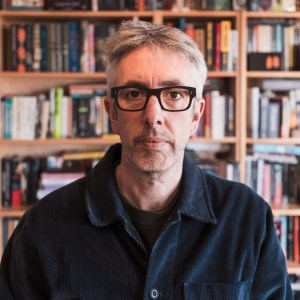
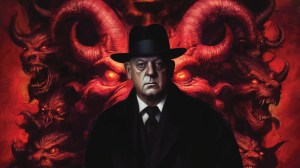 The next incarnation of The Lovecraft Investigations is a deep dive into the life of Aleister Crowley – and it’s being funded by Kickstarter which ends on May 31 at midday. Creator Julian Simpson chatted with Paul Simpson about the new challenges…
How did Crowley come about?
I’ve never done documentary for audio. But I don’t feel like I am now either. The idea of a documentary or a factual series presented by fictional characters was the thing that really got me excited. I don’t know that anyone has done that.
People have done deep dives on Crowley obviously – and lots and lots of books – and there have been longer documentaries, but in the audio documentary format, I haven’t come across anything that’s like 5 episodes long and a deep dive into his life.
We’ve referenced him so much in The Lovecraft Investigations without going into him in a big way, but looking back over what we’ve said about him, while we’ve had fictional characters interact with Crowley, we’ve never said anything factually incorrect about the man himself, so we’ve got a clean slate.
So I thought, why didn’t we just do that? Pause the story and do a deep dive into Crowley for five episodes, which can provide some foundations for the next proper Lovecraft story that we’re doing, but also allows us to have fun.
Richard MacLean Smith who’s co-writing it with me, when we talk about Crowley, we have all these questions, and in a standard documentary format you have to answer those questions and then structure your answer in such a way that you’re telling a narrative nonfiction story. We have the opportunity to have Kennedy and Heawood and Eleanor Peck have these conversations and go, “I understand why he was doing that. What was he doing there? Why were people saying this about him?” You can ask the question on air and speculate and answer it in a format that’s really different.
It’s going to be a complete pain to write because there’s so much research to do and so much to squeeze into the five episodes. First I was like “5 episodes, let’s go” and then you start researching it and go “how are we going to fit this into 5 episodes?”
I think it’s going to be interesting. I think it’s going to be good. A few people have said, “Is there going to be a fictional story running alongside it?” I don’t think there is because I do want people to be able to come to this clean and learn about Aleister Crowley. So it’s more that I think that the stuff we will uncover will give me a lot of sparks and ideas for the next full run of Lovecraft Investigations.
Are you expecting people who have an interest in Crowley to come to this and for them the Lovecraft bits are an add-on?
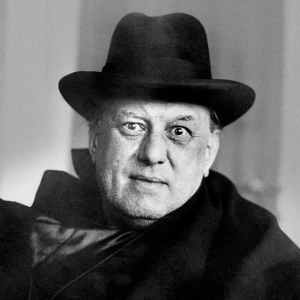 I think it’s an interesting one because that’s going to be something we’ll tackle as we’re writing it, because the fact is that if you’re just interested in Crowley and you have no idea who we are and what we do, it’s going to be a slightly weird experience from the get go. But hopefully you’ll kind of go, “Ohh OK.” Again the brilliant thing about the format is we can address that; we can go “if you’re here because you’re just interested in Crowley, this is not what we normally do, but we are doing Crowley. Everything you hear about Crowley is going to be true.”
This conversation’s been ongoing. I feel like our audience has already bought the show – the Kickstarter is the pre buy. Fourteen hundred people or whatever it’s up to at the moment have bought this and will listen to it. I am absolutely fine with not bringing new people in beyond this, because I’m increasingly finding that it’s very rewarding to write for or to create stuff for an audience who I’m connecting with. I’m not feeling the need for this to go out wide.
There’s been a lot of conversations about “why don’t you give this away for free? It’ll bring more people in.” Free doesn’t help me. Free doesn’t get the next series made. I don’t have any intention of putting advertising on this. So there’s no way of monetizing free distribution.
So all it is is giving something away; it’s like you’ve written a book or made an album, or painted a picture and now you’re going to give it away. That doesn’t make an awful lot of sense to me when our audience might be small in Taylor Swift terms, but it’s an engaged loyal audience who like what we do. I’m very happy to continue on with that audience and grow it incrementally as we go.
The original Lovecraft Investigations, I think will always be free and there’s every chance that Season 5, which will end up being crowdfunded, will ultimately also be widely available because it’s a good way of bringing other people in. But other things that we do don’t need to be widely available, we can be doing the equivalent of selling an album.
You and I were talking about AI before this recording started – large language models and the prevalence of them. It already is pretty easy to type up an audio script for an audio drama, press a button and have it read by AI actors. That’s going to happen more and more and more, where people can just produce stuff that doesn’t have a human component, even to the point that the AI can write the script and then produce the audio, it doesn’t have a human component. That can go out wide and you can put advertising on it and you can maybe make some money from it. I can’t stop that from happening, so I don’t feel like I want to compete with that. I feel like… the analogy I used to someone yesterday was, “I don’t want to be Tesco’s, I’m happy being Fortnum & Mason.”
I’m very happy to have a smaller audience. That’s more where we’re making bespoke stuff. Everyone knows that we’re not using generative AI to create it. We’ve got real actors in real situations. We’re recording on location and the thing is written by human beings and made by human beings, and you’re going to pay for that – but there’s not going to be advertising on it. It’s just going to be a well crafted product that you pay for versus getting out into the melange of stuff that’s out there that’s covered in advertising and you don’t know if it’s real or not real. I don’t need to play in that space.
You have built up a reputation in this field.
I hope so.
I think the Kickstarter’s proved it.
That Kickstarter has been really gratifying from the point of view of going, “This is a wild punt to see if there’s anyone out there,” and finding out that we hit our target inside 24 hours. That made me go, “Oh my God”, because, a little bit like other services, you don’t get viewing or listening figures from the BBC. You don’t know who your audience is. You’re led to believe there are people out there and that it’s doing well, but you don’t know who they are. So putting out the Kickstarter is a bit like sending up a flare and going, “Can anyone see this?”
You’ve got backers at the highest tiers.
 Yeah, we have – someone referred to it as the swagger levels, which I quite like. I just knew that there were going to be people out there who wanted to help more than the standard pledges. There’s a psychological aspect to it, which is people do tend to pick the middle thing so if you give them a high end version that people go, “That’s insane”, which I think it is for most people, “but I can settle to here.”
The next thing for us is the delivery. I want to make sure that this first time out, everyone who bought merch, bought T-shirts, is very pleasantly surprised by the service and the quality of what they’re getting.
I think we will have dedicated people on that, but I also want to have a lot of oversight on it because I want to make sure that we’re sourcing the best stuff, that we’re being environmentally responsible with how we’re doing things. A lot of our offers are digital. The onus is then on me to create that, but at the same time distribution of it is much easier.
The T-shirts, we’ve done something really smart with, which is that the T-shirts will go out towards the end of this summer where everything else doesn’t go out until March. That means that we get to kick the tyres on what distribution looks like with one type of product. The packages are regular, so how easy is this to do and what do we need to tweak before we do the complicated stuff?
In the documentary are you going to run chronologically?
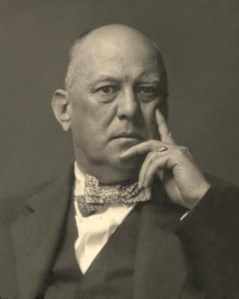 I think that even though we’ll probably jump around a little bit, I think we have to, because I don’t think it’s possible to track a life, that kind of detailed and variously, using a loose definition of the word, “accomplished” without being able to stack one time period on top of another time period.
I’m always wildly frustrated by biographies that start with, his grandparents were born and I’m like, “Oh, come on. Can we get through to the bit where he’s at least alive?”
I’m interested to dodge that. I don’t really want to start with Crowley was born in… Having said that, now I probably will start exactly like that, and I think there are specific periods of his life, but they also all essentially interlink, so the joy of having a panel going through it is that you can have someone go “Well, but that relates back to this thing” or “that jumps forward to this”. But I think in the main chronologically.
For people who know nothing about Crowley, we need to present the facts of his life and the things that he did and where he went. But I’m also interested in this thing which I’ve talked about a lot – the phrase I used was “the version of Crowley that eats a pot noodle in front of the telly.”
I want to know what Crowley was like when he wasn’t putting out the public image of Aleister Crowley. I want to get a sense of him. There’s an awful lot of myth making about Crowley and he’s responsible for an awful lot of it. I want to know what he was like if you were married to him, if you were his kid. What’s Crowley like on a day that he’s not being Aleister Crowley?
That’s going to be hard to get to, but I think that what’s interesting about the idea of this basically being a kind of panel conversation is that you can ask those questions and posit theories without going, “This is what he was like.”
You’ve got the three characters – Kennedy, Matthew and Eleanor…
I think there might be a couple of other regulars that pop in as well, but yes.
You know what interests them about Crowley, but equally, the flip side of that is that their interests intersect a hell of a lot. So how do you get to the bits that they couldn’t basically give a damn about?
I think that between the three of them, there’s nothing that they won’t give a damn about.
We’ve always had a rule with The Lovecraft Investigations. It’s a really difficult rule to follow, but it’s a rule that we’ve always had. I’ve talked about it, Karen Rose has talked about it, and David Thomas, the sound guy, has talked about it a lot and we obviously talked amongst ourselves a lot. The Lovecraft investigations is a show that is put together by Matthew Heawood, not by me. I know that seems like a weird conceit…
No, it’s the headspace that you are in when you are channelling Matthew.
In certain elements of storytelling, I would tell the story this way, but he wouldn’t. He would do this.
And when he’s vanished, for example…
 …the show gets taken over by Kennedy and there is a very marked difference in the production of that show while she is producing and editing it. And then he comes back and it gets a little bit slicker again.
I am very aware that we have to make the Crowley documentary from Matthew Heawood and Kennedy Fisher’s point of view, the stuff that they’re interested in, the stuff they think that their listeners are interested in.
One of the tenets of the show is about people believing stuff and how dangerous belief is. If someone is fanatical in their belief, they’re going to act in a dangerous manner whether or not you happen to think their belief is valid or not. I think a lot of the kind of leverage going into Crowley is going to be about that we can’t make an assertive comment on whether or not he met Horus, or whether or not he met angels or whether the Babalon working was successful or not. We don’t know. But we can start digging into: Did he believe it worked? Or is this him trying to sell some books and get some followers? I suspect it’s a mix of both. I’m not calling him a charlatan across the board, but most people who start grifting in that environment ultimately end up believing the grift.
So there’s an element of that: did he start believing, then realised that there was money in this and then go back to believing again? Or where did that ebb and flow?
I think that is specifically relevant to Eleanor Peck’s point of view. She will go, “He didn’t actually conjure anything, but what was really happening here? Did he believe he had, or was he just, you know, being a publicity hound?”
Have you actually started scripting?
No, we’re in a very light research process at the moment because I am superstitious enough to have said, “Let’s not do anything on this until we know that we’re making it.”
Which you will do Saturday.
We already know but Saturday midday the Kickstarter finishes. Then we’re off to the races. We’re recording in the autumn, which gives us not an awful lot of time to write it.
How long is each episode going to be?
Probably around the half hour. I always think the sweet spot for podcast episodes is around 25 minutes because that tends to be a commute. Someone jumps on the tube or the bus; that’s roughly how long they’re going to be there for, and it’s nice to start and finish a thing during your journey.
We have the advantage that because Richard makes the Unexplained podcast, he is steeped in Crowley already. So I’m going from a slightly standing start. He’s well ahead of me. I have behind me a whole shelf of books about Crowley, which I will need to plunge through and a couple more on the way. But it’ll be a fun summer of Post it notes and…
Magic in so many different ways!
Exactly.
To support the Kickstarter, click here.
 Doctor Who News Star Trek News
 Sci-Fi Bulletin: Exploring the Universes of SF, Fantasy, Horror and Spy-fi!