The Conception of Terror: Interview: Mark Morris
Mark Morris is the author of the final story in the Conception of Terror quartet of plays from Bafflegab for Audible UK, A View From a Hill (read our review […]



Mark Morris is the author of the final story in the Conception of Terror quartet of plays from Bafflegab for Audible UK, A View From a Hill (read our review […]
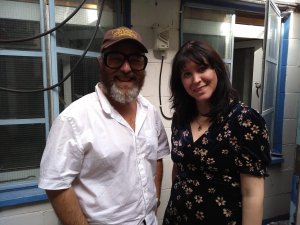
 Mark Morris is the author of the final story in the Conception of Terror quartet of plays from Bafflegab for Audible UK, A View From a Hill (read our review here). Morris, the editor of the New Fears anthologies for Titan, discusses updating M R James’ original tale with Paul Simpson…
How did you become involved with the project?
The simple answer is that Simon Barnard from Bafflegab asked me to pitch a couple of ideas, so I sent him one for this and one for The Ash Tree. I’d worked for Simon before, of course, both on Hammer Chillers and, perhaps more notably, on my recent adaptation of Blood on Satan’s Claw, so he knows my work quite well by now, and what I’m capable of.
 When did you first read an M R James story? What effect did it have on you, both at the time, and subsequently in your writing?
I read dozens, if not hundreds, of ghost and horror anthologies as a kid, so I’m guessing I came across James numerous times in those – certainly when I finally read the Penguin complete ghost stories collection in my twenties I was familiar with the majority of his stories. Often it would be images from the stories that I’d remember, and that I would find intensely creepy: the ‘horribly thin’ figure creeping towards the house in the painting in The Mezzotint; the protagonist in The Diary of Mr Poynter reaching down from his armchair and touching ‘a rounded something’ covered in hair.
I’m pretty sure the first TV adaptation of James’s work I saw was Jonathan Miller’s brilliant Whistle and I’ll Come To You starring Michael Hordern. James has the unerring ability, which few other writers possess, to pinpoint tiny details or to come up with turns of phrase which get right under your skin and evoke an almost primal sense of extreme supernatural unease. The inscription on the whistle in Oh, Whistle… for instance, which translates as ‘Who is this who is coming?’ still sends an almighty shiver down my spine.
Why did you choose this particular story to adapt?
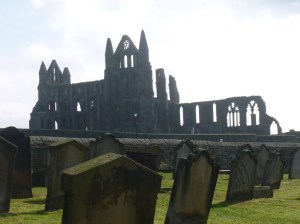
Again it was initially a detail from the story – someone peering through binoculars at a distant building, only to find, when they reach their destination, that what they have seen is in fact nothing but a ruin – that appealed to me. I’ve always found that image, and indeed that story premise, intensely evocative – the sense that something ‘evil’, for want of a better word, is luring our unwitting protagonist towards itself for unknown purposes.
Also, of course, it’s a fairly meaty story, with various elements that I thought would work well on audio. In James’s original story, as in many of his stories, the protagonist is a single man – effectively a stranger in a strange land – but I liked the idea of changing that to a married couple weighed down with emotional baggage, which the ‘evil thing’ latches on to and exploits to its own ends.
 What were the particular challenges with bringing it into the 21st century? I’m particularly thinking of the very different social and societal set up that existed when they were written.
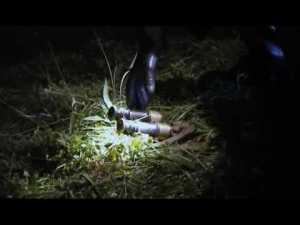
A View From a Hill was a fairly easy one to update – even in the 21st century we have quiet country hotels and remote woodland locations. And in fact, adding things like mobile phones and podcasts into the mix was a huge advantage, because it meant people a distance apart could talk to one another, or have a valid excuse to relate what was happening to them. Perhaps the biggest deviation from the original story was the decision to slightly shift the emphasis of the haunting itself. A View From a Hill is ostensibly a story about a pair of haunted binoculars, which act as the catalyst for everything else that happens, but Simon quite rightly thought that element might seem a bit hokey to a modern audience, and so although the binoculars do appear, the supernatural effect comes not from the binoculars themselves, but from what our protagonists see through them.
 What was your process – did you work out the beats from the original and then allow imagination to flourish, or did you want to use as much of James’ structure as possible?
A little bit of both. I re-read the original story and re-wrote it in a sketchy, scene-breakdown form as I was doing so, and then, using the original structure as a template, I added some bits and took away others. There are some powerful scenes in the original story, which I wanted to keep, but more than anything I wanted to keep the spirit and atmosphere of the story intact. I particularly wanted to retain that sense of the deeply sinister within the bucolic – which I guess again taps in to the ‘folk horror’ aesthetic that also characterised Blood on Satan’s Claw.
Did you find the original story limiting in any way (i.e. the fact that this was an adaptation rather than riffing off the same themes that James used meant it needed to be recognisable)?
No. This is one of James’s meatier stories, as I’ve said – a lot happens in it, it’s thematically rich, and it doesn’t rely, as some of James’s stories do, on a striking and deeply creepy central image that would be hard to translate to audio. Going back to The Mezzotint, for example… it’s a great story but it wouldn’t work on audio, because you’d have to have your characters simply describing what’s in the painting, and reacting to it, in which case you might as well just have a straight telling of the story. The same, sadly, goes for The Diary of Mr Poynter. That moment when our protagonist reaches down, touches hair, and then looks to see a figure, entirely covered with hair, slowly rising up beside his armchair, is horribly creepy (and predates the J-horror craze by over half a century), but it’s very visual, and therefore almost impossible to convey on audio.
 What was the biggest challenge overall of the project for you?
Jamesian ghost stories are generally scariest when you have a single, isolated protagonist menaced by the supernatural. To some extent there is always comfort and safety in numbers, both for the characters themselves, and for your readers or listeners. Obviously, though, with audio, you need to know what’s going on, you need people to talk to one another – there’s only so much you can do with sound effects, and if you have your lone characters talking to themselves too much it starts to sound hokey and obvious. The biggest challenge, therefore, when writing ghost stories for audio, is to make them properly scary by successfully presenting characters who are alone and vulnerable.
This is why using the medium of sound, of listening, is so important. To take mobile phones as an example, they’re often tricky in horror films because they give your protagonist a means of communicating with the outside world when they get into trouble. That’s why in so many cases, filmmakers resort to the cliché of having characters lose their phones, or unable to get a signal. But in audio, mobile phones can be used really effectively, especially if you flip things around, and present the scene not from the viewpoint of the person in trouble, but from the viewpoint of the person receiving the call. By having a character receive a call from a friend or loved one who is lost, alone, scared, in mortal peril or whatever, it can really ramp up the tension, because our focus character wants to help, but can’t – and there’s something deeply scary about that sort of helplessness.
And finally, do you have another James story you’d like to tackle?
As I said above, there are only certain ones that I think would translate well to audio, because so many of them rely on that killer visual image. Although Simon wasn’t keen on the idea, I would still like to have a bash at The Ash Tree. I’ve thought of a way the story could be expanded and updated whilst still retaining its spirit and integrity. Beyond that, I’d have to look at some of James’s lesser known stories and see if anything inspires me. It’s many years since I’ve read some of them, so I can only remember odd snippets and images. In terms of audio adaptation, I’m sure there are some gems in there.
 Doctor Who News Star Trek News
 Sci-Fi Bulletin: Exploring the Universes of SF, Fantasy, Horror and Spy-fi!