World on a Wire: Interview: Renate Leiffer
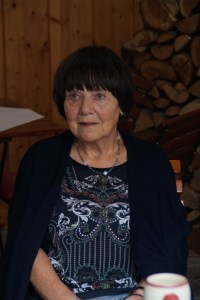
Renate Leiffer was Assistant Director on Rainer Werner Fassbinder’s epic TV miniseries for German television, World on a Wire. With the series now available on Blu-ray for the first time […]



Renate Leiffer was Assistant Director on Rainer Werner Fassbinder’s epic TV miniseries for German television, World on a Wire. With the series now available on Blu-ray for the first time […]
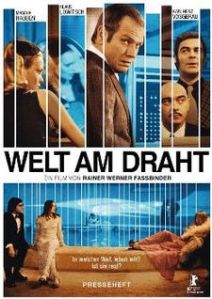
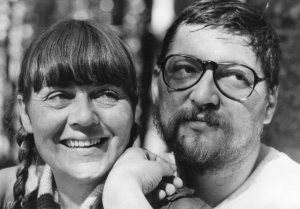 Renate Leiffer was Assistant Director on Rainer Werner Fassbinder’s epic TV miniseries for German television, World on a Wire. With the series now available on Blu-ray for the first time (read our review here) Leiffer talked to Paul Simpson about her work with the legendary German director nearly half a century ago…
How did you get involved in World on a Wire?
I had known Fassbinder since 1968 and worked several times with him. The first time was as assistant in 1972 on the series 8 Hours Don’t Make a Day (Acht Stunden sind kein Tag) which took five months.
I am not one of the many “widows” he left. Rainer and I were like brother and sister, teasing each other and quarrelling over private matters (like oppressing weak people). After one argument during the shooting, Rainer gave me his dog, a Boxer named Zadek; he was named after the theatre director Peter Zadek, who Rainer disliked – he liked being able to tell the dog what to do!
 What was the most unexpected part of the shoot?
Rainer always drew the shots for each day like little comics but only on the day [we were shooting] in the morning. He explained and discussed them with the cameraman and me, and made a schedule of the continuity with me how the shots would be done. Afterwards the cameraman went to the set to give his orders, I went to all the other departments giving them the shooting schedule of the day.
In Paris Rainer and I saw Bertolucci´s Last Tango in Paris with Marlon Brando and Maria Schneider. The next day he drew a comic showing [cinematographer Michael] Ballhaus sliding about 15 meters along with his camera just 5 cm above the floor, seeing the actors from the level of the floor. He had seen this angle in Last Tango!
 Ballhaus wondered about Rainer´s sensational invention and only later knew where it came from when he saw Last Tango. It was exciting for Rainer and all of us to see how Ballhaus would manage this task. He solved it very well, but even Fassbinder was wondering [how he’d do it] – [he] himself did not know how to move the camera this way. I am sure he was thinking of it all night long so he could say: “But Michael, look, it is that easy…”
For another scene Ballhaus had to go onto the roof of a building on the Champs Elysées. He was secured on ropes, and he could see right down to the Avenue. The poor man, he only got to know in the morning about that shot, so there he was, lying on that roof very well dressed, with his checked trousers and shoes with leather soles. He looked like an English Lord lying there!
There was a scene in twilight with Eddie Constantine entering a car (a homage to a shot from Godard´s Alphaville which also starred Eddie Constantine). By the time the camera was ready it was not dusk but night – on the fourth day we did it, but it was even then not really dusk. Michael Ballhaus was called Monsieur Crepuscule since then – Mr. Twilight.
 What did you think of the script when you first read it?
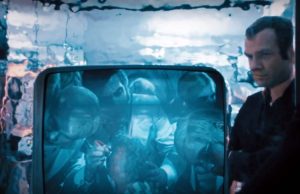
After my first reading I thought: “Help! Which scenes are set in the real world, which in the simulated world?” There was no indication in the script which was which. Also other departments did not check it, so I worked out a schedule. Only then did I begin wondering: Am I simulated as well? But there was enough work to do that you got this thought out of your head quickly. And I never was an esoteric.
Besides, it reminded me of Godard´s Alphaville. And it was Rainer´s wish to shoot the modern buildings in Paris, like a homage.
 What was the biggest challenge making the film?
For me shooting the scenes in the Alcazar nightclub and to move the extras in it. Upstairs, downstairs, in the middle – my God, I was sweating! The show on stage was done by people from the Alcazar.
For Rainer, the challenge was working with Klaus Löwitsch. He was a good actor, and a good drinker – he could drink enormously which made work hard sometimes. Rainer even fought with him once, then it went better.
Shootings took place from 22nd January until around the 17th March, I think we did 180 minutes in not quite 40 days including the moving of all the equipment from Munich to Paris, then Cologne.
It was a lot of work which you don´t mind if you like it.
 What pushed you the most?
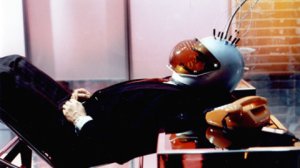
We were young and ambitious and wanted to show that we were professionals – to the crew members who came from the television industry in Cologne, but as well to the actors. Some of the older German actors in the film, like Ivan Desny and Barbara Valentin, they were real professionals. Rainer was working with them for the first time and had to show that he was the boss.
And he was accepted by the actors and the crew. He could show human imperfections which made him sympathetic.
 What did you think of the film then, and what do you think of it now, looking back on it?
It was a challenge for all departments to come to an understanding with the two worlds, especially when the shots took place the same day. This picture was not only work but Rainer made it fun as well to work on. I liked the script at that time and today it is one of the films I like best of all Fassbinder’s. It stands above the others.
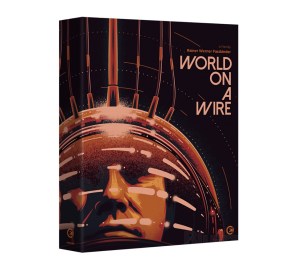
World on a Wire is available now from Second Sight. Thanks to Sneh Rupra for help in arranging this interview.
 Doctor Who News Star Trek News
 Sci-Fi Bulletin: Exploring the Universes of SF, Fantasy, Horror and Spy-fi!