What If?: Interview: Composer Laura Karpman
Composer Laura Karpman’s name will be familiar to genre fans not just for her scoring of Marvel Studios’ What If? but also Lovecraft Country, Taken and many other pieces for […]



Composer Laura Karpman’s name will be familiar to genre fans not just for her scoring of Marvel Studios’ What If? but also Lovecraft Country, Taken and many other pieces for […]
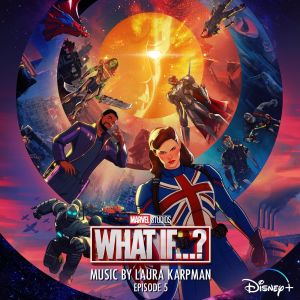 Composer Laura Karpman’s name will be familiar to genre fans not just for her scoring of Marvel Studios’ What If? but also Lovecraft Country, Taken and many other pieces for large and small screen. As part of the press junket for What If?, Paul Simpson had a chance to chat with her one-on-one…
One of the things that the production personnel who we’ve been talking to up to now has been saying is the fact it’s an anthology show but that there is this theme running through it – not using the theme in a musical sense…
 But you could. You could use it in a musical sense because it’s true.
Yes, there’s that D, B flat, C, A combination that I picked up that was in there.
Yes.
When you came onto What If? have you regarded it as one nine episode project or it is nine discrete units?
I don’t know, it’s somewhere between. It’s not as tied together as other episodic work that I’ve done. Lovecraft Country, even though it’s more tied in from a story standpoint [than this] each episode lives in a genre as well so I think in that way the two are similar. I think this series is tied together by The Watcher who’s up there looking at everything and assessing and his theme is there… Has anybody talked about that? Is The Watcher a he or a they? I don’t know.
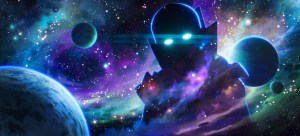 Jeffrey referred to him as ‘he’ when he did the press conference at the start.
Alright, so he’s a he I guess, but that theme does weave itself in many many places throughout the show.
Was that something that came to mind when you saw the animation? How did that process work?
We talked, in our very initial talks, about having a strong theme for The Watcher that would be the title sequence but also could carry us in other various places, have different kinds of mutations, serve different functions throughout the show.
Is it that four note theme because that seems, from what I’ve heard so far, to go off in many different directions.
Yes. I mean the theme itself as you hear in the title sequence has that as the first antecedent and then it finishes that phrase and then the second half with the ‘bah bah bah, bah bah bah…’ business that happens, but those four notes are definitely the four notes that I think drop in and remind you where you are and then we carry on.
 You’ve used a number of themes that your predecessors in the MCU have identified with, the Black Panther theme, and I love the dropping in of the Doctor Strange theme in episode 4. Would you say the MCU has a particularly standardised musical base? Listening to the scores, there’s so many people who’ve brought their talents to it that I don’t know you could say there is a style, like John Williams is Star Wars…
I think that Star Wars is a different thing. Believe me I’ve talked a lot about this because my son is a self professed Star Wars nerd and I said ‘Could you just become a Marvel nerd please? That could be potentially useful to me’ (laughs).
But Star Wars is one tree with branches and I guess the MCU is as well but they are very distinct… maybe it’s trees in a forest? Please stop me with this metaphor because it’s going nowhere!
They’re different and they’re worlds that intersect or don’t intersect in various ways so I think it is different from the John Williams thing. I think there’s a musical diversity in the MCU that’s really lovely and fun. I think what brings it together is the orchestra – the orchestra is a massive tool – its strong orchestral themes, its cinematic scoring. It’s just that kind of big luscious film scoring that’s really really fun to participate in.
 To an extent it also feels like the sort of music that we grew up with.
Yes.
You had that before synthesizers took over the world in the 80s.
And that’s one of the fun things about it. Certainly there are synthesizers that are used and I use them as well and I love it and there’s a lot of that, but it’s also about writing a great tune and about using the orchestra to express that. That’s a great thing to be able to do, especially in television.
Yes indeed, the Star Treks are about the only ones that did it consistently, you had that quality of sound.
Right and we did it on Taken, which is an old project now but that was all orchestral too – a smaller orchestra than we used for this but still.
What size are you using for this?
I don’t have the numbers. I think it’s more like 65 or 70 and I think Taken was about 45 as I recall.
 I was guessing it would be around 70-72 given the variety, and OK you can double track, but particularly the horns…
We had six horns on this show, that I know.
That doesn’t surprise me in the slightest.
You need that.
And you’re using a choir as well.
Yes.
For you, what’s the biggest challenge writing for this sort of show as opposed to a live action or something like Lovecraft?
 I actually think of it as a live action show. I think of it as a living comic book. It doesn’t feel to me like miniscule animation. I don’t mean that pejoratively, I mean that in terms of how you have to score it, like the finesse of doing little details and hitting this at 1 minute and 03 seconds and 35 frames, that type of thing. This is really cinematic scoring where you’re dealing with character, you’re dealing with action, you’re dealing with different cinematic tropes that you’re playing with and just using music to support that with every twist and turn.
Are you spotting the episodes with the director?
We spot with the music editorial team, with Brad and Bryan and with people like A.C and Carrie Wassenaar and some people popping in, on occasion. We do that work remotely of course, as is everybody, but they’re pretty intense spotting sessions.
Are there things that you would have liked to have been able to do so far that’s been a ‘not quite yet but we’ll keep it for down the line’?
No (laughs) I was able to do everything I wanted to do. At first there were some conversations about orchestra and Kevin [Feige] put those conversations to bed when he said ‘Well, we have to have an orchestra!’. So it’s been great.
Are you kidding? It’s a composer’s dream gig, it really is. It’s super fun.
 Which episode so far have you enjoyed scoring most?
Oh I don’t know, every single episode has stuff in it that I’ve loved doing. I loved the heist music from 1×02, I really like the mystery assassin theme in 1×03, I think there’s one cue in there that I felt really super proud of. I loved writing Chadwick’s tribute in 1×02 – that touched me deeply.
Having this four note theme for Doctor Strange and just growing it and growing it and growing it and then contracting it – that episode there was a ton of music. There were literally montages that were all score with very little dialogue.
 Every episode has something that’s really a knockout to work on. I can’t say that there’s one episode where I say I love it the most because they’re all cool and every single one has a different compositional opportunity.
New episodes of Marvel Studios’ What If? stream weekly on Wednesdays on Disney+
Portrait by Maarten de Boer
 Doctor Who News Star Trek News
 Sci-Fi Bulletin: Exploring the Universes of SF, Fantasy, Horror and Spy-fi!