Them: Interview: Covenant: Deborah Ayorinde and Ashley Thomas
Deborah Ayorinde and Ashley Thomas star as the leads of Them: Covenant, the first season of Little Marvin’s new series for Amazon Prime Video. They play Lucky and Henry Emory, […]



Deborah Ayorinde and Ashley Thomas star as the leads of Them: Covenant, the first season of Little Marvin’s new series for Amazon Prime Video. They play Lucky and Henry Emory, […]
 Deborah Ayorinde and Ashley Thomas star as the leads of Them: Covenant, the first season of Little Marvin’s new series for Amazon Prime Video. They play Lucky and Henry Emory, a Black couple moving with their two daughters into the White-dominated suburb of Compton…
What drew you to do this show?
Deborah: For me, when I read the script, I felt like it was some of the most beautiful, most heart-breaking pieces of writing I’ve ever read, to be honest with you. Then I met with Little Marvin and we talked for an hour and I really got a sense of the amount of intention and care that he put into creating Lucky and creating the story.
So for me, it just felt very authentic. Even though it’s a horror and there are supernatural entities, it felt very real. Lucky was written very multidimensionally, so I was like, “Where do I sign up?” No brainer.
Ashley: For me, we have a Black man that loves his wife unconditionally, he loves his children unconditionally and is present emotionally and physically, and is working, holding down a job and wants to protect his family.
On top of that it’s written by someone who looks like me and understands what it is to be a Black man in this world and that journey of looking after your family. So with those nuances and extra layers, for me, that was what was appealing – and to have a showrunner and show creator, executive producer like Little Marvin at the helm, that’s what drew me to the character.
What were the biggest challenges that you faced in playing parts that are in an environment that although in some way emulates today but was a very different place?
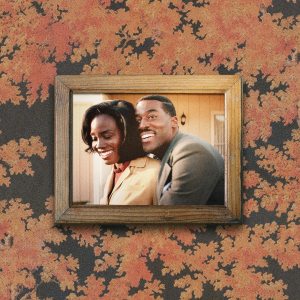 Deborah: For me, I would honestly say my biggest challenge was myself – my own self doubt, my own fear. I knew it was a very important character and I knew it was a very important story so I felt like I had to put my own inhibitions to the side and that was really challenging.
The saying “you are your own worst enemy”? I felt like that was the case in this. I had to conquer myself in order to play Lucky and she gave me that opportunity.
Ashley: Similar. I think mine was in a few parts.
I was scared to play the role at first because of the weight that it had. I just wanted to make sure that I could do the part justice. It’s about American history. Black American history is very important and I just wanted to make sure that I had what it takes to really bring this character to life. Also, we operate in a different environment now. Back then the difference of a decision could be life or death so it’s understanding that when playing the character, that your reaction has to be within the constraints of that time because you can’t react like you would in 2021 to a situation, especially as a Black man or a Black woman.
Deborah: Very true.
How did you feel when you had to shut down for COVID?
 So starting with the Covid-19 experience, we were almost at the finish line and then the pandemic happened. There was a world of uncertainty and we had to quarantine – and then there was light at the end of the tunnel because we got to come back and finish which we were so grateful for.
I actually feel the experience of being quarantined and the pandemic and seeing all these things happening in the world, helped me even more to play Lucky and to infuse all that into Lucky. I think it’ll also hopefully cause people to understand the experience of being them. Because when people were quarantined one of the things I heard a lot of people really struggling with is being isolated. Not being able to see their families, not feeling that human connection, not really feeling like they were really seen or understood, and that’s what [the Emorys] are going through, that’s the experience of being them. So I feel like, for me it helped me play Lucky even more, play the story even more but I really hope it helps audiences to further understand their experience.
But I think the interesting thing that people will see is, as far as we have come, we haven’t come that far. I feel like people will watch the show and realise that a lot of things that they were experiencing back then still happens today. I think it was pretty genius and quite appropriate to put it in a context of a horror because racism is horrifying, because prejudice is actually horrifying, it’s actually terrifying and ugly and so I thought it was perfect, it was appropriate and it made sense to me.
 Ashley: Yes, COVID affected production and made us shut down but it was more the feeling of the people, I would say, just how COVID-19 has really affected Black and brown people, especially. It’s affected my own family: we’ve had cousins who have got it and my older cousin got it and passed away. My Dad has to go to work every day and put himself out there because we don’t come from money, we can’t just stay home and isolate. My Dad’s got to look after his family so I think Covid affected a lot of Black people and brown people in that way.
Also the whole time there were protests happening as well, so there was an energy of people just feeling frustrated and isolated and held down. A lot of things were happening to our community and it was expressed. I went out and was part of peaceful protests, and you could just feel the pain amongst the people.
I tried to channel some of what I was experiencing into Henry as a character towards the end because we had some big final scenes to do – but it was bigger than acting.
I’m glad that this story exists to show people how much hasn’t changed and I hope it can add to the conversation and be a catalysis for some understanding and change.
 Deborah: To add to what Ash was saying that I hope that people will watch this and they do feel seen and they do feel understood and if they have experienced anything even remotely close to what the Emorys are experiencing in this story, I feel like they do see this and they feel seen. I hope they feel seen.
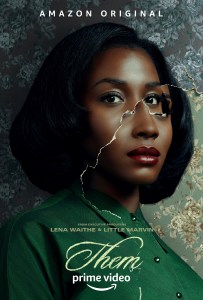
Themis available to watch on Prime Video now.
 Doctor Who News Star Trek News
 Sci-Fi Bulletin: Exploring the Universes of SF, Fantasy, Horror and Spy-fi!