Them: Interview: Covenant: Alison Pill
Alison Pill’s role on Amazon Prime Video’s Them is something of a thankless one – Betty is the instigator and organiser of the white neighbours whom the Emorys face when […]



Alison Pill’s role on Amazon Prime Video’s Them is something of a thankless one – Betty is the instigator and organiser of the white neighbours whom the Emorys face when […]
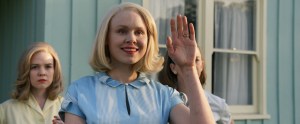 Alison Pill’s role on Amazon Prime Video’s Them is something of a thankless one – Betty is the instigator and organiser of the white neighbours whom the Emorys face when they move to Compton. Shortly before the series arrived, she chatted with the press – including Sci-Fi Bulletin – about the challenges.
What it was about your character that made you say yes to this role?
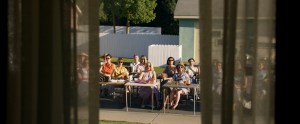
I play Betty Wendell who is a resident of the Compton that the Emorys move into, which is a different Compton than many of us might imagine. She becomes the antagonist for this family, specifically for Lucky, because of her racism and clinging to what she imagines her neighbourhood should look like.
The reason that I was attracted to the role is because I think the violence that white women do in the world is worthy of investigation. I don’t think has been seen in this way on screen in the way that Little Marvin has written all of the characters to be fully human individuals and at the same time looking at the systems that have created these humans.
Did you know a lot about your character’s season arc in advance?
 I did not have all the scripts when I signed on but at my first meeting with Little Marvin, he took me through the whole story of what was going to be happening which was important to know. There’s a lot of information that comes out of later episodes in terms of Betty’s background and history which I was glad to have before shooting, just to know what he thought of her and where she comes from.
The thing that hooked me about this show was this framing of it. Yes, we can classify it as horror but Little Marvin makes the distinction that it’s about terror instead and in an age when in the US white terror is as accepted as it is, as prevalent as it is still today, the exploration of this kind of racialised terror in a genre that amplifies it is really interesting because there’s two elements. There is the historical terror element and then there are these supernatural elements that are really just extensions of the same racialised terror that we see every day.
Would you like to work on more such productions?
My obligation, it seems, is to find stories that are being told in new and interesting ways and stories that inspire us to be better humans, whatever genre that happens in. I’m in the sci-fi world right now and I find that the exploration that happens in the fringes of these genres is pretty interesting, and the creators tend to have things to say in a new way. At the same time if there’s a more conventional contemporary story, that does the same thing of inspiring humans to look at the world in a different way and try and be better, I would happily do that too.
You mentioned when you were talking about Picard last year that you were on a show that was talking about the basic goodness of creatures and humanity. This show is not that, to put it mildly. How does it feel switching? Is there a completely different atmosphere when you’re working on something that is looking into a much darker side of our psyche?
 It is much harder and I think it was a much harder thing for all of us to shake, when we left the set on this one. It is much easier to be like, ‘Well, I’m putting down my pretend laser gun and walking out of this spaceship and I’m feeling OK’ versus re-enacting actual scenes that occurred in neighbourhoods all over this country, that get into the body in a different way.
There’s this insane thing that happens on most sets where Black people’s hair is treated as entirely different and they are often not given competent hair and makeup people, or they’re expected to go and do their own makeup or hair. This was a set where that wasn’t the case, where the care and respect went to our amazing leads and this entire family. It was just a very different environment where our showrunner is a man of colour, where the look of the actual production meant something, [and that] was inspiring in and of itself. The actual set was a wonderful place to be despite the difficulty of the subject matter.
What are the particular were as an actor playing a character who has such hateful views and what research did you do to really get inside her head?
Her views are readily accessible in this world, it’s not hard. I live in a white supremacist society, it’s not hard to find those views.
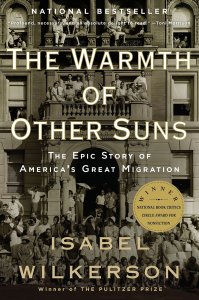
The research that was interesting to me was reading The Warmth of Other Suns, Isabel Wilkerson’s masterpiece, more about the Great Migration and the stories of people who were moving around. And looking at Ida B. Wells’ work. There was far more that side of the research to counteract the hatefulness that I was spewing.
As an artist do you think that the age that we are living in at the moment and the fears that shows like this one reflect are going to be much more in abundance in the near future?
 I think all art is political. I think a lot of art made by white men looked apolitical because it was the culture that we were all accepting.
I think what’s interesting to me now is Little Marvin had not written a show before. He was given a platform that had previously been closed off to him and people who looked like him. It’s still the case that a lot of the time that’s still true but I think the changes to whose stories we are seeing will definitely start to change the narratives we’re used to.
Will it be dystopian? I don’t know.
There is hope in Octavia Butler’s fiction which as the reflections that have been happening around Parable of the Sower recently showed, we can have these end of the world narratives that also offer new ways in terms of the cyclical nature of anything, of life itself. OK, fascism can lead to developing new ideas, we’re going to take down this part of the system that’s not working and create something new.
I think in terms of creative forces, I hope to see a shift that’s not hopeless but is different.
Them is streaming now on Amazon Prime Video; click here to read our other coverage
 Doctor Who News Star Trek News
 Sci-Fi Bulletin: Exploring the Universes of SF, Fantasy, Horror and Spy-fi!