The Wheel of Time: Review: Series 1 Episode 4: The Dragon Reborn
Who is the Dragon Reborn? The wheel turns and all begins anew. Episode four is a step change from the first three parts. It’s not perfect but it is a […]



Who is the Dragon Reborn? The wheel turns and all begins anew. Episode four is a step change from the first three parts. It’s not perfect but it is a […]
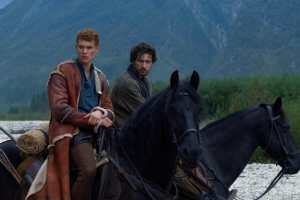 Who is the Dragon Reborn?
The wheel turns and all begins anew. Episode four is a step change from the first three parts. It’s not perfect but it is a big improvement on the previous episode.
We jump around a bit here, and the show focuses time on Logain, a man we’ve only seen in a cage so far. In doing so it provides insight both into the nature of ‘The Dragon Reborn’ that Morraine keeps talking about as well as juxtaposing the journey of the five friends from Two Rivers.
At last we get a sense of the bigger world, of the wars and politics and threats Rand and his friends are walking into. It’s becoming clear that these young people are going to come to a point where they realise there is no going home, that there is no choosing to get involved – one way or another events have caught up with them and there’s no escape, just a choice about what they get to do now they’re in them.
There are several battles scenes in this episode and some jumping about in time to allow for different character arcs to come together neatly. Most pertinent is that we see Logain’s background, or at least how he raised a loyal army, the power he wields and just what kind of threat he represents. It’s great at contextualising the actions of people like the Aes Sedai and explains some of the fear and ruthlessness Liandrin and others have exhibited throughout.
This episode is an example of solid world building done well. Whether it’s the madness of male magic users or the unfurling of other kingdoms, civilisations and politics, episode four brings us all of these things without labouring the point.
The show still suffers from poor composition and I can’t quite tell if this is an inside/outside thing as the elements which work best remain those where there’s a roof over the characters’ heads. A good example of this is the battle where we see, for the first time, the Aes Sedai battling a regular army. The scenes feel unexpectedly claustrophobic rather than epic and although they convey how powerful the magic users are, they pale in comparison to the battle at the end of the first season of The Witcher where I came away really believing just how much of a difference proper battle magic would make in war.
Compare this to the scenes where Rand and Matt are plagued by doubt and nightmares only to find that at least one of them might be corrupted. The drama in these moments is moving and the close view when they discover what’s really going on is fantastic. Additionally, the show is adding layers here with secondary characters who feel real and who feel like they have their own lives while also suggesting that nothing is quite as simple as it first appeared.
If we’ve had Whitecloaks and Fades and Aes Sedai, we’ve also had False Dragons and dangerous daggers and people vomiting up dark goo – all of them interacting in such a way that when one issue is solved it only reminds us that the answers we’re getting aren’t actually answers to the questions we’d asked but to other questions we didn’t know we had.
One such question is which of the five friends is the Dragon Reborn. Now, if you’ve read the books then you already know but the show has done some clever work in leaving newcomers without a clear sense of who it might be. There’s something interesting and potentially special about each of them and in this episode we see exactly what that could look like.
When Nynaeve’s power is finally revealed it’s both the consequence of a subtle emotional bond I enjoyed watching develop and it’s also used to bring an entirely unexpected character moment to Logain that’s then cruelly ripped away by the Aes Sedai. This kind of plotting is a good sign because delivering it without it feeling contrived or clunky demands a light but really clear touch from the writers and director.
I was really disappointed by the initial presentation of the Tinkers in episode three. That is partially redeemed by their presence on screen here. We get to see a little more of what and who they are – inspiration drawn from a number of real world sources that are woven together to bring something that diverges from Roma cliches and develops them into something all of their own design. It’s partial because it’s too early to say if this is more than just another trope (the pacifists wandering the world) or if we’ll discover there’s more depth to them to be revealed.
Verdict: This is a great episode and a marked improvement on episode three. It feels like the show has managed to move past the slightly shonky opening episodes and build upon the difficult foundations it had no choice but to lay down in those first few hours. If episode five and six can continue the trend then we may even see the second half of the season develop into something on the highly recommended list. 8/10
Stewart Hotston
 Doctor Who News Star Trek News
 Sci-Fi Bulletin: Exploring the Universes of SF, Fantasy, Horror and Spy-fi!