The Handmaid’s Tale: Review: Season 1 Episode 2: Birth Day
You can read the title of this episode two ways. The first is the fact it’s focused on birth. We see Offred’s daughter, Hannah, be born. We see what happens […]



You can read the title of this episode two ways. The first is the fact it’s focused on birth. We see Offred’s daughter, Hannah, be born. We see what happens […]
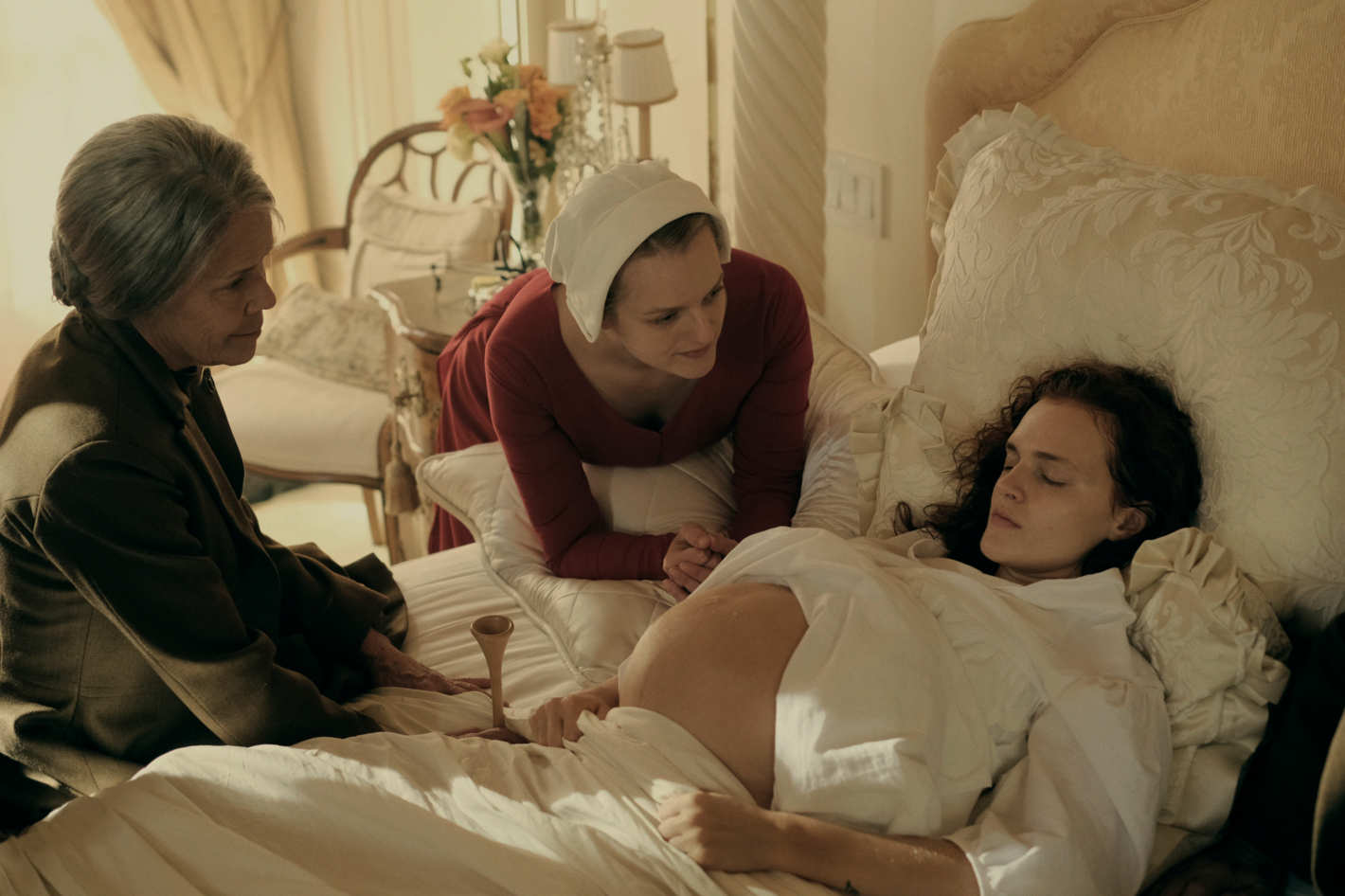 You can read the title of this episode two ways. The first is the fact it’s focused on birth. We see Offred’s daughter, Hannah, be born. We see what happens to Ofwarren when she gives birth. We get an unflinching, tragic and absurd, look at the fetishization of birth.
But we also get a moment of rebirth. A moment where Offred becomes aware the world is not as black and white as she’s been told.
But first, the actual birth. This is the spine of the episode, a full two acts devoted to it that are bookended by the ridiculous ‘Birthmobile’, an overly theatrical mini van that takes the Handmaids to the site where one of them is about to give birth. Like all the world building so far, this has no expository element to it all and that does really interesting things to the size of Gilead. They know what the Birthmobile is, there’s a hint this is far from the first time they’ve ridden in it, and they get on with it. We’re passengers, trusted to catch up, and we do.
But the actual birth itself is a Venn diagram so thick the circles all become one. There’s a class element as we see Serena Joy and the other wives engaged in a pantomime of sympathetic birth that’s as grotesque as it is tragic. It’s like watching a spread in US Weekly try to reinvent a Renaissance painting. All candles, pastel suits and earnest, just this side of bored, emotion.
There’s a magical element to it too, as the wife of Ofwarren’s owner throws herself earnestly into the biological process she’s outsourced. The episode’s most grotesque moment is when, in the final stages of the birth, she straddles Ofwarren who herself is on a birthing chair. A woman culpable in the end of the world, giving symbolic birth to the unwanted offshoot of her choices who is in turn giving birth to the child she’s denied by a biological twist of fate.
Finally, there’s a very human element to it in two different ways. The first is how different the two births are; the virtual one is polite, focused, well-tailored and bored. The Handmaid’s one is a mob of practical women helping as they can, with Offred being hands-on in a way Serena Joy doesn’t know understand. The horror of the world is pushed away for this, as something far more important and far closer to all their hearts approaches.
And then there’s the moment where the baby is born. Healthy. Alive. And for a few seconds there are no Wives. No Handmaids. Just a group of women revelling in the fact one of them managed to cheat the odds. It’s human and real and it gives Gilead a very clear edge. The country as an idea isn’t bedded in quite yet. There are still individuals under the uniforms.
That bookends the flashbacks perfectly, context and consequence locked together. The moment where Offred sees the empty cribs is chilling. The moment where a woman almost steals her daughter and apparently kills a nurse is worse. Again there’s minimal exposition but you’re told every single thing you need to know in the eyes, and faces of the cast.
This is extraordinary, heady writing and it lands every single punch it throws. The stolen moments between Handmaids, the pragmatic approach to state violence and the queasy moment where an Eye van erupts in slow motion into a street arrest will all haunt you.
But what haunts Ofred is hope. Her discovery that there’s a resistance, that Oflgen is part of it and she could be too is as terrifying as it is hopeful. That leads to her quiet defiance of Fred in the closing scenes, the stunning use of Don’t You Forget About Me and the hammerblow ending.
There is a resistance. There is hope. Offred has been born again. But unlike Ofwarren’s daughter, if she cries? She’s dead.
Verdict: Unflinching, darkly funny, brilliantly acted, essential television. 10/10
Alasdair Stuart
 Doctor Who News Star Trek News
 Sci-Fi Bulletin: Exploring the Universes of SF, Fantasy, Horror and Spy-fi!