Sweet Tooth: Interview: Jim Mickle, Jeff Lemire and Beth Schwartz
Sweet Tooth has been a big hit for Netflix, ranking as the number one watched show across multiple stories. Its creatives spoke to journalists about the challenges of bringing a […]



Sweet Tooth has been a big hit for Netflix, ranking as the number one watched show across multiple stories. Its creatives spoke to journalists about the challenges of bringing a […]
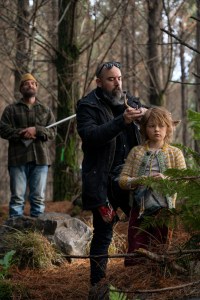 Sweet Tooth has been a big hit for Netflix, ranking as the number one watched show across multiple stories. Its creatives spoke to journalists about the challenges of bringing a popular comic book to a streaming service, and the changes that were inevitably made. Nick Joy was on hand to talk to Jim Mickle (showrunner), Jeff Lemire (comic book creator) and Beth Schwartz (producer).
Congratulations on collectively making Netflix’s number one show. Why do you think it has managed to resonate so much with people?
Jim Mickle – I watched it all for the first time this weekend and I was struck by how it felt like a world that was starting to wake up from the COVID hangover; a story which was also hopeful. It wasn’t just cynical about the whole thing – it gave it a fairy tale twist and timelessness. I think it’s because of Gus and how cute all the hybrids are.
Beth Schwartz – In addition to what Jim said I think it’s so visually stunning – thanks to everyone involved in the show – including New Zealand. It took everyone to this amazing gorgeous place that everyone would want to live in rather than being stuck in your own home. Those are a lot of the comments I’ve been reading – a lot about how gorgeous the show looks, obviously as well as how the character actors are so rich.
Jeff, what was it like to see your comic world come to life on screen but in a slightly different way?
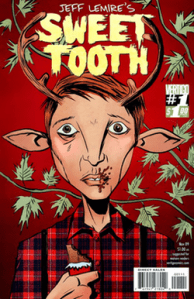 Jeff Lemire – I did the comic over a decade ago – 2008 I started it. I was really coming at it from a place of doing a sci-fi story in the tradition of all of the post-apocalyptic and dystopian stuff that I loved when growing up. But in the decade since I did the book, the world has changed – we’ve had a real pandemic and there has also been a lot of dystopian fiction on screen in that time. I think it was smart to reinvent the look of the show, because if they had done just a straight post-apocalyptic Max Mad it would feel like we’ve seen that so many times. We needed a new flavour.
The other thing people don’t consider, especially with a character of a child like Gus, is that having violence depicted on a drawing on a page and then on screen are very different things. An audience reacts to things very differently in these different mediums. You can do things in drawings that if you were to do them on screen would be shocking or not work. It’s an adaptation – you need to adapt to the new medium and I think that all the hopefulness and heart that were in the comic have been brought forward onto the screen and I think that’s wonderful. I love that they can be two different things and complement each other, but exist on their own as well.
At any point during production did you have concerns that because of COVID this might be last thing people would want to watch?
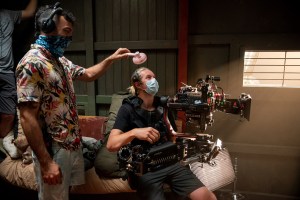 Beth – It was a fear in the sense that we were very conscious that we were writing something that was so close to what was happening in real life, and there were so many dark moments in real life. But as we were working on the show it was such a bright spot for us. It was such fun working out what Gus’ world could look like, and adding the magical element of the hybrid I think gave us some escapism, so I think that might be why people are really connecting to the material. Every time a cut came in to post-production it was such an escape from the real headlines in the outside world.
How important was it to have James Brolin on board as the narrator – he’s the glue that holds the narrative together.
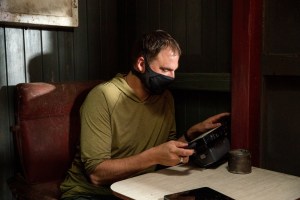 Jim – It’s funny but I don’t remember the moment it felt right to have narration in it. I remember thinking there was so much to convey about the world. There’s two concepts smashed together in the opening minutes of the story to really wrap your head around – the hybrid and the virus storylines – and I felt like it would really help having someone to walk us through that so we could get to understand what the story was all about, because Gus was really important.
I think that’s where it came from and as the story started to evolve it began to take on fairytale aspects and having a narrator added to that. When I fell in love with stuff like The Dark Crystal and The Neverending Story, the whole storybook aspect of that felt like it was a way into this world, and we used that to let us latch onto Gus. When you read it you always have different voices in your mind – you don’t even know what they are. Your assistant editor would do a pass and you’d see what that’s like, and other voiceover artists or narrators that I like from other projects – we’d ask them to do it. It’s like putting music to something – I love it but it doesn’t quite work to this imagery.
It was [executive producers] Susan and Robert Downey’s idea for James Brolin and it was a fascinating thing bringing him in to the studio for the first time hoping that it worked as well as I thought it would. Thankfully it did.
Although the series is an adaptation of the comic book, there are certain elements that had to remain – the things that made Sweet Tooth Sweet Tooth. What are they?
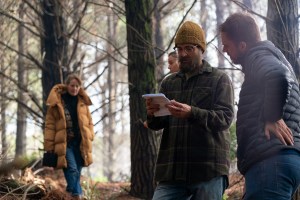 Jeff – For me, what makes Sweet Tooth Sweet Tooth is the character of Gus. The Gus of the show is very much the Gus of the comics. The situations and the way they are presented might be slightly different but it has the same arc in it, and the chemistry between Gus and Jeppard is the key friction at the centre of the story – that’s very much there. Those two things are the key elements that stay intact.
Jim – I think part of it was also Gus seeing part of the world he had never experienced for the first time – his lens into seeing the apocalypse. And the emotion of it is also a big thing. In all of Jeff’s work he’s not afraid to get hard with stuff and let it linger. Even when we hit different beats I think hopefully we come at it with the same approach of not being afraid to show audiences something a little heavier than they might expect.
Beth – I think that the coming of age story of Gus, and the larger things of parenthood and family – all those things resonate in the series as well.
How was it working with such a young lead actor? Did you have to introduce certain practices to protect Christian and provide a safe environment for him?
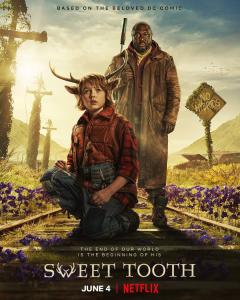 Jim – A number of things. First, Christian operates as if he’s not a child actor, which is amazing. He had a ton of experience before he came; I was blown away by his veteran actor skills and behaviours, which was mind-blowing. Our actors that surrounded our young actors were amazing. Nonso and Will Forte [his surrogate father] instantly connected to him in a way that made him comfortable. The same thing with our other characters like Wendy – actors would hang out to create a past and a relationship. Also our New Zealand sets are very family-friendly and nurturing, and Bree Peters, our acting coach, was just amazing. She really gained their trust and I think was able to help them find things to make them feel comfortable and help understand what they were doing. With TV it’s very fast and the one thing you’re always regretting is that we don’t always have the time to explain what some things might be. A ton of her I think comes through in all the young performances.
As we speak, there’s no confirmation of a second season. The first season ends with so many loose ends – where did you get the confidence to leave things hanging like this in the finale?
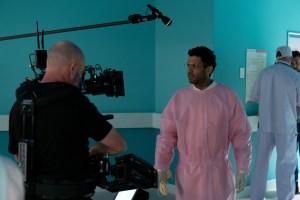 Beth – Well, from being on a show that lasted for eight years – Arrow – maybe I was used to ending seasons like that, in terms of making sure people wanted to come back for more. And also when Jim and I were breaking out this season it just naturally went where it wanted to go. It wanted to tell three different stories separately and we knew in the finale we’d start to interweave these characters that have never met, and also give some new mystery threads to be excited about and give that hopeful ending as well to Gus, to finally meet other kids like, which he’d wanted all season. I’m not sure when the little cliffhanger came about – maybe it was when we were breaking episode 7 – but I love cliffhangers, I’m a huge fan of mysteries and love an end of season asking questions to come back to.
Sweet Tooth is streaming now on Netflix; check here for our other coverage
 Doctor Who News Star Trek News
 Sci-Fi Bulletin: Exploring the Universes of SF, Fantasy, Horror and Spy-fi!