Stranger Things 2: Review: Episodes 4 – 9
The first three episodes of Stranger Things 2 are pretty much the textbook definition of difficult second album. There’s a ridiculous over-use of period songs, multiple new characters and all […]



The first three episodes of Stranger Things 2 are pretty much the textbook definition of difficult second album. There’s a ridiculous over-use of period songs, multiple new characters and all […]
T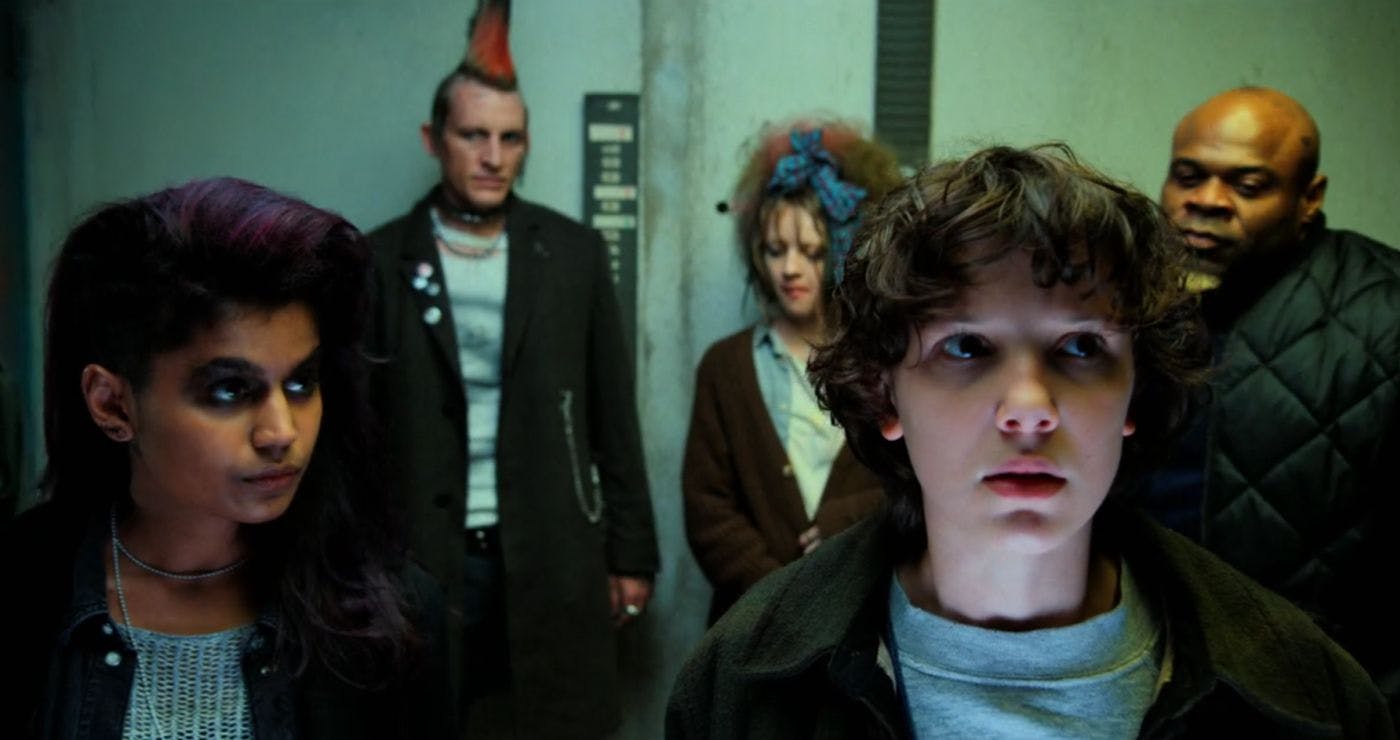 he first three episodes of Stranger Things 2 are pretty much the textbook definition of difficult second album. There’s a ridiculous over-use of period songs, multiple new characters and all sorts of stuff being moved into place without very much happening. Oh and the world’s least necessary GIRLS MUST HATE ONE ANOTHER plot.
And then, in episode 4, someone puts a brick on the accelerator and it never really slows down.
There’s a lot to unpack with the show so let’s start with the plot first and work down. This entire season is built from the bad, and impossible, choices characters made last time around. El ripping the gate to the Upside Down open to get out, the Lab’s experiments on her, Hopper’s somewhat Faustian deal, Will’s PTSD and most of all, justice for Barb. All of these things combine to create a show that carefully builds a second year that feels earned rather than mandatory. The gate being open, and Will having come back from the Upside Down, attracts both a new evil and a new perspective. Hopper’s deal is revealed to be two different ways the Sherriff can kick his own ass simultaneously. The lab is revealed to have done far FAR more than we previously thought and so on.
That rock solid multi-level narrative foundation carries the show through the ropey early episodes into one of the most fundamentally satisfying seasons of TV you’ll see this year. The ending is essentially a two-and-a-half-episode long series of payoffs that does the near impossible: ties off every plot to a satisfactory point and leaves everything open for a third year. It even culminates in an elegant combination of the show’s trademark 180-degree camera flip and a perfect music choice.
The cast are uniformly not just impressive but arguably better than last season. A lot of this comes from some brilliant, and surprising, pairings and sub-plots. Millie Bobby Brown and David Harbour in particular are just flat out brilliant together. El and Hopper have complimentary damage and the way they work through and with that gives the show many of it’s most poignant, and powerful, moments. Plus Brown is extraordinarily good this season, given far more agency than she was in season 1 and thriving for it. Likewise Harbour, surely the spiritual successor to Harrison Ford’s run of ‘crumpled. endlessly put upon, fundamentally decent’ roles. He’s got incredible natural presence and compassion that raises every one of the Chief’s scenes.
Winona Ryder massively benefits this year too, with Joyce transforming from the determined and constantly thwarted rescuer last year to an all-out warrior this time out. Joyce is done with her family being messed with and Ryder’s steely determination is fantastic to see play out. Natalia Dyer and Charlie Heaton also thrive with a plotline to themselves, which also ties into and powers the main arc in a clever and realistic way.
The main four cast members are also massively impressive. Noah Schnapp in particular is great as Will, who this year gets far more to do than simply disappear. Traumatised, haunted and determined, Will is a gentle, funny presence right up until he isn’t. Schnapp is the real find this year and his scenes with Finn Wolfhard’s Mike are highlights.
Wolfhard, fresh off his barnstorming turn in It, almost steals the show. Mike is a magnificently grumpy, deadpan kid and with damn good reasons. He’s also the only person who comes close to understanding what Will has gone through the closer friendship between the pair feels real and earned.
Caleb McLauglin was essentially benched in the first season as Lucas and it’s great to report that is not the case here. A vital member of the group, Lucas gets to step out on his own a good deal this year and it’s a pleasure to see. Plus, his scenes with Sadie Sink’s Max actually give her something to do, which as we’ll discuss, is much rarer than it should be.
But, if you had to pin me down and ask who the MVP of Stranger Things season 2 is, it would be a dead heat between Gaten Matarazzo and Joe Keery. Matarazzo’s Dustin is just a joy; an endlessly determined, fiercely nice kid whose open mind gets him into an absolute ton of trouble. Trouble that Keery as Steve Harrington frequently gets him out of. Ousted from his position as King Of Town, Steve is basically adopted by Dustin and becomes the group’s de factor babysitter. He gets beaten up. A LOT. He also gets dragged into deeply awful situations by the kids and never fails to rise to the occasion. Just as Matarazzo and McLaughlin in particular both revel in the new emotional levels of their characters, Keery is tremendous fun as the new designated adult. Endearing, very funny and with no manner of luck at all, he’s a joy to watch.
The bad news is, there are more members of the cast. Paul Reiser and Sean Astin are both excellent fun as new additions, but the three new primary characters all fare badly.
Sadie Sink’s Max, a would-be love interest, has tons of potential. Sink is a great performer and the idea of bringing someone new in always shakes things up. But Max’s arc is non-existent. She spends the season being lusted after, not believing anything she’s told and then doing one utterly plot vital thing.
More importantly, she’s central to the stupidest decision the show makes. The stultifyingly bad call of having Eleven hate Max not only makes no sense but deeply limits Max’s character. She’s the Not-Eleven, an obstacle and she only just starts to move outside that as the season ends.
Dacre Montgomery, as her older brother Billy, fares even less well. He’s the show’s ultimate 1980s ideal; ratty mullet, perpetual cigarette, Trans-Am, constant hair metal. And that’s literally it. Montgomery does what he can for half the season but by the time the reason for Billy’s outlook appears, it’s too late. There are, as with Max, hints that he’s going places but we shouldn’t have to wait season for that.
But the least well served newcomer is Linnea Berthelsen. As Kali, or Eight, she represents a seismic shift for the show that for the most part works well. The idea of other children exhibiting different abilities to El makes sense, as does Kaly waging war against the lab that destroyed her life.
Where it gets complicated is, again, in the interactions between El and other female characters. Her hatred of Max feels arbitrary, but the fact Kali becomes her Yoda feels positively off the shelf. Plus, it’s the definition of a bad look for one of the show’s only non-Caucasian cast members to be handed a character not just named after the Goddess of Death but steeped in darkness and rage. Much like Max and Billy, there’s a lot of work to be done to make Kali functional next year.
These aren’t small problems but they’re also ones that can be dealt with next season. And, in the short term, they don’t impact too directly on season 2. The central premise is still rock solid, the performances are great (sometimes despite the characters) and the show is a ridiculously satisfying, fun and sweet-natured watch.
Verdict: All in all a very strong season 2. But, as ever, season 3 could and should be better. 9/10
Alasdair Stuart
 Doctor Who News Star Trek News
 Sci-Fi Bulletin: Exploring the Universes of SF, Fantasy, Horror and Spy-fi!