Star Trek: Interview: Discovery: Composer Jeff Russo
The first volume of Emmy and Grammy Award winner Jeff Russo’s score for Discovery, the latest Star Trek small screen series, arrived just before Christmas, covering the first nine episodes […]



The first volume of Emmy and Grammy Award winner Jeff Russo’s score for Discovery, the latest Star Trek small screen series, arrived just before Christmas, covering the first nine episodes […]
 The first volume of Emmy and Grammy Award winner Jeff Russo’s score for Discovery, the latest Star Trek small screen series, arrived just before Christmas, covering the first nine episodes of the CBS All Access / Netflix show. He chatted with Paul Simpson about his work on Discovery – as well as his other genre contribution for 2017, the highly eclectic mutant series, Legion…
How did you get involved with Star Trek: Discovery?
The parent of one of my children’s classmates, Heather Kadin, is one of the producers and we were just having a friendly conversation, not really knowing what each other did. When we started talking about what we were doing, she said she was one of the producers on Star Trek, and would I be interested in doing it? I said, absolutely. She had me come in and meet with [showrunners] Aaron [Harberts] and Gretchen [J. Berg] and everyone and it was a big old lovefest. We were talking about music, what we can do, how we can forge somewhat of a new path while still staying connected to the idea and the ideals of Star Trek. It turned out really great.
In those early conversations – how much were you briefed on the tone of the show? Were you reading scripts or seeing footage?
They gave me a couple of scripts, and that’s really all we had when we started talking. I read the first two scripts, which in the end wasn’t all that indicative of the rest of the season because the first two episodes really acted as a backstory to the jumping off point for the new series.
We did have conversations about tone and about how the stories might be told, and how I might be able to tell the story from a different perspective. In this iteration of Star Trek we’re a little bit more connected to the emotional side of the storytelling and the idea of the interpersonal relationships between crewmembers and different species. I tend to write from a more emotional place and I think that has been able to help propel the storytelling.
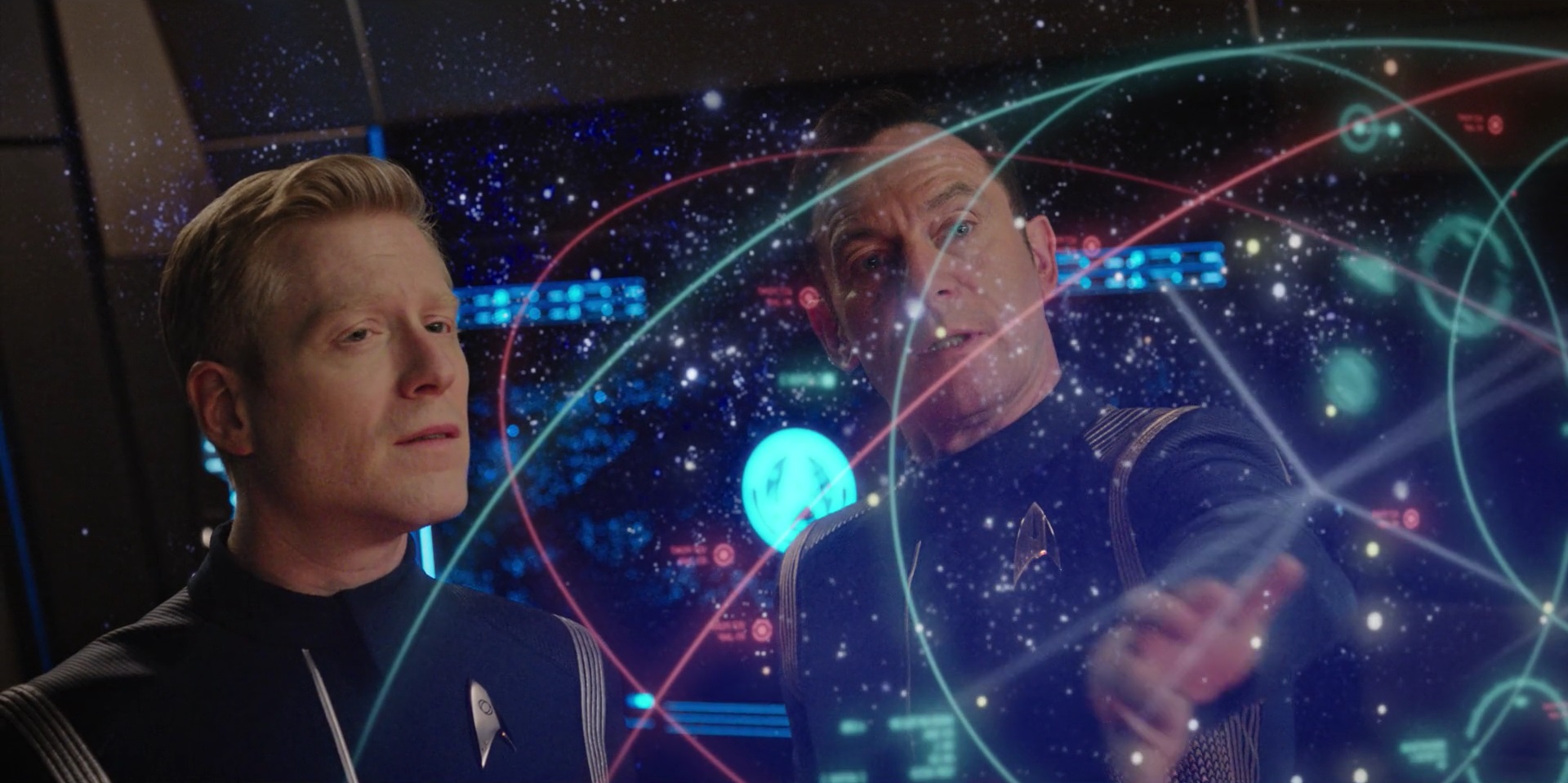 When you’re looking at a scene, are you playing to the beats within the drama, or focusing on getting to the heart of the emotion?
I think it’s actually varies from scene to scene and episode to episode. Obviously when we’re talking about fight scenes, battle scenes, action sequences, I pay a little more attention to the actual beats that are happening in the scene so I can play off them as situations change. Generally though I like to look at a scene and an episode as a whole and see how I might effectively push the emotional content and the heart of the story.
Star Trek is all about the hope and the wonder of the exploration of the universe and how the relationships of different species come together and how we’re all connected. One of the first things we talked about was Roddenberry’s original ideal, as is thought of by me and by us, which is we’re all connected All species, all people and all things are connected – so how do I reference that in music, the connection that everyone has? Even protagonists, antagonists, all of them are connected by a thread, this thread of life. One of the things I tried to do is to express that in music.
 Are there particular voicings that you’re using to express that? In Discovery, perhaps more than we’ve had in a series since DS9, there’s very much an “us” and “them” – even if there is a certain amount of overlap between them – between the Klingons and the Federation.
I think what you’ll see as this season and the series progresses is that it’s not always as it seems.
That’s an understatement!
Right. When you say there’s a lot of “us and them”, you’re right, there is a lot of us and them and as the story progresses, that us and them changes perspective. I think that I don’t necessarily try to play the antagonism of us and them, but how do I draw the throughline between all of the beings?
Obviously I play the swashbuckling element and the big action pieces as there’s definitely X versus Y but usually it comes together musically.
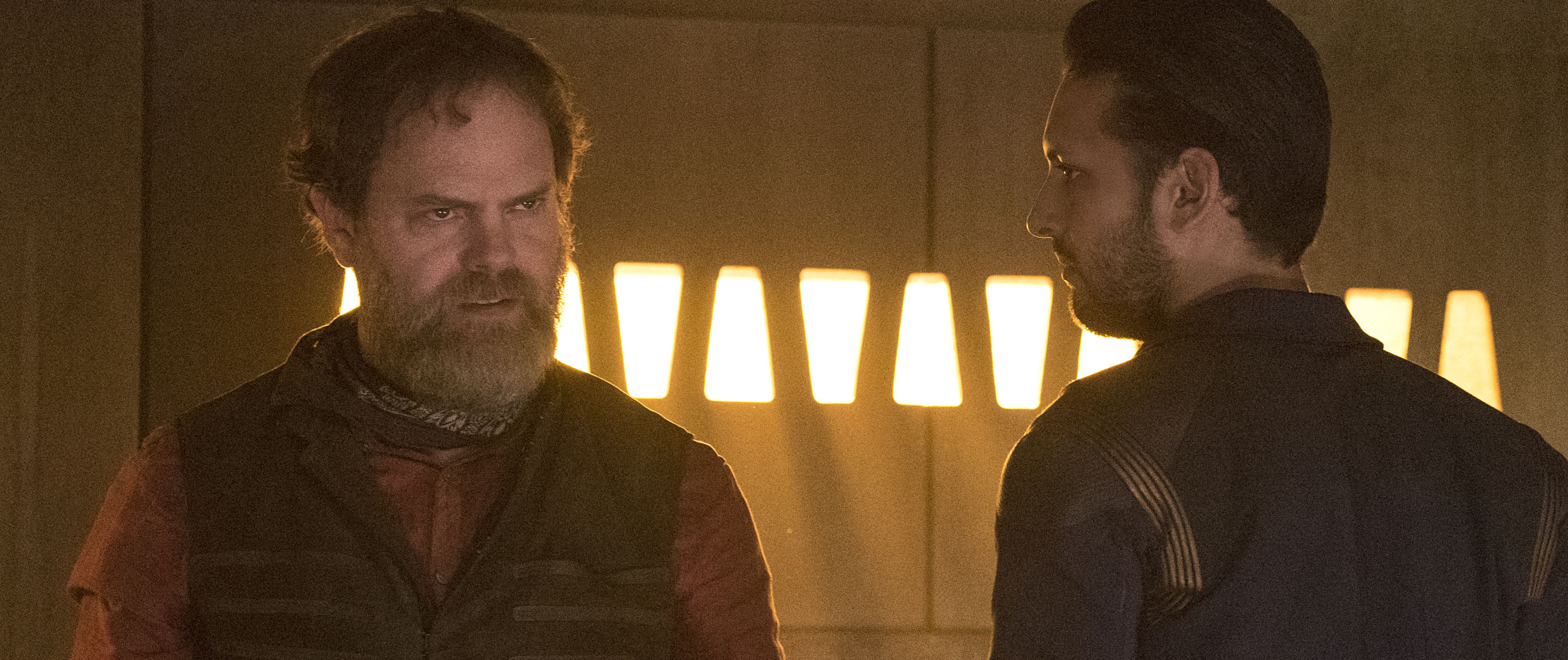 Have you gone the route of specific themes for each character? There’s obviously the Discovery theme that we hear – and it’s very noticeable in the album – but otherwise are there various themes?
Yes. There are definitely a number of Klingon themes; there’s a theme for Burnham and Georgiou; there’s definitely a theme for Lorca. Obviously there are variations on the main Discovery theme. Then there are motifs for episodes – I needed to come up with a theme for Harry Mudd in episode 7, there was a Pahvan theme for episode 8. There is thematic material that I will go back to for certain things. It even becomes more evident in episodes 10 through 15 as you will soon find out.
 How far in advance were you scoring the episodes? Have you finished scoring the season [as of December 16]?
I have not; I’m just starting scoring episode 15. I’m recording the orchestra for episode 15 in the middle of January and that’s the last one. I finished writing everything through episode 14 and now I’m on the last one.
Do you start writing before they have a locked cut?
Because I have all of the thematic material mostly set, I wait for the locked picture so we spot the locked picture and I sketch out all of where I need new thematic material and score – “this needs to be a Klingon theme here”, “here’s the big moment where I think the Discovery theme should be referenced”.
Is there a set amount of music you expect to be writing or is it very much as the episode demands?
It’s definitely episode specific but it’s mainly in the 36 minute range. We’ve been at 38 minutes, we’ve been at 32 minutes but mainly 30-40 minutes of music. It’s a lot.
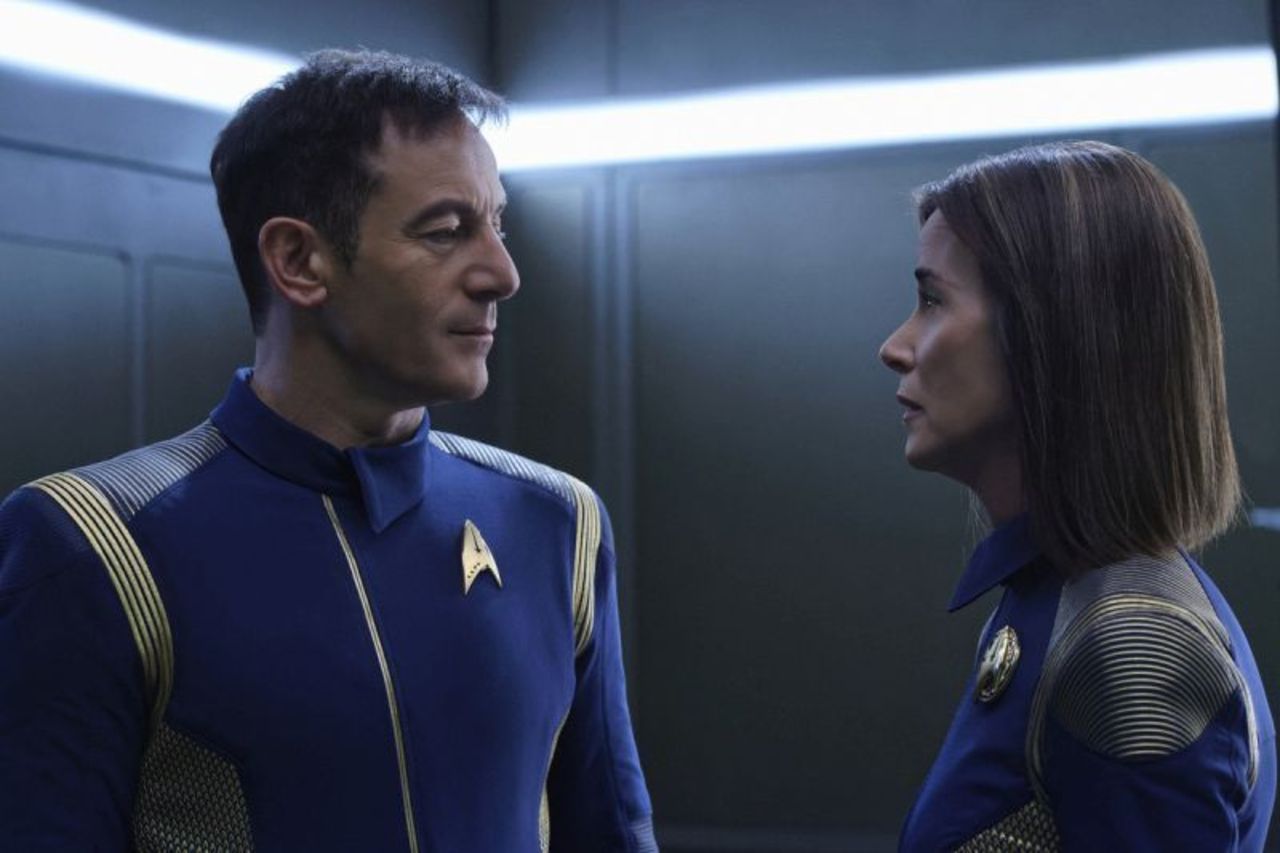 How long do you have on each episode?
A total of about three weeks: that’s the entire time from the moment we spot to the moment that it dub mixes – it gets put into the picture and finalised. It’s usually about six to seven days between my spot and the recording session, so I have about five to six days to write it.
Do you write in order through the episode, or now you’ve got the thematic material, deal with those sections first before you do the episode-specific things?
That varies from episode to episode as well – it depends on however I’m struck by creativity. I’ll look at something and say, “Ok I’ll start here, I have an idea.” If something inspires me – sometimes it’s like, “Oh yeah there’s that big moment with a battle scene or fight scene”. Some times I’ll start there. Other times I’ll wait till the very end to do that because that’s daunting.
On that timeframe, you don’t have that much time to second guess yourself…
I would say there’s no time to second guess myself.
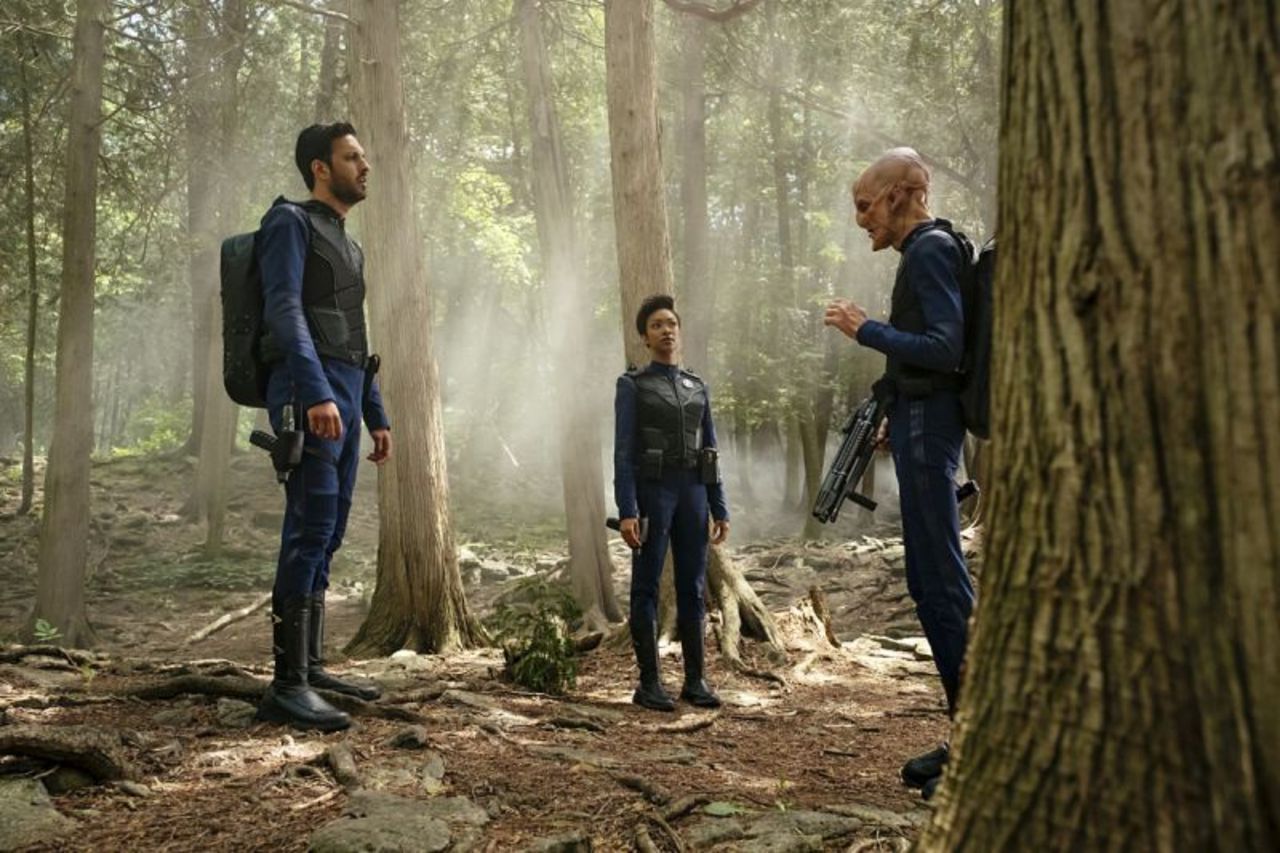 When you take the material into studio with the orchestra, are the producers there? Have they heard a version beforehand?
They hear mock-ups and then they make notes but sometimes they make notes based on the recorded material with the orchestra and then it can get a little hairy when that happens, but we do it.
Recording extra measures [bars] and dropping them in…
That becomes an editorial nightmare!
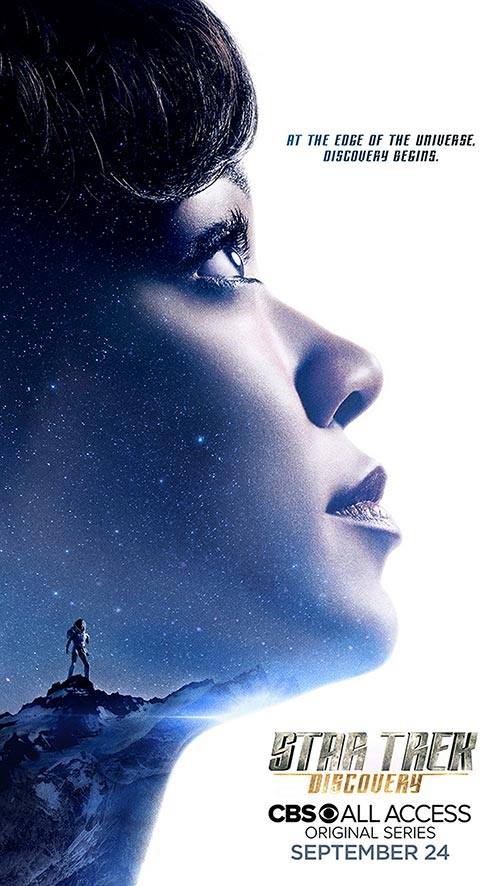 In terms of the album, what were the parameters for the pieces you chose?
It’s about an hour and 21 tracks – I wanted to pick a good cross-section from each episode and I didn’t want to put too much music on. You just pick the stuff you really like.
I know there are going to be fans who are going to be like, “Why didn’t you put that one battle scene on? I really want to hear this.” Here’s the thing: if someone emails and really wants to hear something, I’ll put it up on my website for people to listen to.
When you’re putting together an album, [you’re doing] something that is going to be an artistic statement. I felt I wasn’t going to make it short, but I wasn’t going to make it too long. I feel like about an hour’s worth of music is a good cross section of music from the first 9 episodes and we’re going to do a second volume for episodes 10 through 15 – and we’re going to do a limited edition vinyl release which will be a mixture of music from the entire series, from episode 1 through episode 15. I think that was the artistic statement I wanted to make. I didn’t want to inundate the listener with too much music.
I come from making records – my career was writing songs and being in a band and making records – so I feel like when albums were too long, people stopped listening. They listened to the first six tracks and then they were done. So what I wanted to do was for everyone to hear the whole thing as a musical statement.
I think that’s what I’ve done and if anybody feels short-changed there will be more music released from the series and there’s also the opportunity to hear little things that you might not hear. But the important pieces are all there.
Will you rearrange the track order for the vinyl release – the old idea of making sure there were strong songs at the start and finish of each side? Will you rebalance it?
Yes, I probably will rebalance it – not probably with that aesthetic but in order to have each side be a statement. The fact is, orchestral music and instrumental music play differently from songs. When you’re listening to pop songs you want to start strong and end strong and in the middle it can be some of the lesser important material. But with instrumental music you want to tell the story in a very meaningful way and with 21 straight tracks, digitally for CD, you can tell a unified story. With listening to sides of an album you can’t do that. Sequencing is a different animal altogether.
 I also really enjoyed the Legion soundtracks – very different!
I’ll say!
Were there things that you learned working on Legion that you brought across to Discovery both as a composer and in terms of the practicalities of working on a genre show like this – or were they so completely different, it’s two different mindsets?
It’s two completely different mindsets. It’s definitely two completely different mindsets, not the least of which is on Legion I had to invent it as I was going. I was inventing its own style, whereas in Star Trek, the score style was already set. I already knew the type of music that I wanted and needed for the show because I wanted it to be Star Trek. I wanted it to have big horns and big brass and strong melodies and strong themes, and have it be very orchestral and not terribly electronic.
With Legion the type of storytelling is very different altogether, so neither one can possibly inform the other.
Except giving you different muscles to work with as a composer…
That’s very true.
 Did you listen to the old Trek scores – Jerry Goldsmith, James Horner – before starting work on Discovery?
Not specifically for this. I’ve been listening to those scores for years prior to taking on this job, most of which would have been James Horner’s for The Wrath of Khan which is my favourite of the movie scores. I’m a huge fan of Horner’s so it only made sense for it to be my favourite. I do love Goldsmith’s themes and continue to be in awe of Alexander Courage’s fanfare and theme which I obviously nod to in the series and the theme.
So the answer is kind of yes, but not for the specific purpose of trying to figure out what I’m going to do for this series but I’ve been listening to those scores my entire life because I love them.
They’re part of your DNA in that sense.
Sure!
Volume 1 of the Discovery soundtrack is out now from Lakeshore Records; Legion volumes 1 and 2 are also available.
Thanks to Beth Krakower at Krakower PR for her help in arranging this interview
 Doctor Who News Star Trek News
 Sci-Fi Bulletin: Exploring the Universes of SF, Fantasy, Horror and Spy-fi!