Severance: Review: Season 2 Episode 10: Cold Harbor
Mark has a choice… There’s a scene in the Severance finale where a slave and the one who enslaved them are talking. The slave maker is asking the slave for […]



Mark has a choice… There’s a scene in the Severance finale where a slave and the one who enslaved them are talking. The slave maker is asking the slave for […]
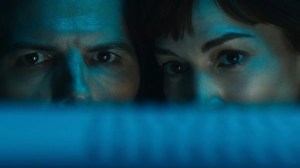 Mark has a choice…
There’s a scene in the Severance finale where a slave and the one who enslaved them are talking. The slave maker is asking the slave for help, to save someone’s life. On the surface this makes sense – who wouldn’t want to save a life if they could.
Except the cost is that the slave will die.
The slave turns around and declares that this is par for the course – the slave maker asking the slave to do something that hurts them, asking them to pay a price so the slave maker benefits.
This is the heart of season 2 for me. If season 1 was about what happens when you put human beings in a machine designed to strip meaning from their lives, to infantilise them at every turn then season 2 was about what it means for those people to say no. In some senses this is about the rebellion of adolescence where a young person coming into their true selves has to divorce themselves from the struts that helped them up until this point.
Where the innies realised they could make their own decisions in season 1, season 2 has them living with the consequences of those first few decisions, being forced to decide if they’ll continue to exercise their freedom or hand it back as a bad job.
Because we all know that freedom can be a burden – put people in a room and ask them to freestyle solutions and most people squander their time in inaction, waiting for someone else to take the lead. You could argue that this is because society (and certainly school) are structured to make us compliant to authority – it’s one of the biggest pedagogies of the Victorians to carry through to the twenty first century: that children, and by extension, the adults they grow into, should do as they’re told.
Combine this with mainstream narratives about maverick loners being the ones who change society and the big man of history nonsense and we face a lot of structures that tell us social solidarity is useless and community is for the weak.
Another show would have had the innies and outies team up to take down Lumon – accepting their suffering for someone else’s agenda. Severance isn’t that show.
Faced with the consequences of helping their outies, Dylan, Mark and Helly all decide to choose their own interests first.
In other hands you might see this as selfish, but we’re reminded at every turn that innies are treated as sub-human, to be murdered at will. They are expendables in the same sense as Mickey in the film Mickey 17 – existing to be exploited and replaced with no more thought than a pen that’s run out of ink.
Of course, it’s also made clear that the billionaire family in charge of Lumon is ultimately responsible for all of this – every little bit of it. They regard innies and outies as expendable in the pursuit of their own ends.
So much art imitating life imitating art.
There’s a use of blood red colours this episode that gives a visceral wash to the sterile blues and whites of Lumon’s severed floor until this moment. Is it birth, death or simply the blood of wounds both physical and psychic that come with the struggle for emancipation?
Perhaps it’s all of them and it’s shocking and effective and shows us the stakes even as people are running down corridors, wrestling with goats and kicking down vending machines.
Keir and the rest of the Eagans might be seeking to be eternally living bodhisattvas but in reality they are Mara, the king and then demon who tried to oppose the Buddha. Righteous in their own eyes but evil by every other standard of the world.
They are the perfect example of power masquerading as competence. Many people complain that billionaires are not all that, even as others are awed by them. The truth is power can feel like overwhelming competence when you’re on the other side of it – but it’s just power, the limited ability to speak into being what you want, the freedom of enhanced agency. But agency doesn’t denote competence or wisdom, even if it gives the illusion of it. That power being unmasked as incompetence is everywhere this episode and remains a salient lesson when faced with power – sure, it’s unnerving, frightening even, but it isn’t all knowing, wise or even capable.
You can outthink power quite easily if you put your mind to it even if that doesn’t mean you won’t pay a price. There’s a saying in financial markets that many people can spot a crash coming but almost no one can make money from it because who can safely catch a falling knife?
There are a dozen scenes in the finale that I could have paused to examine in more detail but the one that sticks with me is in the MDR room when, for reasons I won’t go into, Milchick is stood before Helly and Dylan after having been detained and he’s met by social solidarity.
Until this point he could have done anything and got away with it. Faced with an entire community staring him down, the incipient threat of violence if he doesn’t listen to the message of peaceful non-compliance is powerful and reminded me of the images coming out of Turkey and Serbia, Georgia and Romania right now.
People decry the threat of violence and they should – bloodshed destroys lives no matter the cause but when communities speak peacefully and are ignored or persecuted to shut them up? Violence is inevitable and the blame does not lie with those who tried to be heard peacefully.
Milchick understands what he’s facing at least.
Season 2 ends with a shot straight out of anime, the vibe one of Thelma and Louise and just like that the consequences are on their way.
The events at the end of season 2 are an earthquake whose shockwaves will reverberate for a long time to come and if the innies are celebrating the fragile and temporary joy they’ve secured for themselves – who can blame them.
The tidal wave will crash soon enough.
10/10 Emancipation rocks
Stewart Hotston
 Doctor Who News Star Trek News
 Sci-Fi Bulletin: Exploring the Universes of SF, Fantasy, Horror and Spy-fi!