Peacemaker: Review: Series 1 Episode 4: The Choad Less Traveled
Peacemaker discovers who the team framed for his actions… This is a strange episode. Full of emotion but twisted and broken, portrayed by people who are not in touch with […]



Peacemaker discovers who the team framed for his actions… This is a strange episode. Full of emotion but twisted and broken, portrayed by people who are not in touch with […]
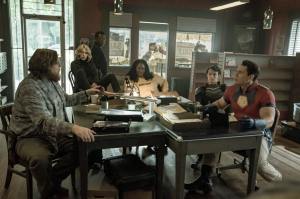 Peacemaker discovers who the team framed for his actions…
This is a strange episode. Full of emotion but twisted and broken, portrayed by people who are not in touch with themselves let alone others.
What surprised me here was how sombre this felt. The absurdist humour’s still there but it’s darker. Often when people talk about darker in this context they mean there’s more sudden violence or swearing but here we get something else. The show lays out our characters’ broken parts and then explores them. Whether it’s Vigilante’s desperate need to belong, Peacemaker’s desperate need to be loved by his father, or Adebayo’s crushing sense of external expectations, no one comes away from this episode with a sense of completeness.
And I loved it for that.
Peacemaker’s father is back (thank goodness, at least I think that’s the right way to express my feelings about the recurrence of a White Supremacist murderer) but the show doesn’t glorify him or his followers. Instead we see underneath the surface to the grotesquery masquerading as justifiable opinions. We see the true horror of the kind of life Peacemaker’s led.
It comes at the subject matter obliquely – and I still think it’s very clear a White person has written this, but that’s not to dismiss its value because what Gunn has achieved here is interesting. In exploring the impact of White Supremacy on the innocent and how that skews their world view almost without reference to how it impacts those it truly hates, what is laid bare are the self-justifications and lies people tell themselves to survive. Most damning is how Peacemaker can’t abandon his family even though he knows they’re fundamentally evil.
This isn’t quite background – it is a core part of the episode and feels like the second most important theme of the show: how we survive trauma, what it does to us and the nature of the people who traumatise us in the first place. None of which I expected from a DC superhero show written by Gunn.
The larger part of the show deals with the plot hungry consequences of the home invasion staged by team ‘cliched dysfunction’ as I’d like to call them. After the big reveal about the nature of the threat in the last episode I didn’t know which direction the show would move in. Rather than panning out to a wider picture, the plot has remained tightly focussed on the team and the immediate aftermath of their (mis)adventure. There’s no real sense of direction from any of them – they don’t know what to do next, don’t know where to turn and don’t know what leads they should follow.
Add to that the fact that they’re far from clear of the mess they made and we get to see them turn around in circles, not even chasing their tail – just looking for anything to do.
This reads as if it could teeter on the brink of tedium but instead it remains entertaining because, despite not making some very obvious business as usual choices, we see how each of the team deals with the traumatic events they’ve been a part of in their own way. It ties perfectly into the elements of trauma I’ve already written about.
This wasn’t the episode I expected. I think, if asked, I would have predicted a gear shift up to a higher speed – a movement forwards without reflection on what’s just happened. What we actually get is people who try to change from second to third and slip completely out of gear instead. The show doesn’t slow down but it doesn’t forget where it’s come from.
Overall, this was a really interesting episode and has left the team, if not ready then about to face new challenges regardless. Peacemaker is a surprise of a show – the writing assured, the pacing just right and the emotional beats weirdly satisfying.
Rating? 8 out of 10.
Stewart Hotston
 Doctor Who News Star Trek News
 Sci-Fi Bulletin: Exploring the Universes of SF, Fantasy, Horror and Spy-fi!