Moon Knight: Feature: Spoiler free preview
Following the international press conference and access to the first four episodes, Stewart Hotston presents a spoiler free preview of the new Marvel Studios/Disney+ series, arriving on March 30… First […]



Following the international press conference and access to the first four episodes, Stewart Hotston presents a spoiler free preview of the new Marvel Studios/Disney+ series, arriving on March 30… First […]
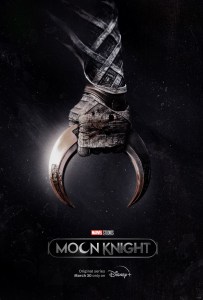 Following the international press conference and access to the first four episodes, Stewart Hotston presents a spoiler free preview of the new Marvel Studios/Disney+ series, arriving on March 30…
First thing to say is that this is a spoiler free review. We’ll be breaking each episode down as they’re released over the coming weeks but for now I want to concentrate on the series and its themes.
These break down fairly neatly into three pieces; Marvel, Mental Health, Egypt. I’m wrangling a bit to get those three words to fit but you’ll see what I mean as we go.
Moon Knight is, if one of the lesser known names outside of fandom, still a very popular part of the franchise but sits off to one side. This isn’t about a scientist or a mythical god but something a little different.
It’s clear from the show that the creators, especially directors Mohamed Diab, Aaron Moorhead and Justin Benson have taken as much inspiration from Spielberg and Lucas’ Raiders of the Lost Ark as they have from anything in the Marvel universe.
This does raise the issue of imperial powers visiting a colonised people to take what’s theirs and the show neatly resolves this not only with the very nature of the Moon Knight but in the way it treats all those on screen. More on this later.
 Moon Knight doesn’t feel like any previous Marvel outing. I think there are several reasons for this. The first is that it doesn’t focus on Americans as our access point to the drama. In that sense, Oscar Isaac is the perfect person for the role of Steven Grant because he brings this perfect sense of a person out of place with many possible roots from which to draw.
The second reason that this doesn’t feel like Marvel is because even though its pulp sensibilities match with the comics and golden age Hollywood adventures it is thoroughly modern in its view of the world.
Finally, the other key reason this feels like a departure is because the superpowers are based far away from anything the MCU has done before.
This sense of breaking out in a different direction to so much of what’s come before for Marvel fits nicely with the experimental feeling of so much of this phase of the MCU. We’ve had Loki introducing the multiverse. We’ve had he Eternals introducing cosmic powers and entities completely separate to the scope of the Avengers, and we’ve had WandaVision introducing magic not as some cold, scientific, gnostic endeavour a la Dr Strange but as something deeply mystical and emotionally driven.
Each of those expanded the playpen for Marvel. Moon Knight starts outside that pen and proceeds to go on its own way with no direct reference to anything that exists elsewhere and it’s brilliant for that.
We also get plenty of the trademark elements which make this recognisably comic book fare. There are set pieces, some sparkling puns and a nefarious villain to hate. Indeed, Ethan Hawke as the main antagonist is almost unrecognisable as he channels Ronald Lacey’s, Toht from the already mentioned Raiders and Philip Seymour Hoffman’s Lancaster Dodd from the 2012 film The Master.
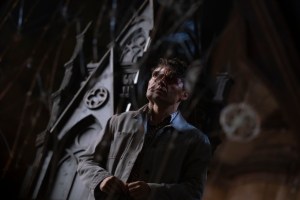 Isaac is playing Steven Grant, a gift shop employee in London with a love of Egyptian history and, particularly, its pre-Islamic cosmology.
A central feature of the show is Steven’s struggle with his mental health. The pre-publicity and press packs talk at length about the character’s experience of Dissociative Identity Disorder (DID). This illness remains controversial in the popular consciousness if for no other reason than it has offered very fertile ground for film and television shows in what have often ben hyper-stylised and stereotypical representations.
I am not the right person to talk about how authentically this show portrays that illness. What I can talk about is how the characters are treated by the showrunners and how the illness is portrayed in terms of its links to the plot.
It’s also worth remembering that DID, to use the shorthand, is there from the beginning in the source material. Like many adaptations, if there are essential problems with the source material, once the decision has been made to adapt it those become inescapable even if valiant attempts can be made to modernise and represent more authentically.
 What I can say is that the show treats its characters with dignity. Mental ill health is not there as a fig leaf and it’s also not there simply as a plot mechanism or a gimmick. The script allows Isaac to deliver a strong performance that grants a struggle for agency to his characters regardless of what he’s going through.
If it’s not social realism neither is it exploitative.
Perhaps most interesting is that the challenges put on screen allow the show to call out its own violence – asking the question about why death and destruction appear to be so easy a form of resolution and what that desensitisation does to people.
All this takes place via a globetrotting sequence of locales – all of them outside of the USA. This is a breath of fresh air. More impressively still, North Africa feels like the place I’ve visited so many times. Gone are the dusty yellow filters and, if Cairo’s exhausting size isn’t quite captured in all its chaotic immensity (it’s a metro area of over 20 million people after all – more than twice the size of London and New York City) that can be forgiven because I’m not sure I’ve seen anything on screen that really manages that for any city I know.
 The important thing here is that Cairo feels, largely, like Cairo. Egypt feels like Egypt as much as Alpine villages feels Alpine elsewhere in the show and London feels like London. This might seem like a simple thing but for a big show like this from the English speaking world it is… rare. Too often we see what the audience might be expecting to see, not what’s actually there in reality.
I realise that ‘reality’ is a tricky word, especially for a superhero show. It’s enough for me to say I could recognise streets in London just as I felt I recognised elements of Cairo. That is a victory worth talking about even if it was largely shot on substitute sets and locations.
At no point does the show feel like a travelogue in which White people go visiting exotic locales, killing the locals and imposing their values. Its thematic relationship to something like Raiders is in all the good things; the characters, the adventure, the moral stakes.
At the heart of this show is a discussion about what the right thing to do is. Not simply about whether violence is the right course of action when faced by those who seek to do you harm but also whether there are alternate ways of being, alternate lives to be led. Much of this discussion is subtextual, presented in the structure of the show rather than explicitly in the nature of the conversations and plot devices but it’s there and it’s good stuff.
 I’ve really enjoyed this show. While it is recognisable in terms of genre it is also, in my opinion, Marvel’s most ambitious show so far. It might hide just how ambitious it is with a covering of familiar tropes but make no mistake, it’s doing different things than anything that has come before.
Furthermore, the show handles a number of delicate matters with dignity while still presenting something with action, thrills and humour. Of all the Marvel TV shows this one feels like it knows what it wants to be in its DNA. It’s not trying to be smart, it’s not trying to be pastiche and it’s not ducking the harder questions.
Rating? 8 phases of the moon out of 10.
 Doctor Who News Star Trek News
 Sci-Fi Bulletin: Exploring the Universes of SF, Fantasy, Horror and Spy-fi!