Midnight, Texas: Interview: Monica Owusu-Breen
NBC’s new summer genre series Midnight, Texas has impeccable pedigree. It’s derived from the trilogy of novels by Charlaine Harris (whose Southern Vampire Mystery books formed the basis for True […]



NBC’s new summer genre series Midnight, Texas has impeccable pedigree. It’s derived from the trilogy of novels by Charlaine Harris (whose Southern Vampire Mystery books formed the basis for True […]
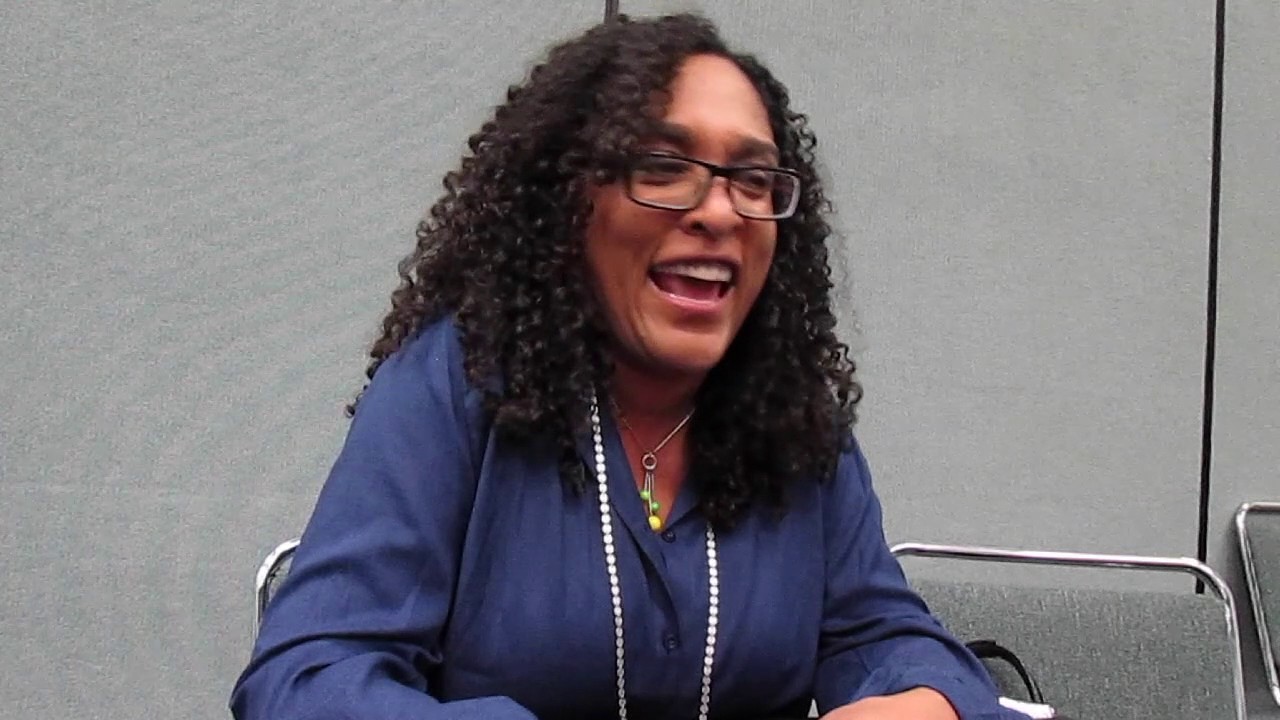 NBC’s new summer genre series Midnight, Texas has impeccable pedigree. It’s derived from the trilogy of novels by Charlaine Harris (whose Southern Vampire Mystery books formed the basis for True Blood), and its showrunner is Monica Owusu-Breen, whose genre credits include Alias, Lost, Fringe, Revolution and Marvel’s Agents of SHIELD. Between the show’s US debut and its premiere on Syfy in the UK, she spoke (and laughed a lot!) with Paul Simpson…
 Thank you for an enjoyable pilot. I’ve read Charlaine Harris’ first two books in the series (Midnight Crossing and Day Shift) and recognised the characters straightaway – even if they weren’t exactly as described. Lemuel didn’t match the physical description from the book but there was no question as to who he was.
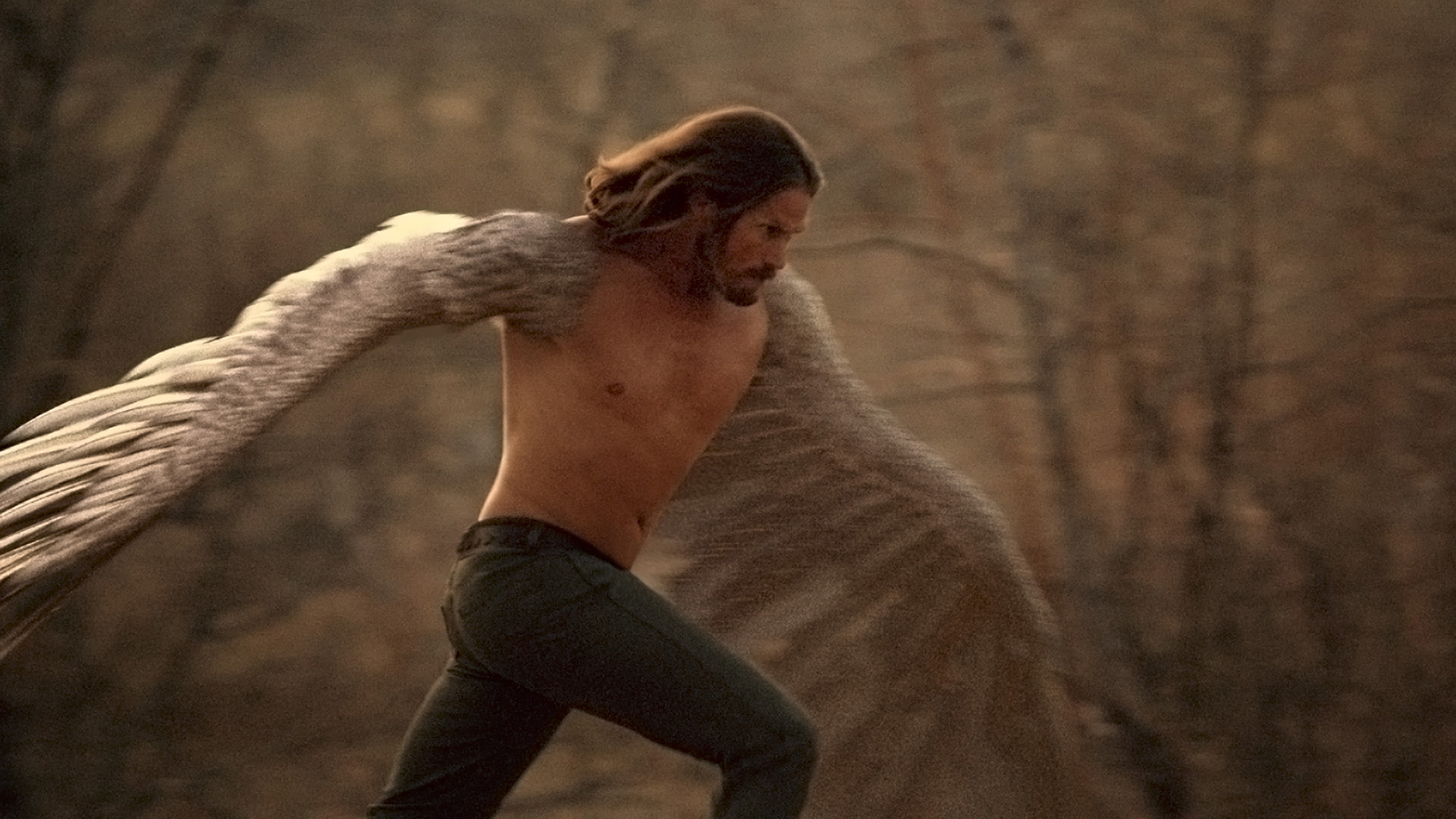
That’s wonderful. It was funny while we were casting Lem. In the book he’s described as this shrivelled, albino, almost a Gollum-like creature. That’s hard to cast for, and we couldn’t CG an entire creature, so what we did was open up casting and say “Who can we get who when he walks in a room, everyone will turn, everyone will notice? He will feel like he doesn’t fit into this remote part of Texas”, and then Peter Mensah walked in and he was perfection.
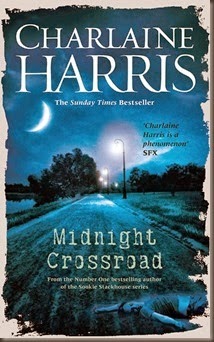 How did you get involved with the books? Were you aware of Charlaine’s other writing than the Southern Vampire Mystery books on which True Blood was based?
I had read some of her books a while ago but while I was working on Agents of SHIELD I told my agent I was keen to develop something original while I had my day job and he sent me these books.
I had a strangely personal connection to them because part of the reason I was itching to develop something was I had had two deaths in my family – my mother and my mother in law – within a month of each other, and I was trying to get my mind off of that. My mother in law was a small town psychic, and my mother had moved to this tiny little town in the middle of nowhere. When I read the first couple of chapters, I was like, “this is good a sign as any” and embarked on this crazy adventure.
When you develop something you have to feel something personal to it, because you use the source material but then there’s also what the network want, what the studio want. It’s a collaborative process so it’s important that you have some connection to the material other than just “I like it” – at least for me. It was a story that I wanted to tell about a group of misfits that I really love.
 Did the network initially want to see your take or did you have a list of “ingredients” you had to include?
Like any other project for the network, I give them my take and they respond and you find that thing that you both believe in.
For me, what was vitally important was the spirit of a town that has this community of people who are slightly different but are still willing to call themselves Midnighters and fight for each other and have each other’s backs. It’s almost an old-fashioned sense of community, a sense of responsibility to your community, to your town.
NBC wanted a show that was much more propulsive than the books were. The books have a small town pace to them and they wanted more action, they wanted more incidents, they wanted more wows. In the pilot, I set up a murder mystery, and NBC did their testing and they did their thinking and a lot of soul searching, then came to me and said, “We love this, we love this world, but can not it just be a murder mystery, because we have a million shows that can do a murder mystery? What we don’t have is a show where supernatural entities can come every week.”
For me, it was, “Can I keep the spirit of what Charlaine wrote, and still give NBC what they want?” I really think we did: we have the community, we have those characters and their stories, but at the same time we have a lot of craziness and incident that happens.
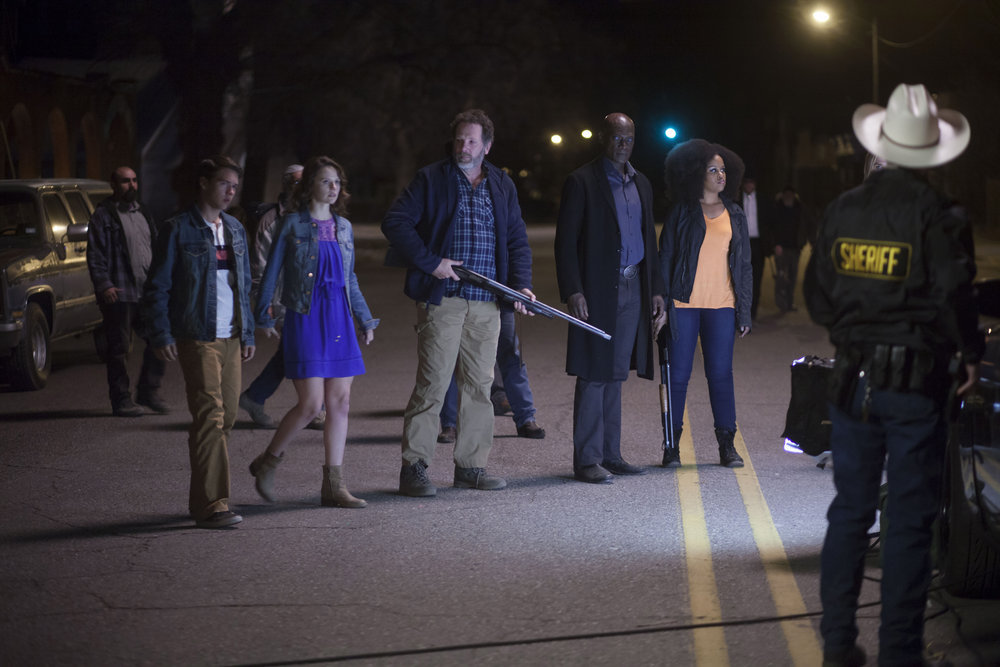 The penultimate scene where the Midnighters bar the road to prevent the Sheriff from taking Bobo away had a very Western feel – which may be more in mind after rewatching Logan recently! – of uniting against the outsider.
I’ve studied Westerns, and I’m a big fan; part of development is how do you differentiate it from other things? The one stoplight town, where the community is banding against outsiders coming in to destroy what they have, is very much a Western trope, very much an American trope, and what I love about the world of Charlaine is it allowed me to lean into that Western, American trope, and have the heroes look different and be different. It’s an American narrative I love: the group of misfits and outsiders banding together.
Supernatural creatures have been used as metaphors in genre shows, as analogies for other things – something Joss really did a lot with Buffy – but here the creatures are what they purport to be rather than just standing for something…
It’s interesting because I think the town of Midnight is an analogy. These characters, I’ve tried to make them as three-dimensional as possible, and fun and empathetic and emphathizable as Charlaine has created in the books. But to me what was important was that this town figured in as a metaphor for inclusion, for mutual respect, for what it means to be a community. It’s funny because it’s become more metaphorical as the United States has shifted a little bit. The idea that people who are so different from one another and are considered outsiders want to band together in this small town in Texas: I don’t think it’s a bad time to put that message out in the world. Right now, it feels like a little bit of a sanctuary!
 What I love about the world Charlaine created is Fiji has fundamental problems with what Olivia does for a living. Killing is not in Fiji’s wheelhouse – she doesn’t love it. She wants to go to the light, not the darkness. But her friendship with Olivia is not about that. She respects her friendship enough to not go there, and she loves her friend. They are both Midnighters, despite the very differences that in other shows would drive them completely apart.
That for me was another lovely part of Midnight – they’re all so different and they doesn’t mean they can’t be neighbours and have a vested interest in the safety of the community.
It sounds like for you a lot of the drama is going to come out of the characters; even if there is going to be a lot of incident the core drama is the characters.
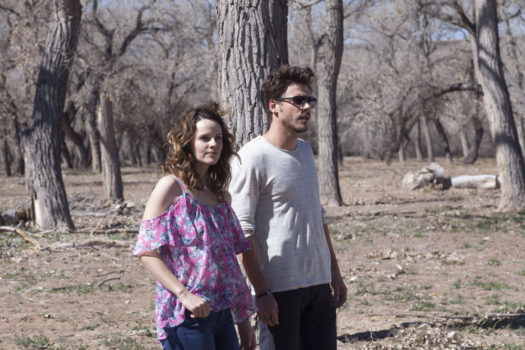 Yes, completely. I’m a romantic at heart, and you have these wonderful characters… This isn’t a cynical show. It really posits the human connection and that makes people stronger. When they’re connecting to their neighbours or to one specific other human being, they’re stronger together than apart. For me that’s always going to underlay the story, because at the end of the day, if I’m going to watch characters I don’t care about fighting demons, then it just becomes an exercise – “oh yes, they’re fighting demons” – but if I care about them, there’s a stake to them, it matters.
That’s what makes genre more than just the bells and whistles – “oh look, there’s a vampire”. What does it mean to be a vampire that loves a woman?
That’s what makes good genre! There’s a lot of stuff out there that does just use this stuff superficially…
You mentioned Logan; Logan to me was a perfect movie. It was beautiful, heroic and it had great action sequences, but at the end of the day, I felt something so deeply for those three characters, and that’s what I am left with. I’m rarely ever left with, “oh that was a great fight”. That doesn’t easily linger with me.
 It’s the old saw about going to see a play and come out whistling the scenery! You’ve obviously had to tweak Charlaine’s characters to make them your own, to give them life that will survive ten or thirty episodes… What’s the biggest challenge been in morphing them?
Here’s the thing: I do feel that a lot of this was also casting. I wrote for blind casting because I think when you try and cast to very specific types, sometimes you don’t get other things. For Lem, at the back of my mind when I wrote the role, I sensed that the Gollum albino wasn’t going to happen. I kept it very open and called him “striking – people turn to look at him and when he looks at Manfred, Manfred has a little bit of whoa”. When we cast it the actor can hack that.
 Other characters were harder: Fiji in the books was an overweight woman. We read thousands upon thousands upon thousands of actors. One of the things that was also very important was that there be a chemistry amongst the group, that you see these people and they could talk to one another… For one reason or another it came down to the wire, and a lot of people have to sign off on this. I would like someone but then someone else would not like them. It was arduous.
Then three days into shooting we got this tape from New York and it was Parisa. She gave Fiji this delightful innocence that I love. I immediately saw her with Bobo, and immediately saw her friendship with Olivia, so for me it became “I’m not going to not cast her because of this other description”… But that said, her pain will be different. I acknowledge there’s a history there.
I really tried more than anything, because I loved the books so much, to keep the spirit of Charlaine’s creations, who they were inside or something about their character that really drove them but not necessarily the physicality of it. I also think you have to be willing to play – TV’s a moving beast. You want to do one thing then you see it in dailies and it doesn’t work so you’re going to change it. I think that’s the difference between being a novelist and a television writer.
 How much has the show altered from the pilot going forward into the rest of the season – or did you go back and reshoot stuff from the pilot?
Not much. I think what ended up happening is NBC saw the pilot, tested the pilot, loved the pilot and came to me and asked if we could not do a whole year murder mystery, but make it so there were more supernatural beings and more supernatural obstacles for this town. For me, a lot of it was additive rather than subtractive. We talked about if you want it to go faster, you have to add more – and with so many characters, to give them something to do, you have to give them more elements too. I think what we ended up with was this amazing fast moving show that is really emotional but it’s like emotion in action. It feels right for a summer show to me.
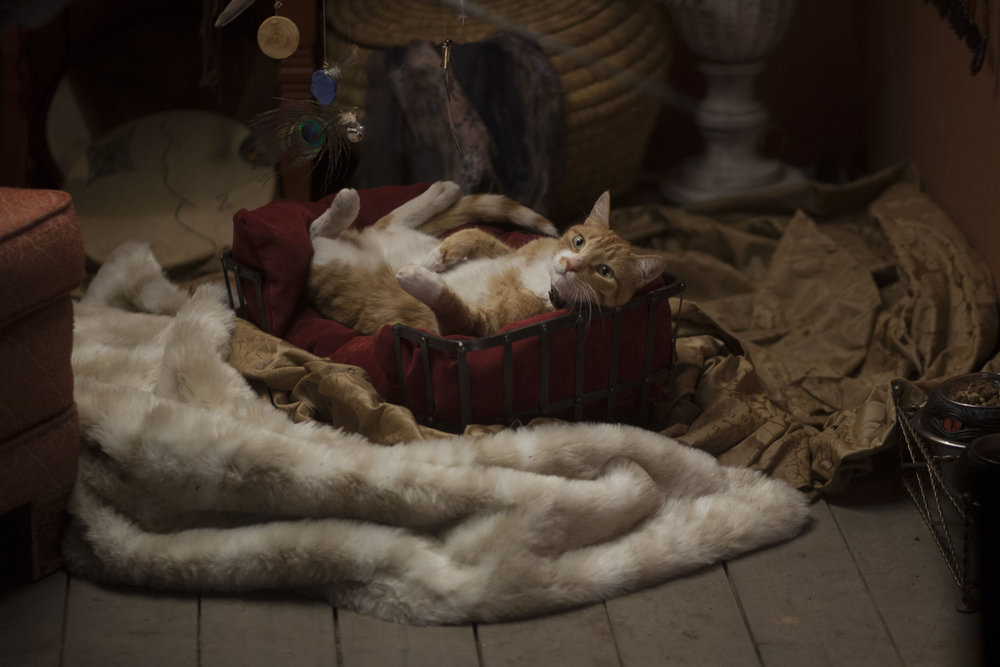 Mr Snuggly – the least appropriately named feline in history – is a talking cat. The last one of those was on Sabrina the Teenage Witch… [Brilliantly, the official credit for the photo right is “Cat as Mr Snuggly”]
Yes, I know. If you had told me three years ago I’d be writing a show with a talking cat, I’d have laughed and said it was ridiculous.
When I read the books and the cat talked after however many scenes it had been, it felt right; it was whacky and whimsical and part of the town that Charlaine created. So yes, we’re going to have a talking cat and he’s funny – he’s the darkness in Fiji’s life, he’s appropriately crabby like cats can be.
 Do you write him as an ordinary character? How do you write a talking cat?
For me, when I read the books, Mr Snuggly was the asshole roommate, and I’ve had that guy – just naysays everything, always makes you feel a little bit worse about yourself, and you should break up because it’s not a really great friendship. I think to me it was important to write that, the annoying roommate, the dismissive roommate. It made me laugh – and it gave Fiji someone to talk to.
Again, Charlaine created this madcap world, so instead of picking and choosing whether this was a bridge too far, it’s part of what makes this town so special and so weird.
 What’s the key thing you’ve learned in terms of making the series that you’ll carry forward?
I learned my cast are absolutely fantastic – I was writing things down and in my mind I was apologising for what I was asking them to do. They were so fun, and I just want to keep that spirit of wild imagination – let’s explore the supernatural in this little town of Midnight, Texas.
Midnight, Texas continues on Syfy UK on Thursdays at 9 p.m. and NBC in the US on Mondays at 10 p.m.
Read our review of episode 1 here
Thanks to Camilla Mosley for her help in arranging this interview
 Doctor Who News Star Trek News
 Sci-Fi Bulletin: Exploring the Universes of SF, Fantasy, Horror and Spy-fi!