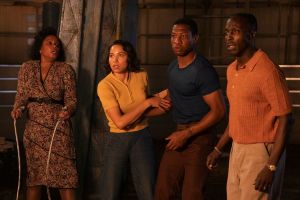
 After his acclaimed series of commentaries on Lovecraft Country, Stewart Hotston widens his focus to examine the way race is treated in three of the most high profile genre shows of the last year – Watchmen, The Boys and Lovecraft Country.
SPOILERS for all three shows contained within. Like seriously, spoilers.
With Lovecraft Country now available for digital download by all the usual means it seemed like a good time to compare two companion shows and explore how each of them treat their diverse roster of characters.
Each of the shows is very different. They’re all nerdery writ large for sure but one is an original screenplay, one is based on a book and another on a graphic novel. I distinguish between them solely on the important basis that graphic novels have a profound visual element already on the page from which novels don’t benefit.
This piece assumes you are familiar with each of the shows.
 As the elder statesman I want to start with Watchmen, the loose follow on to the 2009 movie (which I didn’t enjoy), significantly cleaving close to that rather than the original graphic novel. It is tightly plotted and an almost perfect piece of television. In the year it came out only Chernobyl was as compelling to watch. It is a show about a lot of things, not least a plot against Blackness as a concept, a behind the scenes race war and a conspiracy to make a race of super powered White people. Whereas the movie and its source are deeply satirical, the show, to me, took itself much more seriously even if the characters were often just as absurd and darkly comic.
I believe it took itself seriously because of what it was talking about. There’s no point satirising White Supremacy when a racist holds the Oval Office and children are being openly kidnapped by the state at the borders and never returned to their parents. One can only rage and call for an accounting and this is Watchmen – a scream of carefully constructed rage at White Supremacy. Well the first half of the show is. The back half is… something else.
Lovecraft Country did something else entirely. It explored agency under oppression, becoming, family, love and gender all through the lens of being trapped in a system (both cosmic and material) which sought to dehumanise and render invisible. Yet it did so in the context of a universe in which cosmic horror was a real thing and in which magic itself might exist solely for the benefit of White people. Its tone could veer between Hammer Horror and Shakespearean tragedy via Indiana Jones because it was interested in one thing – the lived experience of its Black main characters.
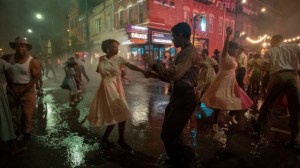 Unlike Watchmen which spent quite some time explaining why racism was bad and how White people weren’t all enemies, Lovecraft Country wasn’t interested in White experience. It wanted to live Black experience in the US, to tell that story with no education for White people, no concessions if you didn’t understand. For many of my White (male) friends who watched the show it committed the crime of ‘being all over the shop’. They, of course, failed to understand the show was a show not about Cosmic Horror but one about the tropes of Black Lived Experience (which is a thing White people should be aware of as being fundamentally different from their own). When they tuned in to see a cosmic horror adventure they were entirely missing the point of the show.
If it veered from different horror and action ideas a tad unevenly it was because what was being kept in focus was not these elements but the centrality of Black experience. The fact this wrong footed so many White folx is not a huge surprise but it is a little telling about how different the two communities’ experiences of the world are and how many White viewers were so separated from this reality they didn’t even recognise the gap for what it was.
 Unlike both Watchmen and Lovecraft Country, The Boys is a predominantly White show. It is tawdry, satirical to the point of absurdity, ultra-violent (although Lovecraft Country probably is gorier) and deeply committed to its offensive aesthetic. Don’t get me wrong – on the whole each of those elements worked really well and the execution is as sharp as anything in the other two. The fact the show is satirical has led some observers to suggest it isn’t as serious as the other two, but if one is looking at the history of political protest… well, satire is up there with those activities likely to get you arrested so I think we are justified in examining what the show has to say about its world and ours.
The reason I want to compare them is that they’re all relatively contemporary, all delivered by showrunners who care about the issues contained within and all tackle core issues around the type of society in which we want to live. The window through which I’m looking at them is how their BIPOC characters exercise agency against the shows’ main antagonists – all of whom are there explicitly to eradicate BIPOC both in the local context of the stories and also in the wider world of the shows.
 The place to start is Watchmen. Watchmen leads with Regina King playing the tremendous Angela Abar and for much of the show it is her story but as the season progresses is becomes more and more about White people and their conflicts than it is about how Black people live through that. Repeatedly Brown bodies are cannon fodder, used to show how serious the White people are in perpetrating their evil plan and right at the end? Dr Manhattan, born a White man, now a god, now presenting as a Black man passively accepts his fate in a Christ-like self sacrifice and it comes down to White folx to save the world from other White folx. The end of Watchmen has a perfect shot – absolutely wonderful but it is also a scene in which the White man has saved the Black people.
Now, this show has great White characters – great allies, great heroes but, at the end of the day it couldn’t help but remain ever so slightly paternalistic and rely on someone else to do the saving.
Don’t get me wrong – the show is wonderful but at the end it discards the agency of the BIPOC protagonists. Should you watch it though? Hell yes – this and all the shows I’m discussing are worth your time.
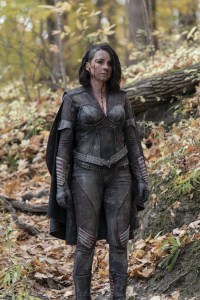 If we’re focussing on The Boys, it’s season 2 where we need to turn our gaze. Not because the roster of characters changes overly but because one significant addition is introduced – Stormfront (yes, that’s right and if it’s on the nose it’s only because this show is all about looking at the nose and then piling into it with an eighteen wheeler). Stormfront is a Nazi. Not a neo Nazi, but a functionally immortal Nazi from actually Germany and was married to a Nazi and everything.
Except she’s not really seen as bad because she’s a Nazi. In a show where sexual abuse, wanton murder and any other number of horrendous actions are presented as normal for super powered beings and their handlers, this almost seems like an afterthought. Bizarrely her Nazi sympathies aren’t her greatest evil according to the show, and she doesn’t get much time to really flesh out her dastardly White Supremacist plan to take over the world and kill all BIPOC. It’s certainly not why the other superheroes hate her.
For me this is the show’s real problem. It’s so tawdry and so in the muck of human filth that when something genuinely systematically evil comes along it is effectively unable to articulate why that thing is evil and why it should be resisted. Furthermore, not a single BIPOC is given agency to resist her – they’re all passive, all overawed by her and it’s other White people who deal with her. In the end she’s not killed because she’s a Nazi but because she hurts a little (White) boy’s mother.
The problems are deeper though. The establishing shot of her as an antagonist is where she mutilates a brown body. (The Boys is certainly not alone in this – I’m looking at you Star Trek: Picard and Dahj’s boyfriend’s murder in the opener. I’d call him by his name, but he’s not been given one publicly.) It’s like shows which add gay characters only to immediately kill them – the mutilation of brown bodies is cheap, nasty and all too common a trope designed to establish someone is evil. God forbid one of the more important straight White characters buys it, but we can kill off the diversity hires fine.
 The Boys gets diversity wrong almost everywhere and not in a satirical fashion. It does not tackle satire about race but treats its BIPOC cast as expendable and exclusively secondary. The only BIPOC protagonists are one dimensional – Mother’s Milk whose only job is to want to see his family again (although kudos for subverting the absent Black Father trope…?) and Kimiko who doesn’t say a word (yet another example of the trope of the ‘Silent BIPOC’). This is an actress (Karen Fukuhara) who played the glorious Glimmer in She-Ra and Kipo in the eponymous show that, when she appears in the flesh (here and in the toothachingly terrible Suicide Squad) is literally rendered mute. Additionally, her motivation? The death of her brother – yet another BIPOC killed to provide plot. It is beyond outrageous really and it was helpful to see showrunner Kripke acknowledge it wasn’t the right approach.
As for A-Train… he only really appears in the show to provide a single document to Starlight which reveals Stormfront as a Nazi. Otherwise he does literally nothing and is almost entirely ignored. He’s in the show but he may as well not be as nothing he does couldn’t have been handled by a well-timed email from Gary in accounting.
Now the source material is written by White guys so perhaps it’s no surprise it has literally nothing to say about race in a show otherwise entirely dedicated to lampooning the idea of absolute power and how it corrupts. It’s a massive oversight and opportunity missed. A legitimate question is could they have handled it well if they’d tried and I admit they could simply have painted themselves into an unenviable corner if they’d attempted it. Nevertheless, the adaptation to TV could have done something interesting with it and didn’t.
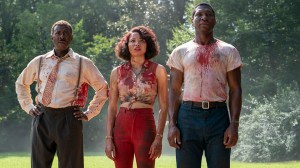 So we come to Lovecraft Country. I’ve written at length about this elsewhere, but I want to focus here on agency and how the BIPOC protagonists make decisions specifically in reference to their antagonists.
Lovecraft Country does something different from Watchmen and The Boys and it does it by design – it centres BIPOC as the characters through whom the story is told. It’s through their experiences we are shown the world (with one or two notable exceptions). This has been enough to alienate even well-meaning White viewers who have said ‘I could tell it wasn’t a show for me,’ as if I hadn’t been forced to watch Brown people as terrorists and disposable bodies while White people dominated agency, growth and morality my entire life (among the many examples, let’s collectively scrub Omid Djalili’s turn as an Arab turncoat in The Mummy from our minds shall we?). Setting aside the hypocrisy of this kind of sentiment of those in the centre being asked to exercise some empathy it’s an interesting point that Lovecraft Country hasn’t made these characters Mary Sues. It could have easily ended up being a show about flawless BIPOC heroes. Instead it’s about people who can fail, make bad decisions and be entirely self-centred. In that it is glorious.
And yet.
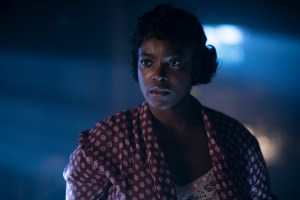 By the end of the show the protagonists make a short series of choices with huge ramifications and these choices appear tone deaf in a number of ways. They centre White structures of power, they centre ideas which have been rejected right up until this point (such as one character’s death being the exact opposite of the very lesson he’d spent the other nine episodes learning) and they make a really uncomfortable decision about race that suggests a retrograde essentialist idea about what makes a person a person. For those who’ve not seen it yet, in the end the show states through its main female protagonist that your skin colour does matter. After ten episodes of seeing just how damaging an idea this is we’re presented, in the last five minutes, with the idea that skin colour decides morality and there are no shades of grey. It is grim and excludes people of mixed heritage, like me, from being proper people.
Sure, perhaps these characters are only as stupid and short sighted as their White counterparts but at the end of Lovecraft Country, it could be argued the Freemans have become the enemy they fought so hard to defeat. In claiming back agency from their White oppressors the series has them become the very same monsters almost with the final shot.
It’s been argued by others that this sets up exploring this in the next series. It’s not a good enough excuse for me.
 In this piece I’ve wanted to explore these three shows and look at how they’ve worked but also at where they’ve failed to think through the representation that in other threads of these very same shows they’ve managed to get so fantastically right. I’m not interested in rejecting these shows on these issues – all three are worth my time and I will keep watching them (to the extent that any of them have further episodes to watch).
However, even shows which are setting out to be ‘good’ in this sense are exploring what this very idea means in a climate where our views have changed dramatically over the last couple of decades. It’s kind of easy to say Nazis are bad, at least for most people. It’s hard to say what is good. It’s even harder to contextualise this idea of goodness because what elements of evil and good (if you’ll allow me to use these somewhat archaic shorthands) do we choose to foreground and which do we choose to glide over?
It’s easy to pick holes in bad shows but all three of these are good shows. Yet that doesn’t excuse us from exploring, alongside them, what it is we’re expecting and what it is we think is the ‘good’.
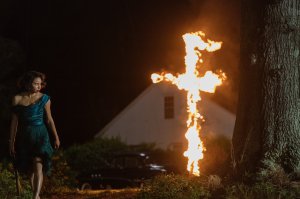 I’ll stick with these shows because they’re attempting to explore subjects which are hard, because whether they’re slickly satirical, self-consciously serious or mad as three kobolds in a trenchcoat, they are all attempting to navigate new landscapes with new ideas.
If you haven’t seen them yet I encourage you to look them up and, as I opened, Lovecraft Country is newly available on digital – please, go find it and see what it’s trying to say.




 Sci-Fi Bulletin: Exploring the Universes of SF, Fantasy, Horror and Spy-fi!