Killjoys: Interview: Michelle Lovretta
Killjoys returns to Syfy on Tuesday July 4th, with war on the horizon – but showrunner Michelle Lovretta has very clear ideas about what works and what doesn’t on the […]



Killjoys returns to Syfy on Tuesday July 4th, with war on the horizon – but showrunner Michelle Lovretta has very clear ideas about what works and what doesn’t on the […]
 Killjoys returns to Syfy on Tuesday July 4th, with war on the horizon – but showrunner Michelle Lovretta has very clear ideas about what works and what doesn’t on the show, as she explained to a group of international journalists on set in March…
What can we expect from this season?
It’s going to be exciting, it’s very sexy; I’d say it’s bigger than our previous seasons. We are building off of everything that we have spent the first two seasons progressing towards. We’re heading towards a war and in the process of getting there we need our team – who had a much darker, harder year last year, obviously – to pull together and to be strong enough to bring other Killjoys in with them, to form a bounty hunter army.
When you start a season, do you know where you’re going to end it?
I always have an end point; I have something in mind. Usually for me, it comes down to a scene or two that has a specific emotion and a specific event and so that’s the thing I hold on to. I know an image of how we’re going to end this year, but the specifics of how we’re actually going to get there in that very last episode I sort of evolve. Because as we go through, obviously things happen in production; in story; opportunities come up; locations come up; and we want to be open to those wonderful new opportunities to make the story bigger, sexier and more fun. And then when I’m at the end in [episode] nine, I look and I say: “Okay, where do we land and how do I get to this last pot here?” So that’s sort of the challenge of the next week ahead.
 Are we going to see a more powerful Dutch this season?
The most interesting thing for me, as somebody creating and writing – along with my team – Dutch, you start with somebody who’s already strong. So you want to always make sure you’re evolving that character and showing different facets of that character.
I think the great fun of this season has been [that] last year we took her to a very dark position of loss; we challenged her, we challenged John, we lost team members. Because Khlyen is gone, I’ve always looked at it as: season three is Dutch – without father issues. She had all of that – she was always doing something as a reaction to somebody – and this season she gets to be pure Dutch. She gets to be somebody who is defining what she wants to do, choosing who that enemy is, choosing that war.
We allow her to have a little bit more lightness as well, because [Hannah] is just lovely and fun and sparkly and young, and she embodies this character on screen so well that sometimes, if I go too far in that direction, I deprive the audience of the fun that Hannah is.
Would you say overall the third season is lighter?
I’d say in Killjoys it’s dangerous to talk in a dichotomy of light and dark. We thrive, I believe, intentionally on existing on a combination of both throughout the season – and often within episodes. We take us to places that are sometimes tragic or politically fraught, and I’ll be honest, we’ll give you some boob jokes along the way in some spaceships, because that’s kind of me! And so we just have fun with that.
I don’t want to take you on a journey that is bleak; I don’t like bleak – I’m not bleak. But there’s a difference between bleak and dark. Dark I think is strong people in hard times that retain hope, and I always want to have that in my work, and I have that in the characters.
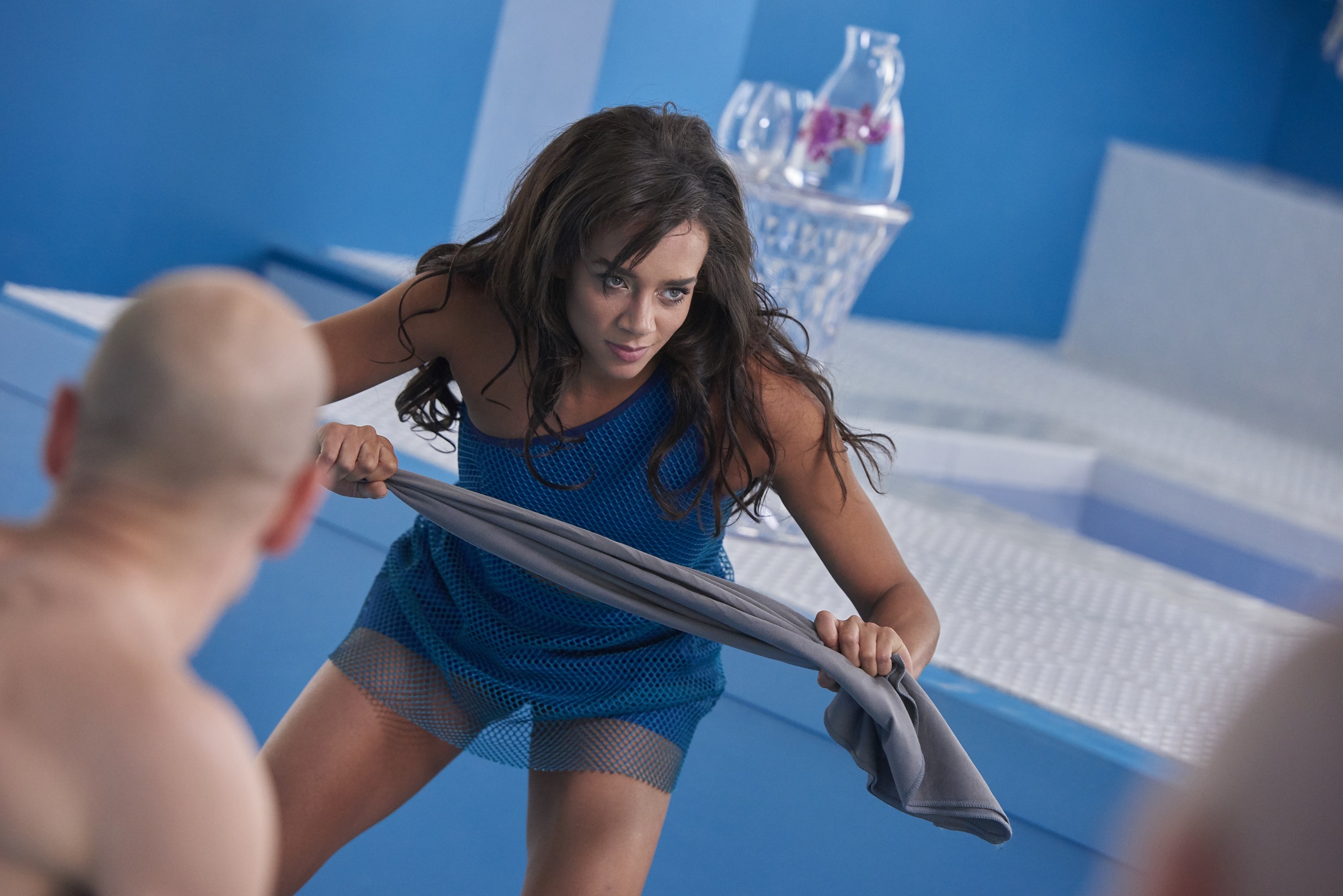 You also said that it’s going to be a sexy season. Why?
Well we have a few romances this season. I won’t spoil who they’re between, but there’s some interesting and surprising ones that I think help gives some energy to the season.
I will say I don’t like thinking in those terms. When I watch other shows, I’m invested in the relationships; when I’m watching and creating my shows, I’m invested in the families. And so that’s a large part of how we tell our stories; it is, at the core, always these three, obviously, and depending on the season they’re more brother/sister or they’re more romantic, or whatever that happens to be. But it really is about building that family and spreading out.
The sexiness, I think, comes a lot of times from our environments, from our events; from the fact that they’re just these phenomenally kickass, very strong, very centred individuals. And I think they live and breathe that on the screen in a very energetic, sexy way.
During the past two seasons, what has the feedback been like from the female fan base? Having a woman as the main character – maybe it’s normal in Canada but for example in Mexico, it’s strange.
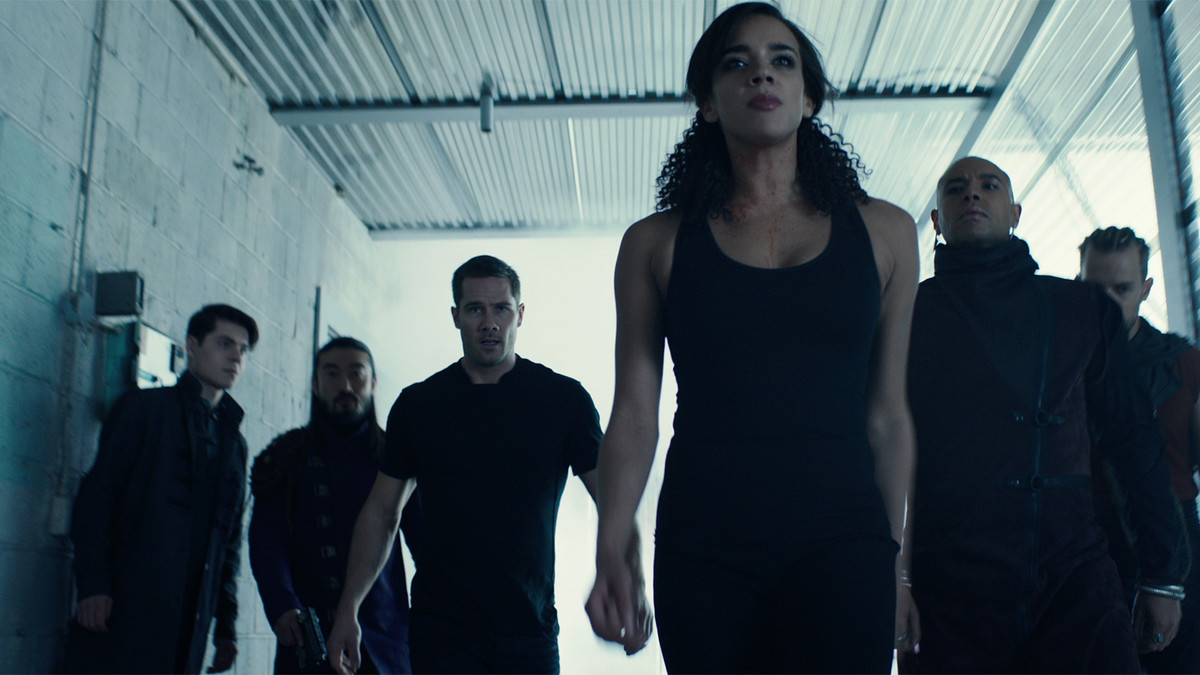 It’s always refreshing to hear because I love that our show has gone beyond our borders and it is something that we’re able to show in other places, because I do take for granted the strong woman at the core.
It’s something that when I found it as a child or a young woman in the Ripleys (of Alien) of the world, I intuitively was like: “More please – that’s what I want!” So I’ve never actually stopped as a writer to ask myself: “Do I have permission to write that character?” She was already there. I like writing more of her.
I think because in Canada women have grown up with that more – the Buffys or the North American TV – it’s a little less of an event for them. But I think there’s always still just that idea of: “Thank you for putting that character out there” and also “thank you for letting that character not just be strong” – because that becomes a little bit… well first of all, that’s not real. I don’t want that in the male characters or the female characters. They’re all able to have different shades.
I’m as pleased for what we’ve done with the Johnny character and the D’avin character, because again, they’re able to sort of be vulnerable, be funny, be bold; be all of those things. So it’s something I’m proud of and it’s something I’m always grateful for when people remind me that that’s not everywhere and I think it should be.
In science fiction we have great female characters but we don’t have so many women working on the creative parts. How was it for you to start working in science fiction?
Well, natural, to tell you the truth! I think that science fiction and the genre and spec-fiction has become in vogue and I’m grateful – along with games and all of those areas of media. They weren’t when I was young. When I was young you would go to the book store and I always figured I’d grow out of it.
It was something I knew everybody didn’t love but I knew that I did, and then by the time I was professionally working in it, it had become a little bit more acceptable. But still, back then on the Mutant Xs and Relic Hunter – [which] was action [rather than sci-fi] – but the shows that I first cut my teeth in; they weren’t prestige and I never wanted to do anything else. It wasn’t about that, it was: “I want to have a rollicking good time”. I like an old fashioned adventure with the lens of modern sensibilities and I think it’s just where I’ve always wanted to be and meant to be.
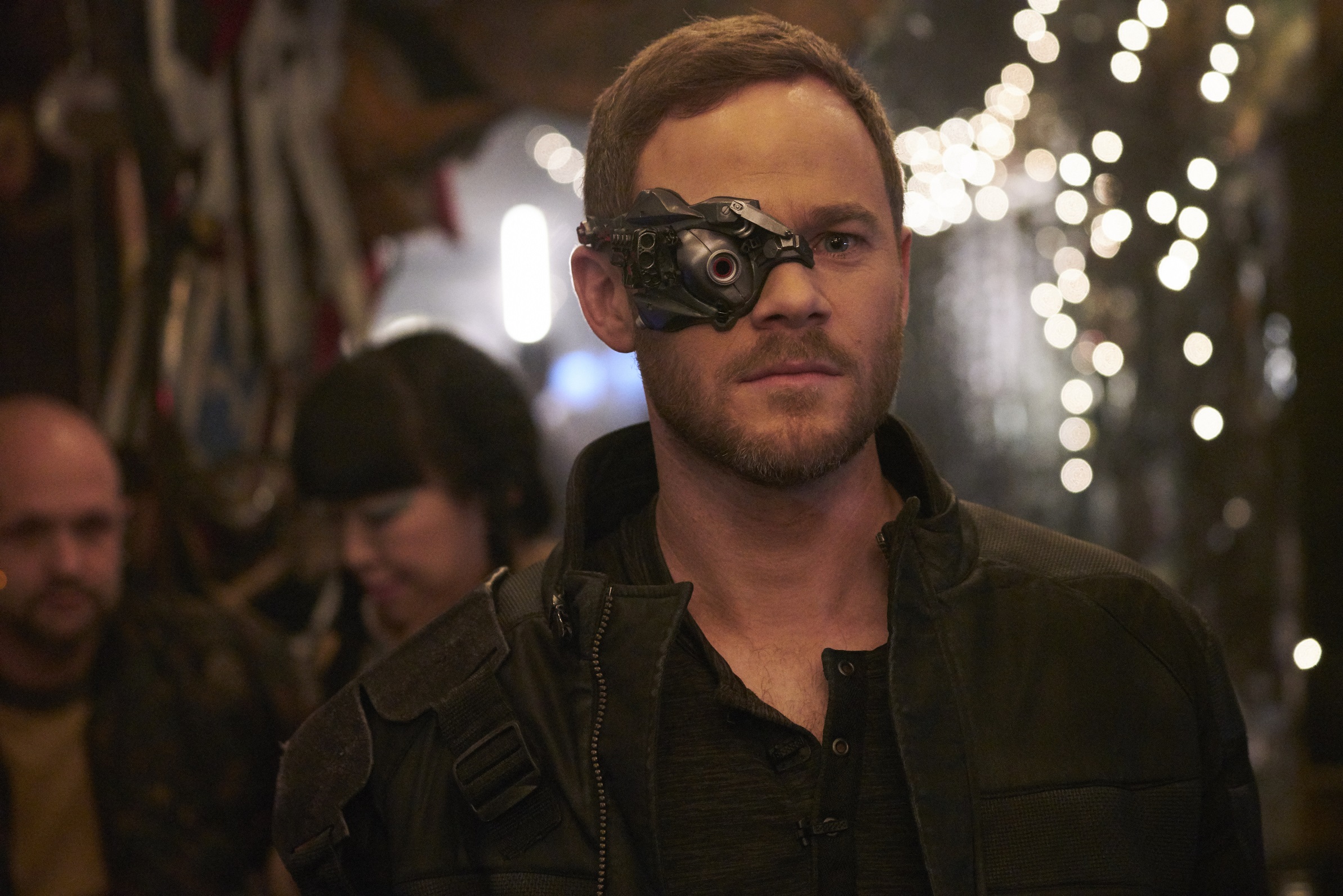 Can you talk a little more about the “Hack-mods”?
One of the things that we like to do in this show, whenever we can obviously, is just to create unique cultures. I think that’s something I’ve always been drawn to in science fiction and it tends to lean a little bit on things that exist, and then you extrapolate from it and try and come up with something a little cooler. We had the Scarbacks and a couple different other ones that we’ve seen along the way.
Season two we introduced the “Hack-mod” world. I’m just a bit fascinated with the futurism of what’s happening with technology and modifications, and already now if you modify yourself to a certain point, people get nervous about it legally because they think that you’re surveilling them or that you have some advantage. So in our world, there is a fine point – every zone – on how much modification you can have before you become illegal and we’ve introduced characters in the past, certainly, that live that way. And this season we’re going to get a little bit deeper into that world as well. It’s just a very sexy, cool and I think very humane world.
How much have you had to revise your idea of the world as you’ve written the seasons? Has that changed a lot?
You know it’s funny, I always think it hasn’t and then every once in a while I go back and read something and I’m like: “Oh, she was going to die in season four. Alright, okay then!” But it’s so organic and you’re so in the moment – but the macro has stayed the same, certainly. The pitch has always been, when I first went to Syfy: this is who the villain is [in] season one; this is who it is in season two; season three; I know who it’s going to be in season four. Those things haven’t changed, but some of the other things also come down to cast chemistry. I don’t mean necessarily romance, but just people that you see and I suddenly want to have more of them together. I used to really like D’avin and Khlyen together. The one thing that they did at the end of season one, they had a fight, and I’m like: “There’s a father-son-dating-my-daughter thing going on here that I’m digging!” And so I found ways to kind of keep them together a little bit and that spiralled off into some new things. So you keep an open mind and you’re also keeping a ramrod spine on where you think you’re going to go or you get lost at four in the morning and you’re very tired!
 How many seasons have you planned?
I always plan – I have to think back – I think it was five but to be fair, what ended up happening – and this is where you have to maintain that flexibility – is, a lot times, we have really great network partners who are very supportive in their notes and always are excited and want more of the stuff. And so then I’m a big dork who wants to please them and then I’m like: “Well there’s a big turnover here” and they’re like: “Bring it up!”, and so I’ve brought forward things; season one ended where I thought season two would end. And so I still have sort of the long arc planned, but some of the major beats have sort of switched where we would reveal them.
It looks like today science fiction is quite bleak in general and it seems like it reflects the political world, so why is it important to also have a fun show that entertains the audience? What were your influences in that respect?
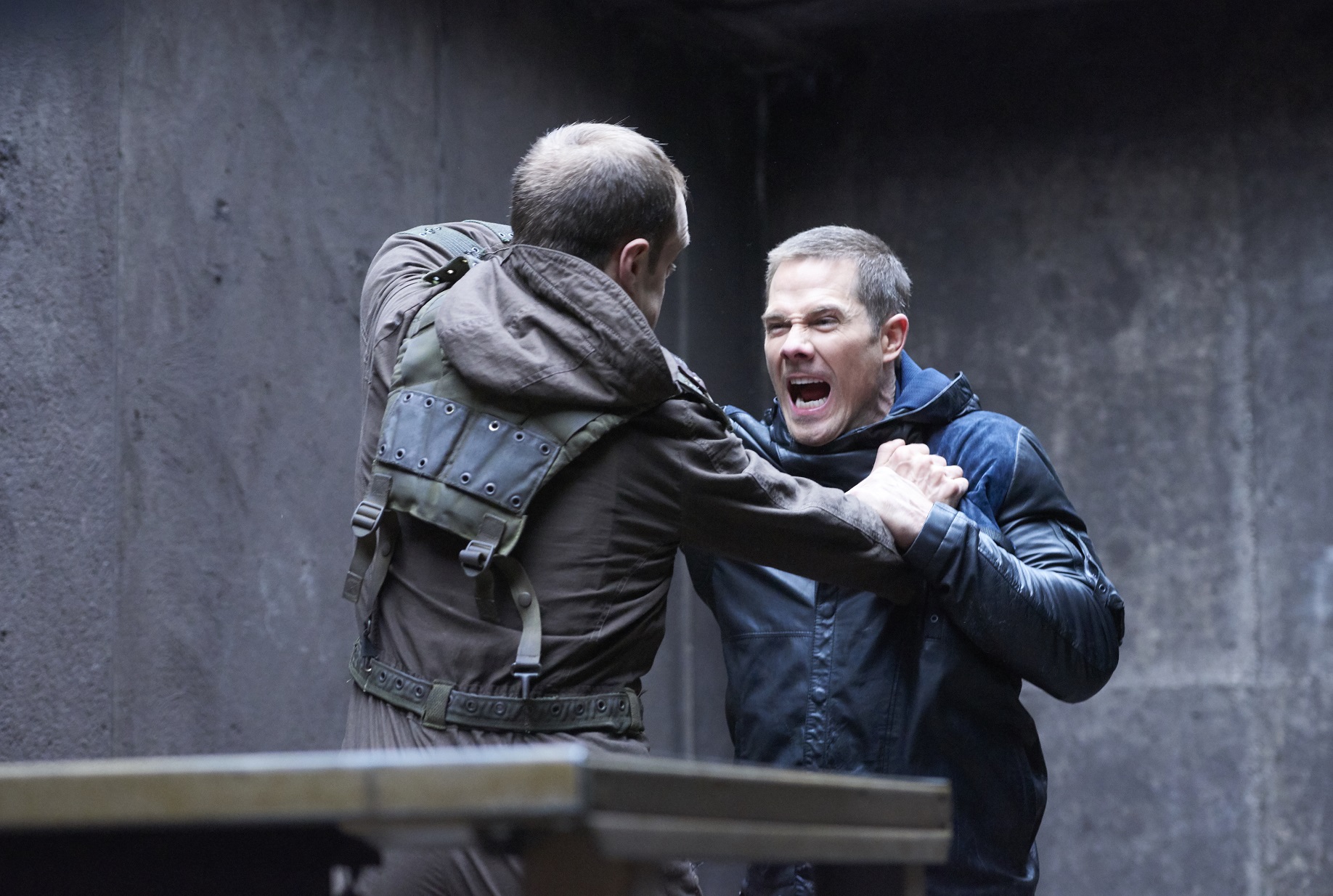 My influences in that are my own personal needs. I think we all have our own, very specific, intimate relationship with what we want from entertainment and I don’t think that there’s one path to it. So there are people who want to come home and they want to watch something that is nihilistic and it’s very epically dark, and that’s never going to be me. So I can’t create that for you because I don’t seek it out. I want to come home and I want there to be comfort and familiarity and fun and joy – but I can’t give you candy canes because that’s boring as shit. So in that process we’re also going to have realities of trauma. We are going to have politics; we are going to have war. But I want to leave an episode having spent time with people I respect and that I enjoy. And to me that’s kind of the cardinal difference. I want heroes; I miss them, I grew up with them, and I want to give them to you. And I think that’s what we do.
Killjoys airs on Tuesday nights at 9 on Syfy UK, and continues on Fridays at 8 on SYFY US and Space in Canada
 Doctor Who News Star Trek News
 Sci-Fi Bulletin: Exploring the Universes of SF, Fantasy, Horror and Spy-fi!