Clarice: Review: Season 1 Episode 1: The Silence is Over
FBI Special Agent Clarice Starling is called back into the field when two bodies show up, suggesting the work of a serial killer. Before diving into this opening episode of […]



FBI Special Agent Clarice Starling is called back into the field when two bodies show up, suggesting the work of a serial killer. Before diving into this opening episode of […]
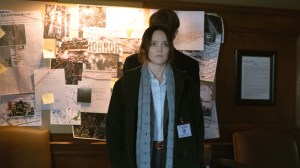 FBI Special Agent Clarice Starling is called back into the field when two bodies show up, suggesting the work of a serial killer.
Before diving into this opening episode of CBS’ 10-part follow-up to The Silence of the Lambs, it’s worth giving context as to where this fits in the timeline and setting some expectations around what you will and won’t see.
Jonathan Demme’s 1991 multi-Oscar winning movie The Silence of the Lambs was based on Thomas Harris’ 1988 novel of the same name, itself a sequel to the author’s Red Dragon. Both novels feature Dr ‘Hannibal the Cannibal’ Lecter, with Red Dragon having been made into movie Manhunter by Michael Mann in 1986, starring Brian Cox as Lecktor (sic). However, it was Anthony Hopkins’ portrayal in Silence that made the character mainstream and established the monster.
The Silence of the Lamb (book and movie) introduced a new protagonist, FBI rookie Clarice Starling, who helps track down skin-stealing serial killer ‘Buffalo Bill’. Movie Hannibal (2001) followed, set 10 years later with Starling on the trail of Lecter again, Red Dragon was remade in 2002, this time starring Hopkins, while Hannibal Rising (2007) is a best-forgotten, unnecessary origin tale. From 2013-15 Bryan Fuller ran a three season TV show called Hannibal starring Mads Mikkelsen, but the rights were not available to use any characters originated in The Silence of the Lambs (Starling, Krendler, Buffalo Bill, etc).
Got all of that? Phew! And now we have Clarice, a show that can only use characters from the mythos that were originated in The Silence of the Lambs. This means no Jack Crawford, Will Graham, Dr Chilton, Mason Verger, Dolarhyde… or Lecter. On the face of it It’s bit like Doctor Who without the Daleks, or Holmes without his Moriarty. The big question is whether Starling is a big enough character to hold the show – let’s look at the first episode.
Alex Kurtzman (Star Trek) and Jenny Lumet’s (Star Trek: Discovery) show introduces Clarice as played by Rebecca Breeds (The Originals) one year after the events of Silence, meaning that it doesn’t interfere with the established events of the Hannibal book/movie. Starling is suffering PTSD, her counsellor believing that she’s not fit for field work. But a direct request from new Attorney General Ruth Martin (formerly Senator) appoints Clarice to the Violent Criminal Apprehension Program (VICAP) to investigate a double murder.
Martin, you might recall, had her daughter, Catherine, kidnapped in The Silence of the Lambs, and she’s here played by 24/House of Cards veteran Jayne Atkinson. Catherine also appears, reaching out to Clarice, looking for support from a fellow survivor… oh, and Precious the poodle is still around. VICAP is led by spiky Paul Krendler from Justice (Michael Cudlitz, Abraham in The Walking Dead), unhappy that Sterling is in the team and continually undermining her. This is the man who a decade later will have his brains fried by Lecter.
The show juggles a number of balls here. It rightly plays up its Silence credentials (including some accurate recreations of Bill’s basement from the movie) while also trying to establish its own identity through a new case. Directed by Maja Vrvilo (Star Trek: Discovery), the opening hour flies by, delivering a conclusion of sorts while also opening up a bigger story arc.
Do we miss Lector? Not really. That character has to my eyes been played to death by three excellent actors – there’s nothing left to say. And that’s before we consider all of the copycat Lecter-like serial killers that have followed in films and shows. But without Lecter, is this just another crime procedural – VICAP: Virginia perhaps? Time will tell.
Verdict: A glossy series opener that throws in enough references to justify its connection to Thomas Harris’ characters, while also opening up the world to new stories and possibilities. 7/10
Nick Joy
 Doctor Who News Star Trek News
 Sci-Fi Bulletin: Exploring the Universes of SF, Fantasy, Horror and Spy-fi!