Brave New World: Interview: David Wiener
David Wiener is the writer and showrunner on the new Sky adaptation of Aldous Huxley’s Brave New World, which gives a 21st century spin to the 1932 book. With the […]



David Wiener is the writer and showrunner on the new Sky adaptation of Aldous Huxley’s Brave New World, which gives a 21st century spin to the 1932 book. With the […]
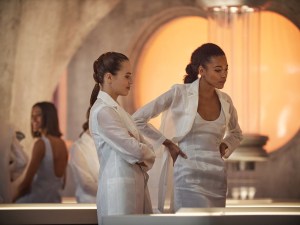 David Wiener is the writer and showrunner on the new Sky adaptation of Aldous Huxley’s Brave New World, which gives a 21st century spin to the 1932 book. With the show’s nine episodes now available to view, Wiener chatted with Paul Simpson about the challenges of bringing the novel to the small screen.
At school, we studied Brave New World and 1984 together – yet they’re two very different books from two very different writers and I think Huxley often gets overlooked.
Very true.
I’ve always been fascinated by different interpretations of Huxley’s work.
It’s certainly a titanic work of literature and part of the adventure is trying to figure out a way to make it resonate today because the premise is so extraordinary and I think it’s probably become more relevant over time than Orwell’s prophecy.
 So what was your first exposure to it?
I think like most people I read it in school and I didn’t remember it very well. I think I just remembered that it was exciting because it had some risqué elements – when I was fifteen, I think it was. I didn’t understand what was so wise and frightening in Huxley’s premise.
I didn’t read it again until I became aware of this project and the possibility of signing onto it. Reading it now as an adult, it was extraordinary to me just how prescient he was. Not just about technology but certainly about our culture and the human tendency to go to great lengths to avoid feeling discomfort or anxiety.
How did you get involved in the project? From the way you phrased that I take it that it was running before you got involved.
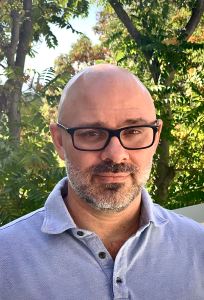 Oh yes, the project’s been in development for quite some time. It’s been a television series before I think in the 1980s and then again in the mid 90s.
I think those were Universal projects and so they had the intellectual property. They had commissioned a couple other versions of the pilot a couple years before I came on and the most recent one was written by Grant Morrison and a guy named Brian Taylor. I was told it was a writing assignment; the title was such an exciting, colossal one that I had to do it. So I came up with my particular take, went in and pitched it.
The network changed while we were making the show – this secret revolution is happening in television obviously then NBC’s streamer [Peacock] came out and it became the flagship show of the streamer, the show that launched it.
 It’s been one of those scenarios that doesn’t happen often in Hollywood where at every step of the process, the answer was yes. I always try to be mindful of how it’s not par for the course because you start to take it for granted after a while.
The book company has been super supportive and I think everybody was just really excited to get their hands on something that’s so challenging. It’s a notoriously unadaptable book for a lot of reasons but that doesn’t mean you shouldn’t try it. The ideas are extraordinary and I think that in my humble opinion that we really struck upon a way to make it contemporary, which was one of the biggest challenges.
Were you always looking at it as a 9 hour event or did it change its length during the process?
No, it was always going to be a nine or ten episode format. Obviously we end the series in a place that’s a little different from where Huxley ends the book.
Yes, just a bit!
There’s the potential to do another season and we’re talking about that now so we’ve already had an initial exploratory writers room.
 Your idea of bringing it to the 21st century, was that a concept that you applied to the characters? Or did you see the way that the characters would apply to the concept, if you see the difference I’m getting at?
I guess the only way I know how to approach anything is from that place of the characters’ emotional needs. I think that once you read the book it’s sometimes difficult to discover what those might be. One of the things that makes the book tricky, as far as something to adapt, is in the book the characters are often vessels for philosophical points of view rather than wholly realised human beings.
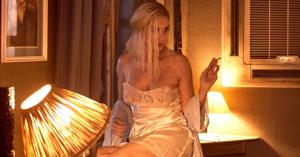
One example of that, probably the most striking one, is the character of Lenina Crowne. In the book she doesn’t change a great deal between who she is at the beginning of the novel and who she is at the end. You could argue that she’s often in the story as a foil for Bernard or John. Really the beginning of writing the show started with her. I saw this great opportunity that Huxley fortunately left available, so rather than recreate the Lenina Crowne from the book, I started in a place where her defining characteristic was her curiosity rather than her man-craziness and the insecurity that I think marks her in the book from pretty early on.
 Now she’s someone who they put in a position where she’s not at the top of the hierarchy and not at the bottom but within this little area, in a really unique position to question the norms of New London.
She became our lens into it in the show – we literally come into the show through her eye. Couple that with who I think is the most extraordinary actress on the planet, Jessica Brown Findlay, I think it was perfect. She really got it immediately, how Lenina could be this character who was provocative, someone who’s always testing and pushing the limits. She’s not the only character that I did some reimagining with but there’s the most latitude there I felt.
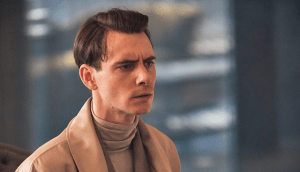
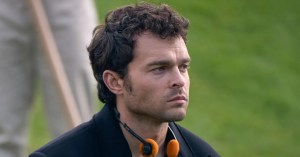 Obviously John’s different in the show than he is the book. In the book he is someone who is kind of defined by this Elizabethan sense of propriety that he’s gleaned from a book of Shakespeare; in our show he’s less puritanical.
The John in the book shows up in New London and is scandalised by the sex and what he’s sees as the promiscuity… of just the women for some reason, that’s what bothers him. In our story John’s a different sort of unsettled young man who, instead of looking to quoting Shakespeare, looks to this extinct music. He shows up in New London and he’s tempted by the sex and the soma and all that.
I think that was key to staying true to the central premise and what I think is the most provocative part of Huxley’s book: I think he’s asking us to consider what is happiness? There’s a difference between what we call happiness and what it really is and that that idea can be used in corrupt ways.
Huxley was of that generation where a woman who enjoyed sex was almost regarded in horror. You had that equation of promiscuity equals mental illness, so Huxley had the mental illness side of it against the puritanical.
 That’s a great point. The book’s a product of its time and I think sometimes because it was so visionary and so prescient in terms of everything, from in vitro fertilization to oral contraception, that he could foresee so much, that people forget exactly it’s nearly a century old.
That’s been some of the other challenges in adapting a product of its time.
As they always say, nothing dates like yesterday’s future.
Exactly!
What was the biggest challenge for you as an exec on the show? Not necessarily in terms of the concept and the writing but actually in pulling the whole thing together.
 It’s a massive show, it’s really big, so the sheer scope of it I think I wasn’t psychologically prepared for, but then you don’t have a choice – it just comes at you.
We shot in three different countries, we had a really big crew. It’s an expensive show, the sets are very big. We had two different studios – one outside of Cardiff and another one up in Swansea – and we also shot in London and all over the UK, and we went to Spain.
There’s over 2,500 VFX shots in the show and it was really important to use VFX in a subtle way. For a character drama often you want the audience to be looking at the characters in the scene and so a lot of that VFX would sometimes be happening in our views in subtle ways and not always subtle. It had to be artfully done so really the biggest challenge was to maintain that standard. Fortunately we wound up with ILM and they had this terrific visual FX supervisor named Tom Horton, and a bunch of other VFX companies.
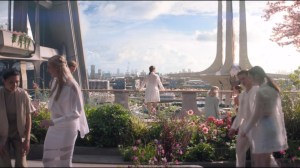
 The first director on the series is Owen Harris and he was an important part of the world building phase. Prior to shooting, one of the things he and I were really intent upon was passing all the decisions through the dogma we had come up with for New London that reflected the ideas behind Huxley’s book. Namely that the architecture wouldn’t inspire offence and at the same time wouldn’t be something that challenged people, its inhabitants, intellectually. There would be lots of open spaces, lots of lines of vision because they don’t have the same cultural hang-ups about bodies or sex or monogamy. It was designed in such a way that it would constantly force people into connection and that what keeps the social body vital is this consistent cross pollination of humans.
In order to support that we brought in an architect named Tim Evans who is also a civic planner and in creating the world, every building that you see in the show has purpose. It’s not just a random sci-fi structure in the distance. The structurally defined body says where it is but also what it is.
The challenge was the sheer number of decisions that I think have to be made. Just making anything for TV is so hard. With ours, it required a little bit of luck and a lot of really stubborn, wilful, dogged people so when it’s raining at three in the morning in Wales (and often it would rain inside our sets harder than it would outside) they would never quit.
Everyone was just so kind. There was just this spirit and I think that would have been more challenging if people weren’t so graceful. We got really lucky, great crew.
 You talked about the philosophy behind New London; what about the philosophy behind the Savage Land? Obviously it’s very different, it’s not an area that’s been preserved as it is in Huxley’s novel, it’s more of a theme park idea.
Exactly, yes.
Obviously that has the corollary that it was created by the people who came up with the New London philosophy in the first place, presumably..
Correct. The book is problematic for a number of reasons and some of those reasons have to do with how it engages with race, with sex, with gender. There are also certain aspects of the book that, through the lens of our culture would be considered probably unacceptable. So we knew we didn’t want to put John on an Anasazi reservation like he is in the book and I wanted to make a place that also had functionality.
 So in the book, he’s on an Anasazi reservation where Bernard and Lenina go and they look around but the purpose of it isn’t the same as it is in our show. In our show it functions more like an adventure park and the “savages” put on these tired old plays that are intended to reinforce the New Londoners’ idea of their own superiority. I thought that that was really interesting. I thought it reflected how certain situations work in our world, where you have a third world country with some great all inclusive resort on it. People come from the first world to this place and they have the luxury of being in this false native beauty, this false original natural beauty, without having to consider the people that service that place, the people that go home and maybe resent their clients a bit. I thought it was a nice backstage drama with a lot of potential.
It’s very easy to exoticize any culture for your entertainment and what happens to Bernard and Lenina on the show, is they wind up going and not having the ability to leave at first.
It’s couple of months since it aired in the States. Was there any reaction to it that you were surprised at, from people watching?
 No, I was really gratified by it. The show has resonated with young people, people under the age of 35. That makes a lot of sense actually; the show is about being young in a lot of ways. It’s about people trying to understand who they are, and it’s about characters feeling big feelings for the first time.
There’s aspects of a John Hughes film in in it. Even when we were creating the show, I always asked the writers to think about “there’s no love like that first love, there’s no heartbreak like that first heartbreak, there’s no sex like the first time you do something”\ and those are all experiences our characters go through. I think it’s been really great and I’m glad that it went in that way.
The book itself is such a daunting title. The show is not the book but it takes those ideas and starts to make something that’s fun and surprising and crosses multiple genres. The response has been really extraordinary.
I did an AMA recently and I was blown away by how deeply people thought about it. What’s been really exciting is how smart people are. The audiences are really savvy now. That’s a product of there being a lot of TV and also a product of the fact we’ve been watching a lot of TV and not getting around as much as we used to and it’s a good lesson I think. One that I certainly heed is you disrespect the audience’s intelligence at great peril now.
Brave New World, all episodes available now on Sky One and NOW TV
Thanks to Molly Wyatt for her help in arranging this interview
 Doctor Who News Star Trek News
 Sci-Fi Bulletin: Exploring the Universes of SF, Fantasy, Horror and Spy-fi!