 Shortly after the broadcast of The Third Day’s live episode, Autumn, created by Punchdrunk, Stephen Volk (creator of the BBC’s Halloween event, Ghostwatch) and novelist and short story writer (and writer of Dalek for Doctor Who) Robert Shearman got together via Zoom with Paul Simpson to discuss the 12-hour event.
This conversation has been lightly edited for clarity. It also includes some spoilers for the first three episodes and the live event.
Have you both watched the three episodes that preceded the live action one?
Stephen: I had, yes. I watched the first three conventional dramas, yes.
Rob: Yes I had as well.
Stephen: What did you know, Rob, about Punchdrunk? I’ll say what I knew about Punchdrunk before this because I was intrigued when I read [about it].
I started watching the three parts, Marc Munden’s three episodes, Summer, and I was intrigued by this. There was publicity around the fact there would be three, then there would be a live event and then there would be a second three directed by Philippa Lowthorpe. And apparently all three things can be watched independently; you don’t have to watch the first three to see the live event, you don’t have to see the live event to watch the last three.
So that in itself was intriguing and then I saw that Punchdrunk was involved. I haven’t seen any of their shows although I did hear from some close friends who went to see The Masque of the Red Death which was put on at Battersea Arts Centre.
Just to give you the gist of it, it wasn’t a conventional play with a beginning middle and an end or even a kind of setting or proscenium.
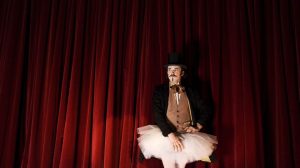 What it was, apparently, they took over the whole building for the whole of the run and you got a ticket and you wandered into the building. The whole building was taken over and immersive, if you like, in this whole atmospheric gothic Edgar Allan Poe universe that you wander into and you make your own way around it, physically. And you come across scenes which aren’t necessarily scenes as such, so much as maybe tableaux. It could be a man sitting at a desk and writing something with a quill pen and that’s all you see until you wander into the next room, which might be a woman in the corner weeping, and then you go through a narrow, narrow corridor which feels as if it’s closing in on you and you’re in a completely dark room which you have to feel around to get out of.
From what I’ve heard, it creates these incredibly intense atmospheres which you wander around for maybe three hours then you eventually get out and you think ‘What the hell was that?’ But you’ve experienced something, emotionally.
Rob: I’ve seen several of them. In 2010 I was taken to The Duchess of Malfi, an opera version of the Jacobean tragedy, somewhere in the Docklands. It’s 136,000 sq ft of this old factory. So you were led in and the audience have to wear masks. In almost all Punchdrunk shows you wear masks, as you wander around exploring this vast installation. You also have to discover the scenes that you watch; you chase cast members about but you also are invited to explore and find cubby holes and things.
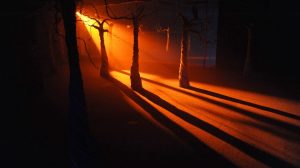 The idea is that you’re observing the actors quite dispassionately, it feels. If you’re watching a sequence where someone’s suddenly writhing in tears on the ground and has a group gathered around, it feels like we’re in cold judgement of it. And then we all start wandering off to find some other scene to watch.
When I was watching Malfi, for half the time I was thinking, “Is this rubbish? Or is this amazing?” The play was about making that decision as much as about anything else. For the first half I just thought, “I can’t tell if this is extraordinary or just the most pretentious guff I’ve ever seen.” And then I decided it was the most extraordinary thing.
I did The Drowned Man, which the National Theatre co-produced, about three or four times. I did Sleep No More in New York, which was their take on Macbeth, and what I began to realise was there’s a similar style to them. It’s about exploring, it’s about finding your own unique experience. For example, what they do in a lot of their shows is they deliberately separate you from the people that you’ve gone with. They’ll get people out of a lift and they shut the doors on them, so they’re trapped on a completely different floor. Because what they want to stress is that when you come out of this and you meet your friends, you’ll have had completely separate experiences and you’ll be arguing about completely different things that you saw and they didn’t.
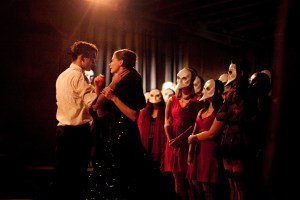 I’ll just quickly tell you this because it just was so cool. When I was in New York, I had this moment where I was watching a strange sequence where a woman was rocking a mannequin in a caravan, and it was really weird and eerie. After the crowd wandered off and found something else to enjoy, I stayed around and looked around the outside of the caravan, and the shutters of the windows suddenly opened and the woman, the actress, stared out at me. Because you feel bolder wearing the mask I stared back and she crooked her finger and she opened up the caravan and led me inside and closed the door.
So I was in her strange caravan, she took off my mask very very gently and then she sat me down and she began spoon-feeding me warm tea while telling me a story about this little boy who wanted to go to the moon but when he got to the moon, he found it was shit! It was all shit! The moon was shit! And then she gave me this wonderful hug and whispered in my ear, ‘Blood will have blood’ and then she held my gaze and nodded, and put my mask back on, and expelled me back into the theatre. It’s a silly thing to say but it was one of the most genuinely tense and erotic things (laughs)… I mean, I would have married her at that moment. I was so excited by that.
Punchdrunk regulars, people that go and see Punchdrunk shows try and find ways in which they can have these personal experiences. On Malfi, I was aware people were being led off to be sung to privately in Bishop’s quarters and things. It’s about the idea that what you’re doing is exploring, and people go back, time and time again, often to try and replicate an experience that cannot be replicated. I saw an amazing thing in The Drowned Man that I wanted to see again and again and I could never find it. And I think what The Third Day was doing, I recognised some of the imagery they’ve taken from other shows.
So for example when I saw The Drowned Man one of the most chilling things I did, I went upstairs at one point to explore the top of this building .It was very very dark and as I went through the room I suddenly recognised that there were rows and rows of what looked like dead men sitting in chairs watching something. As I got closer I realised they were all scarecrows and I had never felt so unnerved. I was totally on my own there, the only living person, and then on The Third Day there’s that weird moment when they’re about to go and take Jude Law out and we pan down and just see all those scarecrow bodies lined up. It was similar. The audience were discovering something dissonant and frightening.
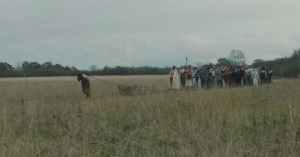 Stephen: What I was going to say about my reaction, not having seen Punchdrunk before and switching on, not [when it started] at 9:30 but I think about 10:30 and then seeing a man in the back of the pickup truck and following him going along, I wasn’t that interested. What I found really surprised me was, I was expecting to dip into it and get on with some work frankly on that Saturday (laughs). I expected to dip into it maybe every half hour just out of curiosity so I could say I’ve seen it.
What I found was that I was drawn into it in the most peculiar way, even though some of the scenes like, for instance some men are digging a hole in a field or a grave, OK, that is one scene but the scene is actually half an hour long. It is literally watching two men dig a hole. In a movie, you’d be hard pressed to make that scene probably 30 seconds, they would want to trim it probably. That defiance of movie language I found suddenly very disconcerting and very defiant and confrontational, in a way that I found slightly upsetting and absorbing that it almost had a physical effect on me. I had to have a physical effect back, I had to give it my attention.
I’ve been looking at social media at the reactions people had to it and you are by no means the only person Steve, to say that. That they intended starting it and popping in and ended up watching for twelve hours. Writers, directors, lots of people in the industry but a lot of people outside.
 Stephen: There were people that threw in comments. I started watching it on Facebook before I discovered in was on FreeView which has a far better picture. I started watching on Facebook and the comments were coming up and a surprisingly low number were saying ‘What the fuck is going on? I don’t understand this, this is tripe’ or something like that. A lot of people were more intrigued and into it than I would have expected, given what the internet is like.
There was someone that disliked it, someone I respect, a theatre person actually, a writer who said, ‘This is not at all cinematic, it’s very flimsy and there’s nothing to it.’ And I thought, “Possibly he’s not coming at this from the right angle to appreciate it”, which is surprising, because for me it felt like theatre. Like you said Rob, it felt like theatre that was being captured on a camera
Rob: Which of course was the [point], I think it was
Stephen: If you’re not used to that relationship in the theatre, of something evolving and happening before your eyes and then you’re part of it and you allow it to happen, then you won’t give to it and enjoy it, I don’t think.
I have to switch over to that mentality and think, OK, this is something that I’m going to give some space to, to work for me. I’m not going to expect it to have the pace of a drama or a TV drama or a movie or anything like that, it is simply watching something enacted.
And that whole device then I thought was… First of all I thought it was mesmerising because it was slow, and in the end, I thought, it was creepy in a way that frankly most horror films of the last ten or twenty years don’t even come close to. I would say that absolutely honestly, even good ones that I’ve watched in the last couple of days, you’re so aware of the cutting, the writing, the structure, the scene structure, the breakdown, the synopsis, the acting, the everything. They seem so incredibly false and manufactured now, compared to a day of watching something happen – and that was terribly exciting.
 Steve, is part of that though the fact that you are in the industry and that your bread and butter is that creation, is being aware of that structure. In the same way an architect won’t go into a Frank Lloyd Wright house and see it the same way any of the three of us would.
Stephen: It’s probably partly that but why wouldn’t I be irritated by something that didn’t show me the craft that I’m involved in? Why would I find that refreshing and intriguing rather than annoying? Someone equally immersed in cinema and TV as I am could completely reject it out of hand and not even watch it. I think probably why I keyed into it was this…
Over the last couple of years, I have been trying to say to myself, what’s the least that you can do in a story to make it horror? Not, What’s the most you can do? but What’s the least you can do? So this idea of slowing everything down, and actually not doing much to unnerve the audience, really appeals to me at the moment. It keys into my mindset because I think it’s too easy to be blockbuster-y Blumhouse-y and just throw the audience into a ghost train ride with loads of CGI. That’s easy as piss. To actually have nothing happen and yet get the audience afraid to leave the room, now that is interesting. That’s my mindset so that’s why it really caught me on Saturday.
Rob: I was so relieved in a way, again because I’m a big Punchdrunk fan, and one of the things that you notice in the theatre [is] the expectation of action that makes people feel nervous. So people would go into rooms with the hope that something might happen there soon, and then they wait. Actors would be asleep or just doing something trivial and you know at some point something’s going to snap, and in a funny way knowing that it could not be snapping for the next ten or twenty minutes is almost hypnotic. You know at some point something will shatter. It’s genuinely frightening waiting to see that thing shatter. It’s the way in which, for example, Jude Law is asleep and you watch it and he’s asleep for I think fifteen minutes or so before he’s brutally woken up and what is gripping is how we wait for that inevitable moment of brutality. You know at some point he will be dragged out and it’s about the interruption of ordinary small things that makes you feel very very nervous for them.
 Stephen: You talk about trying to achieve a naturalism or realism in horror like the found footage phenomenon. It’s a given now that you try and get a naturality to the telling of something that’s essentially implausible like a ghost story. So you’ve got something unnatural and so you tell it in the most natural way possible to give it the verisimilitude and all the rest of it but like I say, nothing I’ve seen has come close to this which actually just almost removes the writing and just has ideas, just has visuals, just has the geography replace the writing in a way.
What I observed was that taking away the dialogue was the most fundamental thing and I talked to [thriller novelist] Sarah Pinborough [about this] and she said this really rattled her until she got used to it. I think she was really absorbed by it.
The idea that you’re not actually picking up on actual lines of dialogue in order to further the narrative. There wasn’t any dialogue and if there was, it would be whispered, two people whispering or far off in the distance doing something. So it commands you to not look for that narrative thread or plot point. It commands you to look carefully, look at the frame, look at what’s happening in every corner of the frame and observe the behaviour, because the only clues you’ve got are what people are doing or what they’re not doing and there’s nothing else you can hang onto.
Rob: When I used to go over to the States and Canada a lot around Halloween time, they traditionally had ghost houses to walk through. Theatrical ghost houses, and the idea is that as you find your way around them, every single thing potentially becomes a source of terror. It’s so much more frightening than it being obviously signposted. And one of the things that’s so wonderful about the Punchdrunk installations is the way that you’ll wander into a room and you’ll pick up a book and you’ll start reading people’s postcards – other people won’t have bothered looking at them and why should they? There’s so much else to look at but everything may be relevant. If we thought real life was a horror scenario every single thing would be unnerving because you can’t work out the relevance. And that’s what I love about those, what keeps you on edge is waiting to see whether or not [it is].
There’s that wonderful sequence in The Third Day where the man with the mask with all the nails in is reading the Wish List, and that’s so much a Punchdrunk thing, finding those Wish List letters and reading them over and over because the camera won’t cut away from that. It’s like the bit where they’re dunking what looked like genuine extras queuing up because they felt like doing a moment and that happens…
Stephen: The baptism type thing?
Rob: Yes. The idea that you can’t yet tell what might be relevant and what isn’t is so much more unnerving than being told…
 Stephen: That feeling of not knowing what’s relevant and irrelevant. I remember that was my feeling, which is the absolute pivot of my thinking about the supernatural and cinema, when I watched Don’t Look Now.
Rob: Yes
Stephen: Don’t Look Now for me is an absolute masterpiece because everything might be relevant, everything might not be relevant. There’s little details of cutaways to a broach, is that relevant? Or the priest that you cut away to and he wakes from a dream, is that relevant? It was the first film that actually conveyed something that I had an inkling about, which was how it was a metaphysical place in the universe of wondering what is relevant, what is not relevant? I can probably verbalise it slightly better now than I could at the time but it was about walking out of the cinema and feeling that the world around me, it just represents everything I don’t know about, and I think the Punchdrunk technique seems to be trying to catch that kind of thing. If I take this book off of the shelf, I might read something and if I don’t then the story is a different one.
Rob: It’s been a massive influence on We All Hear Stories In The Dark. My book which I spent ten years writing, is a direct attempt to do a book like a Punchdrunk show.
Stephen: Really? Oh fantastic.
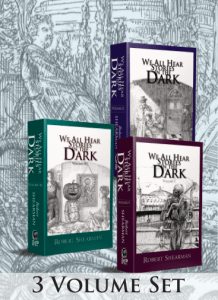 Rob: The whole book is a series of labyrinths and things which are hidden away and no one can replicate their experience. For years I was trying to work out a way to write something like that. It’s why I went to see The Drowned Man several times, to see how they were doing it. That strange miasmic effect, that everything may or may not be relevant and it would have a different relevance according to how you’ve seen it.
What generally happens in Punchdrunk shows is that the action gets repeated maybe two or three times in the night and so you will end up seeing ends of dramas and then you might catch the beginnings at some other point and you can’t quite see how they lock together, maybe ever. What they tend to give you at Punchdrunk is some sort of strange, not that helpful synopsis, to help you through, because otherwise you won’t be able to interpret a lot of it, but it’s partly about that lack of interpretation that makes it so genuinely unnerving.
Stephen: I thought the lack of being able to interpret it was almost part of the enjoyable side of the challenge. I haven’t seen it but with The Masque of the Red Death, I know Poe’s stories. I know Poe was a great symbolist and in some ways his stories were about fantastic images. The logic of the stories is not that important but the baroque tableaux that represent psychology are the important thing and I thought exactly the same thing watching The Third Day live show. It’s not really about the search for meaning. I always remember seeing Harold Pinter and someone said to him, ‘Mr Pinter, could you say what your plays mean?’ (Laughs) And there was a great Pinteresque pause and he said ‘I think meaning is a very overrated commodity’.
Rob: Absolutely right.
Stephen: I think there will be thousands of people out there, if not millions, thinking, ‘Yeah but what does it mean?’ The people searching for the literal so they can go away happy that now they know what it means, they can put it in a pocket and they can carry it away and they can tell somebody about it. They’re much more uncomfortable about their feelings and reactions to just images and things happening.
Rob: Part of the joke about The Third Day is the way that when it opens, it tells you what the story is, it tells you what’s going to happen. It tells you, this is going to be the Stations of the Cross and we realise very very quickly, this is going to be some sort of parody of the crucifixion and resurrection of Jesus. So there’s no shock about any of the plot because it’s not about that. It’s about how they’re going to do their own version of the crucifixion, how they’re going to do their own reinterpretation of him coming back from the dead.
My wife came in afterwards and I showed her a four hour version on fast forward because I had recorded it. I was able to say to her, ‘So, we have about half an hour of some digging here’ and she could say ‘OK, let’s watch some of that.’
Stephen: How dare you fast forward it! (Laughs)
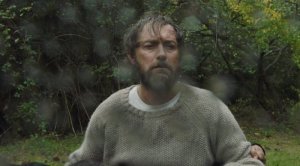 Rob: I know! But she wanted to experience it. She’d seen the first episodes of The Third Day and I said, ‘If you’re just wanting to see what happens next then we find all that out in the first minute. But just watch this’ – and we begin that painstakingly slow journey across the causeway, to that eerie ambient drone…
Stephen: The music throughout is absolutely fantastic
Rob: The music was superb and again makes you feel very very unnerved.
You’ve both been saying the key thing with Punchdrunk is that you go in and see a performance.The three of us go and see it and we’re all going to have different experiences.
Rob: Yes.
But this was broadcast, it wasn’t a question of all the alternate angles you can look at. You couldn’t press the red button to watch Jude or anything like that so effectively you two guys should have had the same experience?
Rob: Yes, that’s absolutely correct.
Stephen: But it was originally designed as an interactive experience and they were going to sell tickets for people to go to the island
They had to stop doing it because the causeway would not take the number of people.
Stephen: I read that they then decided that the camera would replace the audience.
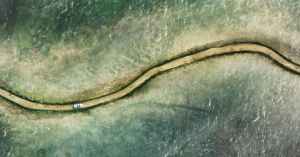 Rob: That’s right, yes. And so effectively, if you go see a Punchdrunk show, it doesn’t take twelve hours, you might get two and half. What we’re watching over those twelve hours effectively is I think, almost every iteration of where we would have gone if they’d done a two and a half hour version we could have done on the island. Which is actually one of the reasons I loved it. I think one of the things also that you would have done, had it been a live theatre event is, do you remember that bit where Jude Law meets the boy who’s also been selected to be the sacrificial person on the beach? It would have been possible I’m quite sure, and it would have been very Punchdrunk-y, that half of the audience would have been following the non-Jude Law character and you’d have had probably different experiences but you’d have come together to watch them both being sacrificed.
Stephen: For instance, the woman that kept warning about everything being burned down. We did follow her to her caravan and she lit up all the candles and there was a section with her and there was a section where the camera went off with the Welsh guy…
Rob: Yes, that’s right. He goes and sobs by the…
Stephen: The water from the sea and nailing things to the tree and that kind of thing. What was he nailing in the tree? What does it matter?
Rob: It doesn’t matter.
Stephen: That old religious thing I found really absorbing because it was a ritual. Was it pagan? Was it Christian? I love that, was it pagan? Was it Christian? Was it something we know or something we don’t know? And it raised intellectual questions in me – not that it asked me these, I just raised them myself – which were, Is it saying it’s all nonsense or is it saying there’s something here quite profound?
It’s certainly potent even though it is nonsense. We know it’s made up, we know it’s not real but it’s nevertheless a procession, the sacrificial person, the crown of thorns as I called it – is that pagan? A crown of thorns or is it actually the horns of a pagan god? And so it raised all these things by enacting something about the spiritual, about, Is it daft? Or what it is to be human? Or is it just silly?
Rob: What Punchdrunk does is it occupies at the same time, two totally contradictory positions. At times it will say this is deliberately very boring and it’s also fascinating that we’re being boring.
Stephen: I love it (laughs).
Rob: It says, I’m going to show you this and ask is there meaning to it? There is a meaning to it but there’s also no meaning to it and it’s that thing where you hold both things at the same time in your head, knowing that actually they are having a laugh with you.
Stephen: That’s why it’s rather like visual art, in the sense that this could be a twelve-hour gallery piece.
Rob: I was thinking that.
Stephen: Not a television piece because you’re used to going to an art gallery and not being spoon fed something. Television you’re used to being spoon fed what something means, what it’s about, what you’re supposed to think, what’s coming next and all those things. In a gallery you go in and you’re told nothing and you’re used to bringing yourself to it. That’s why I think if you’re used to that experience, you’d probably have an easier time than if you’re not used to that initiative.
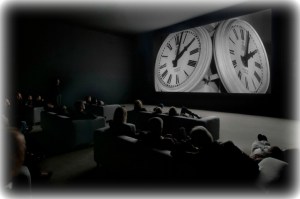 Rob: One of my favourite things over the last few years – I saw it first over in Canada but it was over at the Tate Modern over Christmas last year as well – was The Clock [a piece of installation art by Christian Marclay], a twenty-four hour non-stop film.
Stephen: Fantastic
Rob: It’s amazing.
Stephen: We saw it in Venice, that again was completely absorbing, wasn’t it?
Rob: Totally, and I did one of the overnights.
The idea of this is it’s a film composed of multiple bits of television and film where anything on screen is showing the time. As you’re watching it at 3:34pm in the art gallery, there will be background things, sometimes quite obvious and sometimes more subtle, saying 3:34. What’s extraordinary is they’ve had to use thousands of bits of film and TV to do this. Thing is, people come in and might sit down and watch it for ten minutes, ‘Oh, bit of Back to the Future there, oh that’s a bit of a Clint Eastwood film’. What becomes odd is how absorbing this actual genuine lack of narrative becomes. You know it was never intended this way but you start finding narrative within it even though you know there isn’t one because it’s not intended that way.
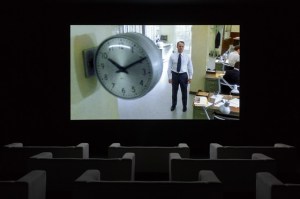 Stephen: It becomes almost a spiritual experience.
Rob: Yes
Stephen: Because you realise how much of your life has been documented or how time is documented by cinema. I found it quite profound.
Rob: I just found it impossible to get away from. I went home and told Janie, my wife, about it and she was appalled by the idea of it (laughs). And the thing is the idea is appalling. When you hear it, it sounds so awful but it strangely isn’t.
There’s a bit in The Third Day, where Jude Law is digging the hole and I said to Janie, “We’ll have this now for about 35 minutes. Seriously, we’re going to watch him in real time genuinely dig a hole.’ It sounds boring, it’s totally fascinating partly because you can’t quite believe they’re doing this, partly because of the sheer genuine effort involved in his doing it and also because narratively you can just see that every passing minute makes this ordeal harder and harder and harder. And that becomes more frightening. You’re waiting narratively in all horror things for something to interrupt stuff like that and they’re not going to do it.
Stephen: I was just thinking about that scene, it’s almost got a Beckett quality…
I was thinking that.
Stephen: I mean what are we doing in life ultimately but just digging a hole that eventually we’re going to be in? That’s an allegory of what we all go through, and that’s the benefit of watching something that unfolds. I think that you can swim around in them and form your own opinions of really, rather than reject. It’s not impossible that I would have rejected this and not bothered to watch it but I don’t honestly know why I didn’t.
Rob: I think also, Punchdrunk would have said, [although] I’m not going to put word into Felix Barrett’s mouth, one of the things about these sorts of events is that if you had rejected it that also would have been a completely valid and artistically correct decision.
That’s what you were saying about the stories in your book.
Rob: Yes.
As long as they get a reaction
 Rob: It’s about effectively working out where you’re going to provoke people until the point they reject it, and in my case watching this, I admit I got very bored by the rave which went on, for me, a long time. I know why they were doing it and I know that that was the point where I was looking at my watch… and we’re all now waiting for narrative closure. I was checking Twitter while I was watching and people were saying, ‘We’re running out of time for Jude Law to make a reappearance’, and I thought, “Is everyone still expecting at some point Jude Law to come back and commit revenge upon them?” and I knew that wasn’t going to happen. That was never going to be the case but the longer that went on, the more I began to admire the fact that maybe this would just be the ending. Maybe now for the next three hours it’s just going to be these people having fun until they turn the lights off. I would have accepted that even though I would have found it deeply irritating!
Stephen: Lest we give the impression it was all a kind of theatre of overcoming one’s own boredom, there were some incredible moments, and I mean really incredible, which is why I actually think it’s much more than a work of folk horror, it’s actually an absolute masterpiece. The moment where they’re all having the feast and they start looking at something off camera
Rob: Yes!
Stephen: And you think the camera’s going to pan to what they’re looking at but it doesn’t, and you watch their eyes following something behind you. It comes round to the other side of you and then you see it’s a pickup truck, which slowly, at the pace of a hearse, goes towards the building at the far end, and you see Jude Law and the other guy’s naked body dead in the back of the pickup truck. That was, I would say, more alarming than many horror films I’ve seen in the last few months.
 Rob: And I would add to that, and actually I think what’s perfect about the thing that I love the most as well, and again it’s that waiting for action, is the bit where you’ve got Jude Law and the other sacrificial boy standing in real time…
Stephen: Oh, out at sea.
Rob: …on these high platforms waiting for them to fall off. And you wait for 25 minutes – I went back and timed it. Jude Law standing on that platform…
Stephen: With an incredible sky, I mean that image alone is…
Rob: It’s beautiful.
Stephen: It’s cinematic.
 I have to interject at this point because it fits what you just said. Pat and I went to Messums art gallery in Wiltshire on Sunday morning and they’ve recreated Elisabeth Frink’s studio within the gallery, and we watched a little film about 1992 erecting her last sculpture which was the Risen Christ for Liverpool Cathedral. That pose is exactly the pose that Jude Law had when he was standing out at sea, with his hands outstretched at his side, palms towards us. That was the Risen Christ, and I absolutely love that fact that the people making this know those kinds of resonant images. For me it permeated that they knew what they were doing. You know whenever you watch something – be it TV, be it entertainment whatever – you know when someone is in charge of the material that they’re playing with. I was going to say conveying but not conveying – playing with – and I really felt they know their Christian and pagan iconography and they’re having fun with it, in the loosest possible sense.
Rob: And it has that modern art feel that people often object to by saying, “Well anyone could have done it”, but what’s so remarkable about The Third Day is that you’re watching somebody say, standing on a platform for 25 minutes or digging a hole for half an hour and it looks like it’s just random but it’s actually meticulous. That’s what so great about it. You never lose the sense of confidence about it. You might think ‘I can’t believe how long they’ve dragged this bit on’ but you know it’s a deliberate decision.
That’s what I liked about following it on social media is again, like Steve was saying earlier, I was half expecting people to be sneering at it but what they got from it was that total confidence. They couldn’t necessarily decode it, they couldn’t work out why they were doing it but they knew it was fully intentional and what made it hypnotic was just how extraordinarily well crafted something that occasionally looked like nothing at all, could be.
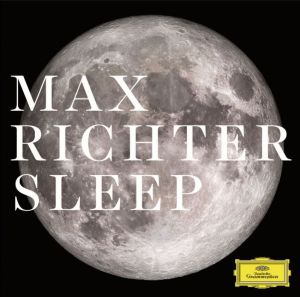 I’m a big fan. I’m into minimalist music, I like the fact that Max Richter a couple of years ago produced an eight hour piece called Sleep which I love. I’ve got into the idea very much of in these more modern days the idea of stuff which can actually take 24 hours to tell, like The Clock.
Stephen: I feel exactly the same. The last couple of years sometimes I send off a story for an anthology and I say to the editor, ‘I’m kind of not sure whether this is horror or not’ and invariably they come back and say ‘You know what? It is.’ But it’s like I never feel it’s been successful, do you know what I mean?
Rob: Yes. What I find in horror is the dissonance of everything possibly being important. It’s the idea that, and I’m not a drug taker but what I‘ve heard from those who’ve done it is, one of the things actually which is unnerving is the heightened response. So if you were just on the island and you just walked around some fields without the ambient drone, it would just be irrelevant, but the idea that what that film does is it makes you spend twelve hours constantly alert to things but because nothing’s happening it makes you very very paranoid. The Third Day a very paranoid experience. Because you know that something really bad is happening…
Stephen: I think that’s absolutely right. That’s what I enjoy, that sense of dread. Which you knew wasn’t going to be a question of minutes but a question of hours of dread and anticipation. I always say to people, I believe in my heart of hearts that atmosphere and dread is the complete opposite of fright, thrills and action. I think that about editing. Stanley Kubrick was the master of very slow shots, slowly moving in, but often he’d hold shots for a long time so that you’re looking at everything. Cutting away from a shot every two and a half seconds, that’s the modern idiom. But if you hold on the shot for ten seconds or twenty seconds, people’s reaction to it gets very much different. You hold it for a minute, they start to get really twitchy and then they’re looking in every fragment of the dark corners to see what might happen there or just to read the image. Like in a graphic kind of way, what is the meaning in this image? Why are we here? What are we doing?
Why are we being kept here?
Rob: I felt strangely almost preternaturally scared in the opening twenty minutes or so when we are going down the causeway and we first see in the distance a human figure. You’re scanning for such a long time waiting for something to be found and suddenly you see in the distance there’s a man moving. I was freaked by that, and I had to think, “Why? We’re not anywhere near him yet.” It was the fact that at that point you are desperately wanting something but you’re also therefore frightened by what that something could possibly be. It’s incredibly clever and so hard to pull those sorts of things off because it takes courage to do that.
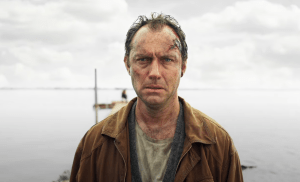 How much of that came out of what you were already aware of, of what happened in the first three episodes? Do you think that somebody coming to it who believed the hype that you don’t need to see anything else would get anything like that impression? The sense of dread is something that everybody I know who’s watched The Third Day has talked about. Whether they criticised it or they praised it, they had that sense of dread through the three episodes.
Stephen: Personally, I really liked and enjoyed the first three episodes, I think it’s elusive and enigmatic and absolutely beautifully crafted on every level. I think it’s outstanding. So I can’t put myself in the position of someone who hasn’t seen them actually because I know the Jude Law character and I know the character of the American woman who is also great. One thing that perplexed me was why Paddy Considine and his wife weren’t in it
Rob: No, I was puzzled by that.
I don’t disagree with Steve but my reaction is a bit different. I really don’t feel that you need it. I really enjoyed the Third Day Summer story. I thought that was good fun. But it’s also at the same time – and I’m not knocking it for it – very derivative; you recognise a lot of it. It’s done really well. What I felt watching the 24 hour, the 12 hour…
It felt like 24 (laughs)
Rob: Only because I watched..
You watched it twice so…
Rob: Also, I watched it in half frame so I was trying to maximise it!
 I actually think that you don’t need those three episodes at all, in fact if anything in that Punchdrunk-y way, you actually decode enough that I don’t think you need to have known the three hours dramas beforehand at all. I think it’s a different kind of nervousness.
I think that what Third Day very skilfully gave us in those first three episodes was a really good eerie well-written folk horror story. What you get from the twelve hour Punchdrunk thing is something which is that breaking of fourth wall tension and it doesn’t have to relate back to the story whatsoever. I think it probably helps a little bit but I didn’t actually…
Stephen: Apparently, it started as a documentary company and they wanted to make a behind the scenes film with Punchdrunk, I believe.
Rob: Yes
Stephen: And Felix Barrett thought, “Well if we’re going to collaborate with TV why don’t we do something a lot more exciting?” I think that’s how it started. Then he brought in Dennis Kelly who wrote Utopia and, I think from Barrett’s point of view, straddles theatre and television. So I’m still absolutely intrigued by the idea of how they sat in a room and came up with it, and how much of an idea of the shape of the whole thing, how that came together. Three episodes on TV, a live event and then three more episodes. I’m intrigued as to how that evolved.
Rob: The idea of going back to the more conventional storytelling second half, for what feels like a second season now, almost feels to me a bit superfluous. I will watch it and I am curious, and I think that there will be things introduced into the twelve hour version that they’ll carry on.
The woman with the caravan I suspect has a bigger part of it, and there’s obviously something about Larry not liking various things going on and that might feed in, but I must admit I could genuinely take that twelve hour Third Day as its own entity and it would work perfectly well.
 I think that actually therefore they’re probably right. I think incredibly skilfully they’ve managed to do something which has a structure of three regular episodes, one mad twelve hour live experience, and then three more regular episodes – to be watched in any order you wish. Or just watch one version of it. I think they have made that work and I’m sure there will be great payoffs if you watch the next three episodes, but actually that twelve hour in its own way is so beautifully eerie and inexplicable that I think in itself it stands apart.
The Third Day: Autumn is available to watch via Sky Arts and HBO’s Facebook pages




 Sci-Fi Bulletin: Exploring the Universes of SF, Fantasy, Horror and Spy-fi!