The Rising: Interview: Pete McTighe
Pete McTighe is lead writer and executive producer of Sky One’s new supernatural crime drama The Rising, and as the show drops, he chatted with Paul Simpson about the challenges […]



Pete McTighe is lead writer and executive producer of Sky One’s new supernatural crime drama The Rising, and as the show drops, he chatted with Paul Simpson about the challenges […]
 Pete McTighe is lead writer and executive producer of Sky One’s new supernatural crime drama The Rising, and as the show drops, he chatted with Paul Simpson about the challenges and opportunities of the series…
How did you get involved with The Rising?
I had been working with Sky for quite a long time on various things, A Discovery of Witches most recently, and they had pitched this show to me. They’d got the concept from a show called Hotel Beau Séjour which had been running in Europe for two seasons. I came along to it and really liked the initial concept – the victim of a crime comes back and investigates her own murder. I think that’s great but I wanted to very much not do a straight reboot of that original show but just take that initial concept and run with it and do something completely different with it. Brand new characters, brand new setting, brand new story, brand new everything really, so that’s what it was – taking that initial hub of that clever idea and then spinning off something new. For me, this show is an emotional rollercoaster really which is what I really wanted.
 It opens with this young woman, Neve Kelly, waking up in the middle of a lake, unsure how or why she’s there. She realises quite quickly that she’s died, that she’s been murdered, but is somehow still here in some strange limbo where no one can see her. That’s where her quest begins really, to understand what happened to her, why it happened, who’s responsible.
The great thing about this show, for me, was that it’s giving voice to the character who traditionally would just be a body on a slab, a McGuffin for someone else’s story. It’s about putting a victim of a terrible crime front and centre in a show and giving them agency that in any other show they wouldn’t have.
Yes, it’s almost giving a voice to the silent witness isn’t it?
Exactly.
One of the toughest things in this sort of story is making sure the rules are consistent. How much did you have to sit down, before you even wrote a scene, to work out what the rules were or were you coming from a standpoint of ‘this is how we need to tell the story’?
It was a bit of a mixture to be honest. I felt that it was really important that we establish those rules really clearly and everything that happens, we have an explanation for, so by the end of the series the audience will understand why some people can see Neve and some can’t and that’s a very clearly established rule.
But for me, particularly in that first episode, it was about making sure that as an audience we felt alone with Neve, we felt that sense of loneliness and isolation that comes with this shock of waking up and realising you’re dead and that no one else can see you. It was important for me that she felt very alone for that first episode so we could go on that journey with her and experience the pain of that and the loneliness of that.
 The dog [who can see her] was obviously a really useful device because I felt that quite often in genre shows, some of my favourite shows like Twin Peaks or The Returned or Dark, there’s usually an element of nature in there and the effects on nature. I felt that when Neve came back, even though people can’t see her, there’s something where animals can sense her and that she has some kind of relationship with them and with nature.
Nature plays a big part in the series as it goes on and that’s where the dog idea evolved from but it was important for me that Neve wasn’t a “ghost”. She can’t walk through walls or any of that kind of stuff, she’s bound to our physical world, primarily, but she’s operating on a different plane of existence, a plane that she can see out of but her friends and family can’t see into. That was the starting point for me.
As the series progressed we started to have fun with that and push the boundaries a bit but always making sure that we had an explanation for those rules of why they were fixed and why they were working, otherwise the whole thing can fall apart quite easily I think if you haven’t got that rigour
So with something like that where you’re scripting scenes where she opens a door, somebody else in the room doesn’t see her open the door, are you actually very consciously giving that sort of direction in there?
Yes. With a show like this where you are world building and establishing rules that are strange and that you wouldn’t find in a normal show I think for all the people at Sky and the crew and directors, you need to be really clear, especially in those early episodes, when you’re starting to spell out the rules and what we’re seeing, so I’ll be very prescriptive about what we’re seeing in each of those shots just to make it really clear who’s seeing what.
 So when it switches, say when her dad’s talking to her the first time in the woods, the shot where we pull back…
And don’t see her? I had to be very very prescriptive in those scenes just to really establish the tone in those early episodes and make it clear who can see her and who can’t.
As the writer, did you find that constricting, that you had to think about the technical elements of that or did you write it then go back in and in the rewriting and editing incorporate those technical things?
I actually really enjoy the technicalities of those kinds of things in writing. I do a bit of directing here and there, with the Doctor Who short films and stuff, so I think very visually when I’m writing anyway. So as I’m writing a scene I’ll see the shots and sometimes I’ll be really prescriptive if necessary and spell out what I think those shots need to be to capture the story and sometimes I won’t. But with something like this, I was very specific because I felt like it just needed to really make sure those shots were working for story at every turn really, particularly for those first few episodes. I was more prescriptive and more technical than I would normally be.
In the press pack you mention Carly Paradis, the composer was delivering elements of the score that you were listening to while you were writing it. Was she writing to picture or was she writing to script?
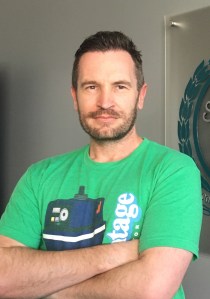 She did a bit of both. She initially gave us a bunch of demos that were just textures and moods and feelings which were really useful and that was at a very early stage.
We were shooting block one when Carly was onboard but I was still writing later episodes, so I was able, in those later episodes, to use her music. I do this all the time. I always write to music. Whenever I’m writing a show, I choose a score. It’s never music with vocals in it, it’s always an instrumental or score or something. I choose music that evokes the feeling of it and with The Rising it was great because I was using a bunch of other scores, from Dark and Twin Peaks and stuff like that, but then once Carly’s stuff started coming through, I was able to start using her music which was great.
By the time I was writing episode 8 she’d done the score for a lot of the first episode so I just had that on repeat. It was great because it just puts you in that headspace and in the mood of the show.
How much of the performance of the actors influenced the way you wrote the later episodes? Was there something specific you saw in the various performances?
We were really lucky with this ensemble of actors actually because without exception every single one of them just nailed it. There’s a lot of new faces in this show which is really exciting to me, to not have the same old faces on television. There’s a lot of really great new talent and particularly with our leads.
 Clara is just phenomenal. To be in literally almost every single scene of the show and to be able to carry the pressure and the weight of that and to make the environment of the set really welcoming for other people, she’s just so professional and nails every single beat. All of our younger actors just followed that lead that she set and that tone and they were all just brilliant.
The relationship between Neve and Alex that really builds from the end of episode 2 and becomes a spine of the series – as I was seeing their scenes and the chemistry that they have come together, I really wanted to capitalise on that. I planned to anyway, but when you start seeing chemistry between certain actors you really want to write it up – that’s what I want to do anyway. So for episode 8 it was really about giving that relationship as much weight as possible because I’d just seen how great they were together.
In terms of The Rising overall, what has this one challenged you most doing, that you’ve not had to deal with as a writer on a show like Doctor Who or as a showrunner?
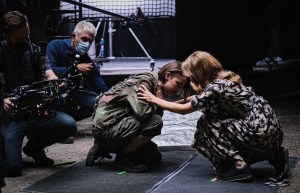 There’s a writing level and a production level. On a writing level I think it was challenging in that it was a real mix of genres which is what I love. It’s genre sci-fi – supernatural is my favourite thing, it’s my jam – and also it had a traditional murder mystery crime show element. so for me it was about finding the right balance to fuse those things together so that if you’re a lover of whodunnits or crime shows you can come to this and really get something out of it but also similarly if you’re not that into crime shows but you’re into supernatural then the show also has a great draw card for you as well. It was about just making sure that the balance of those genres was right and that it felt distinctive and fresh as well.
Then from a production point of view, to be boring, it was Covid. Covid was a huge thing, still is obviously, but it was a huge thing when we were shooting. We had really tough protocols to deal with, I’ve now shot three shows during the pandemic which is insane to me that I’ve been able to do that, and this was particularly tricky in terms of actors to the set and actors coming down with Covid and just keeping everyone safe.
It was a real challenge because it was such a long shoot – it was a shoot during changes of seasons which was challenging from a production perspective.
The Rising comes to Sky Max 22 April, with all episodes streaming on NOW.
 Doctor Who News Star Trek News
 Sci-Fi Bulletin: Exploring the Universes of SF, Fantasy, Horror and Spy-fi!