The First: Interview: Natascha McElhone and Beau Willimon
The First has taken off on Channel 4. The company’s first co-production with Hulu tells the story of the first manned mission to Mars and the many trials and tribulations […]



The First has taken off on Channel 4. The company’s first co-production with Hulu tells the story of the first manned mission to Mars and the many trials and tribulations […]
 The First has taken off on Channel 4. The company’s first co-production with Hulu tells the story of the first manned mission to Mars and the many trials and tribulations that face those involved in it. The series stars Sean Penn and Natascha McElhone, and was created by Beau Willimon. The day after the press launch for the show, Sci-Fi Bulletin’s Paul Simpson and Den of Geek’s Louisa Mellor chatted with Willimon and McElhone…
The First feels like an astronaut show rather than a space show…
Beau Willimon: It’s a human show. It’s about the first human mission to Mars with the emphasis on the human. We do spend quite a bit of time focusing on astronauts but not only the astronauts. For example, Natascha’s character, Laz Ingram, is the visionary behind all this. Other members of the ground team, scientists and so on, and of course the loved ones of all these people. In order to embark on a mission like this, it requires a formidable amount of sacrifice, contending with the emotional and psychological costs of it, so that’s really where the heart of the show is.
The bulk of the first season is here on Earth trying to get to the starting line, and we want to dramatize just how difficult it is really just to get to that line. That’s really where our focus is.
Rather than being a prequel to The Martian in tone, it feels more like a future version of The Right Stuff
Natascha McElhone: Love that movie.
The human characters are the focus. How much of the worldbuilding did you do before you “put pen to paper” or did you work stuff out as you went along as you were scripting?
B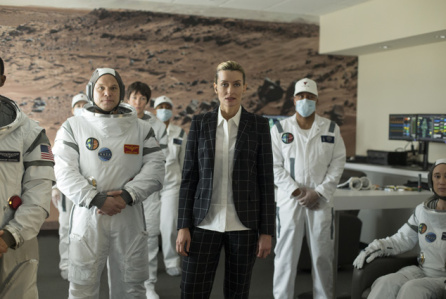 W: A bit of both. The level of expertise required to write about this show accurately is vast – there was no way that any writer without multiple doctorates or decades’ worth of technological and scientific research would have been able to approach it the same way that the people in real life who are actually doing this for a living would. I did a lot of research, book learning, on my own prior to really putting pen to paper but at a certain point you have to dive in. There are going to be gaps and stuff you don’t fully know so at a certain point you bring in consultants to make sure that everything you do is accurate.
Natascha can give you a sense from the actor’s perspective on what it was like playing a role like Laz Ingram.
NM: For a minute I’ll speak on behalf of actors playing astronauts as well: it took an awful lot of research and we were lucky enough to go to the Kennedy Space Centre, the Jet Propulsion Laboratory [in Pasadena, CA]. Sean did Russia…
BW: He actually did go to Russia [to the astronaut facility at Baikonur].
NM: No half measures.
BW: And speaking with a host of former astronauts, current and former NASA employees.
NM: Production were very good about giving us reading lists. They’d done the groundwork on what was worth checking into and what was less informative, so that was really useful. We did use a lot of the same resources.
We did end up having a WhatsApp group, sharing videos all the time, things that we’d picked up particularly about female astronauts that was really helpful.
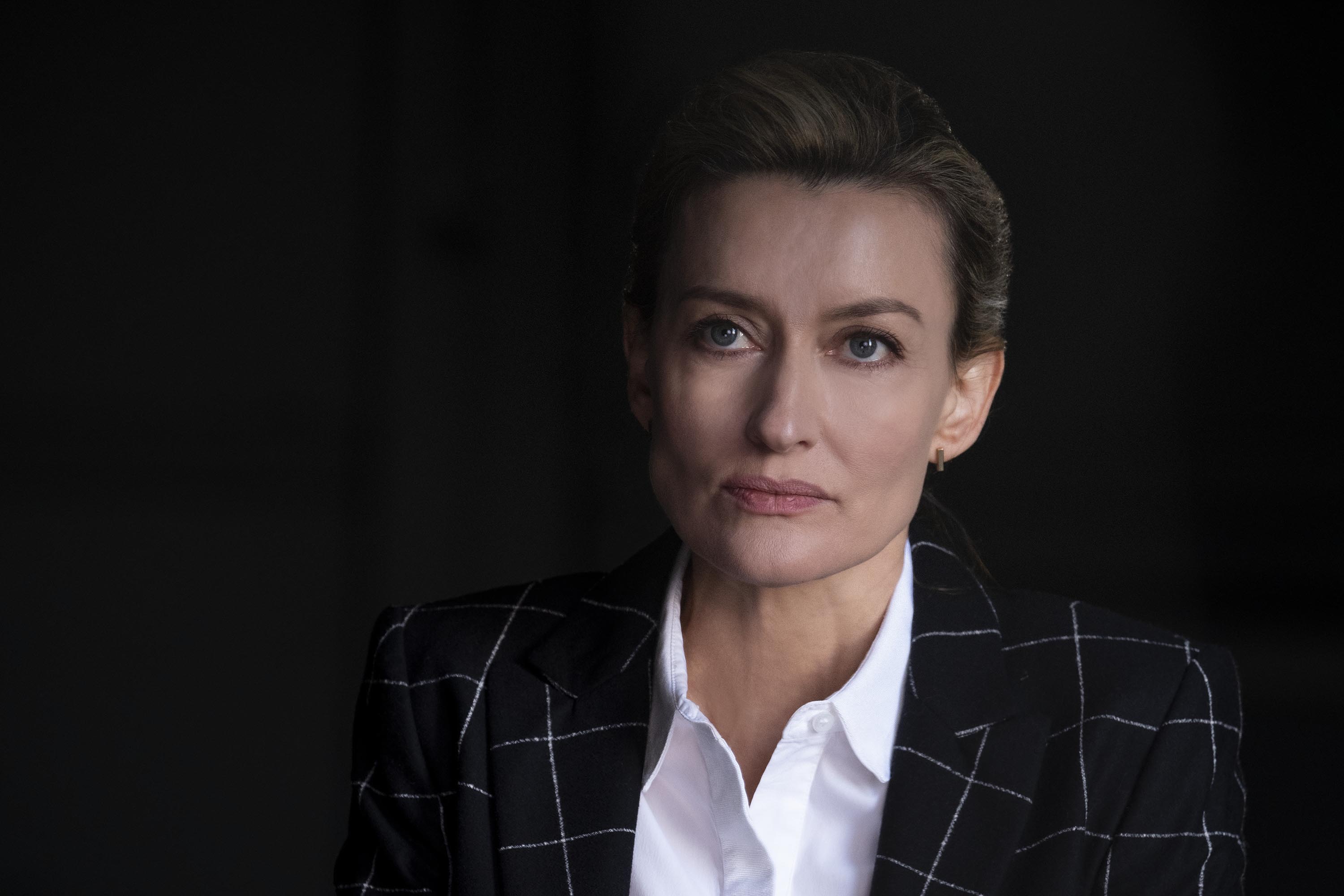 Natascha you’ve mentioned that when you met Beau there were things you discussed that he didn’t want for Laz’s character?
BW: From a writing perspective she’s a different animal of sorts from other characters. Where a lot of the other characters are ordinary and relatable, because their lives are similar to our own – they’re ordinary people trying to do extraordinary things – Laz is an extraordinary person whose life might not seem quite as ordinary as the average person, but she has to contend with all the ordinary things that life throws at her.
NM: Interestingly I think for her thinking in a macro cosmic way is not a challenge. It’s maybe something she even did as a child, being tuned into slightly different stratospheres than your average kid, but therefore what’s challenging for her is the nuance and minutia of dealing with day to day people and politics – that sort of thing, perhaps, she is less skilled at.
And the superrich are not normal people…
BW: One of the thing Natascha talked about quite early on is that Laz Ingram is not all that interested in money, in personal wealth. She is wealthy as a by-product of the work she’s done, and she’s interested in raising money for the mission, but she doesn’t gauge her values by a bottom of line of dollars and cents.
NM: Money for her in her life is about efficiency, and how she can make best use of her time to achieve what they’re trying to achieve. If she has this ergonomic house that just functions incredibly efficiently, of course that’s useful but I’d say the clothes, all that sort of thing, is quite perfunctory. I don’t think she spends a load of time online shopping.
BW: She does what she has to do to present a certain version of herself to the world that exudes confidence and leadership. There’s a certain amount of salesmanship going on.
NM: You want to invest in her.
BW: With a lot of the other characters, we spend quite a bit of time with their home lives and their pasts. What we’re trying to do with each character is to present their life through their own perspective and what’s important to them. We didn’t want to reduce Laz to “she goes to work, now she comes home and we’re going to do all the home life stuff”. We see bits and pieces of her personal life, but because her personal life to her is not as important as the work she’s doing, in many way, her work is her personal life. We took a different approach, which I thought was novel and interesting.
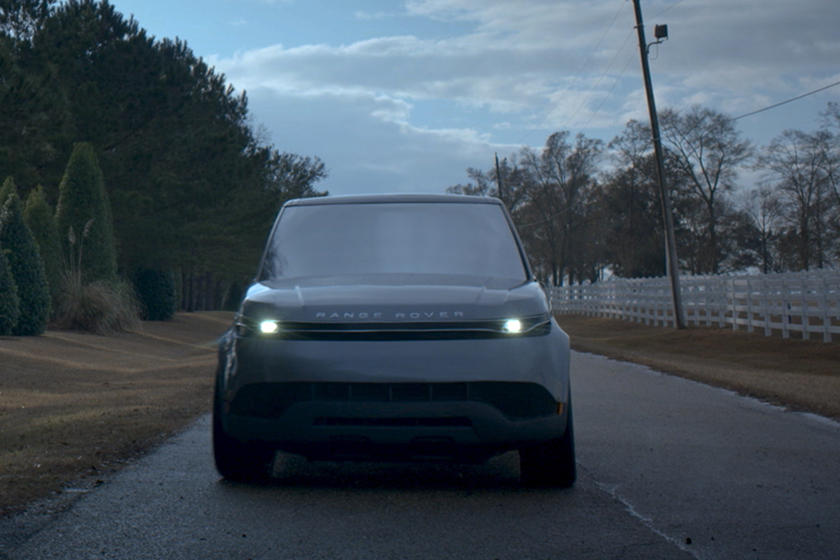 There’s a scene in the first episode when Laz has come home after the tragedy and Laz steps out in front of a car. Its safety features mean it stops despite her ordering it to drive at her. When you first read it, did you consider she might be thinking that since something has screwed up on the mission something could screw up now – in the back of her mind, it would be karma, if it does hit her, even if it shouldn’t…
BW: It’s an interesting question. I’ve not thought about it that way before, and I like that interpretation of it.
I think at its root, it has to do with control, trying to make order out of chaos. Here on a day when chaos has won out over order, in her own odd and specific way, this is Laz exerting a type of control which also flirts with danger. I suppose yes, there is a possibility of something going wrong with that car and the sensors wouldn’t have stopped it and so there’s a certain gamble, a rolling of the dice. I think that conflict between danger and risk, and control, is at the heart of who Laz is.
It occurred to me that she’s taking another gamble, and the look on her face – was it relief or not?
BW: Natascha should speak to this, but exploring Laz’s relationship with risk was something we talked about a lot. Do you have anything to add?
NM: No, I don’t. We discussed this moment ad nauseam and in fact it was one of the first discussions that I had with Beau. I think that’s what’s on the screen, the lightness of touch, the question mark around all of it, is more interesting than trying to give you an explanation.
BW: We’re interested in interpretations like yours – people may have other ones than that.
Did the Challenger disaster in 1986 have an impact on you?
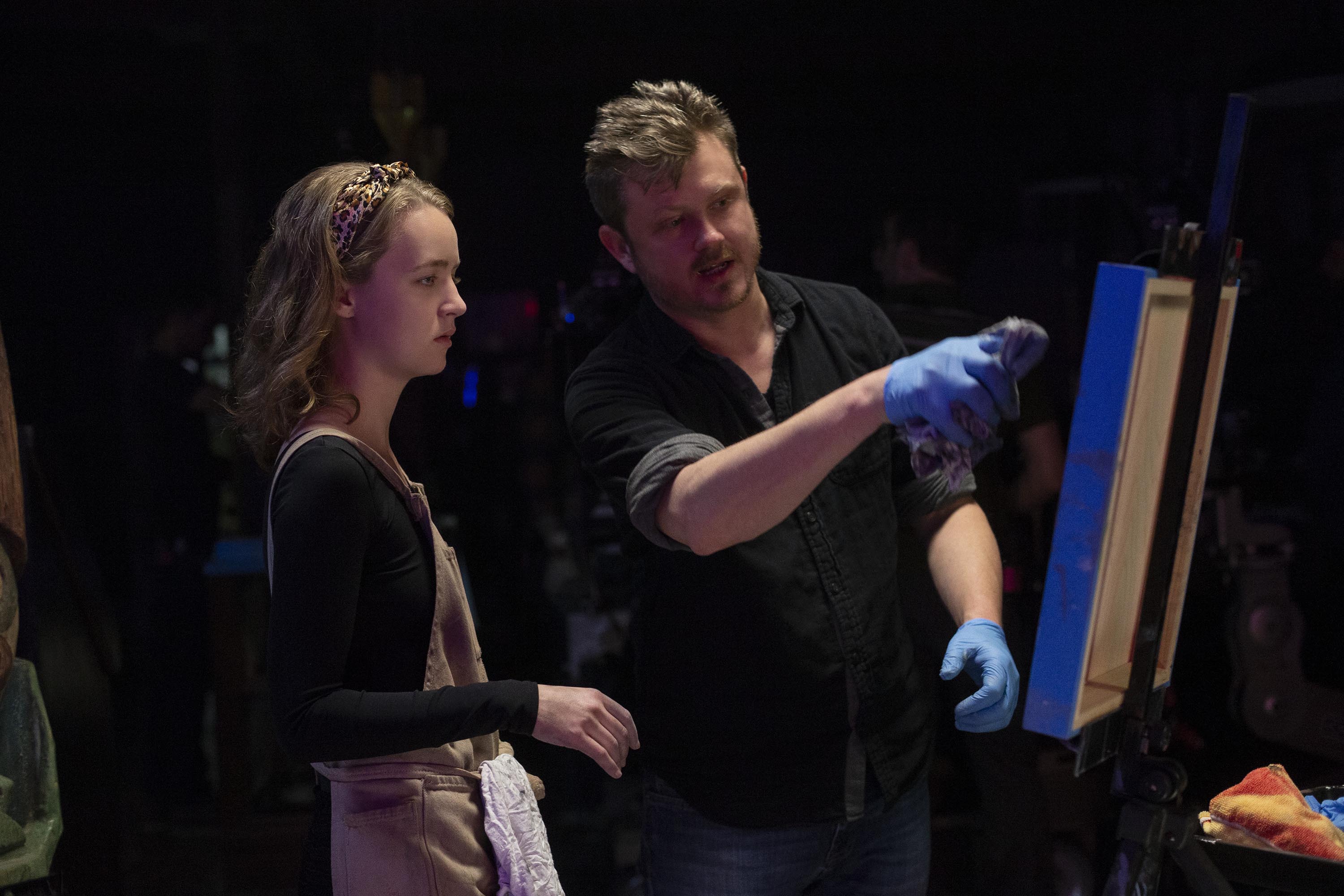 BW: Undoubtedly it had an impact across the whole world. I believe I was second or third grade and we were watching it at school. For a little kid who doesn’t have a full conception of what death means, it was this moment where a schoolteacher, Christa McAuliffe, not unlike the schoolteacher who was standing in front of us that day, is an astronaut, and is suddenly faced with this strange and foreign thing that becomes intimate and recognisable. You witness a tragedy like that and for a little kid like me, you remember every aspect of that day, every detail of it. It was one of the first times I had to confront death and what does that mean?
Certainly I was drawing on that for the writing of it, but we also talked to a ton of people who were part of the space program during the Challenger and Columbia tragedies to get their input on what it was like to actually be working on those teams and actually experience it as an adult.
NM: I think because of something Beau alluded to earlier on, that her primary relationship in her life is perhaps with her work, Laz was very connected to all of those people and they’d been team building for a very long time. I think because she’s a solution finder, rather than someone who likes to stay in a problem, her call to arms and action is very evident. There were other people to do the heart and soul stuff, and she was much better at putting her mind on to moving on from that point.
BW: One of my favourite moments from Natascha’s performance is after the catastrophe. She has to come back and speak to her team she says the line “Our machine has failed us”. What I got from what Natascha did that was extraordinary – and [the camera is] on her back, so it’s her voice and body language – she talks of the machine as if it were a family member in a way. I think that’s her relationship.
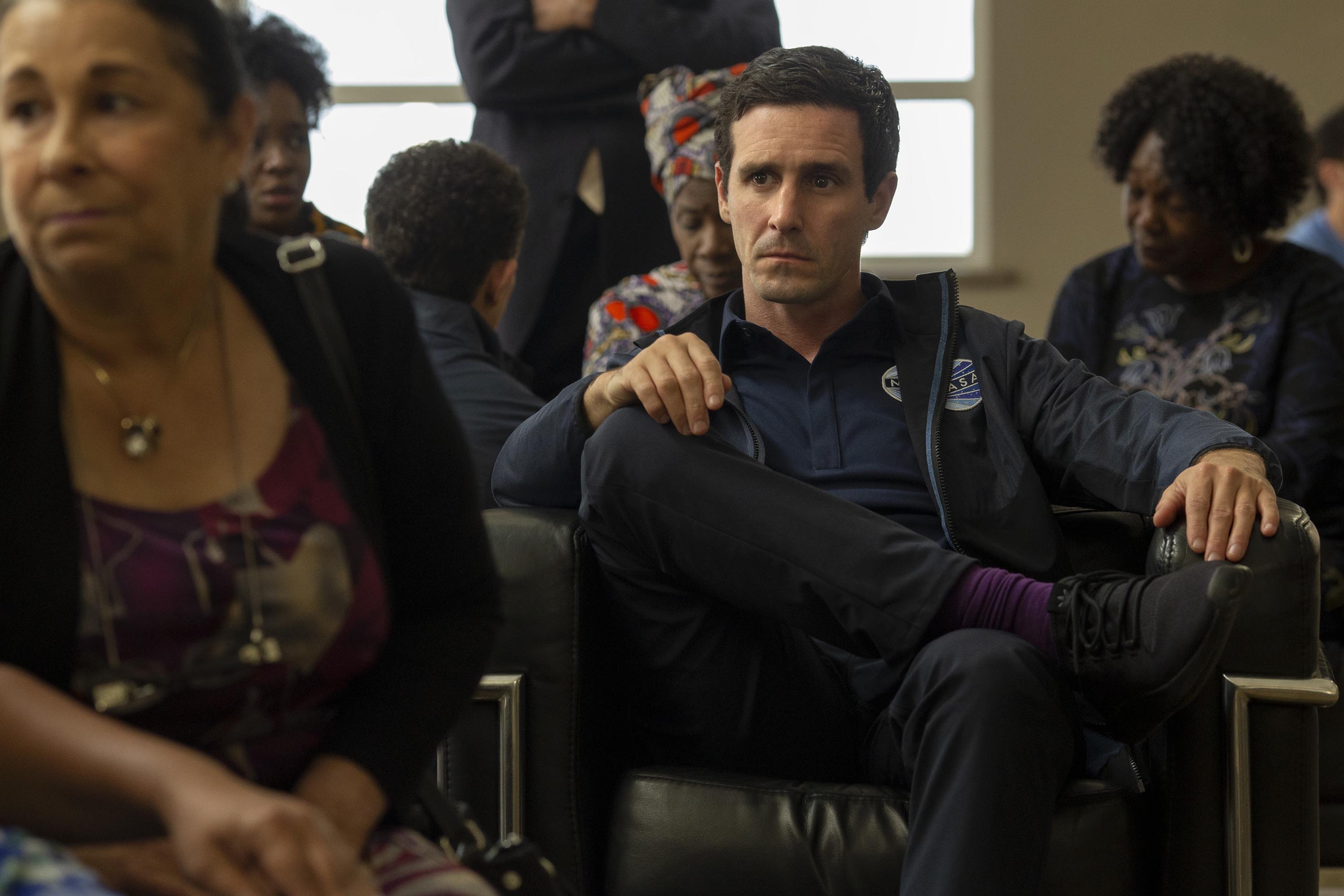 On a practical note you were producing The First for Hulu who released all eight episodes in one go, and for Channel 4 who are showing it weekly – which would normally be two different feels to a drama. Did the fact audiences would experience it differently affect the way you wrote it?
BW: The short answer is no, because we began writing the series we didn’t actually know who our partners were going to be and how it would be released. I’ve working on a streaming show that was released all at once but in that case as well I didn’t really write for either a binge or a week to week.
You have to think about in a novelistic way – if you pick up a book, the author has no control over how you’re going to read it. Are you going to read it in one sitting? Are you going to read it five pages a day? Are you going to read it in your quiet living room or on a noisy tube ? Your only job as a storyteller is to tell the best story possible and if it’s a good story then it should work in either format.
Beau at the press launch you talked of the show delivering on its “Mars candy”…
 BW: That was the alternative name for the show but we settled on The First…
I was being a bit facetious. I don’t want to mock the Mars aspect of it but the reason I referred to it in that way was one way of constructing this show is to get straight to the surface of Mars within an episode or two, but had we done that we wouldn’t have had the opportunity to see how hard it is even to get to a launch and be as invested in the characters.
The whole point of this mission is to get to the surface of Mars, so the whole telling of that story is also to get to the surface of Mars. We just want to earn it. We don’t want it to be easy. We want to see as many steps along the way as we can fit into the story.
Season 1 which is mostly Earthbound is about how you get back to the starting line when you’ve suffered a terrible catastrophe. We see plenty of preparation and training and the hoops that Laz has to jump through, the cost to families and loved ones, and we’re always reminding people of what we’re trying to get to, little specifics of Mars along the way.
It’s not unreasonable to think after this first season, now we have our astronauts on the way, if we’re lucky enough to keep making the show, we will see them make it to Mars, and by the time we get there we really will have felt that it’s a true journey. This operation doesn’t happen overnight so by the time we get to Mars we want the audience to have the same euphoria as billions of people across the world will when it happens in real life.
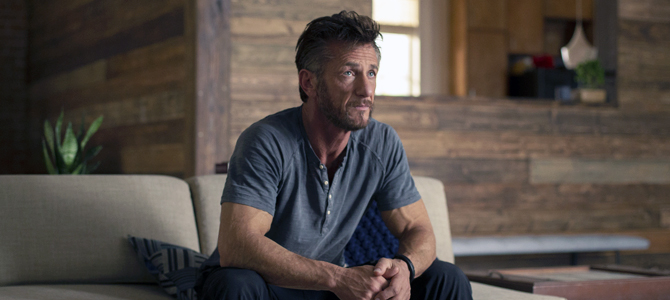 There’s a lot of contrast in the first episode between the small scale of picking up dog mess and the huge scale of the launch. Is that going to be a feature of the series?
BW: I’m glad that you asked that question and picked up on those things. It’s a show where the cleaning up of a dog’s mess and the launch of a rocket can sit side by side, and I think that’s life. On one hand you might be cutting your toenails and rushing to get to work, and later that day word comes that someone very close to you has passed away – toenail clipping and death in the family are part of the human experience. They go hand in hand and there’s no difference than in a trip to Mars.
One of the things that we set up is that Natascha’s character had back issues – seeing her contend with what millions of people do: “My back’s bothering me! Where are my painkillers? What exercise do I have to do while I’m also trying to land a giant mission?” also emphasises that.
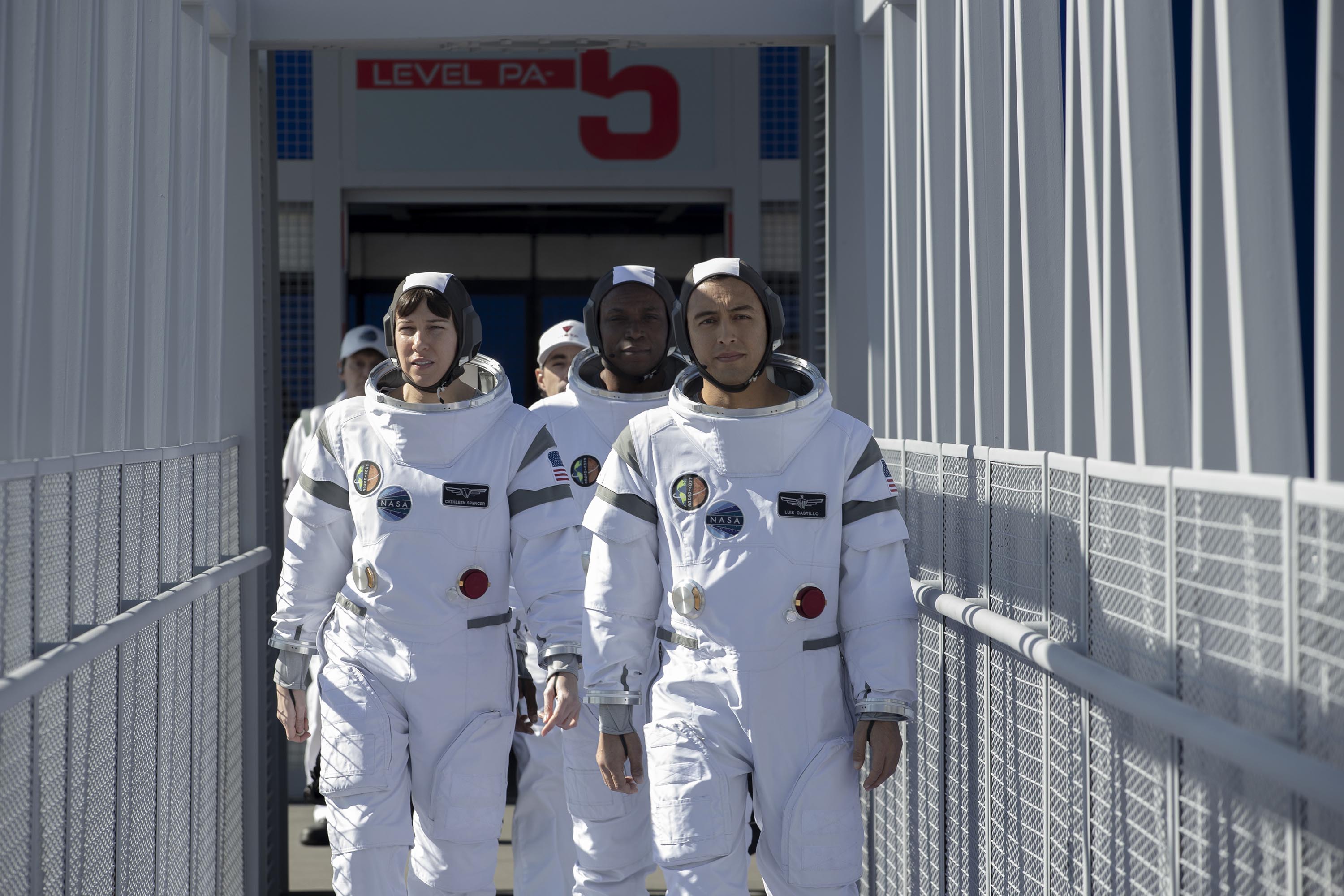 NM: Funnily enough, in the same way that Beau shot a lot of material and footage and then ended up curating it and cutting it to tell this story that we now have, the joy as an actor of shooting extra bits that aren’t necessarily in the final product is that you get to experience other parts of the character that just give it another layer. The back issue in one iteration, we almost started with her on the floor unable to get up before the rocket’s launch.
What I got from the introduction of Sean’s character, which I only saw last night on the big screen for the first time, was his competence. I know they’re small things but his efficiency, competence and earthiness, his ability to just crack through things and get it done… There’s nothing airy and dreamy or wafty about the character. I really liked that.
I trusted this guy and he hadn’t said a word. We hadn’t seen him in relation to any other person and yet just from hanging out in his house, tinkering around, you trusted him.
BW: Interestingly, fixing pipes is a lot of what astronauts do. Even stuff like dog poop – one of the major engineering tasks for anyone designing a spaceship is what do you do with the poop? You have to contend with these things, the gristle of life in the context of this giant dreams.
The First airs weekly on Channel 4, Thursdays at 9 pm; in the US it is available to stream on Hulu
Thanks to Debra Clavey, Elena Kemp and Toby King for their help with arranging this interview.
 Doctor Who News Star Trek News
 Sci-Fi Bulletin: Exploring the Universes of SF, Fantasy, Horror and Spy-fi!