The Bastard Son & The Devil Himself (aka Half Bad): Review: Series 1
Nathan is the illegitimate son of the world’s most dangerous witch, Marcus Edge, sworn enemy of the Fairborn council who are keeping the boy in a cage, training him to […]



Nathan is the illegitimate son of the world’s most dangerous witch, Marcus Edge, sworn enemy of the Fairborn council who are keeping the boy in a cage, training him to […]
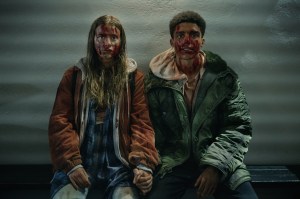 Nathan is the illegitimate son of the world’s most dangerous witch, Marcus Edge, sworn enemy of the Fairborn council who are keeping the boy in a cage, training him to be a weapon to destroy his own father.
The Bastard Son & The Devil Himself slipped under my radar when it first dropped back in October last year, but, ironically, I was drawn to take a look precisely because I read some online articles outraged that Netflix had decided not to renew the series for a second run (giving me flashbacks to how I became addicted to Firefly back in the day following that show’s cancellation).
I’d been put off initially because the publicity said it was about witches and the title sounded a bit gothic, neither of which (so to speak) are my thing at all. After a baffling scroll through my Netflix home page where the show is now confusingly advertised as Half Bad (which means nothing at all if you haven’t read Sally Green’s original novels), I finally sat down to watch… and eight episodes later was left absolutely blown away.
Much as I respect and admire the success of the Harry Potter franchise, fay stories about a magical public school have always left me completely cold. The Bastard Son & The Devil Himself is the antithesis of Potter, and I think that is at the heart of why I love this series so much – although hopefully broader minded folk will enjoy both. While there are occasional sprinkles of gothic, these witches live in a world so real, I feel I’ve lived quite a lot of it myself. Nathan is bit of an outsider, brought up in a caravan with his elderly nan; he goes to the local comprehensive school; he swears, he has sex, he drinks, smokes weed; he’s not too sure about The Lord of the Rings; and runs the full gamut of teenage emotion, in all its anger, vulnerability and confusion. Kudos to Jay Lycurgo for realising the character so wonderfully. It’s an extraordinary performance, both entirely relaxed – played first and foremost as a gawky, volatile, loveable but messed up adolescent – whilst also being deceptively charismatic. It’s a bold decision to allow the character to be a truthful, completely recognisable teenager, leaving all the witchy shenanigans as an obstacle getting in the way of all that hormonal hell.
Of course, much of this is on the page. Joe Barton is a perplexing presence in the screenwriting landscape. I was equally blown away by his highly original Anglo-Japanese crime drama Giri/Haji; but left disappointed by the not-very-original-at-all Lazarus Project; and left even more disappointed by the supposed sci-fi movie Encounter (which didn’t have an encounter in it at all). With The Bastard Son he and his team are on top form, their feet absolutely on the ground no matter how fantastical the content. The dialogue throughout is natural, flowing, very funny at times, and played for the reality of the world and its relationships, rather than getting bogged down in bogus mysticism.
All of this can work because the series has a classic ‘put-a-clock-on-it’ structure. Nathan must get a parent’s blood on his seventeenth birthday or he will die a horrible death – but his mother is dead, and his father is a hunted fugitive. It’s also hugely satisfying because all the characters, no matter how small, are three dimensional, and everyone’s deeds and decisions have consequences. There are none of the narrative ‘get-out-of-jail-free’ cards that so often plague series like this. It’s also absolutely as violent, gory or sexually up front as it needs to be, including a highly amusing if architecturally dangerous depiction of the female orgasm.
Like all the best storytelling, this tale of warring witches isn’t really about witches at all. It’s about the endless internecine battles that continue to tear our very unmagical world apart to this day. Whether it’s intentional or not, some excellent casting allows the audience to see resonances with Northern Ireland, racism, religious bigotry, anti-Semitism, with stops along the way to explore sexuality, parental alienation and the nature of anger itself.
The feet-on-the-ground sensibility is also played out through production design. It’s one of the few series I can remember where the characters’ clothes get progressively dirtier and more distressed as the action progresses and there is never any call to suspend your disbelief at an artificially ‘TV ready’ appearance. By the end of the series Nathan really looks like he needs a bath.
Last, but not by any means least, there needs to be a shout out to Emilien Vekemans, who plays Nathan’s guardian angel, the appropriately named Gabriel. It’s a great character, consciously reminiscent of Will Sharpe’s amiable, charismatic rent boy from Barton’s earlier series Giri/Haji. With Nadia Parkes ably completing the trio as Analise, I was left heartbroken that we would not be seeing more of this terrific threesome in future episodes.
Verdict: I think you may have gleaned that I rather like this series. I hope others do too, but I accept that there are reasons why I may like it more than most. If you, like me, missed it first time around, check it out, and let’s make Netflix regret their decision not to renew! I suspect it has a far longer shelf like than the platform might have anticipated. 10/10
Martin Jameson
 Doctor Who News Star Trek News
 Sci-Fi Bulletin: Exploring the Universes of SF, Fantasy, Horror and Spy-fi!