Review: Threads (Remastered)
Simply Media, out now When a 210 megaton bomb is dropped on Sheffield in 1980s Northern England, families struggle survive in the subsequent nuclear winter. It was tough growing up […]



Simply Media, out now When a 210 megaton bomb is dropped on Sheffield in 1980s Northern England, families struggle survive in the subsequent nuclear winter. It was tough growing up […]
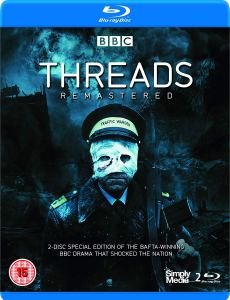 Simply Media, out now
When a 210 megaton bomb is dropped on Sheffield in 1980s Northern England, families struggle survive in the subsequent nuclear winter.
It was tough growing up as a teenager in the 1980s – we were either going to die from a nuclear bomb or from AIDS – the prospect of reaching the 21st Century felt like a fantasy. And it was into this climate of paranoia and high political tensions between the two tribes of US and USSR that the BBC released this BAFTA-winning, horrific what-if docudrama.
When you compare the the golden glow vista looking down onto Sheffield in the opening of Doctor Who’s The Woman Who Fell to Earth with the same grim, grainy shots in Threads, there’s a sense of relief that we’re still here 35 years later. Unlike a lot of 80s drama, this TV movie has lost none of its effect, a harrowing and graphic look at how humanity and its infrastructure collapses in the fallout of the attack.
Murder, looting, starvation and radiation sickness are lingered on; you observe in horror as the regular working class families find their homes literally ripped apart. Rotting bodies of dogs and cats, charred hands sticking out of rubble – it’s upsetting stuff and you can’t help but think you’d rather have died in the bomb drop.
Director Mick (Volcano) Jackson incorporates grainy real-life news footage, adding verisimilitude to Barry (Kes) Hines’ no-nonsense script. The only time you’re pulled out of the drama is the presence of Blue Peter’s Lesley Judd doing her best Selina Scott impression as a newsreader, and a voiceover of Ed (UFO) Bishop as the US President.
The restored two-disc release has taken the opportunity to clean-up and re-grade the image (with Jackson’s permission) to make it colder and sharper, with improved night-time resolution. In addition to the regular 4:3 broadcast version there’s a reformatted 16:9 version and 9-minute interviews with female lead Karen Meagher, production designer Christopher Robillard and cinematographer Andrew Dunn. There’s also a fascinating 30-minute interview with film historian Stephen Thrower, setting the context of the media and political landscape onto which the play was released. As a nice touch there’s also a PDF of Radio Times articles and letters.
Verdict: Horrific and upsetting, time has not dulled the impact of this terrifying look at the destruction of society. You really need to be in the right frame of mind to tackle these two hours of grim TV, and they could hardly be described as entertainment. The special edition makes the grim look even grimmer, but then this essential landmark TV drama was always intended to be as shocking as possible. 9/10
Nick Joy
 Doctor Who News Star Trek News
 Sci-Fi Bulletin: Exploring the Universes of SF, Fantasy, Horror and Spy-fi!