Marchlands: Interview: Jodie Whittaker
Six years before she was cast as the 13th Doctor, Jodie Whittaker was one of the stars of Marchlands, ITV’s cross-time ghost story, playing Ruth Bowen, one of the characters […]



Six years before she was cast as the 13th Doctor, Jodie Whittaker was one of the stars of Marchlands, ITV’s cross-time ghost story, playing Ruth Bowen, one of the characters […]
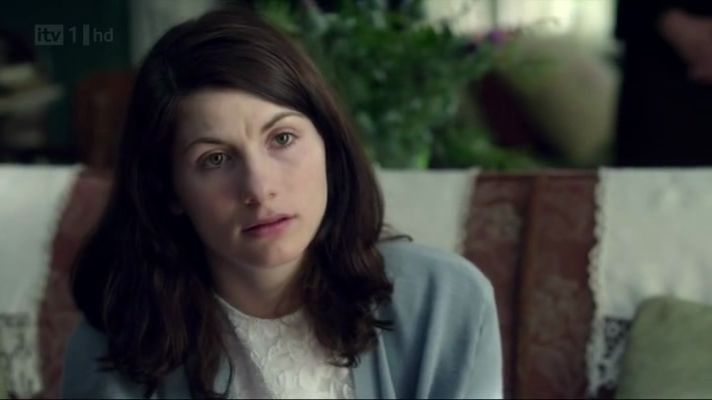 Six years before she was cast as the 13th Doctor, Jodie Whittaker was one of the stars of Marchlands, ITV’s cross-time ghost story, playing Ruth Bowen, one of the characters in the 1968-set portion of the tale, whose daughter drowned a few months before the series begins. Paul Simpson sat down with Whittaker at the London Studios to discuss the project for a short piece for Total Sci-Fi; what follows is the full length version of that interview, previously unpublished.
What attracted you to the project?
At the time there were various reasons. I thought three stories in one in five hours was really exciting and really different, particularly as it wasn’t an episode dedicated to each one. The cup goes down in 1968 and it’s lifted up in 2010 – the challenges for everyone involved, especially props and camera, were huge and I thought that was really interesting.
 I also love the fact that each storyline is its own world, and that ours very much dealt with grief and bereavement, 1987 deals with psychology, and 2010 is about your history catching up with you. That has the heavy presence of the ghost in the house; for us in 1968, there isn’t such a presence, it’s more loss and feeling that your daughter is still there. I think that’s a common feeling when you’ve lost someone and their bedroom is still there, their chair is still empty at dinner table. There was no sinister, spooky element to ours – it was more grief.
Those three things coinciding in an overall piece that was about many different things I thought was a great idea, especially for telly. It’s quite filmic in its attempts as a script. They gave it five episodes, rather than cram it in three and you’re forcefed all the information. I feel the characters are given enough time to breathe, so by the climactic episode, you know them.
You see people at fascinating stages: one character, Olive Runcie, you see her at 7, 20 and then in her 40s. The lead is the house; it’s the central bit.
There’s an element of Manderley from Daphne du Maurier’s Rebecca – the house has a presence, it’s a character… Where was it filmed?
The exteriors and the sitting room were in someone’s house, but the interiors were in an old school. A perfect building with lots of corridors and levels, so there were rooms for all the various scenes. My favourite bits of the scene changes are in the kitchen, where you see a modern kitchen change to how it was back in the day. In 1968, we were a working class Northern family; by 2010, they’re a successful couple who live in a house like that. The changes there are really interesting.
 How much did you research the period?
My parents were 18 in 1968 from a village in Yorkshire so I had information at my fingertips. Plus it was an interesting time for women: if you look it up, you get all these images of London and these incredibly liberated teenagers and women enjoying this movement but that wasn’t really going on up north. Maybe a bit in Leeds, but this is set in the villages outside of Leeds.
You get the sense with Ruth that she was a bit of a restricted artist. If life hadn’t had this tragic twist, you can see Ruth moving into the city with her family when she was a bit older and being part of a more artistic lifestyle. That was harder to look into, because that kind of northern working class area wasn’t chronicled – why would it be? I’m lucky because I was one of the only natives who could ask what it was like.
Ruth is living in a very common situation, with her in-laws. They’re quite a well-off family, a business-running family so they’re affluent on those terms, and that explains the size of the house.
Did you research the way people react to grief in those circumstances, or did you just feel it?
I’ve talked to different people about different experiences when I’ve researched a part, but this one particularly I didn’t think it would be helpful to me, or appropriate in some ways to speak to someone. If they opened up – which is a big ask to talk about the loss of a child – and said they reacted in one way, and I realised that my character doesn’t do any of the things I’ve been told, I don’t know how I’d feel if I was not able to actually filter it into the dynamics of a scene having exposed someone that way.
I also don’t think there’s a universal reaction. If I was playing a soldier, absolutely, there are facts involved; but when it’s grief, people react differently.
I s she like [Moors Murder victim] Keith Chapman’s mother desperately wanting the closure, but maintaining an inner strength?
Absolutely. It’s an unexplained ending, that everyone else has accepted, but it’s so frustrating to be the person that sees the cracks in the story. She comes into a room, incredibly empty from the loss of her child, but with a drive, the thing that gets her out of bed every day, that it isn’t uncovered. But she’s met by people who have accepted the information that has been given to them, like her husband, who just wants to deal with it in his own way. Her lack of acceptance, to him, is traumatising, because it brings things up all the time. For my character, it’s not so clear-cut. She doesn’t believe for a second that her daughter would behave like that.
Does she see people’s attitudes as indifference?
Yes to an extent, and she can’t understand why they’re trying to forget, which is a cruel accusation that she makes. Obviously [her husband] Paul isn’t trying to; he’s trying to deal with it in his own way. Many couples break up after the loss of a child, because there’s no formula for dealing with it.
This storyline is a story, and has an arc and a journey, and I had to be loyal to that, as well as playing the underlying grief of the piece. I’ve got to filter things in with my life experience – not that I’ve got masses; I’m only 28 – and experiences from other people. You focus your brain and try to get that into the part in the most truthful way possible. You’re given a script so 90 per cent of the work is done for you.
You have to leave it to instinct, because you have no idea how the other actors are going to respond in certain scenes. Life is like a tennis match, batting off other people. In the first episode, my character is incredibly slow-paced and low in energy, which affects people in the room; they try to pick it up which can grate on my character.
I was lucky though: I got to go home at the end of the day. It wasn’t real. I have no idea what it feels like, and I don’t think I can have any appreciation for what people who have experienced it have gone through. But you have to commit to it 100 per cent or it’s disrespectful.
 Are you in any of the other time periods?
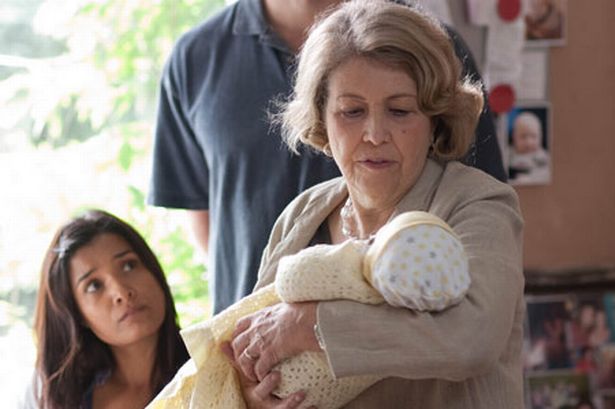
Yes, Anne Reid plays me. I leave my storyline and we move away, and Ruth moves back in 2010 as a widowed childless lady.
Did you liaise with Anne?
Yes because I shot first, so me and Anne had a long sit and chat about accents, voice, but it was mainly work for her because I set it. There were a lot of picking at nails, very spiky gestures and tense hands which Anne watched. When something happens, your life tragedy, it tattoos something on you and it’s very difficult to shake off. There’s a slight emptiness behind the eyes. For me, it was easier because it wasn’t hidden, I was heart on sleeve whereas for Anne, it’s her history, and it’s there but it’s not at the forefront of her day.
 Did it help you to know where Ruth was 40 years on?
Yes it did. What’s interesting with this piece is that it doesn’t give everyone a happy ending. It’s not a convenient story: not everyone’s story is neatly tied up. As an audience we desire that but it isn’t always.
Click here to read Jodie Whittaker’s interview regarding taking on the role of the Doctor.
 Doctor Who News Star Trek News
 Sci-Fi Bulletin: Exploring the Universes of SF, Fantasy, Horror and Spy-fi!